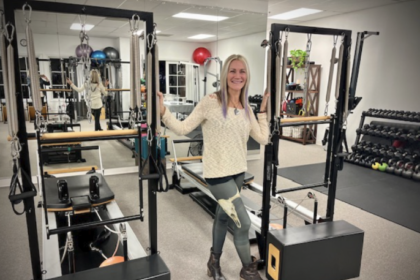
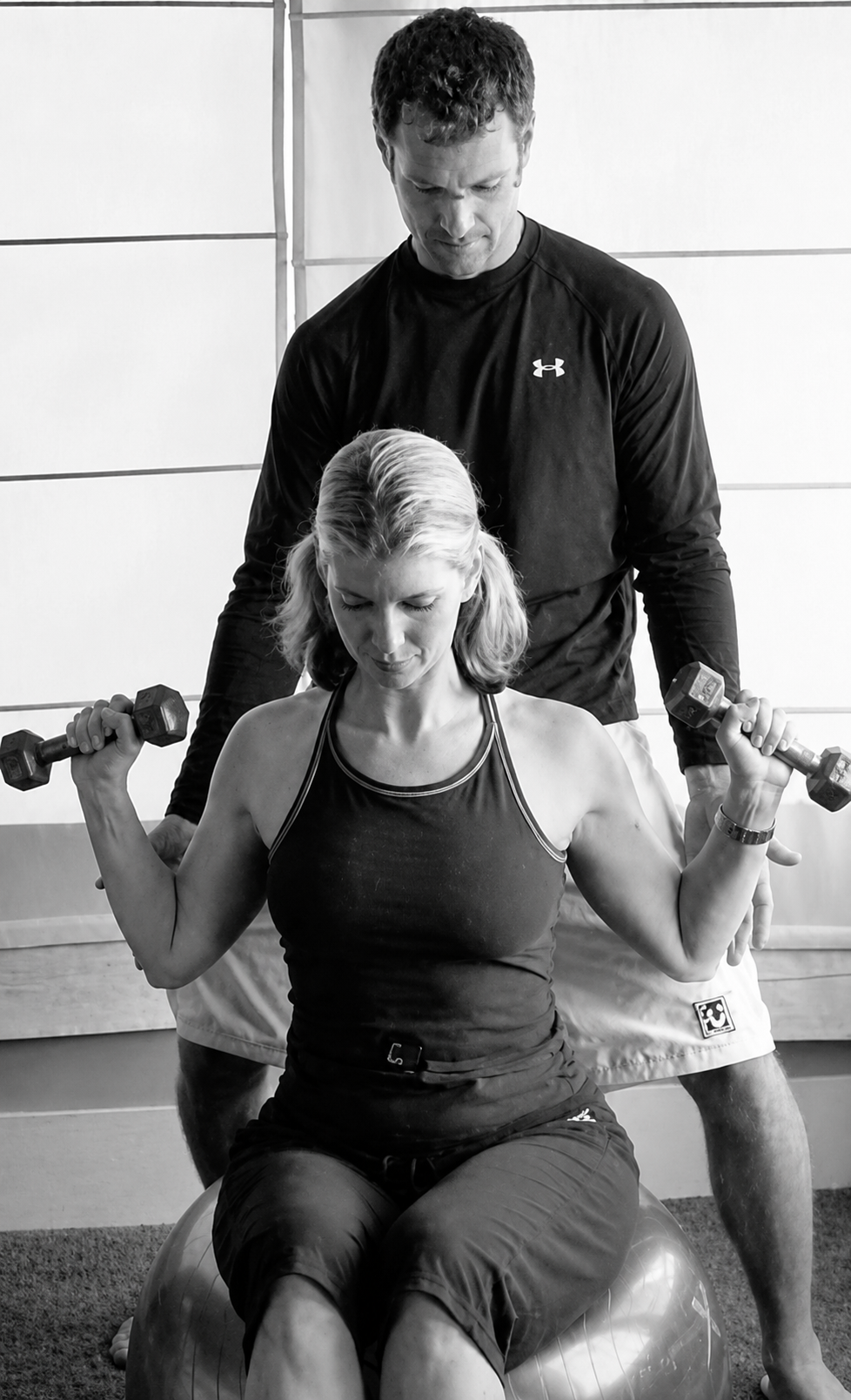
That convenience is only the surface of the model. McDonald’s deeper idea is slower and more personal: listen before programming, connect the client to what the muscles are actually doing, use resistance with purpose, and keep adapting until the training fits the person rather than forcing the person into a fixed routine. In his interview, he described a practice of roughly twenty-six active clients at a time, many seen more than once a week, with much of his business now concentrated around northeast Seattle.
“You can begin no matter where you are. It can be whatever you want it to be.”Stewart McDonald, Owner And Personal Trainer / Homefit In-Home Personal Training
The training comes to them. There is no commute across town, no waiting for equipment, and no need to learn a crowded room before learning the movements themselves. McDonald arrives with a plan, works with the space and equipment available, and can bring training tools when needed.
The tone is equally distinctive. McDonald does not describe himself as a whistle-and-clap trainer. His language is methodical: slow down, find the muscle, understand the movement, then add meaningful resistance. He sees the coaching relationship as a way to make fitness feel less intimidating and more understandable.
The program stays adaptable. In the interview, he described clients ranging from children to people in their nineties, along with people returning after injury or long periods of inactivity. The common starting point is not age or athletic identity. It is what the individual can safely and realistically bring to the session that day.
McDonald’s operating focus is access without dilution. Bringing training into a home is meant to remove a practical barrier, but the standard remains serious: observe closely, explain the movement, load the body appropriately, and keep the session personal enough that the client does not become another name inside a large membership system.
Why The Starting Point Is The Person, Not The Program
McDonald’s version of personal training starts by reducing the distance between the plan and the person who has to live with it. The home setting removes the commute and the unfamiliar room. The conversation removes assumptions. From there, exercise selection, resistance, pace, and progression can be built around the client’s real capacity rather than around a prewritten class format.
Homefit In-Home Personal Training is a Seattle-based coaching practice founded and led by Stewart McDonald, offering in-home and virtual personal training built around deliberate resistance, adaptive circuits, and a methodical mind-body focus.
The practical mechanism is simple: McDonald goes to the client’s home, works with the space or home gym that already exists, and can also coach live through virtual training. He then adjusts the exercises, resistance, and session flow to the client’s goals and current ability.
The coaching philosophy favors controlled effort over chaos. McDonald describes slowing movements down, helping clients feel the working muscle, using resistance progressively, and combining exercises into circuits that keep the session moving without turning it into a rushed checklist.
McDonald grew up in Seattle and described movement as part of daily life from childhood: cycling, baseball, football, and other sports. At seventeen, curiosity about how the body could change led him into a small hardcore gym in Kent. He said the people there took him under their wing, and the experience became formative. He gained substantial muscle, entered bodybuilding competitions, and won a Washington State bodybuilding title in 1989. Years later, when a career transition opened the question of what to do next, he returned to the subject that had held his attention for decades and built Homefit with support from his wife.
Inside The Homefit Approach
This profile examines how Homefit combines in-home convenience, resistance training, adaptive circuits, movement quality, and long-term coaching relationships inside a practice that remains deliberately personal.
The trainer comes to the client, then adapts the session around the person, the room, the equipment, and the day rather than delivering a fixed class format.
McDonald described clients from childhood through their nineties, including beginners, older adults, youth athletes, people returning after long breaks, and clients training around limitations.
The method pairs convenience with a deliberate coaching philosophy: meaningful resistance, methodical movement, exercise variety, and enough personal attention to change the plan when the client needs something different.
A Lifelong Lifter Who Chose The Living Room
McDonald’s story begins long before Homefit. He remembers the first serious gym he entered as a teenager not merely as a place to lift, but as the place where he “found my people.” The room gave him mentorship, community, and a technical fascination with how muscles work. That interest later became competitive bodybuilding and, eventually, a professional toolkit.
When he moved into training as a career, the appeal was not simply that he knew exercises. It was that he could use what he had learned to help someone else make a change. He completed an intensive personal training academy, later earned certification through the National Academy of Sports Medicine, and built a practice that brought coaching to clients rather than waiting for clients to come to a facility.
Why Resistance Comes Before Complexity
McDonald repeatedly returned to resistance in the interview. His argument is not that every client should lift the same weight or pursue the same goal. It is that bodies need an appropriate reason to adapt. He wants the client to feel the working muscle, understand the movement, and then use enough resistance to make the effort meaningful.
He also rejects the idea that effective training has to look frantic. In situations where a client is managing a limitation or rebuilding confidence, he described slowing the work down, keeping the session methodical, and choosing exercises that let the body build capacity without turning every minute into a test.
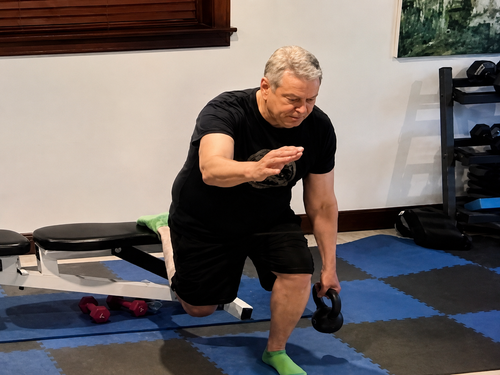
That philosophy makes the home setting more than a convenience. A client does not need a massive equipment floor to train seriously. The work can be built from dumbbells, bands, body weight, a home gym, or whatever the environment supports, provided the programming and resistance are chosen with enough care.
Calm, Personal, And Built Around The Room You Already Have
A Homefit client does not have to perform readiness before training begins. McDonald comes into the client’s own environment, listens to what the person wants, and adjusts the session around the body and circumstances in front of him.
Operationally, that can mean changing an exercise on the fly, using a mini circuit to keep the hour moving, spending more time on one lift when quality matters, or switching between in-home and virtual coaching. Emotionally, the goal is to make the work feel accessible enough that the client can stay with it long enough to build a real fitness lifestyle.
Slow Down Enough To Feel The Work
McDonald’s governing philosophy is built around connection before speed. He wants clients to understand what the working muscle feels like under load, then learn to stay with the effort long enough to find the part of a set where real fatigue begins. In his language, the session should be challenging without becoming stressful theater.
That principle extends into the circuits he prefers. A session might move among a Bulgarian split squat, a clean and jerk, and a chest press as a small circuit, then shift into another group of movements. Other exercises, such as deadlifts or pull-ups, may deserve their own focused sets. The point is not novelty for novelty’s sake. It is to keep the whole body working while preserving enough structure that the client never has to wonder what comes next.
The distinction is not that Homefit has invented a new exercise system. It is that the practice reorganizes familiar strength work around access and attention: bring the coaching to the client, reduce environmental friction, choose resistance deliberately, and adapt fast enough that the program remains personal from one session to the next.
What Homefit In-Home Personal Training Offers
The service mix centers on individualized personal training delivered where the client already lives or through live virtual coaching, with resistance, circuits, balance, movement quality, and exercise variety adapted to the individual.
“My elderly, 90 plus year old, wheelchair-bound father, decided he wanted to become mobile again. Stewart brought his brilliant, intuitive training style. He challenged and empowered Dad to get out of his wheelchair and into his walker, to march with his knees high, lift weights, and soon begin to balance again.”
The Case Against One-Size-Fits-All Fitness
McDonald’s toolbox matters because he does not expect one exercise or one routine to fit everyone. He described collecting as many useful movements as he can so he can find the balance between what a client wants, what the client can do, and what level of resistance or complexity is appropriate.
His circuit method reflects that same principle. The hour can move quickly, but the work itself stays organized. Exercises are “married” together in small groups when the pairing makes sense. At other times, one lift deserves more attention. Adaptability is the point, not constant motion.
That also changes the coaching relationship. McDonald described himself as a “buddy system” for clients who need help finding a pathway into fitness. The expertise matters, but so does making the route understandable enough that someone can keep moving forward rather than feeling overwhelmed by the number of choices.
What Consistency Makes Visible
Asked what clients may begin to notice in the first 60 to 90 days, McDonald described changes in how people feel, how they move, and how they see themselves. He also emphasized that those changes are not automatic. They require work from both coach and client, and the conditioning phase can take months rather than days.
The longer-term outcome he values is a lifestyle shift. He said the proudest moments come when a client reaches the goal that mattered at the beginning, whether that involves strength, body composition, confidence, or simply becoming the person who trains consistently. The visible result matters, but so does the change in identity that makes the behavior easier to sustain.
From An Eight-Year-Old Goal To International Powerlifting
McDonald points to one young client as a vivid example of what a long coaching relationship can become when the client’s own ambition remains the engine of the work.
The relationship began when the boy was eight. His mother contacted McDonald because her son wanted to become “the strongest man in the world.” McDonald said he agreed to give the training a try, then became a steady source of exercise instruction and encouragement as the client kept returning to the goal.
By the time of McDonald’s interview, the client was almost seventeen and, according to McDonald’s account, was entering international powerlifting meets and traveling to compete. McDonald described his role modestly: a “buddy system” that helped the young athlete connect to exercises, information, and a pathway he already wanted to pursue.
The story fits Homefit’s broader philosophy because the outcome was not imposed by the trainer. The client supplied the ambition. McDonald’s contribution was continuity, instruction, and enough adaptability to help that ambition mature over years rather than disappear after a few weeks.
A Practice Shaped By Relationships, Not A Facility
Homefit’s community is distributed across homes, neighborhoods, and long-running client relationships rather than gathered under one gym roof. McDonald also credits his wife with helping him make the transition into business ownership, and his interview repeatedly returns to the idea that movement becomes easier to sustain when another person is present, paying attention, and invested in the process.


Why This Matters In Seattle
McDonald said Homefit no longer depends on chasing clients across distant high-end communities. His own northeast Seattle network has grown enough that local people find the business, recognize that the trainer is nearby, and reach out. At the time of the interview, he described a working roster of roughly twenty-six clients as a full and productive week.
That local relevance is practical. For someone who dislikes gyms, has a demanding schedule, already owns equipment, prefers privacy, or simply wants more individualized attention, in-home training changes the first logistical question from “How do I get to the gym?” to “What can we do with the space I already have?”
Homefit also keeps a virtual path open. McDonald said he came to value live remote training during COVID because it allowed him to coach effectively without entering the client’s physical space. The format remains consistent with the larger Homefit idea: use the setting that gives the client the best chance to keep showing up.
FAQ
Who Is Stewart McDonald?
Stewart McDonald is the founder, owner, and personal trainer behind Homefit In-Home Personal Training in Seattle, Washington. He described a lifelong background in sport and resistance training, competitive bodybuilding in the 1980s, a Washington State bodybuilding championship in 1989, formal personal-training education, and certification through the National Academy of Sports Medicine.
What Is Homefit In-Home Personal Training Known For?
Homefit is known for bringing individualized personal training directly into clients’ homes and for offering live virtual coaching. McDonald’s approach emphasizes resistance training, adaptive circuits, movement quality, exercise variety, and helping clients build a stronger mind-body connection.
Does Homefit Require A Home Gym?
No fixed home-gym requirement was stated in the interview. McDonald described working in already-built home gyms as well as creating workable training setups in ordinary home spaces. The legacy article also notes that training can be organized around simple equipment and available floor space.
Who Does Homefit Work With?
McDonald described a wide client range, from an eight-year-old who later pursued powerlifting to clients in their nineties. He has also discussed working with older adults, people returning from inactivity, clients managing movement limitations, and people who simply want a more personal alternative to a commercial gym. Training around a medical condition should be coordinated with an appropriate healthcare professional.
What Does A Typical Homefit Session Look Like?
The exact session varies by client. McDonald described circuit structures that may combine several complementary exercises, along with more focused sets for movements such as deadlifts or pull-ups. The common thread is controlled resistance, full-body work, adaptation, and a methodical pace rather than a rigid list performed the same way every time.
What Makes Homefit Different In Seattle?
The differentiator is the combination of location and coaching style. Homefit removes the trip to a gym, then uses the client’s own environment as the setting for individualized strength work. McDonald keeps the practice small enough that he remains directly involved in the coaching relationship.
What Is The Best First Step?
McDonald said the best first step is to visit the official Homefit website and send an inquiry. He reads the messages himself, responds to questions, and uses that contact to understand what the person is looking for before deciding what the right starting point should be.
Key Takeaways
Homefit is built around in-home and virtual personal training, reducing the logistical and psychological friction that can come with a conventional gym environment.
McDonald emphasizes controlled resistance, movement quality, and a stronger connection to the working muscle rather than intensity for its own sake.
Circuits, exercise selection, equipment, loads, and progressions can change with the client, allowing the training to remain personal from one session to the next.
McDonald’s core message is that people can begin from wherever they are and build a style of exercise they can continue rather than treating fitness as a short burst of effort.
Conclusion
Homefit In-Home Personal Training is not a story about replacing a gym with a living room. The stronger idea is that the setting can change without lowering the standard of coaching. McDonald brings the plan to the client, then asks the same serious questions any good training relationship should ask: what can this person do, what are they trying to become, what level of resistance is appropriate, and what will help them keep showing up?
His message is ultimately less about a particular exercise than about permission to begin. The client does not have to become a gym person first. The training can start where life already happens, then become more demanding, more skillful, and more rewarding as the body and the confidence catch up.
Stewart McDonald
Stewart McDonald built Homefit around a straightforward coaching standard: meet clients where they are, bring the training to them, slow down enough to understand the movement, and use resistance and consistency to help them build a fitness lifestyle that fits their lives.


Stewart McDonald grew up in Seattle and began serious weight training as a teenager. He later competed in bodybuilding and said he won a Washington State title in 1989. After formal personal-training education and certification through the National Academy of Sports Medicine, he built Homefit as an in-home personal training practice and has continued serving clients through both in-person and virtual formats.
Help clients begin from wherever they are, build a stronger connection to their bodies, use resistance deliberately, and create a form of exercise that can become part of a lasting fitness lifestyle.
In-home personal training, virtual coaching, resistance training, adaptive circuits, movement quality, balance, exercise variety, youth development, older-adult training, and highly individualized programming around the client’s current ability and goals.
About This Spotlight
Fitness Living Magazine™ selected this Spotlight for Homefit’s in-home and virtual training model, Stewart McDonald’s long-running Seattle practice, his clearly articulated resistance-first and mind-body coaching philosophy, the breadth of clients described in the interview, and a business model that keeps the trainer directly involved in the client relationship.
Fitness Living Magazine™ publishes these features to place local fitness leaders on the record about how their programs operate, what clients experience, what standards guide the coaching, and what makes the business relevant to its local community.
Source material for this Spotlight consisted of the recorded Fitness Living Magazine™ editorial interview with Stewart McDonald, the existing published Homefit Spotlight and supplied photo/caption assets, client perspective material supplied by Lisa Goldsmith for editorial use, the current Fitness Living Magazine™ article URL, and the official Homefit website used to confirm the current business website and two Homefit-owned supporting image assets.
This feature is editorial content and is not medical advice. Training descriptions, methods, and outcomes reflect the featured expert’s account and individual experiences. Results differ from person to person. Readers should consult a qualified healthcare professional before beginning or changing an exercise program, especially when managing pain, injury, illness, or another medical condition.