That is why the studio’s operating language begins with welcome, education, and individual context. Kyla’s own path moved through an active childhood in the Pacific Northwest, pregnancy and postpartum changes, strength training, midwifery, continuing education in core and pelvic floor function, aerial arts, and eventually a larger family-built studio designed to serve more people without asking them to fit one narrow picture of fitness.
“Everybody’s welcome here. Fitness doesn’t look a certain way.”Kyla Helgeland Alexander, Co-Proprietor And Strength Coach / Misfit Strength & Circus
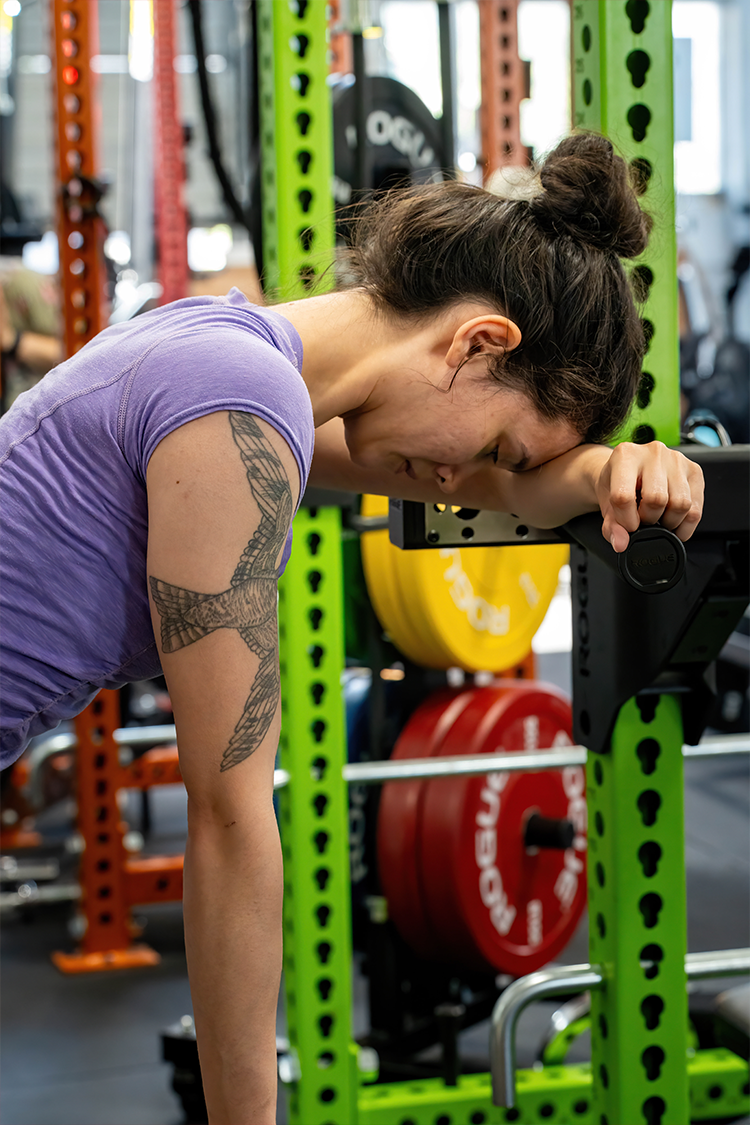
Kyla wants the room to signal belonging before it asks for performance. She described a colorful studio with different-colored squat racks, pride flags, coaches who greet people when they arrive, and a culture where clients are not expected to know how to lift or look a particular way before they begin.
The coaching reinforces that first impression. Clients are listened to, assessed as individuals, and taught from the level they actually bring into the room. For someone who has been intimidated by a conventional gym, that changes the first question from “Am I ready for this?” to “Can someone here help me learn this?”
The other early signal is accountability. Eish said he follows up when someone misses sessions, keeps injury updates current, and checks body composition again every 30 days. The member is meant to feel expected, not merely enrolled.
Kyla’s leadership standard is inclusion expressed through coaching decisions. The studio names needs that many conventional gyms leave implicit, including hypermobility, neurodiversity, core and pelvic floor concerns, chronic pain histories, pregnancy and postpartum needs, and complete beginner uncertainty, then builds training around the person rather than asking the person to disappear into the program.
The Studio Built For People Who Feel Out Of Place Elsewhere
Kyla’s answer to what the business means personally is also the clearest explanation of its market position. Misfit exists for people who do not feel comfortable in regular gyms. She described clients who are neurodivergent, hypermobile, managing chronic pain, carrying injury histories, or simply afraid that a conventional gym will ask too much before anyone understands what their body needs.
Misfit Strength & Circus is an inclusive strength and circus arts studio in Seattle built around individualized coaching, beginner-friendly teaching, core and pelvic floor education, and a deliberately welcoming environment for people who may not feel comfortable in a conventional gym.
Clients can begin with one-on-one coaching or beginner lifting, with movement preparation and progressions adjusted around current ability, pain or injury history, joint stability, and the person’s goals. Kyla described breathing, deeper core connection, mobility, and stability as foundations for progressively heavier strength work.
The wider studio model includes progressive group training, reservable training stations, circus and aerial classes, an infrared sauna, and recovery support, giving clients multiple ways to connect strength to everyday capability, skill, and confidence.
Kyla grew up active in Arlington, Washington, playing sports, dancing, riding bikes, and climbing trees. After having children young, she found herself trying to understand how to feel strong in a body that had changed. Strength training became part of that process, and her later work as a midwife deepened her education in breathing, core function, pelvic floor health, pregnancy, postpartum recovery, and the ways dysfunction can show up in ordinary movement.
Inside The Misfit Strength & Circus Approach
This profile examines how Kyla’s background, the studio’s strength hierarchy, its hypermobility-aware preparation, and the connection between lifting and circus arts create a distinct client experience in Seattle.
The studio specializes in people who often feel unseen by conventional fitness, then adjusts coaching around mobility, stability, pain history, core function, and learning needs.
Clients include complete beginners, hypermobile and neurodivergent people, clients with pain or injury histories, pregnancy and postpartum clients, and people drawn to aerial and circus arts.
Misfit connects serious strength coaching to a colorful community where people are greeted by name and given reasons to build strength that matter beyond the weight room.
A Coach Shaped By Midwifery And Aerial Arts
Around nine years before the interview, Kyla met her now husband, Thomas Alexander, who had already spent many years in strength coaching. He had a small studio with a business partner who was preparing to retire. Kyla and Thomas eventually opened a space together, then expanded into the current studio so they could offer more services, more ways to participate, and more entry points for different budgets and interests.
Kyla is also an aerialist and aerial coach. That combination of strength training, midwifery, core and pelvic floor education, and circus arts helps explain why Misfit treats movement as something to understand rather than something a client should already know how to perform.
Why Preparation Comes Before The Big Lift
The distinctive mechanism in Kyla’s programming is not a branded exercise. It is preparation. She estimated that about 90 percent of Misfit’s clients have hypermobile joints to varying degrees, which means the body may need a more deliberate setup before a larger strength movement.
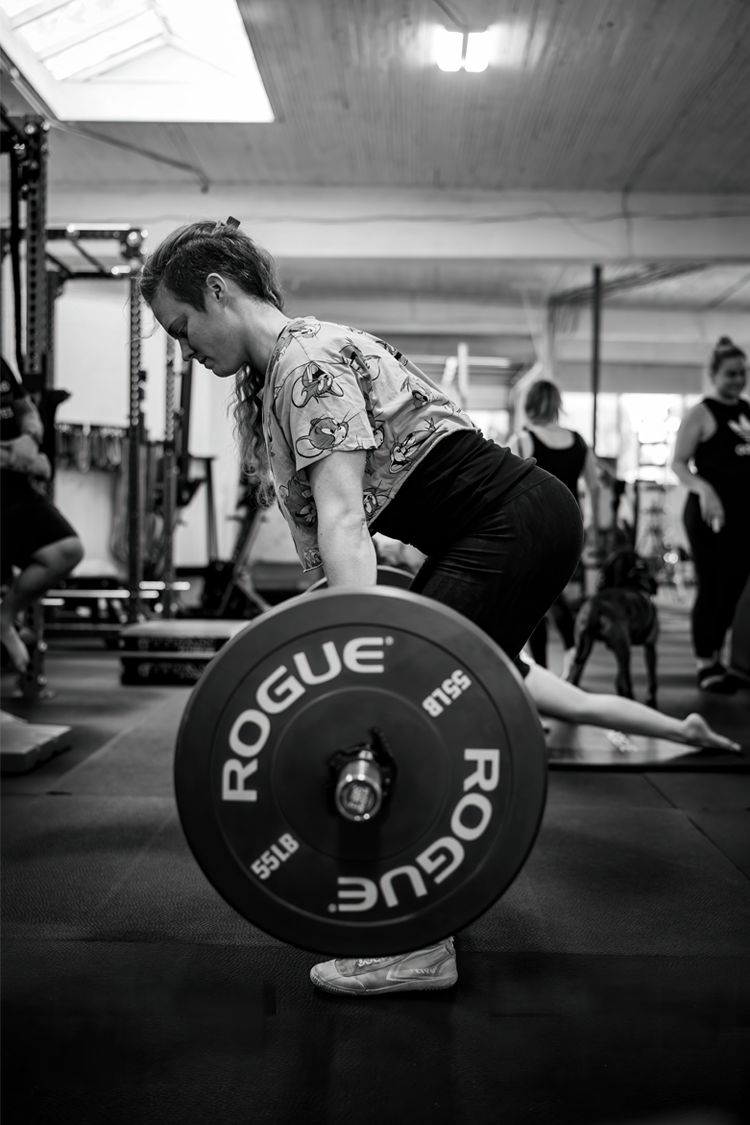
If the session includes a squat, the preparation may focus on hamstrings, glutes, and core. The goal is to activate the muscles and movement patterns that need to contribute before the client asks the body to handle more load.
That sits inside a larger hierarchy: mobility first, stability second, strength third. Clients need enough range of motion to get where the exercise asks them to go, enough control to own that range, and then enough strength to load it progressively. Kyla also described varying angles of pressing and pulling and rotating rep ranges over time so clients develop multiple strength qualities rather than repeating the same pattern indefinitely.
Welcomed Before Challenged
A client at Misfit is meant to feel that the room is for them before they are asked to prove anything inside it. Kyla wants people greeted, listened to, and coached from where they are, with no expectation that they already know the equipment or fit a particular visual idea of fitness.
Operationally, that means individualized assessment, thoughtful progression, beginner classes capped at six, and coaching that can shift around pain, joint stability, experience level, or a client’s goals. Emotionally, it means the person is not made to feel like a problem because they need an explanation, a modification, more preparation, or a different starting point.
Meet The Member Where They Are
Kyla’s governing philosophy is that progressive overload still matters, but it only works well when the body is prepared to tolerate it. People cannot lift the same weight forever and expect to keep getting stronger, yet adding load without adequate mobility, stability, joint balance, and form can turn progression into a problem. Misfit’s answer is to improve those foundations while continuing to build strength over time.
She gave the shoulder as one example. When the muscles across the front are overactive or tight and the muscles across the back are underactive or lengthened, the joint can lose useful balance. Programming may therefore include more opening through the front and more strength on the backside before the client is asked to press or pull harder. The principle is simple: earn better positions, control them, then load them appropriately.
Misfit’s differentiator is not simply that it welcomes people who have felt uncomfortable elsewhere. The stronger distinction is that the studio translates that welcome into a coaching sequence: understand the body, prepare the right muscles and patterns, teach control, progress strength, and connect the work to something the client wants to be able to do.
What Misfit Strength & Circus Offers
The service mix spans individualized strength coaching, beginner lifting, progressive group training, core and pelvic floor education, and circus arts, with the same emphasis on education and support.
“I’ve been doing personal training with Kyla to combat some chronic pain issues that no other doctor, PT, or massage therapist had been able to help. Amazing!!”
Giving People A Reason To Get Stronger
One of Misfit’s most unusual choices is to place a strength studio and a circus community under the same identity. Kyla sees that as a motivational advantage. “Getting stronger” can feel abstract. Getting stronger because you want to hold a handstand, climb an aerial apparatus, move through partner acrobatics, or simply do something that once felt impossible gives the training a destination.
That link between capability and play also helps explain why the studio name matters. Misfit was chosen for people who have felt like outsiders in one way or another. The culture is not built around pretending difference disappears. It is built around making difference compatible with learning, skill, strength, and community.
The practical result is that strength is connected to something beyond the barbell. A client may want more shoulder control for aerial work, more stability for a handstand, or simply the confidence to use equipment that once felt intimidating. The reason to train becomes personal enough to keep returning to.
What Progress Makes Visible
In the first 60 to 90 days, Kyla hopes clients begin to feel more stability and control. She wants them to understand breathing, connect to deeper core muscles, and see how those skills integrate into a squat, a press, or another loaded movement. From there, the longer arc is greater strength, more confidence with equipment, and less intimidation around movement.
Kyla also described body-composition changes for clients who explicitly have that goal and follow the studio’s recommendations, while emphasizing that weight loss is not required for fitness. Her larger standard is function: a client should be more capable of doing the things they want to do, whether that means training harder, managing everyday tasks with more confidence, or participating in a skill that makes strength worth pursuing.
A Postpartum Client Who Reported More Control And Less Pain
When Kyla was asked for a client story that stayed with her, she described one woman who first knew her through a postpartum circus class and later came to her for more individualized work.
According to Kyla’s interview, the client had already spent substantial time in physical therapy but still had unresolved pain. As the client began working with Kyla regularly, Kyla said the woman started reporting that she had much less pain than before, more control, less back pain, and less hip pain.
What made the story meaningful to Kyla was its ordinary usefulness. The goal was not a dramatic performance statistic. It was the client noticing that her body felt more manageable in daily life and that movements which had been associated with discomfort were becoming easier to navigate.
Kyla also gave another kind of everyday example: clients telling her they could put a bag into an airplane overhead compartment without help. Those small moments are part of how she defines success, because the value of strength becomes visible outside the studio.
A Studio Community Built Around Strength, Skill, And Belonging
Misfit’s human context extends beyond personal training. Kyla described a small-space culture where people are greeted when they arrive, feel known by the coaches, learn alongside others, and can move between strength training and circus arts without having to adopt a different identity for each room.


Why This Matters In White Center And Seattle
Misfit occupies a specific place in Seattle’s fitness landscape because it speaks directly to people who may not recognize themselves in a conventional gym message. Kyla said clients often tell the team that explicit references to core and pelvic floor function, hypermobility, and neurodiversity are what made them believe the studio might actually understand what they need.
That local relevance is practical. Someone searching for beginner strength coaching, hypermobility-informed exercise, pregnancy or postpartum support, pelvic floor education, neurodivergent-friendly fitness, or beginner circus arts does not have to translate a generic gym promise into their own situation. Misfit names the needs, then invites the person into a conversation about fit.
For prospective clients, the distinction is equally straightforward: a small reservation-based environment, individualized coaching, beginner instruction, and a team that expects the starting point to vary from person to person.
FAQ
Who Is Kyla Helgeland Alexander?
Kyla Helgeland Alexander is a co-proprietor, strength coach, aerial coach, and retired midwife at Misfit Strength & Circus in Seattle. Her interview describes continuing education in core and pelvic floor function, pregnancy and postpartum training, strength coaching, hypermobility-informed programming, and aerial arts.
What Is Misfit Strength & Circus Known For?
The studio is known for individualized strength coaching, beginner lifting, progressive group training, core and pelvic floor education, hypermobility-aware programming, circus arts, aerial classes, and a deliberately welcoming environment for clients who may not feel comfortable in a typical gym.
Is Misfit Strength & Circus Beginner Friendly?
Yes. Kyla repeatedly said clients are not expected to know how to lift, already be in shape, or look a certain way before starting. Beginner lifting and introductory circus options are designed to teach skills progressively from the person’s actual starting point.
How Does Misfit Approach Hypermobility?
Kyla described using preparation exercises to activate the muscles and movement patterns needed for larger lifts, together with a broader hierarchy of mobility, stability, and strength. The exact approach depends on the individual client.
What Programs And Services Does Misfit Offer?
The interview describes one-on-one personal training, beginner lifting, progressive group training, reservable training stations, core and pelvic floor coaching, circus and aerial classes, an infrared sauna, and fascial work incorporated into coaching when appropriate.
What Is The Best First Step For A New Client?
Kyla said prospective clients can stop by while the studio is open or schedule a consultation to see the space, ask questions, and discuss training. She also said first classes were offered free to new clients at the time of her interview.
What Results Does Kyla Hope Clients Notice?
Kyla described goals that include greater strength, better stability and core control, less pain where possible, more confidence using strength equipment, and greater capability in everyday life. Individual experiences vary.
Key Takeaways
Misfit explicitly serves clients who may feel overlooked elsewhere, then changes assessment, preparation, progression, and communication around the individual.
Kyla’s hierarchy of mobility, stability, and strength puts breathing, core connection, range of motion, and control underneath progressive overload.
Circus arts and everyday capability give clients concrete reasons to get stronger, making progress about what the body can do as much as what it looks like.
Kyla described consultation visits as information-sharing rather than a sales conversation and said first classes were offered free to new clients at the time of her interview.
Conclusion
Misfit Strength & Circus is not distinctive because strength training, mobility work, or aerial arts are new. It is distinctive because Kyla’s team has organized those familiar disciplines around a different starting assumption: the client should not have to become less complicated before the gym is willing to understand them.
The studio’s name makes that position unusually clear. Misfit is for the person who has felt like an outsider, the beginner who wants instruction, the client whose joints or pain history require more thought, the parent rebuilding connection to their body, or the person who simply wants strength to lead somewhere more interesting than another number on a bar. The invitation is not to arrive ready. It is to arrive as you are and learn what stronger can look like from there.
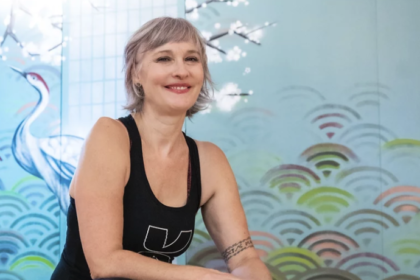
Kyla Helgeland Alexander
Kyla Helgeland Alexander brings strength coaching, aerial arts, and a midwifery-informed understanding of core and pelvic floor function into a studio built for people who need fitness to be more individual, more educational, and less intimidating.
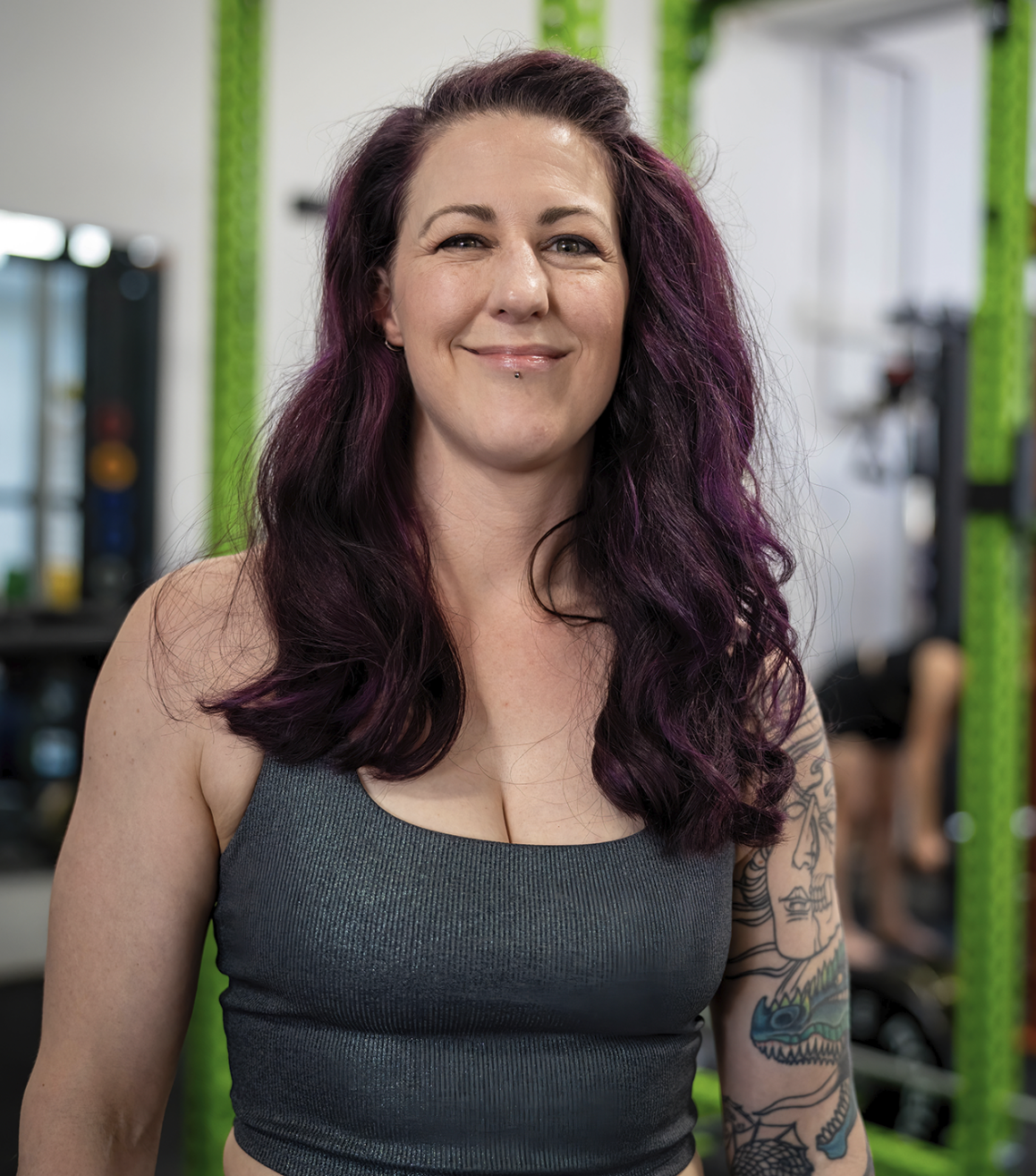
Kyla grew up active in the Pacific Northwest and found strength training more seriously after pregnancy and postpartum changes pushed her to learn how to feel strong in her body again. Her later work as a midwife expanded that education into core and pelvic floor function. She is also an aerialist and aerial coach, and she co-runs Misfit Strength & Circus with her husband, Thomas Alexander.
Meet people where they are, teach them how their bodies work, build mobility and stability underneath progressive strength, and create a space where someone does not need to look or move a certain way to belong.
Inclusive strength coaching, hypermobility-informed programming, neurodivergent-friendly support, core and pelvic floor education, pregnancy and postpartum training, beginner lifting, progressive overload, aerial arts, circus skills, and movement confidence.
About This Spotlight
Fitness Living Magazine™ selected this Spotlight for Misfit Strength & Circus’s inclusive coaching model, hypermobility-aware strength preparation, core and pelvic floor education, beginner-friendly teaching, circus arts integration, and clear effort to make clients who feel out of place in conventional gyms feel understood before they are challenged.
Fitness Living Magazine™ publishes these features to place local fitness leaders on the record about how their programs operate, what clients experience, what standards guide the coaching, and what makes the business relevant to its local community.
Source material for this Spotlight consisted of the recorded Fitness Living Magazine™ editorial interview with Kyla Helgeland Alexander, the existing published Misfit Strength & Circus Spotlight, supplied photo and caption assets, the customer review provided for editorial use, and the official Misfit Strength & Circus website supplied in the source package.
This feature is editorial content and is not medical advice. Training descriptions, methods, and outcomes reflect the featured expert’s account and individual experiences, and results differ from person to person. Readers with medical concerns should consult an appropriate qualified healthcare professional before beginning or materially changing an exercise program.