This Forge CHS Charleston review examines the gym’s locally owned 24/7 model, organized training environment, strength-first coaching, limited membership, and no-chaos culture in West Ashley.
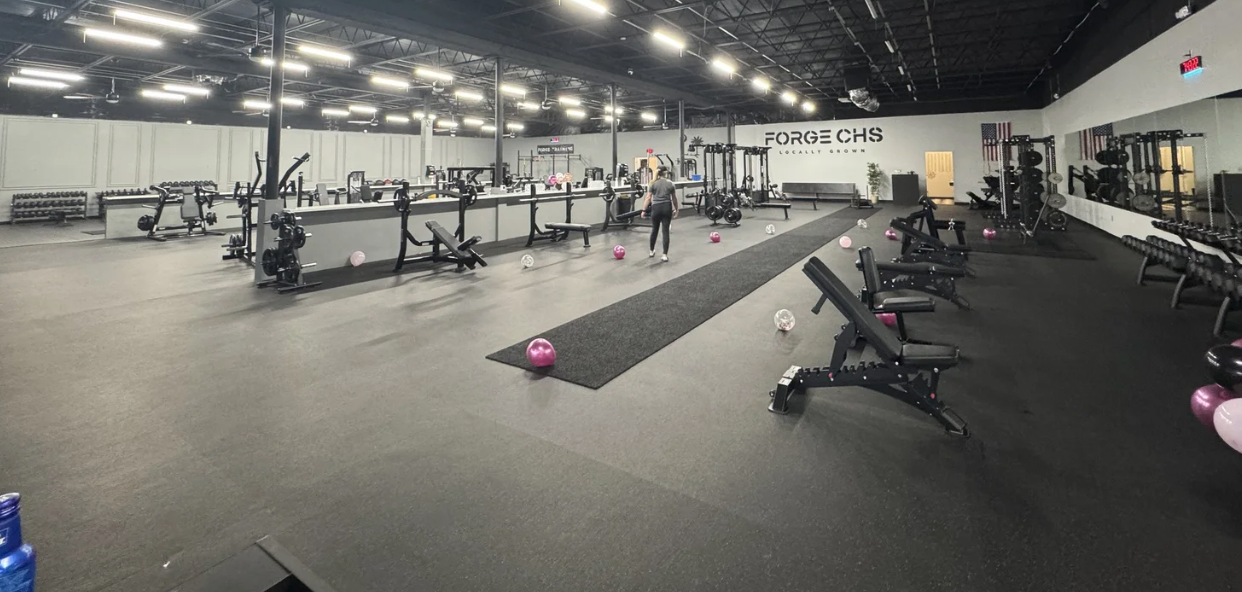
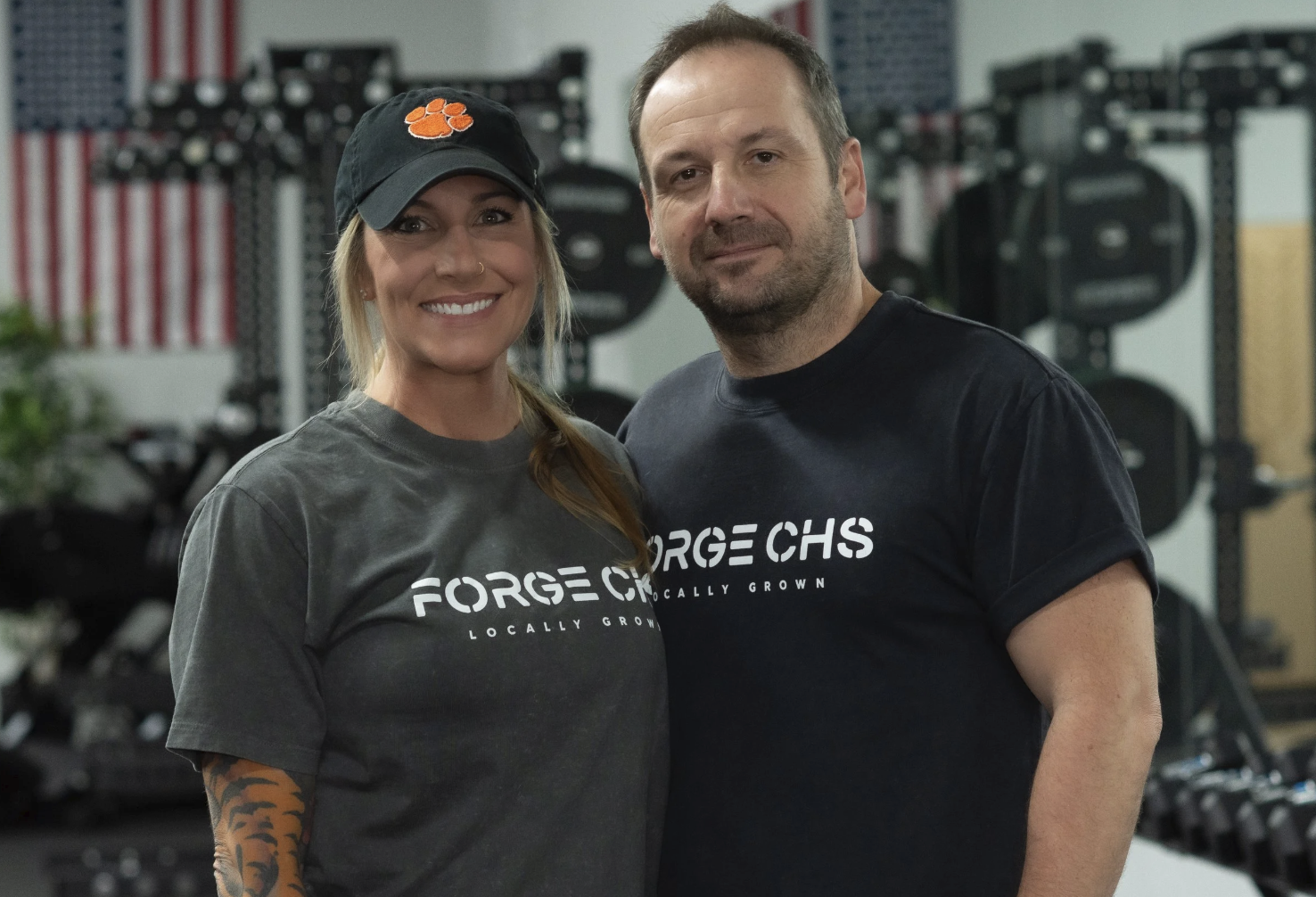
She and co-founder Christian Wolf built the 10,000-square-foot facility themselves, with limited membership, secure 24/7 access, an organized equipment layout, and a culture designed to feel calmer than the chain-gym environments Tiffany associated with crowds, waiting, filming, and intimidation. The result is serious about training without asking members to accept chaos as the price of belonging.
“Clean, convenient, and no chaos. Locally owned.”Tiffany Dennis / Forge CHS
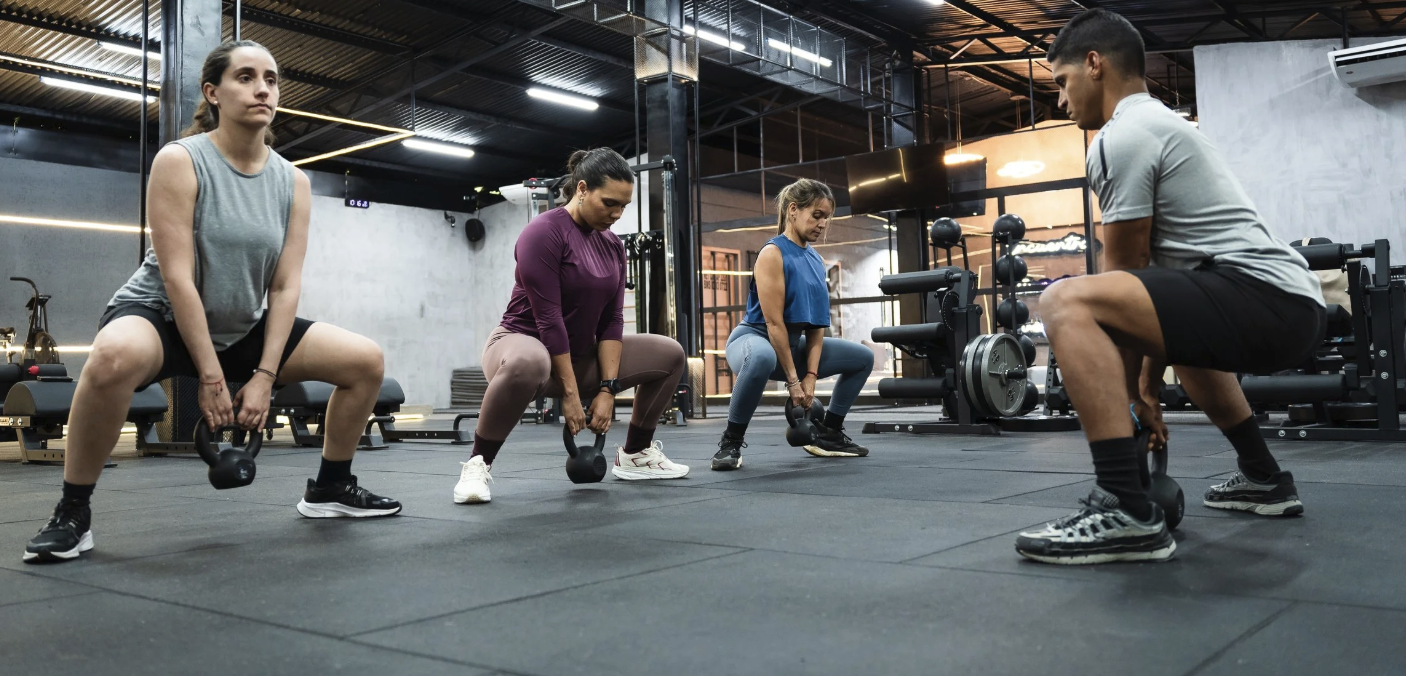
The first signal is order. Tiffany described the facility as immaculate, professional, and intentionally easy to navigate. Equipment is placed with purpose, the floor remains open enough to move through, and the environment is meant to help a first-time lifter understand where to begin rather than feel swallowed by the room.
The second signal is access without congestion. Forge CHS operates around the clock, but Tiffany said membership is capped to protect the atmosphere. At the time of her April 2026 interview, the business was already more than halfway toward its 650-member ceiling in less than nine months.
The deeper signal is local accountability. Tiffany said members look after the facility and one another when the owners are not present. In a gym without televisions, tripods, or a culture built around filming, shared responsibility becomes part of the member experience.
Tiffany brings roughly two decades in fitness, most of it developed inside a locally owned Charleston gym before Forge CHS. Her leadership focus is protective: keep the space clean, make strength approachable, help nervous members become comfortable enough to ask questions, and preserve a community whose members treat the gym as a shared home.
Inside The Forge CHS Community Standard
Tiffany did not describe community as a social calendar or a marketing phrase. She described members spotting one another, working in on equipment, saying hello, protecting the facility after hours, and helping a nervous newcomer feel less exposed. That behavior is what turns a 24/7 room into a locally accountable training culture.
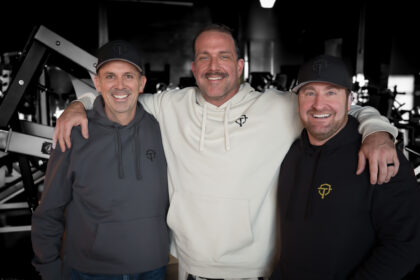
Forge CHS is a locally owned 24/7 gym in West Ashley, Charleston, founded by Tiffany Dennis and Christian Wolf and designed around strength training, organized access, limited membership, and a welcoming culture without the crowds or filming atmosphere Tiffany associated with larger chain gyms.
The business combines independent gym access with one-on-one coaching, strength and conditioning classes, mobility, nutrition support, and youth athlete programs inside a 10,000-square-foot facility.
Its current official website presents a free first workout for local clients during staffed hours, along with no contracts, no sign-up fees, and no cancellation fees.
Tiffany said she had worked in fitness for about twenty years, including roughly seventeen years at a locally owned gym. When that facility was acquired by Crunch, she felt displaced from the kind of owner-led environment where she wanted to continue her career.
The opening of Forge CHS also carried personal meaning. Tiffany said she wanted to honor the late owner of the former gym and keep faith with members who had trained beside her for more than a decade. She and Christian invested their money, time, and relationship in the build, completing much of the 10,000-square-foot facility without hiring out the labor.
A Clearer Path Through A 10,000-Square-Foot Gym
This profile examines how Forge CHS uses a large but ordered floor, 24/7 access, limited membership, scalable programming, and local accountability to make serious training feel easier to enter and easier to sustain.
Forge offers the equipment and operating hours of a larger gym while limiting membership and protecting a cleaner, quieter, more personally accountable atmosphere.
The model can serve independent lifters, personal-training clients, class members, beginners seeking clarity, and people whose schedules make 24/7 access practical.
Tiffany’s standard connects strength training with organized space, coach availability, no filming culture, and members who help protect the experience together.
Why Forge CHS Had To Stay Local
Tiffany said national chains had changed Charleston’s fitness landscape, pushing aside many of the locally owned facilities where relationships and long-term trust shaped the experience. Her response was not to build a smaller imitation of the chain model. It was to protect the local qualities she associated with Charleston itself: kindness, welcome, accountability, and recognizable ownership.
That choice made growth more deliberate. Many early members followed from Tiffany’s former gym, then spread the word. Social media documented the build-out, but the business grew largely through organic relationships. She acknowledged that slower visibility was difficult, yet said the people who arrived were varied in age, appearance, and profession while sharing a responsibility toward the space.
The No-Chaos Model Behind The Experience
The no-chaos idea is not a decorative slogan. It is built into the operating choices. Membership is limited. The facility runs without televisions and without tripods or routine filming. Equipment is organized to make the next step legible. Secure 24/7 access removes schedule friction, while staffed hours and coaching provide a human point of contact.
Tiffany also described the member base as protective. When the owners leave, members are trusted to take care of what she called the house and to take care of each other. That shared responsibility matters because convenience alone does not create belonging. The culture depends on people using the freedom of 24/7 access without turning the gym into an anonymous room.
The training system follows the same logic. Traditional strength work is the anchor, then balance, core training, conditioning, mobility, and functional movement are added according to the person. The aim is variety with purpose, not novelty for its own sake.
From Intimidation To Ownership
The early win at Forge CHS is often social before it is physical: a nervous member enters quietly, begins saying hello, asks how to use a machine, and becomes comfortable enough to take ownership of the training experience.
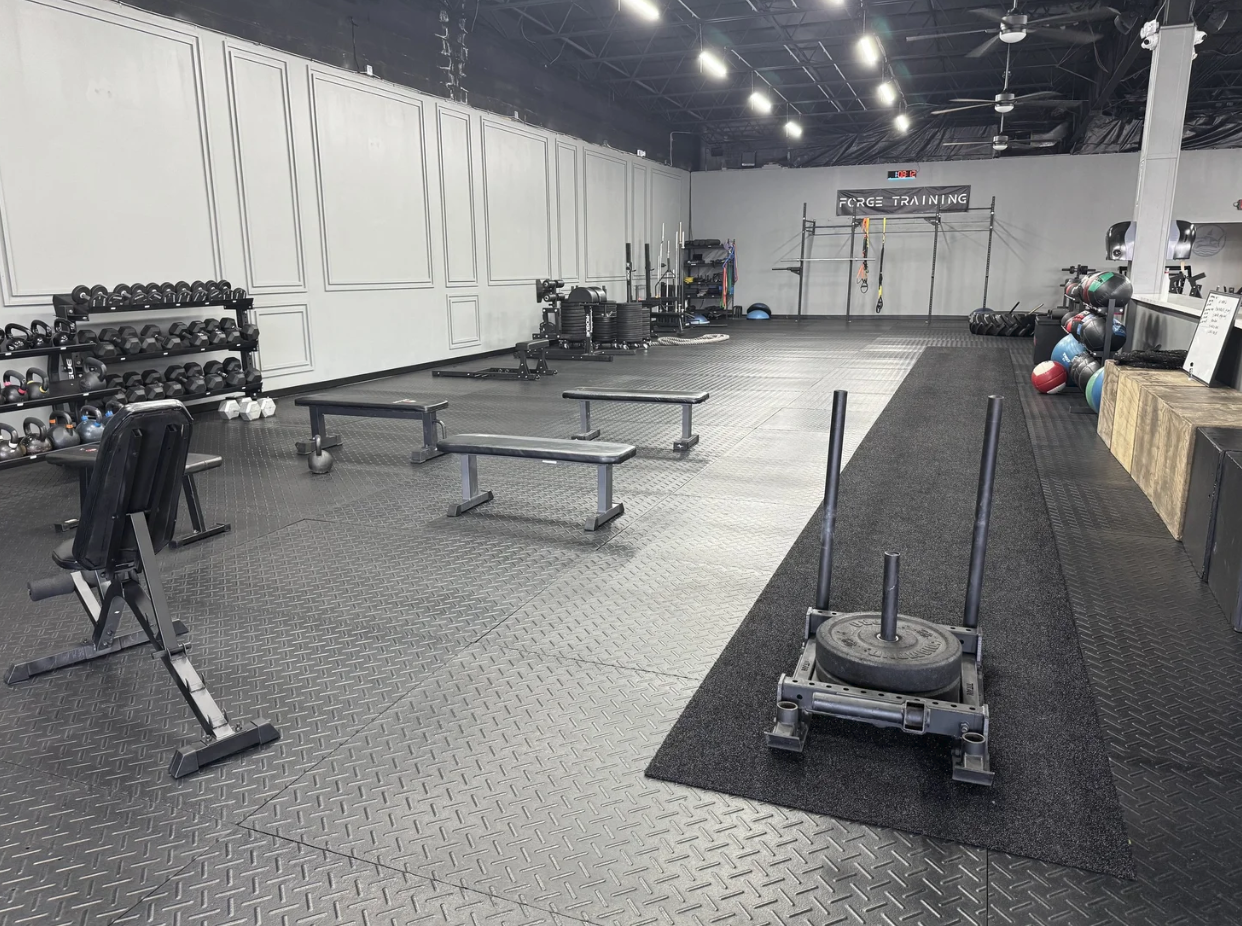
Operationally, that shift is supported by purposeful equipment placement, coaches who can answer questions, programs that can fit different schedules, and a no-filming environment intended to lower the sense of being watched. Tiffany said a novice should be able to find a clear path rather than feel overwhelmed by the room.
Strength First, Then A Well-Rounded Life
When Tiffany was asked to name the training method she returns to most, her answer was strength training. Free weights, barbells, and machines form the base because strength is the quality she believes is hardest to replace. Around that base, she builds a hybrid program with conditioning, balance, core work, mobility, and functional movement.
Her description of results also moved beyond appearance. She wants people to feel lean, strong, capable, mobile, and able to use the body they are building. Those outcomes reflect her coaching philosophy and individual experiences, not guaranteed timelines or medical results.
Forge CHS’s local distinction is not only ownership or access. It is the effort to make a large, fully equipped gym feel governed by the same social expectations as a smaller neighborhood institution: know the place, respect it, help the next person, and leave the atmosphere intact.
What Forge CHS Offers
Forge CHS combines independent access with coached paths. Its current official website lists open-gym membership, personal training, group classes, mobility, nutrition coaching, and youth athlete programs, with a free first workout offered to local clients during staffed hours.
Who This Gym May Be A Good Fit For
Based on Tiffany’s interview and Forge CHS’s current operating model, the gym may be especially relevant to people who value serious strength equipment but want more clarity, flexibility, and social ease than a crowded chain environment provides.
People who dislike overcrowding, filming, waiting for equipment, or an anonymous big-box atmosphere may appreciate limited membership, an organized floor, and a culture built around shared responsibility.
Someone new to lifting or returning after time away may value clear equipment placement, scalable programming, and coaches who can answer questions before uncertainty becomes a reason to stop.
Members who need 24/7 access but still want personal training, classes, mobility, or nutrition support may find the mix practical for building a routine that can change with work and life.
“My absolute favorite gym. Clean facility, never too crowded, high quality machines and weights, and a super friendly environment. Also locally owned and operated.”
Confidence Is Part Of The Result
Tiffany’s proudest wins often begin before a weight changes. She described watching people enter the gym in a shell, uncertain about whether they fit, then slowly say hello, ask for guidance, and learn how to navigate the equipment. That change matters because confidence determines whether the facility becomes usable.
In her account, the member’s identity shifts from visitor to participant. A person who once felt exposed begins asking better questions, choosing a program, and understanding how to train for a specific goal. The result is not merely comfort; it is enough knowledge to act.
What Returning For Years Makes Visible
Tiffany reported a 90 to 95 percent retention rate across relationships extending a decade or longer, including one woman who has trained with her since the first session of Tiffany’s career. Those figures come from Tiffany’s interview account and were not independently audited by Fitness Living Magazine™.
The broader point is continuity. Forge CHS does not use long-term contracts to secure the next month. Members can leave. That makes a relationship lasting ten, fifteen, or nearly twenty years evidence of trust repeatedly renewed rather than access locked in by paperwork.
The 93-Year-Old Who Still Trains
One of Tiffany’s clearest examples of continuity is her oldest client, a 93-year-old man who still makes the trip to the gym himself.
According to Tiffany’s interview, he continues to drive himself, push the sled, and lift weights. She also said he has lived through a stroke and other health challenges, while training remains part of his life.
What Tiffany emphasized was not a medical claim or a dramatic before-and-after. It was the member’s continued agency: he still arrives, still trains, and still trusts the relationship enough to make strength work part of ordinary life.
The story reflects the outcome Forge CHS values most consistently. Strength is not presented only as appearance or performance. It is treated as a practice that can remain useful across changing ages, circumstances, and goals.
The People Protect The Place Together
Tiffany described a diverse membership in which people work in on equipment, spot one another, and look after the facility after hours. The social standard is uncomplicated: train seriously, respect the room, and help make the next person feel less alone in it.
Why No Chaos Matters
The absence of chaos changes the psychological cost of a workout. A member who expects crowds, dirty equipment, filming, or a wait for a rack has to spend attention managing the room before training begins. Forge CHS is designed to remove as much of that friction as possible.
That does not make the gym quiet in the sense of being passive. Group classes, free weights, sled work, and conditioning still create energy. The distinction is that the energy is supposed to come from training and community rather than from congestion or spectacle.
Why This Matters In West Ashley
West Ashley gives the model a practical local context. Tiffany described a place for professionals, younger and older, who want to arrive, complete an efficient session, and continue with the day without parking struggles, lines, or an intimidating atmosphere. The Savannah Highway location and 24/7 access make convenience part of the local proposition.
Local ownership also gives members a visible line of accountability. When the gym is clean, the owners are present in the promise. When a member needs help, the coaching team is not an abstract corporate layer. That proximity is part of what Tiffany wanted to preserve when larger chains changed Charleston’s fitness market.
For a reader comparing West Ashley gyms, the distinction is concrete: serious equipment, limited membership, no contract, 24/7 access, multiple coaching paths, and an explicit attempt to keep the environment organized, welcoming, and free from filming culture.
Questions Readers Ask
Who Founded Forge CHS?
Forge CHS was founded by Tiffany Dennis and Christian Wolf in West Ashley, Charleston. Tiffany brings roughly two decades in fitness, while Christian is identified in the supplied source package as co-founder and partner in building the business.
What Does This Forge CHS Charleston Review Highlight?
The Spotlight examines Forge CHS’s locally owned 24/7 model, limited membership, organized strength environment, no-filming culture, coaching options, member confidence, long-term relationships, and relevance to West Ashley.
Is Forge CHS Beginner-Friendly?
The interview and current official site both describe an environment designed to reduce intimidation. Equipment is organized, classes can be scaled, coaches are available, and a new member can speak with the team before a first workout.
What Training Does Forge CHS Emphasize?
Tiffany identifies traditional strength training as the foundation. The broader model also includes conditioning, mobility, balance, core work, functional movement, personal training, group classes, nutrition support, and youth athlete programming.
Does Forge CHS Require A Contract?
The current official website lists no contracts, no sign-up fees, and no cancellation fees. Membership options and terms should be confirmed directly with the business before joining.
What Is The Best First Step For A New Member?
Forge CHS currently invites local prospective members to reach out, share their goals, tour the facility, and try a first workout free during staffed hours. The team then helps the person review available plans and choose a next step.
Key Takeaways
Tiffany and Christian tied the business to visible owner responsibility, not merely a locally owned label.
Secure 24/7 access is balanced by limited membership and a floor organized to protect clarity and space.
Traditional strength work anchors a broader program that can include conditioning, mobility, balance, core training, and functional movement.
The member experience is designed to move someone from intimidation toward questions, capability, and long-term participation.
Conclusion
Forge CHS is a story about what local ownership is supposed to change. Tiffany Dennis and Christian Wolf did not simply put their names behind a gym. They tied the business to a daily promise about cleanliness, access, order, strength, and how members should feel when they walk through the door.
The stronger idea is restraint. Keep membership limited. Keep filming and spectacle out. Keep the floor understandable. Keep coaches close enough to help. Keep 24/7 access useful without allowing the room to become anonymous. In West Ashley, that combination turns convenience into a community standard.
Tiffany Dennis
Tiffany’s interview describes a fitness career shaped by roughly two decades in the industry, a long tenure inside a locally owned Charleston gym, and a training philosophy grounded in strength, functional capability, member confidence, and the protection of a clean, welcoming environment.
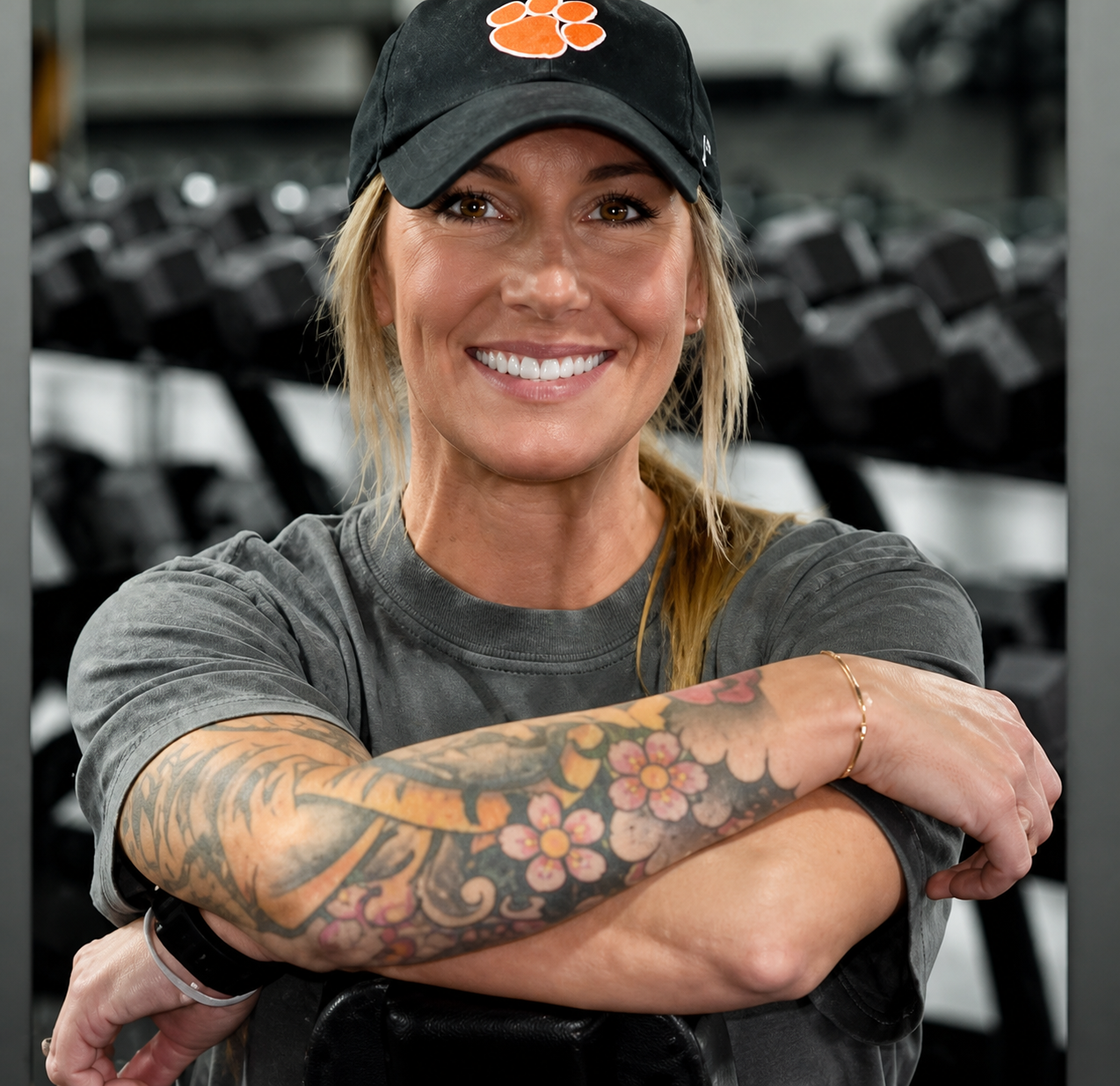
Tiffany said she had worked in fitness for about twenty years, including approximately seventeen years at a locally owned gym before founding Forge CHS with Christian Wolf. Her background in personal training and strength coaching informed a 10,000-square-foot facility designed to combine serious equipment with limited membership, secure 24/7 access, and a culture that remains approachable to new members.
Use traditional strength training as the foundation, add conditioning, balance, core work, mobility, and functional movement according to the person, and create a clear path that helps members feel capable rather than overwhelmed.
Local ownership, 24/7 access, organized strength training, one-on-one coaching, scalable group classes, functional fitness, beginner confidence, long-term client trust, limited membership, and a clean no-chaos environment.
About This Spotlight
Fitness Living Magazine™ selected this Spotlight for Forge CHS’s locally owned 24/7 model, deliberately limited membership, organized strength environment, source-supported long-term client relationships, clear beginner-confidence philosophy, and stated commitment to a clean, welcoming, no-chaos training culture in West Ashley.
Fitness Living Magazine™ publishes these features to place local fitness leaders on the record about how their programs operate, what members experience, what standards guide the coaching, and what makes the business relevant to its local community.
Source material for this Spotlight consisted of Fitness Living Magazine™’s recorded April 29, 2026 interview with Tiffany Dennis, the customer review supplied by Esprit Oree for editorial use, the provided Forge CHS photographs, founder information identifying Christian Wolf as co-founder, and Forge CHS’s official website, used to confirm current contact information, services, membership language, and the current first-workout entry point.
This feature is editorial content and is not medical advice. Training descriptions, methods, retention figures, health-history references, and outcomes reflect the featured interviewee’s account or the identified source material, and individual experiences differ. Readers should consult a qualified healthcare professional before beginning a new exercise or nutrition program when appropriate.