A systematic review released this week pooled 18 controlled trials and found that stretching, foam rolling or hands-on treatment at one point along the back of the body produced measurable remote flexibility gains at a site nobody touched. The remote flexibility effect was moderate and immediate, and the long-term picture is still thin.
Remote flexibility has long been gym-floor lore: roll your calf and your hamstring reach improves, work the sole of your foot and your forward bend changes. On 13 November 2026, Frontiers in Physiology published a systematic review with meta-analysis that put the claim through 18 controlled trials and 876 participants.
The review was led by Anna Gabriel at the Technical University of Munich, with co-authors at the University of Regensburg, LMU Hospital in Munich, the University of Graz in Austria and the University of Bayreuth. The team searched PubMed and Web of Science for controlled trials that measured remote flexibility along the posterior myofascial chain in healthy adults, and registered the protocol in advance on PROSPERO as CRD42023482938.
Sixteen randomized controlled trials and two further controlled trials met the inclusion criteria. Of the 876 participants, 528 were female and 268 male, with no information reported for the remainder. Every trial was rated at low to medium risk of bias using the RoB2 and ROBINS-I tools, and the team pooled the results using robust variance estimation.
Across the 15 studies that contributed acute data and 46 separate effect estimates, a single local treatment shifted remote flexibility by a standardised mean difference of -0.74 (95% CI -0.95 to -0.54, p<.001). In the coding used by the review, that negative figure represents a moderate increase in range of motion at the untreated site.
At a Glance
- Published 13 November 2026 in Frontiers in Physiology, Exercise Physiology section.
- 16 randomized controlled trials plus 2 further controlled trials, covering 876 healthy adult participants.
- Pooled acute remote flexibility effect: SMD -0.74 (95% CI -0.95 to -0.54, p<.001), from 15 studies and 46 effect sizes.
- Manual techniques reached SMD -0.70 (95% CI -0.96 to -0.45, p=.002); stretching -0.62 (-1.25 to 0.01, p=.05); foam rolling -0.83 (-2.73 to 1.07, p=.15).
- Treating the plantar foot sole gave the largest change at -1.07 (-2.09 to -0.05); the calf -0.85 (-1.09 to -0.62); the suboccipital and cervical region -0.50 (-1.00 to -0.10).
- Sessions under 480 seconds produced -0.83 (-1.14 to -0.51, p<.001), slightly larger than sessions of 480 seconds or more at -0.64 (-1.01 to -0.28).
- Main caveat: only three trials examined long-term remote flexibility, and the authors describe those results as ambiguous.
What the Posterior Myofascial Chain Means in Practice
The posterior myofascial chain is the connective-tissue line running up the back of the body: the sole of the foot, the calf, the hamstrings, the lower back, and on into the tissue at the base of the skull. Anatomists have mapped it for decades. What has been argued over is whether pulling on one link changes remote flexibility in the others. Therapists and coaches have built whole systems on the assumption that it does, prescribing foot work for tight hamstrings and calf work for a stiff neck, largely on clinical observation rather than pooled trial data.
That is the question this review set out to settle. Each included trial applied a treatment at one location, then measured range of motion somewhere else along the line, comparing the result against a placebo, an inactive control or a sham procedure.
How Big the Remote Flexibility Effect Was
A remote flexibility effect of 0.74 standardised units sits in what sports scientists usually call the moderate band. It is not the kind of change that rewrites a training programme, but it is larger than the measurement noise in a sit-and-reach or ankle dorsiflexion test, and the confidence interval stayed clear of zero.
The remote flexibility estimate also held up against different comparison conditions. Against a placebo the pooled figure was -0.75 (95% CI -1.18 to -0.32, p=.01); against an inactive control it was -0.68 (-1.07 to -0.30, p=.02). Against a sham procedure the estimate was larger at -0.95, but the interval crossed zero (-2.42 to 0.51, p=.10), which reflects how few sham-controlled trials existed to pool.
The pooled remote flexibility estimate, drawn from 15 studies and 46 separate effect sizes measured away from the treated area.
Which Techniques Carried the Effect
Three families of treatment were pooled separately. Manual techniques, including hands-on work and tool-assisted variants, produced the most statistically secure remote flexibility estimate at -0.70 (95% CI -0.96 to -0.45, p=.002). Stretching came in at -0.62, with an interval that just touched zero (-1.25 to 0.01, p=.05).
Foam rolling produced the largest point estimate of the three at -0.83, but also by far the widest interval (-2.73 to 1.07, p=.15). That spread reflects how few rolling trials measured a distant outcome rather than any evidence that rolling fails. Meta-regression across the moderators returned broadly similar numbers, which argues against any one technique owning remote flexibility.
Fitness Living Magazine has previously covered a trial that pitted myofascial release against hamstring stretching in athletes, which tested much the same toolkit at the site of treatment rather than away from it.
Where on the Body the Treatment Landed
Treatment site mattered more than technique. Work on the plantar foot sole produced the largest pooled remote flexibility change at -1.07 (95% CI -2.09 to -0.05, p=.05), and calf treatment the most precise at -0.85 (-1.09 to -0.62, p=.01). Hamstring treatment reached -0.63 (-1.06 to -0.20, p=.02).
At the top of the chain, treating the suboccipital and cervical region produced -0.50 (-1.00 to -0.10, p=.03). Lower-back treatment gave a larger point estimate of -0.93, but its interval crossed zero (-2.18 to 0.32, p=.07). The outcome measures followed a similar pattern: total chain or hamstring range of motion at -0.80 (-1.16 to -0.45, p=.003), ankle range at -0.62 and cervical range at -0.69.
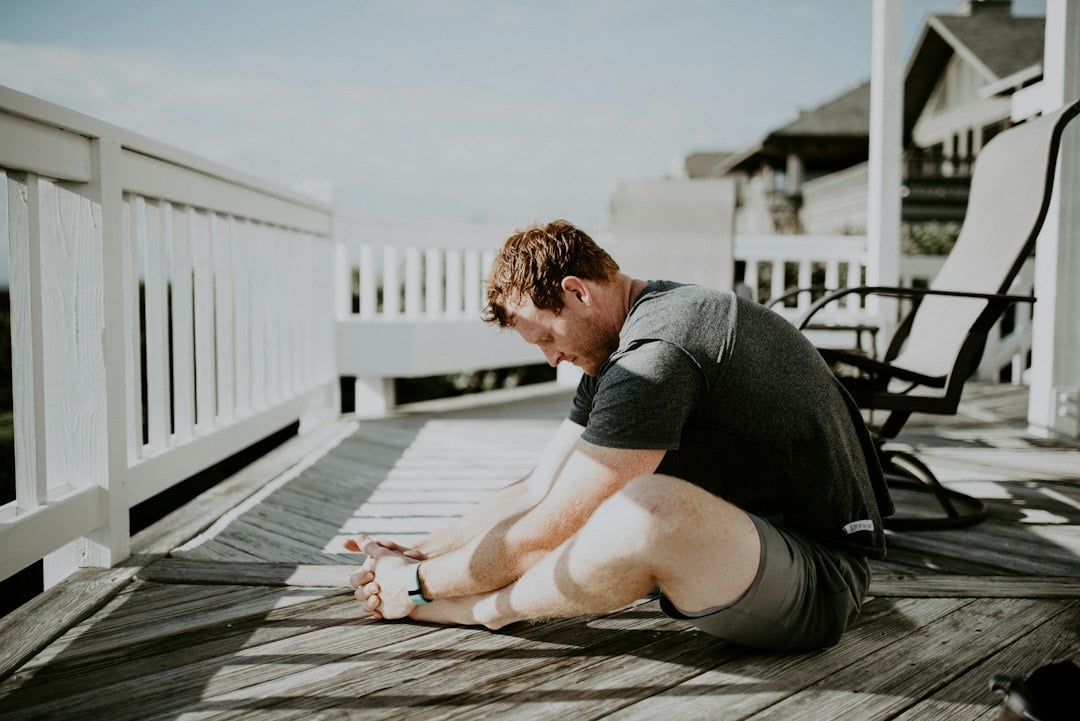
Why the Direction of Travel Mattered
One of the more interesting splits concerns direction. When treatment was applied low and measured high, from the foot or calf upward, the remote flexibility effect was -0.89 (95% CI -1.19 to -0.60, p<.001). Working from the top down produced a smaller -0.58 (-0.91 to -0.26, p=.007).
Timing behaved sensibly too. Range of motion measured within five minutes of treatment showed -0.65 (-0.90 to -0.40, p=.003), fading slightly to -0.54 (-0.91 to -0.17, p=.03) beyond five minutes. Earlier reporting on static stretching after a lifting session described a similarly short window for its measured effects.
What Remote Flexibility Does Not Yet Explain
The review stops short of a mechanism. Mechanical pull transmitted along connective tissue is one candidate; a nervous-system response that lowers resistance to stretch across a whole region is another. Nothing in the pooled data separates the two. The two explanations also carry different practical implications: a mechanical chain would reward sustained pressure along the line, while a neural response would reward almost any tolerable input to the region, which is one reason the technique comparisons matter.
Nor does an acute finding tell you whether repeated sessions build anything durable. Only three of the 18 trials followed participants over weeks, and those pointed in different directions. On current evidence, remote flexibility is a measurable immediate response rather than a documented training adaptation, much as work on how quadriceps muscle stiffness shifts with joint position describes a state rather than a lasting change.
How to Use Remote Flexibility Work in a Warm-Up
For a reader deciding what to do before training, the review supports one modest, specific conclusion. If a joint is stiff and treating it directly is painful or impractical, treating elsewhere along the same chain is a reasonable alternative that has now been tested rather than assumed. It is not a substitute for direct work where direct work is available.
The trials were also short on dose-finding. Treatment durations, body sites and measurement windows varied so widely between studies that the review could only compare broad bands rather than recommend a protocol. A few practical points still follow from the numbers rather than from theory:
- Short sessions were enough. Under eight minutes of treatment slightly outperformed longer sessions in the pooled analysis.
- Use it close to the activity. The measured benefit was largest within five minutes and smaller after that.
- Working upward from the foot and calf produced the larger effect in this dataset.
- Expect range of motion, not strength or injury protection. Neither was measured here.
Slotting two or three minutes of calf or foot work into an existing routine is low-cost and low-risk, and it sits comfortably alongside the kind of movement preparation tested in a structured basketball warm-up program. None of this replaces individual guidance: anyone managing an injury, a recent operation or persistent pain should work with a qualified clinician rather than self-prescribing from a meta-analysis.
The Fitness Living Takeaway
Treating one point along the back of the body produced a moderate, immediate improvement in remote flexibility at an untouched site, pooled across 18 controlled trials and 876 adults.
The effect is solid enough to use and small enough to keep in proportion. It was measured in young, healthy people, it faded within minutes, and only three trials looked beyond a single session. Treat remote flexibility as a useful warm-up option rather than a replacement for training the tissue you actually want to change.
Research & Sources
- Frontiers in Physiology: Acute and chronic remote flexibility effects along the posterior myofascial chain
- Study DOI
- Images: LittPro Inc / Unsplash; Scott Broome / Unsplash
This article summarizes peer-reviewed research for general information and is not individualized medical or exercise advice.