Nutrition & Performance · Evidence Explainer · November 14, 2026
A scoop of beetroot powder tells you how much powder you have. It does not, by itself, tell you how much nitrate is inside.
For someone comparing a juice shot, a powder and a gel, that distinction matters. An ingredient name and a serving weight answer different questions from a measured nitrate amount. Before asking whether a supplement might help a workout, establish what the serving actually contains.
What a product analysis found
In a 2019 laboratory study, Edgar J. Gallardo and Andrew R. Coggan measured nitrate and nitrite in 45 lots of 24 beetroot products from 21 companies. Purchases ran from September 2017 through June 2018. The sample included powders, mixed beverages, concentrates and bulk juices—not exercise participants.
Nitrate per serving differed roughly fiftyfold across products. That comparison partly reflected serving assumptions: researchers used manufacturers’ recommendations for most products but assigned bulk juice a 500-milliliter serving. Different lots of the same product also varied.
This was a composition study, not a trial of strength, race times or recovery. It cannot show that one tested brand improved performance more than another. With only one to three lots per product, it also cannot describe every batch. Treat it as a historical demonstration of variability, not a shopping ranking for today’s formulas.
Why the ingredient name is not enough
The Australian Institute of Sport’s guidance explains that vegetable nitrate content varies with growing conditions, soil and time since harvest. It also notes that few beetroot supplements have undergone independent nitrate testing. Home-prepared beetroot foods or juice do not necessarily provide a reliably known amount.
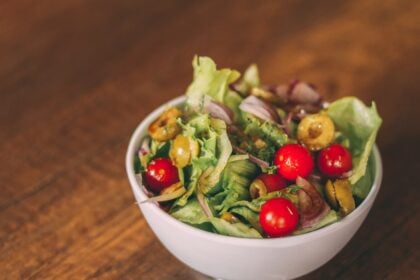
That is a measurement issue, not a reason to avoid vegetables. The same guidance encourages vegetable intake for its broader benefits. A beetroot salad can belong in an ordinary meal without being treated as a precisely standardized sports supplement.
Three questions for the label
What is being measured? Look for nitrate itself, rather than assuming a stated weight of beetroot powder is equivalent. A larger scoop does not automatically establish a larger nitrate amount.
What counts as one serving? Check whether the stated amount refers to a scoop, an entire container or multiple servings. Comparisons only make sense when their units and serving sizes are clear.
What supports the number? Ask the manufacturer whether nitrate content has been measured and whether the evidence applies to the product and batch being sold. Missing information leaves uncertainty; it does not prove the product contains no nitrate.
The useful distinction: Establishing content comes before evaluating a performance claim. Even a measured nitrate amount does not guarantee that an individual workout will improve, and a study’s protocol is not a personal dosing prescription.
Sources and scope: Gallardo and Coggan, International Journal of Sport Nutrition and Exercise Metabolism (2019), 29(4), 345–349. DOI: 10.1123/ijsnem.2018-0223. Methods and results reviewed in the accessible indexed full text. Australian Institute of Sport, dietary nitrate/beetroot juice guidance, accessed November 14, 2026. This is an evidence explainer, not a report of a new trial or a current product endorsement.