A randomized crossover trial found that adding 12 minutes of static stretching after upper-body lifting changed the first 30 minutes of vascular and autonomic recovery in healthy young men.
Static stretching after lifting is often treated as a flexibility habit, not a cardiovascular recovery strategy. A study published September 3 in the European Journal of Applied Physiology tested whether stretching immediately after resistance training changes how quickly selected vascular and heart-rate-variability measures return toward baseline.
Twenty-seven healthy, physically active men completed three laboratory conditions in randomized order: resistance training alone, the same resistance training followed by static stretching, and a seated control condition. The lifting session used bench press and seated biceps curls for four sets of eight repetitions at an eight-repetition-maximum load. The stretching condition then added 12 minutes of static stretches for the chest and elbow flexors.
Researchers measured flow-mediated dilation of the brachial artery, artery diameter, heart-rate variability, heart rate and mean arterial pressure before the session, immediately afterward and 30 minutes later. The stretching condition was associated with an earlier return toward baseline in several endothelial and autonomic measures.
At a Glance
- The peer-reviewed randomized crossover trial was published September 3, 2026.
- Twenty-seven healthy, active young men completed resistance training, resistance training plus stretching, and control sessions.
- The stretching protocol lasted 12 minutes and targeted the muscle groups used in the workout.
- Flow-mediated dilation fell after lifting alone and was still below baseline at 30 minutes, while that decrease was not observed after lifting plus stretching.
- Two heart-rate-variability measures also returned toward baseline sooner after the stretching condition.
What the Static Stretching After Lifting Trial Actually Tested
This was not a study of soreness, muscle growth or next-day performance. It focused on the immediate cardiovascular recovery period after a relatively demanding upper-body strength session.
The resistance protocol was intentionally simple: bench press and seated biceps curl, four sets of eight repetitions each, using the maximum load participants could sustain for eight repetitions. In the stretching condition, participants then performed static stretches for the pectoral and elbow-flexor muscles, with four 30-second holds per stretch and 30 seconds of rest between efforts.
The study design is useful because every participant completed every condition. That reduces some of the person-to-person noise that can complicate comparisons between separate groups.
The post-workout stretching protocol lasted 12 minutes. Researchers then compared vascular and autonomic recovery with resistance training alone.
What Changed During the First 30 Minutes
After resistance training alone, flow-mediated dilation fell immediately and remained below baseline 30 minutes later. Flow-mediated dilation is an ultrasound-based measure of how well an artery widens in response to increased blood flow and is commonly used as a marker of endothelial function.
That same reduction was not observed when the lifting session was followed by static stretching. Brachial artery diameter also returned to baseline by 30 minutes after lifting plus stretching, while it remained elevated after lifting alone.
The researchers saw a similar difference in selected heart-rate-variability measures. Both resistance conditions initially reduced high-frequency power and RMSSD, measures often used to describe cardiac vagal modulation. At 30 minutes, those measures were still below baseline after lifting alone but had returned toward baseline after lifting plus stretching.
Mean arterial pressure decreased immediately after both exercise conditions and returned toward baseline by 30 minutes. In other words, the stretching condition did not produce a broad advantage across every cardiovascular measure.
Why Faster Recovery Is Not Automatically Better
The authors themselves are careful about this point. Temporary changes in vascular function and heart-rate variability after hard exercise are not necessarily harmful. In healthy people, they can be part of the normal stress-and-recovery response to training.
A faster return to baseline therefore should not be interpreted as a guaranteed health benefit. The trial did not measure whether the stretching group recovered better for the next workout, built more muscle, improved cardiovascular fitness or experienced fewer adverse events.
It is possible that the stretching changed local blood flow, shear stress or nitric-oxide signaling, but those proposed mechanisms were not directly measured. The authors describe them as plausible explanations rather than demonstrated causes.
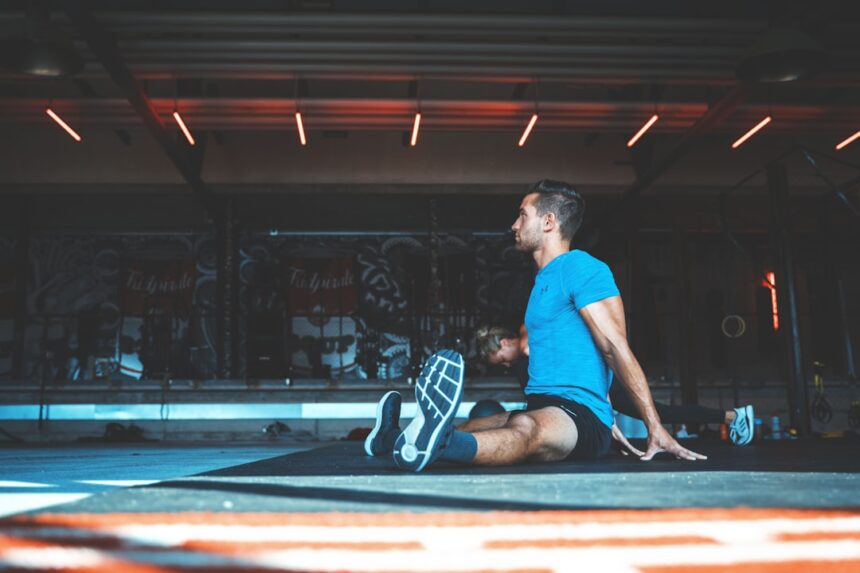
Static stretching after training may be a reasonable cooldown choice if you enjoy it or want to work on flexibility. This study does not establish that everyone needs a 12-minute stretching routine after lifting.
What the Findings Mean for Lifters
For fitness enthusiasts, the most useful takeaway is modest: post-workout static stretching appears capable of changing short-term vascular and autonomic recovery after resistance exercise.
That is different from the common claim that stretching “flushes out” soreness or prevents injury. Those ideas were not tested here. The new trial adds a cardiovascular dimension to stretching research, but it does not replace the broader principles that matter most for strength training: progressive overload, appropriate technique, adequate recovery and a program you can sustain.
Recent Fitness Living reporting on resistance training and muscle hypertrophy showed how deeply repeated lifting can remodel type II muscle fibers over eight weeks. The new stretching study looks at a very different time scale—the first half hour after a single workout.
That contrast is useful. Acute recovery signals can be interesting, but long-term training outcomes are determined by repeated sessions over weeks and months.
What the Study Cannot Tell Us
The sample included only 27 healthy, physically active young men. The results may not apply to women, older adults, beginners, people with cardiovascular disease or people taking blood-pressure medication.
The workout used only two upper-body exercises, and the stretching protocol was specific to those trained muscles. A lower-body session, full-body workout, different loading scheme or shorter stretch routine could produce a different response.
The study also tracked recovery only through 30 minutes. It cannot tell us what happened later that day or how long any differences lasted. Heart-rate variability is an indirect measure of autonomic modulation, and the trial did not directly measure sympathetic activity, nitric oxide, oxidative stress or baroreflex sensitivity.
Finally, the authors noted relatively low reproducibility for their flow-mediated-dilation measurements. That does not invalidate the result, but it adds another reason to treat the finding as an early physiological clue rather than a finished prescription.
A Practical Way to Use This Research
If static stretching already fits your training, there is little reason to remove it based on this study. A short cooldown that targets the muscles you trained may support flexibility and, according to this trial, may also alter early vascular and autonomic recovery.
If you dislike stretching, the evidence is not strong enough to say you are missing a proven recovery requirement. A sensible strength program, sufficient rest between sessions, sleep and nutrition remain far more established priorities.
The trial also should not be used to justify aggressive stretching immediately after heavy lifting. The participants used a standardized protocol under supervision. More intensity is not automatically better.
The Fitness Living Takeaway
In 27 healthy young men, adding 12 minutes of static stretching after upper-body resistance training was associated with faster recovery of selected endothelial and heart-rate-variability measures over 30 minutes.
That makes post-workout stretching an interesting low-cost recovery tool, but not a proven way to improve long-term cardiovascular health, muscle growth or performance. The study is best viewed as a fresh clue about what happens immediately after lifting—not a new rule every lifter must follow.
Research & Sources
- European Journal of Applied Physiology: Vascular and autonomic recovery after resistance training with and without post-exercise static stretching
- Permanent DOI for the randomized crossover trial
- ClinicalTrials.gov registration: NCT07364149
- Image: Marvin Meyer / Unsplash
This article reports on peer-reviewed exercise science for general information. It is not individualized medical or training advice.
The Fitness Living Weekly
New Fitness Living Spotlights, important fitness news, research and independent reporting, delivered directly to your inbox.
One considered edition each week.
Do You Lead a Fitness Business Worth Knowing?
Fitness Living Magazine features independent gym owners, fitness trainers, and Pilates studio owners strengthening their local communities.