Recognized by Fitness Living Magazine™ For instructional access, injury-conscious coaching, small-group teaching, and local fitness leadership.
The two women had trained together since their children were small, and when the studio they shared closed during the pandemic, they opened their own on the Santa Cruz Westside. Sally brought a martial arts background. Deana brought a soccer player’s respect for functional movement. Both brought the same conviction: a fitness studio should not require confidence as a prerequisite.
“We want everyone to walk into our studio and feel that they belong, that they don’t need to have this expertise. We will teach them.”Sally Larter, Co-Owner / Westside Fitboxing
A small room, a bag of their own, and instructors who introduce themselves before class. New clients arrive ten to fifteen minutes early to learn the format, wrap their hands, and locate the mats and weights.
Nobody is expected to know how to punch. Sally runs free Saturday how-to sessions capped at four people so each client receives close attention, and she arranges weekday times for anyone who cannot attend. Instructors know when a newcomer is coming, greet them, watch their form, and answer questions before and after class.
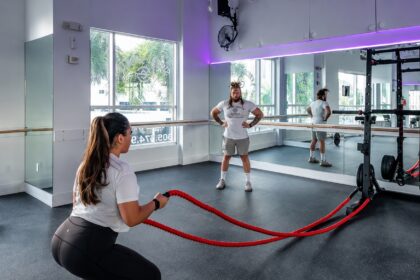
Clients also notice who shares the room. College students train beside people in their seventies. A client with Parkinson’s punches while others kick, with modifications offered as a normal part of class. Deana and Sally are often on the floor even when they are not teaching, and conversations continue in the parking lot after class ends.
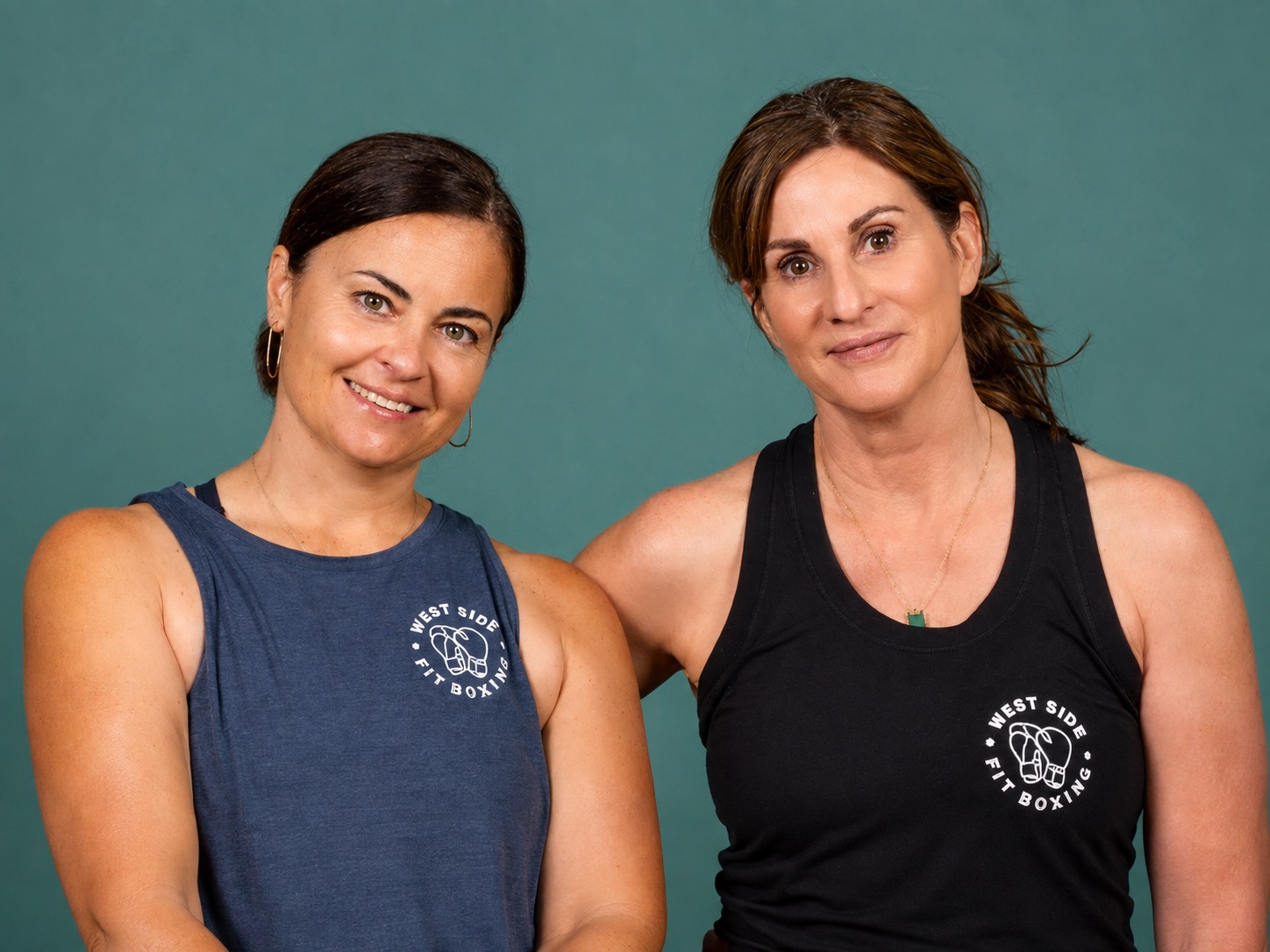
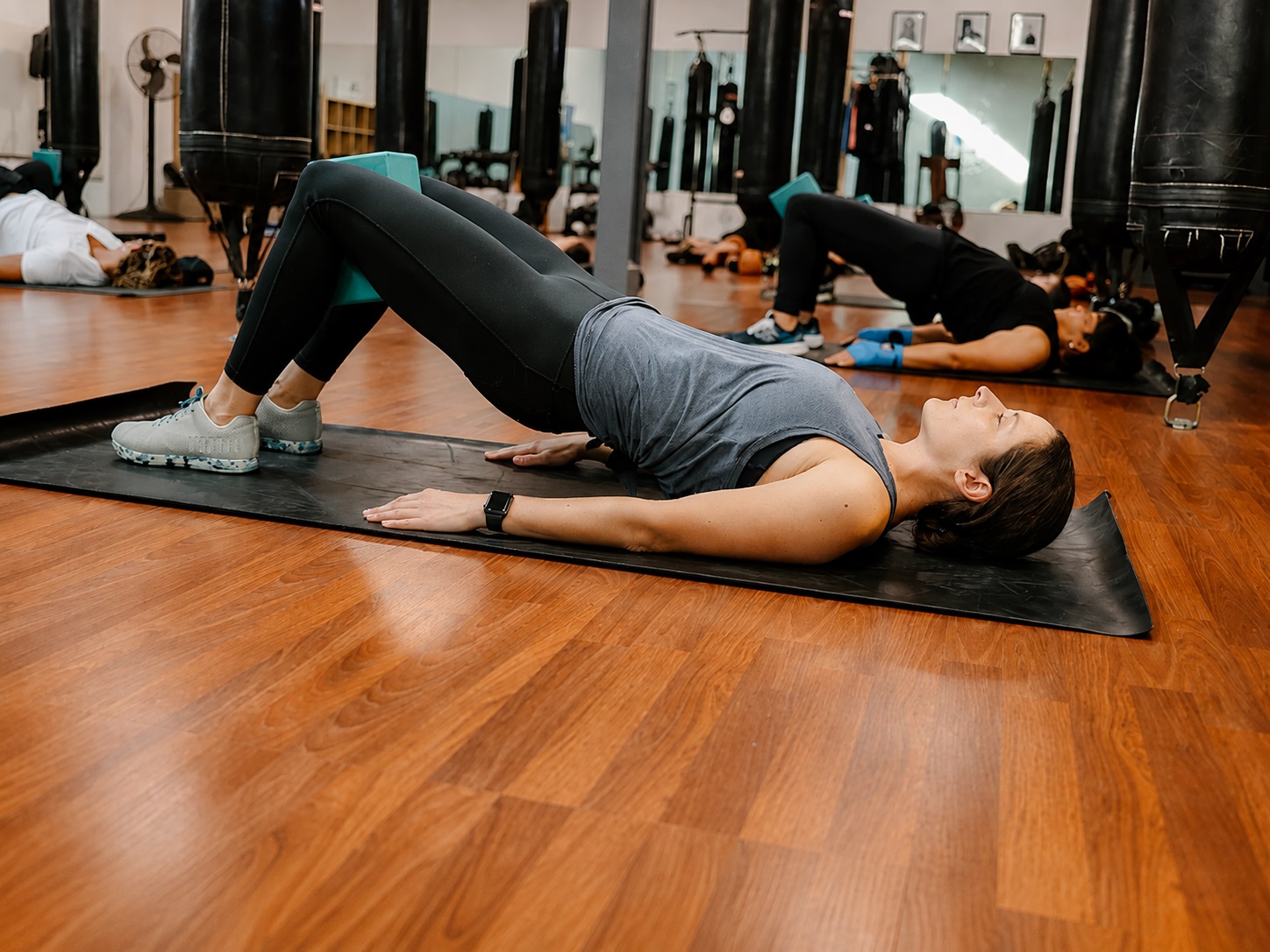
Sally Larter and Deana Rabiah run the studio around a single standard: teach the form first, then let the workout get hard. That owner-led approach gives Westside Fitboxing its unguarded, instructional, and deliberately unintimidating identity.
The premise here is operational rather than motivational. Westside Fitboxing treats intimidation as something the environment itself can reduce: teach form before intensity, reserve a heavy bag for each client, keep instruction small, and make sure the instructor knows who is new before class begins.
Sally Larter and Deana Rabiah built that philosophy into a small Westside studio where beginners are taught before they are tested.
Creating a non-intimidating fitness environment sounds like a marketing line until you look at what it requires operationally. It means capping an instructional session at four people. It means telling every instructor which client is new that night. It means offering a modification before anyone has to ask for one. At Westside Fitboxing, the welcome is not a slogan on the wall; it is a set of decisions the owners make about how the hour is run.
Westside Fitboxing is a women-owned boutique studio on the Santa Cruz Westside built around a simple operating idea: teach first, then intensify.
Clients train on dedicated heavy bags, free how-to sessions are capped at four, and modifications are offered before anyone has to ask.
The result is a room where beginners, returning athletes, and older clients can train side by side without sparring or assumed experience.
Sally came to fitness kickboxing through martial arts rather than through fitness. Her training includes Muay Thai and a fourth-degree black belt, and for years the kickboxing work existed to keep her conditioning sharp for something else. When she later ran a studio with a business partner, it was the fitness kickboxing, not the martial arts curriculum, that drew the widest range of people through the door. That observation eventually shaped the business she runs today.
This profile looks at how two owners built a Santa Cruz studio around taught technique, personal heavy bags, and a room that does not ask anyone to prove themselves at the door.
Kickboxing technique is taught for fitness and stress relief, with no sparring, no partner contact, and no shared equipment.
College students, surfers and mountain bikers cross-training, working adults, and clients well into their senior years.
A small client base, owners on the floor, and free instruction make the studio unusually accessible for a boxing-style space.
Sally and Deana had been working out together since their children were young, first as participants and then as instructors in the same space. Deana, a former soccer player, had been looking for a way to stay fit that was genuinely enjoyable and surrounded by good people. When that studio closed during the pandemic, the two of them decided to open something narrower and more deliberate.
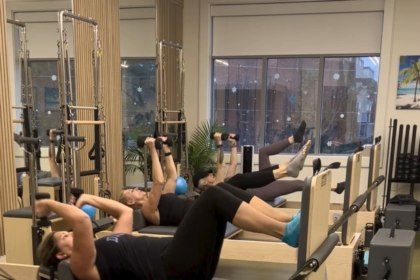
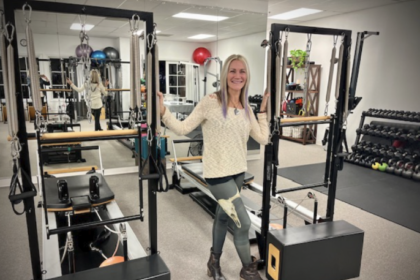
Westside Fitboxing dropped the martial arts curriculum entirely and kept the two things that worked: fitness kickboxing on heavy bags, and Deana’s CorePower+Strength program, a Pilates-inspired mat class built around core and total-body strength. The formats complement each other (some clients do both, many do one), and neither requires prior experience. What the owners wanted, from the first day, was a space where people could work hard without feeling assessed.
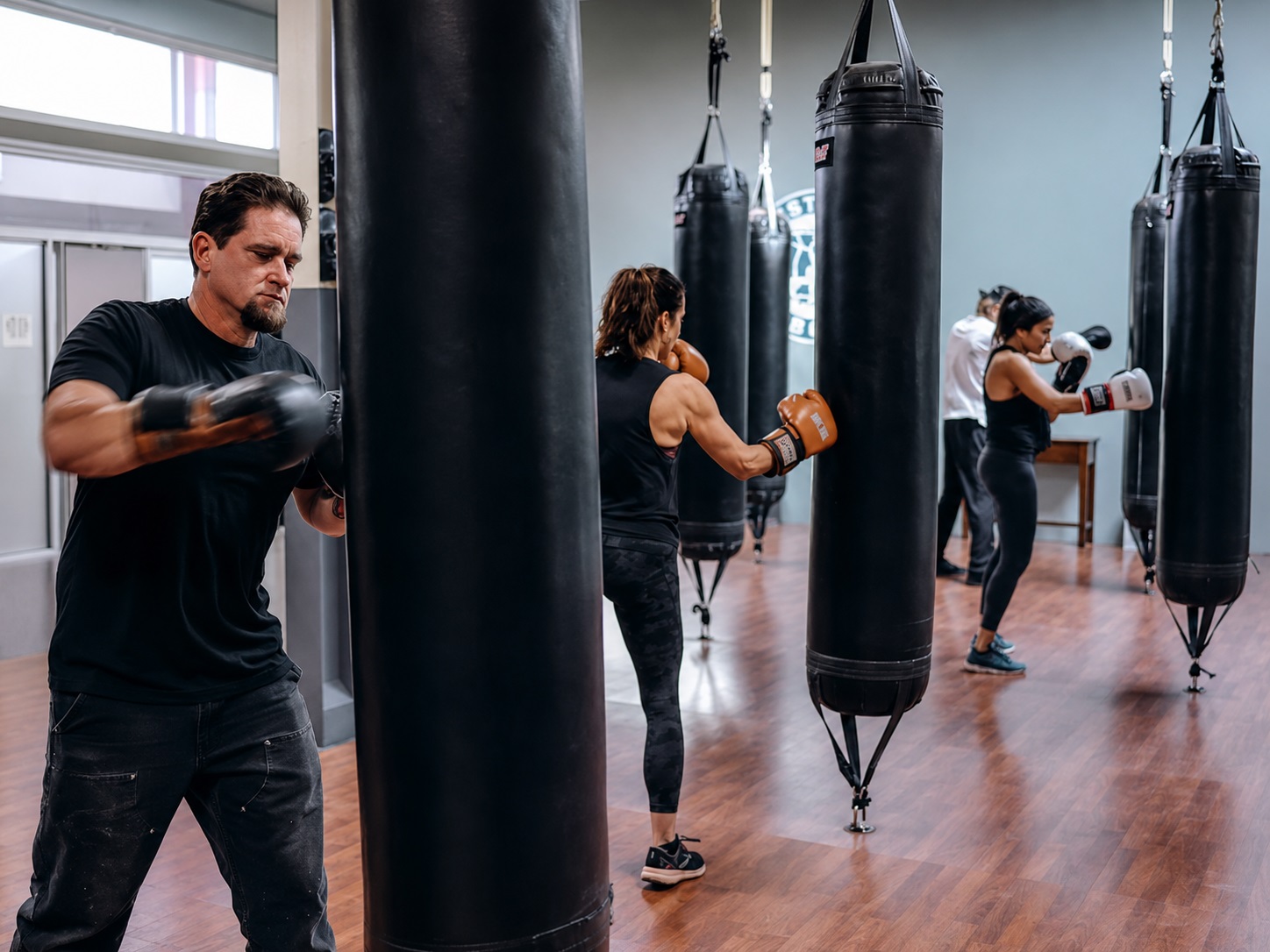
Ask Sally what actually separates the studio from other kickboxing options and she does not start with philosophy. She starts with equipment. Westside Fitboxing uses heavy hanging bags anchored at both the ceiling and the floor, one per client, for the whole session. She contrasts that with water-filled freestanding bags that swing under contact, with focus mitt work that requires clients to alternate and wait, and with classes that punch the air. In her view, each of those compromises either the workout or the client’s safety.
The absence of sparring is the other structural decision, and it is the one prospective clients ask about most. Both owners said they regularly hear from people who wanted to try kickboxing but did not want to worry about being hit or kicked. Removing contact does not soften the work. Clients spend thirty to forty minutes on the bag before moving into weights, core, and mat work, and the impact of striking a heavy bag remains part of the training effect.
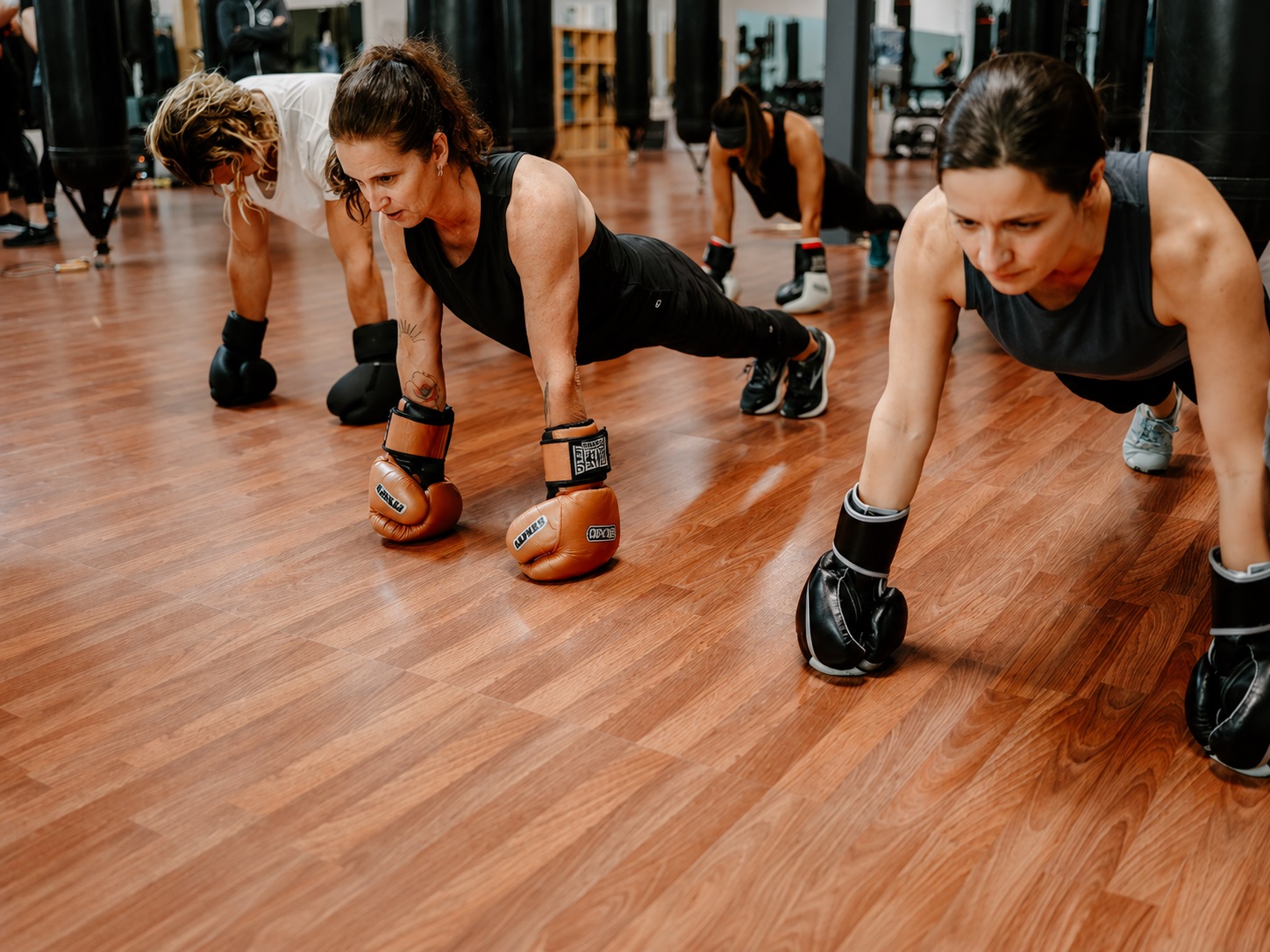
A client at Westside Fitboxing is meant to feel known rather than processed. The owners introduce themselves to newcomers, ask about injuries and training history, and flag new faces to whichever instructor is teaching.
One graduate student who trained at the studio during her time at UC Santa Cruz wrote the owners a letter before returning home and has since kept in touch about the training she carried with her.
Both owners describe form as the thing that gets lost in larger gyms unless a member is paying separately for a trainer. At Westside Fitboxing it is the first thing taught and the thing instructors keep watching: how a punch lands, whether a kick is loaded correctly, what a plank looks like under fatigue. The stated goal is twofold: clients get more from the workout, and they are less likely to hurt themselves doing it. Deana noted that the studio also works with clients returning from injury, where careful technique is not optional.
Instructors are given latitude within that structure. The owners do not choreograph classes; they set the general shape and let each instructor build the session, on the theory that different instructors bring different strengths and clients respond to the variety. Every class is a full-body class, there is no leg day or arm day, and the programming is deliberately mixed so bodies do not settle into a routine.
Westside Fitboxing matters because it treats intimidation as a design problem rather than a personal failing: teach the technique first, remove the contact, and the door opens for people who assumed the sport was not for them.
Based on the interview and the studio’s published information, Westside Fitboxing is built for people who want a coached full-body workout in a small room, with or without prior experience.
Who Westside Fitboxing May Be a Good Fit For
Sally Larter and Deana Rabiah describe their ideal member less by fitness level or body type than by openness: someone who wants a strong, capable body, a welcoming room to build it in, and the freedom to train at their own pace without feeling watched or judged.
People who have never boxed, or who have felt out of place in a traditional boxing or fitness gym, may appreciate a deliberately non-intimidating room, free how-to sessions capped at four people, and instructors who expect no experience and teach proper form first.
Everyone works their own heavy hanging bag and no one spars or gets hit. Clients who want cardio, upper-body and core strength, and a real stress release in about an hour may find the fitboxing and CorePower+Strength formats a good match.
In a small room of roughly thirty to forty regulars, from college students to seniors, modifications are offered for injuries and conditions and people are encouraged to push or rest as they need. Those who want to be known by name, and the friendships that tend to follow, may feel especially at home.
“Best workout in town. Excellent instructors and friendly staff. Very welcoming and always fresh and clean.”
Asked what the fitness industry makes unnecessarily complicated, Deana answered without hesitation: the image it sells to women. The assumption that a certain body type is required to walk into a Pilates studio or a boxing gym, she said, is one of the main things keeping people out of both. Neither owner is interested in reinforcing it. Their stated aim is to build strong, capable humans, and they are indifferent to what that looks like from the outside.
That thinking runs through the training itself. Deana works to convince clients, women in particular, that they are stronger than they assume, encouraging small increases she can see them ready for. Sally emphasizes the upper-body strength and bone loading that come from striking a bag, and the mobility that has to accompany strength if it is going to be useful later in life. Sally also weaves elements of self-defense awareness into class: keeping a guard up, understanding spatial awareness, and reacting to protect the head.
When clients train regularly, the owners describe a familiar sequence. Endurance comes first: the breaks get shorter. Then the weights get heavier, particularly for upper body and shoulders. Then the technique arrives, and with it something both owners returned to repeatedly: empowerment. Sally calls it the aha moment, the point where a client who came in timid is hitting the bag hard enough that the whole room can hear it, and cannot quite hide the smile that follows.
The other outcome is harder to program for. The owners describe clients becoming friends, lingering in the parking lot after class, and offering each other help with things that have nothing to do with fitness. It happens across generations, which in a room holding both college students and retirees is not a small thing. Deana also frames the workout itself as stress relief: a place to leave the rest of the day at the door and push as hard as safety allows.
Santa Cruz is an unusually active city, and both owners are candid that their real competition is the surf and the bike trails as much as any other studio. They also decline the local habit of comparing gyms. Sally said plainly that she would never tell a client to train only at Westside Fitboxing; the studio has surfers and mountain bikers who use classes as cross-training, and the owners consider that a good use of the space rather than a lost sale.
For someone searching for fitness kickboxing in Santa Cruz, a beginner-friendly boxing workout, or a low-impact core and strength class on the Westside, the distinction is practical. This is a small, women-owned studio where the instructors reflect the community they serve, where the room is openly welcoming to Santa Cruz’s LGBTQ community, and where the answer to “is this okay for someone my age who hasn’t worked out in a long time” has been the same since the doors opened.
Sally Larter and Deana Rabiah are the co-owners of Westside Fitboxing, a women-owned boutique studio in Santa Cruz, California. Sally teaches fitness kickboxing and brings a martial arts background that includes Muay Thai and a fourth-degree black belt. Deana leads the studio’s core and strength program and came to fitness through a background in soccer.
Westside Fitboxing is known for heavy-bag fitness kickboxing with no sparring, along with CorePower+Strength, a Pilates-inspired class focused on core and total-body strength. Every participant trains on their own hanging heavy bag, and free how-to sessions teach proper punching and kicking form before intensity is added.
Yes. Sally Larter and Deana Rabiah said no martial arts or fitness experience is required. New clients are encouraged to arrive ten to fifteen minutes early, instructors are told in advance when a newcomer is in the room, and modifications are offered in every class so clients can work at their own pace.
No. The studio does not include sparring or partner contact of any kind. Classes apply proper kickboxing form to a personal heavy bag for fitness and stress relief, which the owners describe as the reason many people who were curious about kickboxing finally try it.
Westside Fitboxing combines heavy hanging bags anchored to the floor and ceiling, free small-group how-to sessions limited to four clients, a small and consistent client base, and a deliberately non-intimidating culture. The owners describe the studio as open to every age, body type, and background.
Westside Fitboxing is a women-owned Santa Cruz studio offering heavy-bag fitness kickboxing without sparring and a Pilates-inspired core and strength class.
Sally Larter and Deana Rabiah treat proper form as the entry point, teaching technique through free small-group sessions before intensity is added.
Every client trains on a dedicated hanging heavy bag, and modifications are offered in every class so injuries and fitness levels do not exclude anyone.
The studio serves roughly thirty to forty consistent clients across a wide age range, with the owners usually on the floor whether or not they are teaching.
Westside Fitboxing is not really a story about kickboxing. It is a story about what a studio has to give up in order to be genuinely open (the sparring, the ranking, the assumption that clients arrive already knowing how to move), and what it gains in return. Sally Larter and Deana Rabiah built the place they wanted to train in, and the result is a room where a first-time client and a lifelong athlete can work the same hour without either feeling out of place.
Asked what they would most want a prospective client to remember, both owners gave the same answer within a second of each other: that everyone is welcome, and that everyone can come try it. Deana added the version she tells her own children: find something you enjoy and stay with it, and it stops feeling like a workout. For a studio built around removing reasons not to start, that may be the most accurate summary of the whole enterprise.
Sally Larter & Deana Rabiah
Two long-time training partners built a small Westside studio around a simple operating principle: teach the form first, then let the workout get hard.
Sally Larter and Deana Rabiah are the co-owners of Westside Fitboxing in Santa Cruz, California. Sally came to fitness kickboxing through martial arts, with training that includes Muay Thai and a fourth-degree black belt, and she leads the studio’s bag work and free instructional sessions. Deana, a former soccer player, developed and teaches CorePower+Strength, the studio’s Pilates-inspired core and strength program. The two trained together for years before opening the studio as business partners.
Their shared philosophy begins with form: teach people how to move correctly so the workout does more and the risk of injury does less. Around that sits a commitment to a room without ego, where nobody needs prior experience, modifications are standard, and the goal is strong, capable bodies rather than a particular appearance.
Their values include accessibility, injury prevention, individual attention, intergenerational community, and openness to every body type and background. At Westside Fitboxing those values appear as free how-to sessions, class modifications, owners on the floor, and a studio culture the co-owners describe as welcoming by design.
Fitness Living Magazine™ selected this spotlight for the deliberateness of the studio’s entry point, the co-owners’ account of how technique is taught before intensity, and the range of ages and abilities training in the same small room.
Fitness Living Magazine™ publishes these features to place independent studio owners on the record about how they run their rooms, what they teach first, and who they build the schedule for.
Source material for this spotlight consisted of the approved Fitness Living Magazine™ editorial draft prepared for review with Sally Larter and Deana Rabiah, the recorded editorial interview conducted with them, customer feedback supplied for editorial use by Mahmoud Alnahlawi, and the official Westside Fitboxing website. Class descriptions, client counts, pricing and offer references, instructional details, leadership references, and training philosophy are limited to what those sources contain. No credentials, awards, rankings, medical claims, or client outcomes were added beyond them.
This feature is editorial content and is not medical advice. Training descriptions, methods, and outcomes reflect the featured experts’ own account and individual experience, and results differ from person to person. Readers should consult a qualified healthcare professional before beginning any new exercise program.