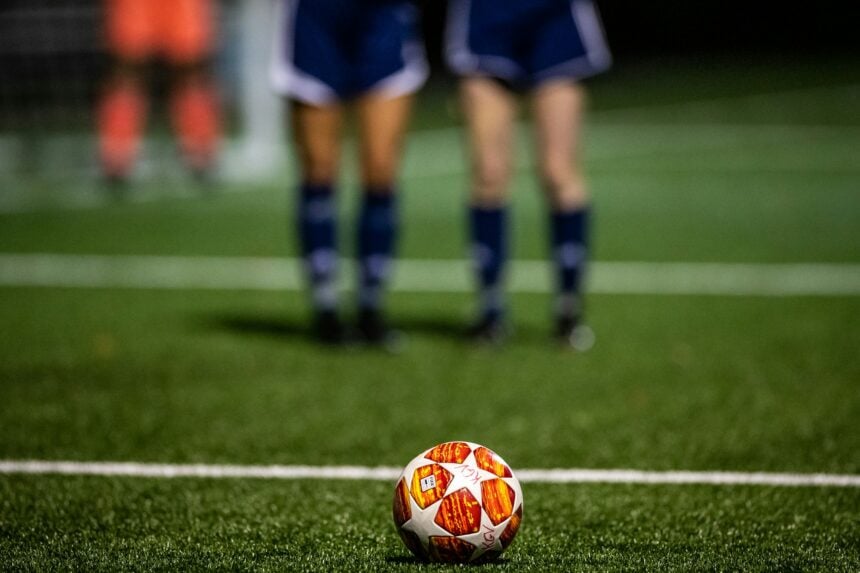
Blood drawn within 20 minutes of the final whistle showed three muscle damage markers climbing after a single competitive football match. The study is small, uncontrolled and focused on a group that exercise science rarely samples: second-division female players.
Muscle damage after one official match was large enough to register across three separate blood markers in a study of 17 female football players, published on 20 November 2026 in BMC Sports Science, Medicine and Rehabilitation. Creatine kinase, aspartate aminotransferase and alanine aminotransferase all rose significantly between a sample taken the day before kickoff and one taken minutes after the match ended.
The work comes from Mehmet Bakay and Cengiz Arslan at the Faculty of Sports Sciences, Firat University, Elazig, Turkiye, with Deniz Sanli of Batman Training and Research Hospital and Nuri Muhammed Celik of the Faculty of Sports Sciences at Batman University. The players competed in the Turkish Second Division.
Design was quasi-experimental and prospective with repeated measurements, comparing each player against her own baseline rather than against a separate control group. Venous blood was collected approximately 24 hours before the match and 15 to 20 minutes after it finished, with the last team training session roughly 36 hours before the pre-match draw.
The squad averaged 17.53 years of age, with a standard deviation of 2.55 and a range from 15 to 28. Mean sports age was 3.53 years and mean body mass index 19.87 kg/m2. The group held two goalkeepers, six defenders, six midfielders and three forwards.
At a Glance
- Published 20 November 2026 in BMC Sports Science, Medicine and Rehabilitation, volume 18, article 608.
- 17 female Turkish Second Division football players, mean age 17.53 plus or minus 2.55 years.
- Blood taken about 24 hours before one official match and 15 to 20 minutes after it ended.
- Muscle damage markers rose: creatine kinase (p = 0.001), AST (p less than 0.001) and ALT (p = 0.004); calcium also rose (p = 0.047).
- Uric acid fell (p = 0.011) and oxygen saturation fell from 98.88 to 98.47 percent (p = 0.035).
- C-reactive protein and glucose did not change significantly.
- Main caveat: no control group, only two sampling points, and match exposure was not standardized.
The Three Muscle Damage Markers That Rose
Among the muscle damage markers, creatine kinase produced the largest signal, with a reported effect size of r = 0.82, which the authors classify as very large. Aspartate aminotransferase followed at d = 1.28, also very large, and alanine aminotransferase at d = 0.81, described as large. All three muscle damage markers are enzymes that leak from muscle tissue when fibres are mechanically stressed.
Creatine kinase is the standard reference marker for exercise-induced muscle damage because it is abundant in skeletal muscle and appears in the bloodstream within hours of hard eccentric work. The transaminases are usually read as liver markers, but both are present in muscle, and after heavy sport they often move together with creatine kinase rather than signalling anything hepatic.
Calcium also increased, at d = 0.52, a moderate effect. The paper does not publish pre-match and post-match mean concentrations for creatine kinase, the transaminases, calcium, uric acid, glucose or C-reactive protein in its main text, so the size of each shift is reported here only as the effect sizes and p values the authors give.
Players who completed the full 90 minutes. One played 57 minutes, one played 33, and five never left the bench, yet all 17 contributed blood samples.
What Fell: Uric Acid and Oxygen Saturation
Two measures moved in the opposite direction to the muscle damage markers. Uric acid decreased with an effect size of d = -0.69, in the moderate to large band. Oxygen saturation decreased from 98.88 plus or minus 0.60 percent before the match to 98.47 plus or minus 0.87 percent afterwards, p = 0.035, with r = 0.51.
The authors are explicit that the oxygen saturation shift is too small to indicate clinical change. A drop of roughly four tenths of a percentage point in healthy young athletes sits inside normal variation, and it is reported as a statistical result rather than a physiological warning.
The Markers That Did Not Move
C-reactive protein showed no significant change, with a small effect size of d = 0.21. Glucose was flat, at d = 0.03, which the authors call negligible. Both nulls are informative given the timing of the draw, because they separate muscle damage from inflammation.
C-reactive protein is an acute-phase inflammatory protein that typically peaks many hours to days after muscle-damaging exercise, not within 20 minutes of it. Finding no movement at that moment is what the timeline would predict, and it marks the difference between muscle damage signals that appear immediately and the inflammatory response that follows later.
Why a Two-Point Design Misses Most of the Muscle Damage Story
Enzyme release after damaging exercise is a process, not an event. Creatine kinase continues to appear in the bloodstream after the work stops, stays elevated while the tissue repairs, and returns toward baseline over the following days. A design with one pre-match and one immediate post-match draw sees the opening of that sequence and nothing else.
That matters for how a result like this gets used. A coach wanting to know when a player is ready again needs the descending half of the muscle damage curve, which is where soreness, repeated-sprint ability and jump performance usually recover. This study was not built to supply it, and the authors say so, listing the two sampling points as a limitation that prevents assessing the full time course.
The practical consequence is that these figures establish that one match produces measurable muscle damage, without establishing how much or for how long. Those are different questions and they need different study designs.
Why Muscle Damage Readings Are Hard to Interpret After One Match
The study captured two points on a muscle damage curve that normally runs for days. Creatine kinase after football typically keeps climbing well past the final whistle, so a sample taken 15 to 20 minutes out catches the beginning of the rise rather than its peak. The authors list this directly as a limitation.
Baseline is the second problem. The pre-match draw came about 24 hours before kickoff and roughly 36 hours after the squad last trained, and the authors state that residual effects of prior exercise on baseline creatine kinase, AST and ALT concentrations cannot be excluded. If the starting values were already elevated, the measured change understates the true match effect.
Exposure was the third. Because match minutes were not standardized and five players did not enter the game at all, the group average blends players who ran for 90 minutes with players who sat still. Any muscle damage estimate drawn from that mix describes the squad, not a dose.
What 17 Players Can and Cannot Settle
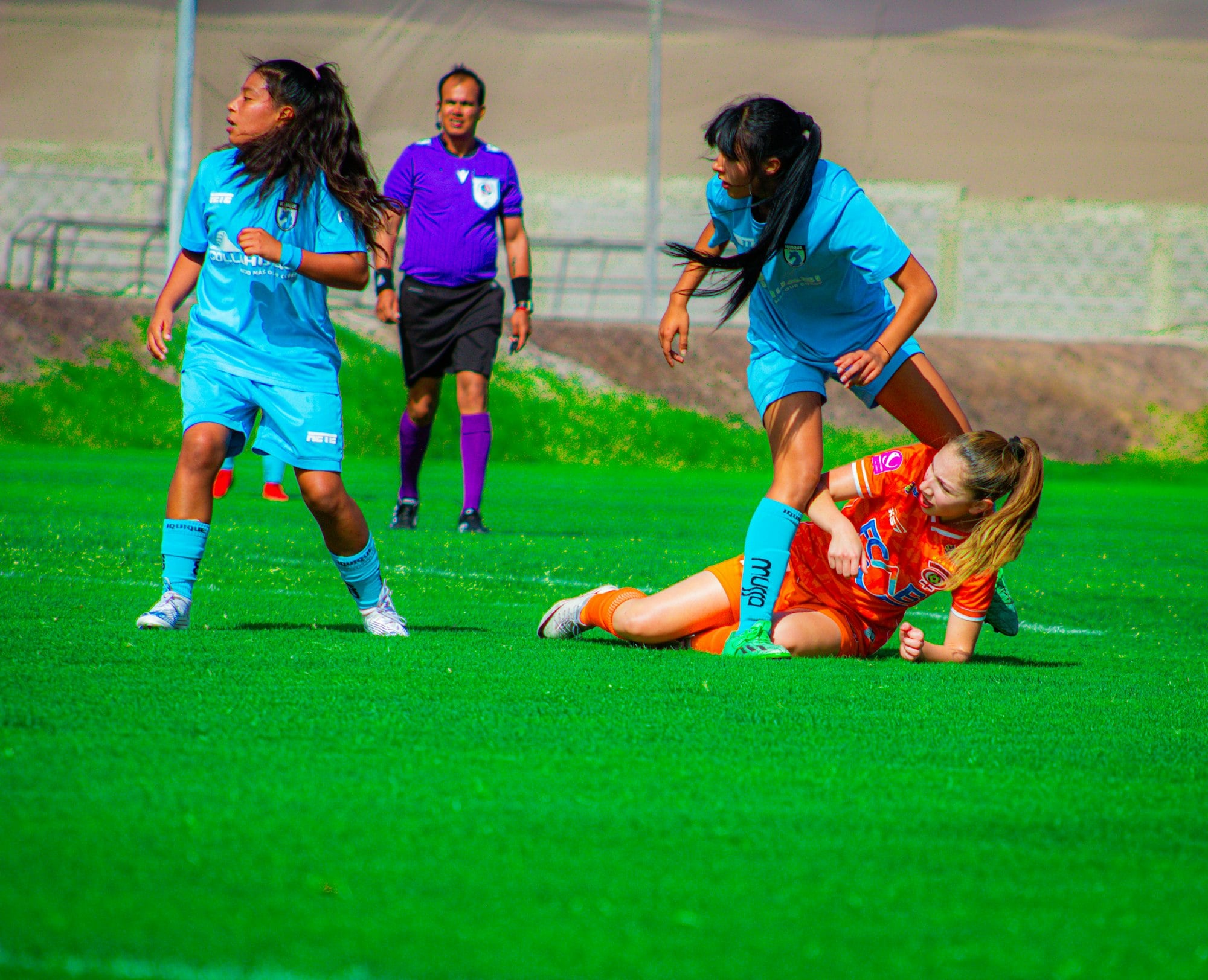
Seventeen players is a squad, not a sample built for precision, and muscle damage responses are notoriously variable between individuals. With that many participants, a single unusual responder can shift a group mean, and confidence around any effect size is wide even when the p value is small.
The age range compounds it. A group running from 15 to 28 years old mixes adolescent and adult physiology in one average, and a mean sports age of 3.53 years suggests fairly limited training history for a professional division. Both make the result harder to generalise to older or more experienced squads.
What the study does offer is muscle damage data on a population that is chronically under-sampled. Most acute muscle damage research uses male athletes, and applying male enzyme responses to female squads has never been well justified.
What It Means for Players and Coaches
This is a measurement study, not a recovery trial. It does not test any intervention, it does not say how long recovery takes, and it does not establish a threshold at which a player should be rested. What it supports is a modest and already familiar point: one competitive match imposes real mechanical load, and the blood shows it immediately.
Reasonable general practice does not change on the strength of 17 players:
- Treat the day after a competitive match as a lighter day by default rather than scheduling peak intensity into it.
- Do not read a single enzyme value as a fitness or readiness score; muscle damage markers vary enormously between individuals.
- Minutes played is the simplest load signal most teams already have, and this study is a reminder that it is unevenly distributed across a squad.
- Any blood testing decision belongs with a qualified clinician, not a training app.
Related coverage puts these numbers in context. A crossover trial found a post-match recovery protocol cut jump height loss from 16 percent to 7 percent in 20 players, and a study of elite rowers showed how neuromuscular fatigue changes movement mechanics rather than just blood chemistry. On the markers themselves, a 21-study review reported that uric acid fell most with moderate-intensity exercise, and a soccer cohort found that landing asymmetry persisted alongside hamstring training.
The Fitness Living Takeaway
One official match raised creatine kinase, AST and ALT significantly in 17 female second-division footballers, with creatine kinase showing a very large effect.
The direction of the result is unsurprising; the value is in who was measured, since acute muscle damage data on female squads remains scarce. But with no control group, only two sampling points, unstandardized match minutes and no published pre-post means for most markers, this is a descriptive snapshot. It tells coaches that a competitive match registers in the blood within minutes, not how much recovery any individual player needs.
Research & Sources
- BMC Sports Science, Medicine and Rehabilitation: Acute changes in muscle damage and selected biochemical markers following an official match in second division female football players
- Study DOI
- BMC Sports Science, Medicine and Rehabilitation: journal scope
- Images: My Profit Tutor / Unsplash; Luis Andres Villalon Vega / Unsplash
This article summarizes peer-reviewed research for general information and is not individualized medical or exercise advice.