This Reidt Fitness Systems Costa Mesa review examines Josh Reidt’s three-dimensional training model, barefoot movement work, baseball-specific strength, athlete experience, remote options, and current first-step opportunities.

Those questions now sit inside a Costa Mesa facility where Josh says roughly one hundred athletes can move through the doors in a day, from developing players to college athletes and professionals. The training is demanding, but the system is not built around punishment. It is built around sequence: earn movement, become strong inside that movement, recover well enough to repeat it, and keep showing up long enough for the work to become visible on the field.
“Everything in here is geared around three-dimensional athleticism.”Josh Reidt / Reidt Fitness Systems
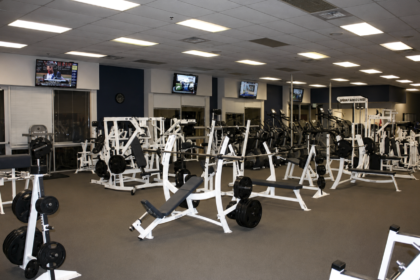
The first signal is specificity. This is a baseball room, not a general strength gym with a baseball label attached later. Josh’s programming starts from the movement, recovery, throwing, rotational, and seasonal demands of the athlete in front of him.
The second signal is that athletes train barefoot. Josh removes shoes because he sees the foot and ankle as the first link in how an athlete creates ground force and transfers it through the body. The choice is part of the method, not a visual gimmick.
The third signal is expectation. Josh said he does not want every athlete; he wants athletes willing to learn from failure in training, accept coaching, and earn progress over time. The room is built to challenge athletes privately so they can perform more confidently in public.
Josh Reidt’s coaching lens was formed by his own pitching injury, years of study, high-school coaching, and mentorship from people he credits with expanding how he understood athletic movement. In his interview, Josh said his work has since included more than 150 major-league players and over 1,000 collegiate athletes, along with program relationships extending into high-school, college, and professional baseball. He frames that scale less as status than as responsibility: the same standard should reach the freshman trying to make a team and the professional trying to extend a career.
Inside Reidt Fitness Systems’ Baseball Performance Model
Josh Reidt built Reidt Fitness Systems around the kind of information he wishes had been more accessible when he was a young pitcher: sport-specific movement, recovery, arm-care awareness, mobility, and strength that respects what baseball actually asks the body to do. His own career-ending injury gave the philosophy urgency; years of coaching and athlete development turned it into a system.
Reidt Fitness Systems is a Costa Mesa baseball performance facility led by founder Josh Reidt. Current official offerings include supervised in-person group training, youth training, distance programming through the RFS app, hybrid access, day-pass options, and team consultation/program design. The program emphasizes three-dimensional athleticism, movement before load, barefoot training, mobility, recovery, and baseball-specific strength, with an on-site physical-therapy partner available inside the facility.
Chanda said the studio’s advantage is the ability to program for the people actually in the room. Beginners can be guided through introductory classes and a mapped-out schedule, while private work and the wellness center provide more individualized options when someone needs a different starting point.
The current official site also lists a free first workout, supervised group training, youth training, distance and hybrid memberships, team consultation, and an on-site physical-therapy partner, giving readers a current view of how the training model can be accessed.
Josh grew up inside multiple sports, playing baseball, basketball, and football before baseball became the clearest path forward. As a high-school pitcher he drew college attention, but he was still training largely through a power-based model that he now believes did not sufficiently account for baseball’s mobility, recovery, and joint demands. In college, a serious elbow injury and the uneven rehabilitation that followed ended his playing career at nineteen.
The loss pushed him back toward the game through coaching and study. Josh coached high-school baseball, trained the same players, and watched the demand expand from the team into parents, siblings, and other athletes until the training operation became the larger job. He credits mentors Jeff and Shannon Myers with helping him think beyond heavy lifting toward movement, direction, deceleration, tissue quality, and the broader athletic system.
A Baseball Facility Built Around Movement Before Load
This profile examines how a career-ending injury became a baseball-specific performance model, why Josh prioritizes movement access before heavier loading, and how the same coaching standard extends from developing athletes to remote and professional players.
Programming is adapted to the client in the room rather than delivered from a fixed national script.
Beginners, experienced exercisers, parents, clients returning after injury, and adults whose training priorities change over time.
Two suites, broad class variety, private training, a Kids Clubhouse, experienced staff, and unusually long client tenure.
The Injury That Turned Questions Into A Coaching System
Josh’s injury did more than end a playing career. It exposed the gap between being strong and being prepared for the specific demands of throwing. He described inconsistent recovery, lingering neurological symptoms in the hand, and the frustration of not knowing what was normal. That uncertainty became the reason he started studying biomechanics, recovery protocols, throwing routines, joint movement, and the needs of overhead rotational athletes.
The coaching business grew almost accidentally. At Laguna Beach High School, he made strength work part of the baseball program, then found himself training dozens of players and eventually hundreds of people connected to them. Over time the performance work overtook the coaching job. The facility that followed became a place where baseball development could be treated as a long arc rather than a short block of workouts.
Training In Three Dimensions, From The Ground Up
Josh’s central technical argument is that baseball players have to own movement in all three planes, not simply become stronger in the positions most convenient to load. He described jump patterning, scapular work, joint work, mobility, rotational control, and strength as pieces of one athletic problem. If an athlete cannot access the range the sport requires, he would rather improve that access before adding more weight to it.
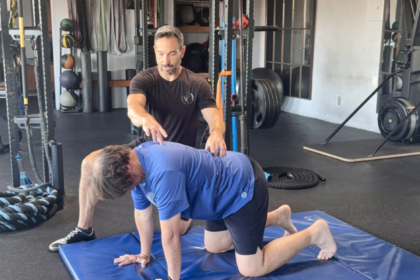
Barefoot training makes the same point from the ground upward. Josh sees the foot and ankle as the athlete’s first and last contact with the ground, and therefore part of how force becomes rotation, acceleration, and stability. Athletes remove their shoes early in the process so the small structures of the foot and ankle are trained as part of the chain rather than treated as something hidden inside footwear.
The approach also creates a boundary around Josh’s role. Strength and conditioning is the “meat and potatoes,” as he put it, but the facility includes an on-site physical-therapy partner and Josh said he refers to trusted specialists when an athlete needs expertise outside his lane. That willingness to share the problem is part of the performance model: the athlete matters more than keeping every service under one coach.
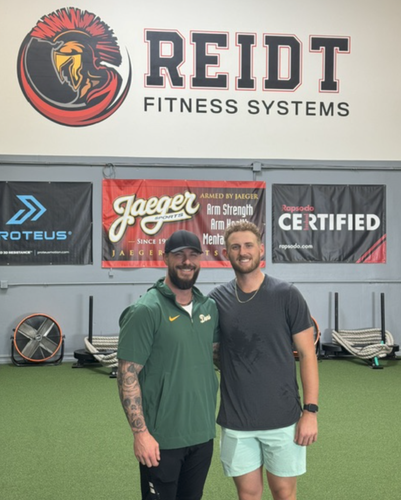
Demanding, But Built On Trust
Josh does not describe the ideal Reidt Fitness Systems athlete as the most talented player in the room. He describes an athlete who is willing to be coached, willing to fail in training, and willing to understand that the difficult rep is information rather than embarrassment. His phrase is blunt: athletes should “fail in private” so they can perform more confidently when the result is public.
That expectation sits inside unusually long relationships. Josh said many athletes who begin as high-school freshmen remain through all four years, return during college breaks, and in some cases continue through professional baseball. The relationship can expand beyond the gym into weddings, family milestones, and the phone call an athlete makes when the problem is not baseball at all. High standards and personal trust are meant to coexist here.
Less Is More, But Every Progression Has A Purpose
Josh’s preferred training sessions generally stay under an hour. He rejects the idea that more time in the gym automatically means more development, especially for high-school athletes whose attention, sport volume, school demands, and recovery capacity are already being taxed. His alternative is density with purpose: tempo, progression, and enough work to create adaptation without turning fatigue into the goal.
He described writing progressions months in advance so a simple movement can evolve rather than disappear from the program. A push-up might progress through range-of-motion changes, yoga variations, single-leg versions, elevated positions, unilateral demands, and eventually loading. The sequence gives the athlete something measurable to earn, and it gives the coach a trail back to where mobility, discomfort, or control once became the limiting factor.
Reidt Fitness Systems is most persuasive when the pieces are viewed together: movement before load, barefoot force transfer, short purposeful sessions, progressive skill, recovery, and a relationship long enough for the coach to see what changes from season to season. The system is demanding, but it is not random.
What Reidt Fitness Systems Offers
Current official business information shows a training model built around supervised group work in Costa Mesa, youth development, remote and hybrid access, and team program design. Josh’s interview adds the operating context: the standard is meant to remain baseball-specific whether the athlete is in the building or training from a distance.
Who This Baseball Performance Facility May Be A Good Fit For
Josh’s interview is unusually clear about fit: Reidt Fitness Systems is built for athletes who want baseball-specific development, are willing to be coached through difficult progressions, and value long-term accountability more than an easy workout.
Athletes who want strength work organized around baseball movement, throwing demands, mobility, recovery, and rotational power may value a system designed for the sport rather than a generic lifting template.
Younger players who need movement quality, coordination, body awareness, and coachable habits before chasing heavier weights may fit the progression-first approach especially well.
Players who are willing to fail in training, accept direct coaching, and follow a program consistently may appreciate the culture whether they train in Costa Mesa or through the distance and hybrid options.
“Coach Josh is an amazing coach and person. Training with him has been great and my skills as an athlete has skyrocketed since the start.”
A Facility Where Athletes Stay For Years
Josh measures a large part of the facility’s success in continuity. He said turnover is low and that many athletes who enter as freshmen in high school stay through graduation, return during college breaks, and sometimes continue training in professional off-seasons. The relationship does not reset simply because the uniform changes.
That continuity is also how the business has grown. Josh said he does little conventional marketing; referrals from baseball programs, professional organizations, local schools, athletes, and families have done much of the work. The reputation travels because the same athletes keep carrying the relationship into the next level of the sport.
What Better Movement Is Supposed To Change
When Josh describes results, he connects the weight room back to baseball. In his account, athletes who follow the program consistently may begin to throw harder, throw more strikes, move faster, recover with less arm soreness, repeat mechanics more reliably, and continue making strength gains during the season. He treats those changes as expressions of a body working together rather than as isolated numbers.
The first stage, especially for a newer athlete, is often less dramatic: better body awareness and a more connected understanding of how the hip, trunk, shoulder, foot, and ankle contribute to the same action. Josh would rather improve the chain incrementally than chase a quick velocity jump that the athlete cannot sustain. Reported outcomes above reflect Josh Reidt’s coaching account; individual experiences vary.
The Veteran Hitter Who Needed Movement Before More Strength
Josh cited Albert Pujols as a high-level example of the same principle he uses with younger athletes: when an experienced player already has strength and skill, the next improvement may begin with movement quality rather than more load.
According to Josh’s interview, he began working with Pujols late in the veteran hitter’s career when movement limitations and physical discomfort had become part of the training conversation. Josh said the early work emphasized different movement patterns, barefoot training, and strengthening smaller links in the chain rather than simply asking an accomplished hitter to lift more.
Josh recalled Pujols telling him after that first offseason that he felt much younger physically. The relationship continued through the closing years of Pujols’s playing career, which Josh uses as evidence for a broader coaching lesson: even elite athletes can benefit from revisiting movement quality instead of assuming the answer must be more intensity.
The value of the example is not that one method guarantees a particular statistic. It is that Josh applies the same sequence across levels: understand what the athlete can access, improve the limiting movement, build strength into the new range, and let performance follow from a better-organized body.
Where Long-Term Trust Follows The Athlete
Reidt Fitness Systems sits inside a larger baseball ecosystem. Josh’s relationships often begin on the training floor, but the work can continue as athletes move into college programs, professional organizations, stadium environments, and off-season routines. The photographs below reflect that longer arc rather than a one-season transaction.
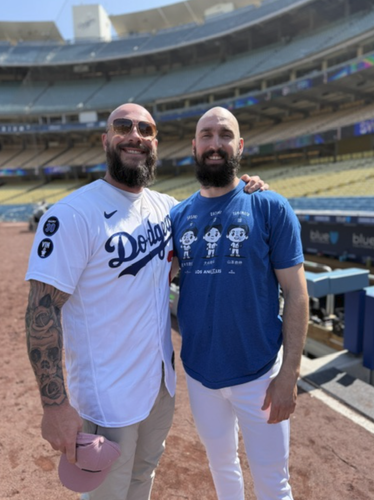
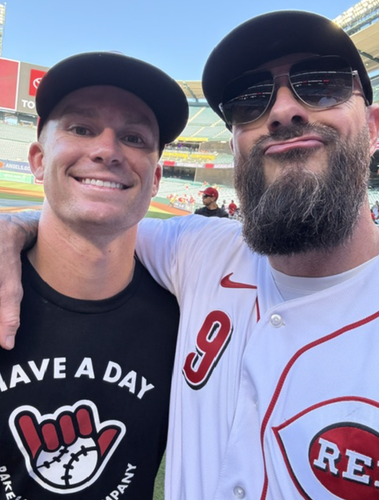
Long-Term Athlete Relationships As Part Of The System
Josh’s definition of coaching has widened over time. He once wanted Reidt Fitness Systems to be known primarily as the place where the best baseball players trained. Today, he talks more about what the relationships become after years of shared work: athletes returning from college, professionals maintaining an off-season routine, former players getting married, and younger athletes seeing older ones model what the next level requires.
The same shift appears in how he talks about his own family. Josh said he wants the business to become something his children can be proud of whether or not they ever choose to run it. That emphasis on legacy changes the tone of the facility. The goal is still baseball performance, but the larger standard is discipline, self-care, reliability, and the ability to carry lessons from training into the rest of adult life.
Why This Matters In Costa Mesa
Costa Mesa places Reidt Fitness Systems inside one of the deepest baseball regions in the country. Josh described long-standing relationships with Southern California high-school programs, college coaches, scouts, and professional organizations, and the current official site positions the facility specifically around high-school, college, and professional baseball development.
That local network matters because baseball performance is rarely isolated to one coach. An athlete’s travel schedule, school program, throwing workload, team strength plan, physical-therapy needs, recruiting process, and professional organization can all overlap. Josh’s advantage is not that he owns every part of that system; it is that he has spent years learning how to work inside it without pretending every athlete needs the same thing.
For families comparing baseball training in Costa Mesa and Orange County, the practical distinction is clear: sport-specific group strength work, youth development, an on-site PT partner, remote and hybrid access, and a coaching culture that expects athletes to stay engaged long enough for progression and recovery to matter.
Questions Readers Ask
Who Is Josh Reidt From Reidt Fitness Systems?
Josh Reidt is the founder and baseball performance coach behind Reidt Fitness Systems in Costa Mesa. He is a former multi-sport athlete and college pitcher whose playing career ended after a serious elbow injury and surgery. He later moved into baseball coaching, strength and conditioning, athlete development, remote programming, and team consultation.
What Does This Reidt Fitness Systems Costa Mesa Review Highlight?
The Spotlight examines Josh Reidt’s baseball-specific training model, three-dimensional athleticism, movement-before-load philosophy, barefoot training, progressive strength work, athlete experience, long-term relationships, current in-person and remote services, Reader Guide, and first-step options.
What Is Reidt Fitness Systems Known For?
The facility specializes in baseball performance training and emphasizes sport-specific strength, mobility, arm-care awareness, recovery, barefoot training, and three-dimensional movement. Current official offerings also include youth, distance, hybrid, and team-program options.
Who May Reidt Fitness Systems Be A Good Fit For?
Based on Josh’s interview, it may especially fit serious baseball players who want sport-specific strength, developing athletes who need movement quality before heavier loading, and athletes who respond well to direct coaching, difficult progressions, and long-term accountability.
Does Reidt Fitness Systems Offer Remote Training?
Yes. The current official site lists distance and hybrid memberships, and Josh described remote programming through an app with ongoing communication and check-ins. He said his expectations for discipline and completion do not change simply because the athlete is training somewhere else.
What Is The Best First Step For A New Athlete?
For an in-person athlete, the current official Services page says the first workout is free and presents the free trial as the best way to see whether the program is a fit. For remote or hybrid athletes, the Services page provides those options, while Josh’s interview recommends sharing age, position, injury history, team context, and goals so the training conversation begins with useful information.
Key Takeaways
Reidt Fitness Systems organizes strength, movement, mobility, recovery, and progression around the demands of baseball rather than borrowing a generic lifting template.
Josh wants athletes to access the ranges their sport requires and become strong inside those ranges before heavier strength is treated as the answer.
The foot and ankle are trained as part of how ground force moves through the body into rotational power, stability, and athletic movement.
Athletes often remain connected through high school, college, professional baseball, and remote training because the relationship is built to survive more than one season.
Conclusion
Reidt Fitness Systems is ultimately a story about converting an athletic loss into a better sequence for the athletes who came after it. Josh’s playing career ended before he expected, and the unanswered questions around training and recovery became the reason he kept studying. The facility in Costa Mesa is the mature version of those questions: how much movement does the athlete actually own, where does force travel, what breaks down under fatigue, what does recovery need, and what should happen next rather than simply harder?
The answer is not one exercise. It is a standard of progression. Move in three dimensions. Build from the ground up. Keep sessions purposeful. Recover enough to adapt. Fail where the stakes are private. And stay in the relationship long enough for small improvements to compound. For a baseball athlete, that may be the clearest value of Reidt Fitness Systems: not a promise of a quick fix, but a system designed to keep making the next version of the athlete more capable than the last.
Josh Reidt
Josh Reidt turned the hardest part of his own baseball career into a coaching system centered on movement quality, athlete accountability, and the belief that strength should transfer to the field rather than live only in the weight room.
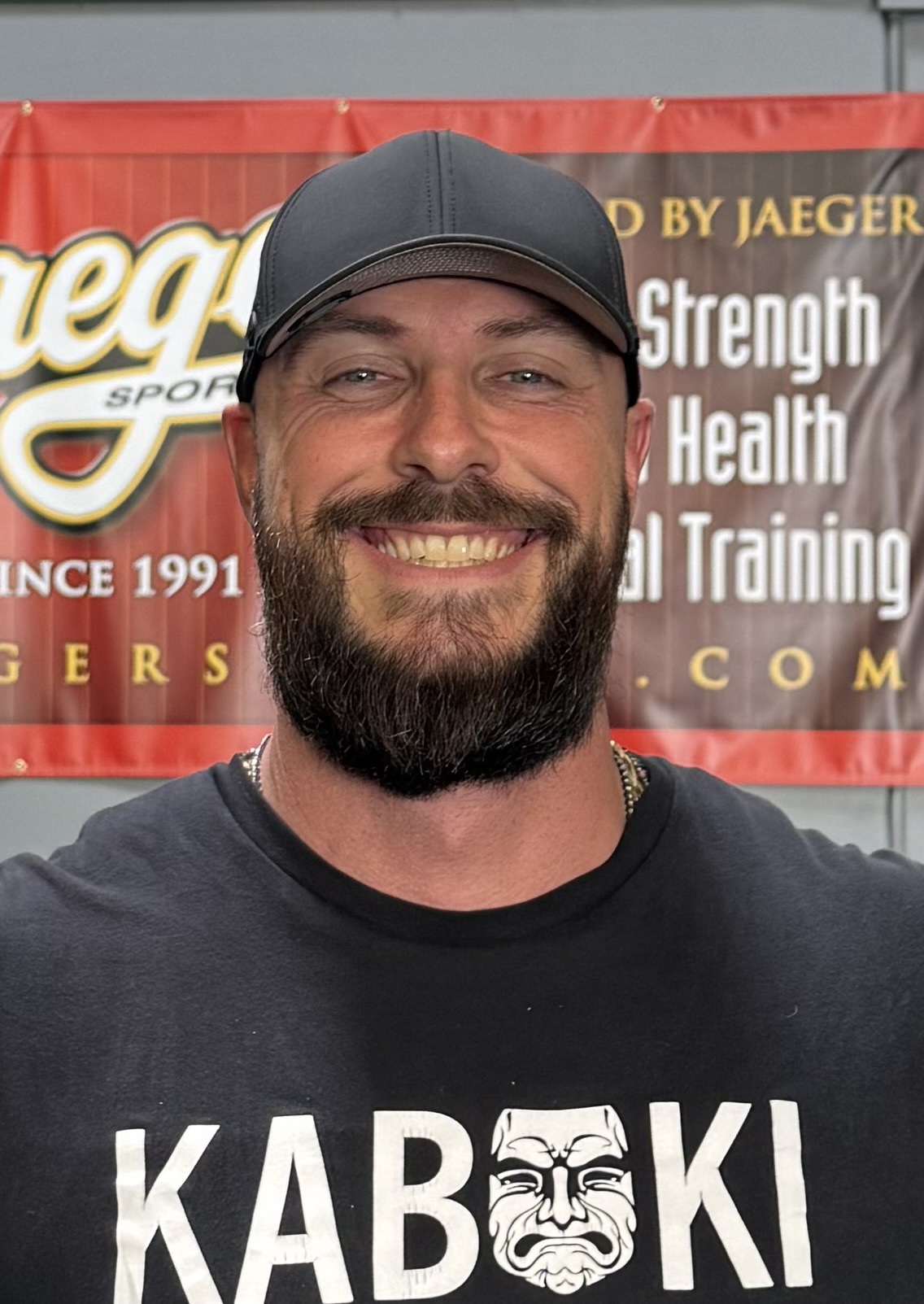
Josh Reidt is a former multi-sport athlete and college pitcher whose baseball career ended after a serious elbow injury and surgery. He moved into high-school baseball coaching, strength and conditioning, and the study of overhead rotational athletes, then built a training business that grew from team workouts into Reidt Fitness Systems. In his Fitness Living Magazine™ interview, Josh said his career has included work with more than 150 major-league players and over 1,000 collegiate athletes, along with program relationships across high-school, college, and professional baseball.
Build athleticism in three dimensions, earn movement before adding load, keep workouts efficient, and make every progression traceable. The goal is not a dramatic one-day performance in the gym but an athlete whose strength, mobility, recovery, and body awareness continue to improve on the field.
Baseball-specific strength and conditioning, three-dimensional athleticism, barefoot training, mobility, arm-care awareness, recovery, progressive group programming, youth development, remote and hybrid coaching, team program design, and long-term athlete relationships.
About This Spotlight
Fitness Living Magazine™ selected this Spotlight for Josh Reidt’s first-person account of turning a career-ending pitching injury into a baseball-specific performance system, the facility’s three-dimensional and barefoot training methods, long athlete relationships, current in-person and remote training structure, and a clear coaching philosophy that connects physical development with accountability and discipline.
Fitness Living Magazine™ publishes these features to place local fitness leaders on the record about how their programs operate, what members experience, what standards guide the coaching, and what makes the business relevant to its local community.
This Spotlight draws from Fitness Living Magazine™’s May 21, 2026 interview with Josh Reidt, the original Reidt Fitness Systems source package including supplied photography and client-perspective material, and the current official Reidt Fitness Systems website for current location, training formats, youth, distance, hybrid, free-trial, team-consultation, and on-site physical-therapy-partner information.
This feature is editorial content and is not medical advice. Training descriptions, injury and recovery references, athlete stories, and performance outcomes reflect Josh Reidt’s interview, supplied client material, and current public business information; they do not establish medical efficacy or guaranteed athletic results. Reidt Fitness Systems provides fitness and performance coaching and works alongside an on-site physical-therapy partner, but readers and athletes should use qualified medical professionals for diagnosis, treatment, and injury-management decisions. Individual experiences vary.