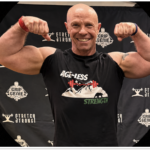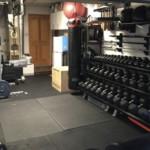
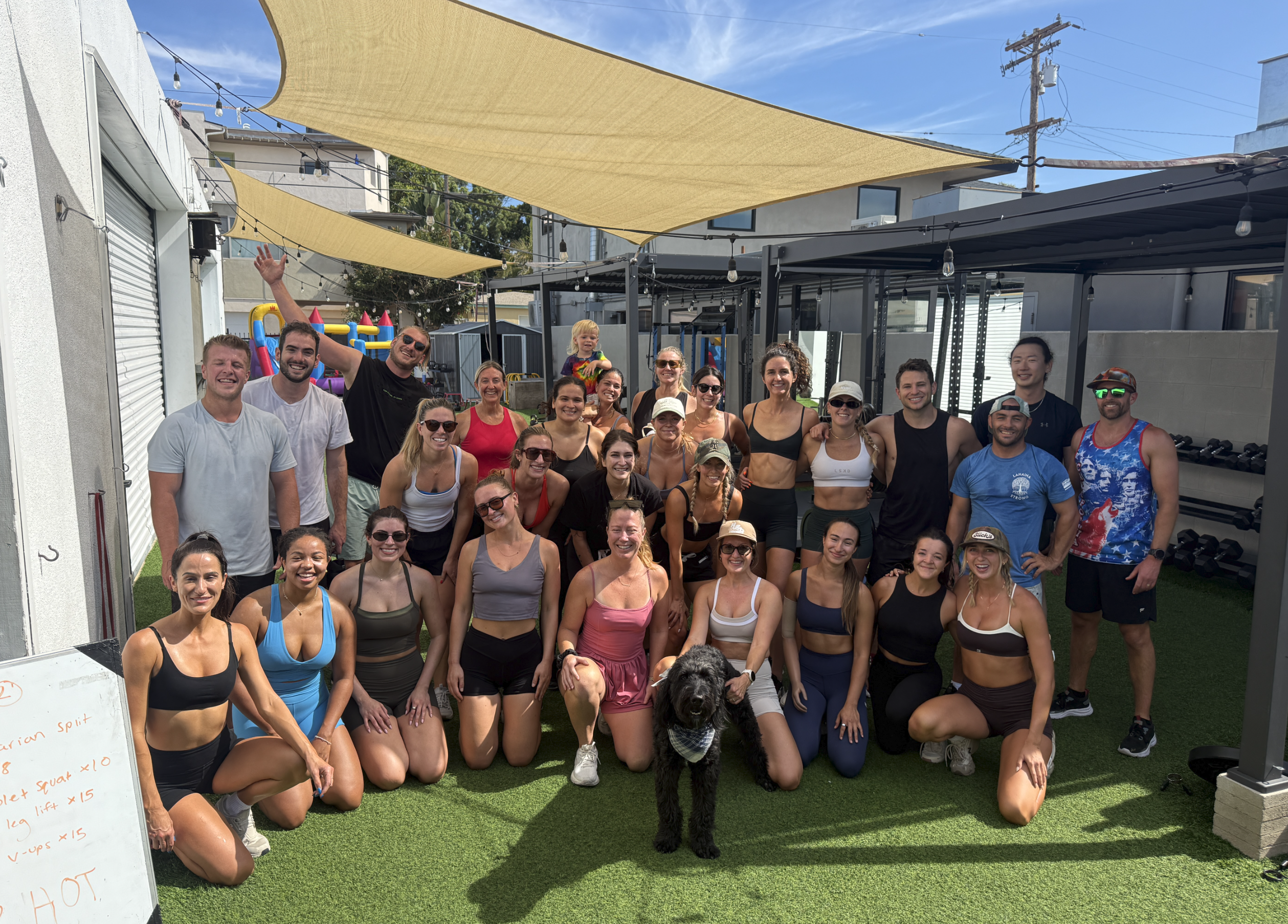
That emphasis is not separate from the training. Hamanaka believes people train more consistently when they enjoy the hour, know the people beside them, and trust the coach adjusting the movement in front of them. His current three-word order for the studio makes the hierarchy explicit: culture, community, fitness.
“You can get a good workout anywhere you go. But you can’t get the people.”Michael Hamanaka, Owner-Operator / The Movement Warehouse
A new member is meant to be recognized before the first station begins. Hamanaka said he or his manager generally tries to be present for a first trial, asks about past injuries and previous training experience, and makes sure the newcomer is greeted by name.
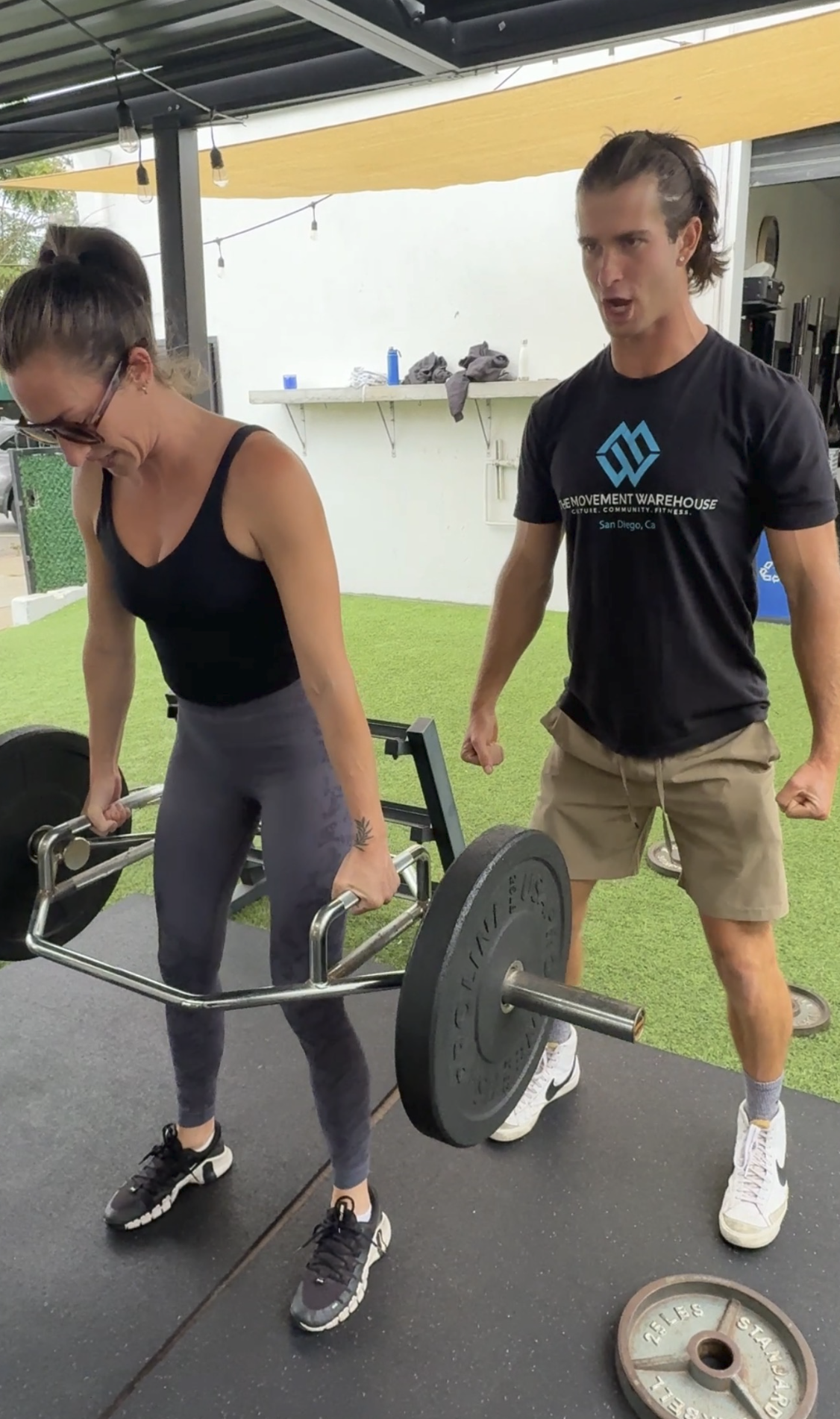
New members are often paired with people who have trained there long enough to know the movements and the flow of the class. Coaches can change a barbell squat to dumbbells, a goblet squat, a reduced range of motion, or another appropriate variation, depending on what the person can perform comfortably and with control.
They also notice the social rhythm of the room. The group format leaves no need for headphones, and recovery between sets often becomes conversation. Hamanaka sees that connection as part of why people return, not as something that happens after the training is finished.
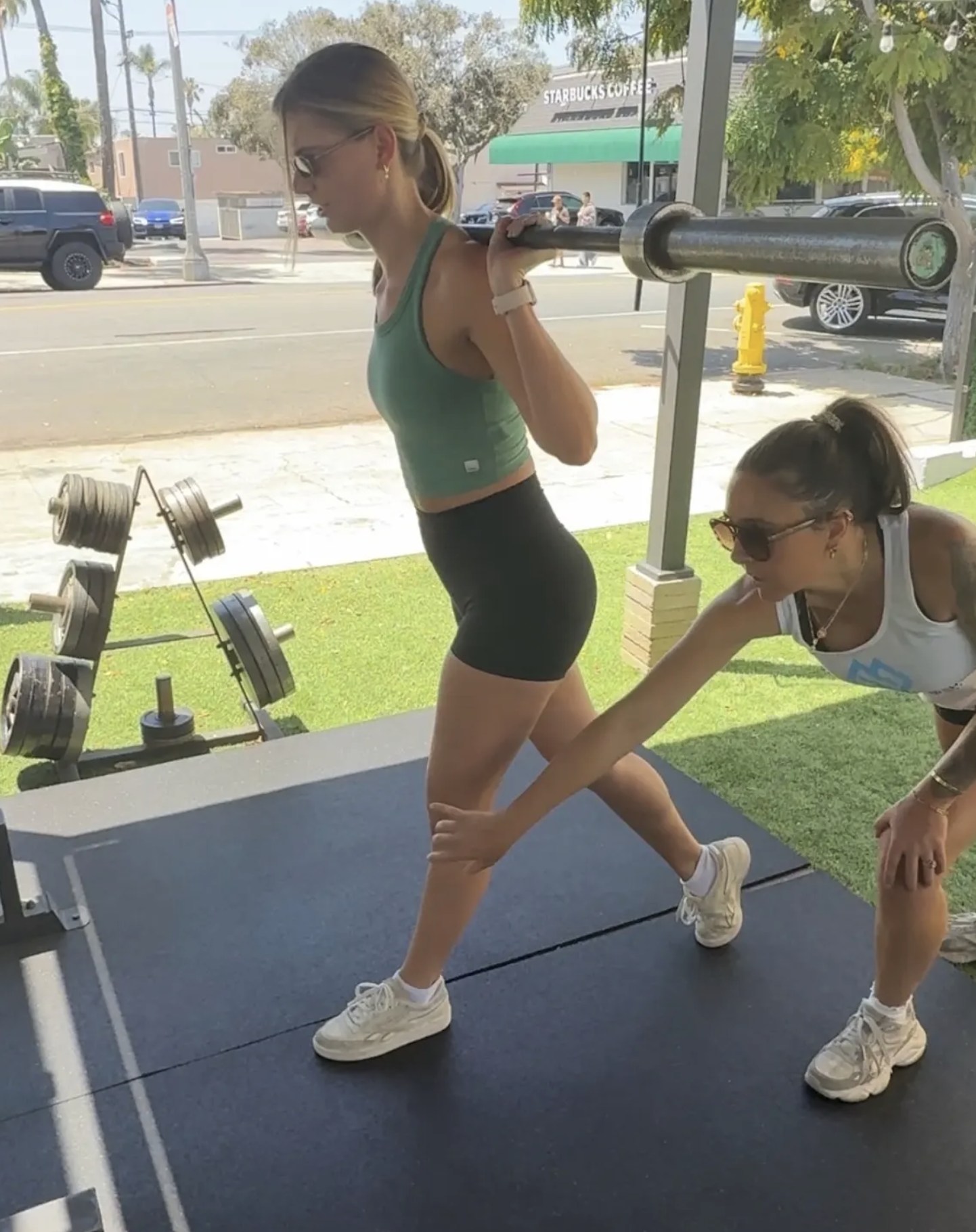
Hamanaka’s current priority order is culture, community, fitness. He is explicit that enjoyment and human connection come before chasing the hardest possible hour, because he believes the workout only produces results when people keep returning to do it.
The operating premise is unusually clear. The studio does not try to make every session feel maximal. It tries to make the hour technically useful, personally attentive, and enjoyable enough that members want another one.
In that model, community is not decoration around the program. It is one of the mechanisms that helps the program remain part of a member’s life.
Why The Workout Comes Third
The Movement Warehouse occupies an unusual position in a neighborhood crowded with places to exercise. It trains outside. Its primary product is large-group strength work rather than a class built around exhaustion. And its owner has deliberately ordered the studio’s priorities as culture, community, and then fitness. The workout comes third because, in Hamanaka’s view, it cannot matter for long if people do not want to come back.
The Movement Warehouse is an outdoor large-group strength training studio in Pacific Beach, San Diego, opened by Michael Hamanaka in 2017 and serving roughly 140 members.
Training follows a repeatable upper-body, lower-body, and conditioning split, with six-week strength blocks layered over the schedule and movements modified to each member’s current ability.
The environment is designed for people who want coached strength work without being treated as interchangeable, including beginners and former athletes trying to enjoy training again.
Hamanaka did not begin as a career trainer. He spent about a decade working in restaurants after college, then earned a personal training certification and pursued internships because he wanted a way to do meaningful work that he also enjoyed. That transition eventually placed him inside a San Diego training environment that changed both the way he exercised and the reason he exercised.
Inside The Movement Warehouse Approach
This profile examines how a Pacific Beach strength studio uses repeatable programming, exercise modification, and the social design of a group floor to turn consistency into the central performance variable.
The training is built around strength and movement quality, but the owner deliberately treats enjoyment and connection as part of what keeps the program working.
Roughly 140 members, including beginners, longtime lifters, and former high school or college athletes trying to reconnect with exercise.
Members and trainers stay for years, while timed group stations create repeated opportunities for coaching, conversation, and relationships to form.
The Three Months That Changed The Method
Hamanaka had played sports throughout childhood and fell in love with golf in high school, but his early weight training was mostly conventional lifting. The shift came during an unpaid three-month internship at Fitness Quest 10 in San Diego. He was working early mornings at the facility, restaurant shifts later in the day, and rideshare driving to make ends meet. Golf disappeared from his schedule completely.
What replaced it was a different kind of training. The programming emphasized functional movement and feeling capable in the body rather than lifting only for appearance. When Hamanaka returned to the golf course after three months without practicing, he said he hit the ball farther, straighter, and with more control. That experience changed his philosophy of what fitness should accomplish and eventually shaped the studio he opened after later coaching roles.
What Happens In The Ninety Seconds Between Sets
The most distinctive mechanism at The Movement Warehouse may be the time when members are not lifting. Sessions are organized into timed stations that can run for six, ten, thirteen, or other lengths depending on the day. Inside a heavy strength station, a member finishes a set and needs a recovery period before the next effort.
In a conventional gym, that interval can disappear into a phone or headphones. Here, members are in an outdoor group class, so the recovery often becomes conversation with the person beside them. Hamanaka did not describe that as a marketing tactic. He described it as one of the reasons relationships form and the room feels different from an individual workout performed in parallel with strangers.
The weekly programming gives that social mechanism a technical structure. Monday and Thursday are upper-body days, Tuesday and Friday are lower-body days, Wednesday is conditioning, and Saturday is a full-body conditioning session. Six-week strength blocks change the emphasis inside that framework so members can pursue measurable progress without requiring the calendar itself to be reinvented every week.
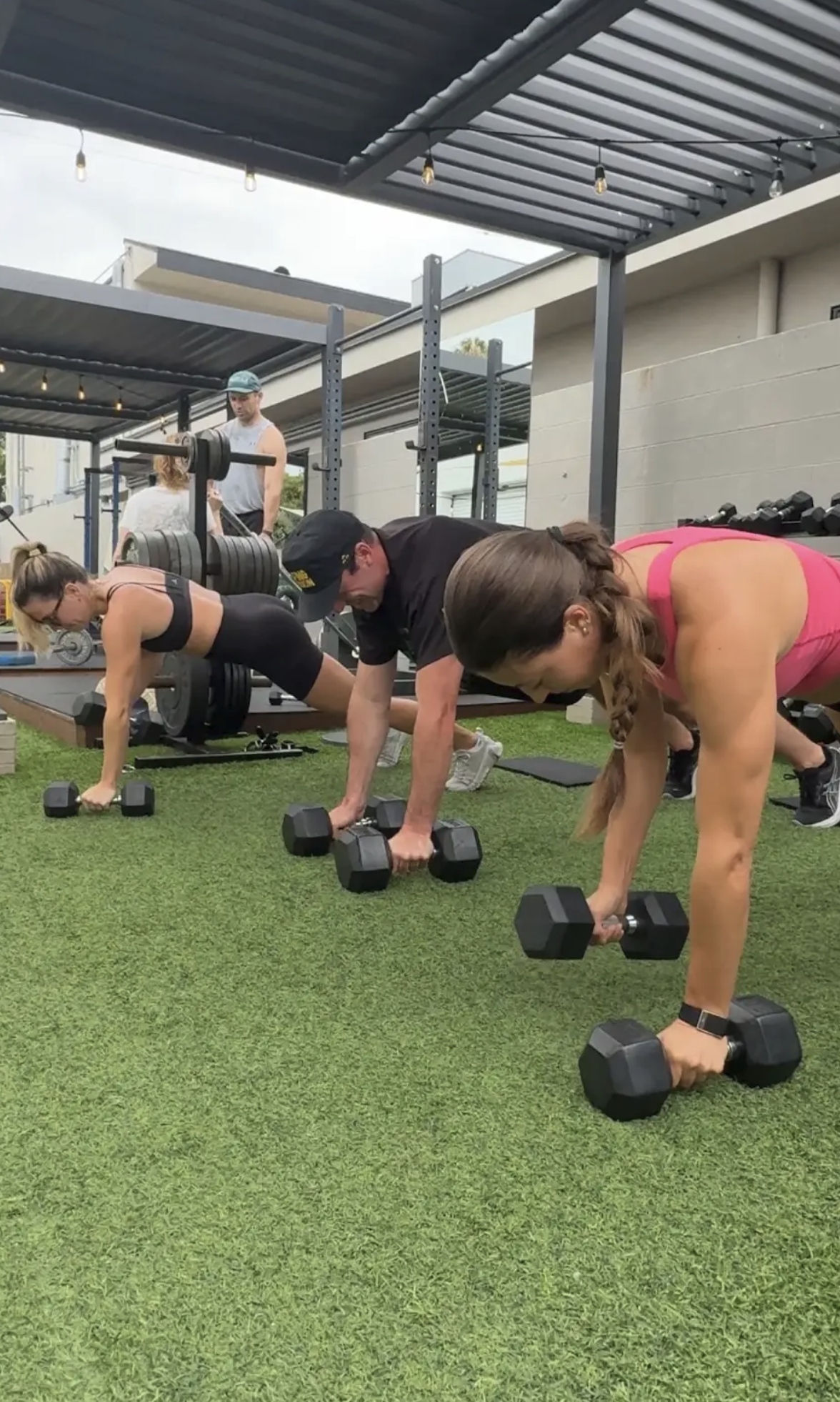
Known Before They Are Pushed
A first-time member is not expected to decode the room alone. Hamanaka said newcomers are greeted by name, asked about injuries and prior experience, and often paired with longtime members who already understand the exercises and the flow of class.
That attention continues after the introduction. Coaches can change the implement, range of motion, or exercise variation to match what the member can perform well. The goal is not to prove that someone can survive the prescribed version of the workout. It is to find the version they can train consistently and progress from.
Strength Is Meaningless Without Mobility
Hamanaka’s long-standing motto is “strength is meaningless without mobility.” He traces it to the training philosophy he absorbed during his internship, where the objective shifted from simply moving more weight to moving well enough that strength could remain useful outside the gym.
In practice, that means meeting the member where they are. A person with a limited range of motion does not need to force the same squat variation as the strongest person in the room. A coach can change the load, stance, implement, or movement itself. Hamanaka’s standard is to establish control first, then add resistance as the person is ready.
The distinction is the combination of two standards that are often separated: movement has to be technically appropriate, and the hour has to be enjoyable enough to repeat. One protects the quality of the training; the other protects the consistency that allows the training to accumulate.
What The Movement Warehouse Offers
Based on Hamanaka’s interview and the existing published Spotlight, The Movement Warehouse is built around coached strength training in a group setting, with one-on-one and specialty services available alongside it.
“The Movement Warehouse is so much more than a place to workout. It’s a community. No matter where you are in your fitness journey or what your goals are, you’re welcomed and supported. I had been away from working out for 8 years and MVMT welcomed me with open arms. My goal wasn’t to be a size 2. My goal was to get stronger. What I like best about MVMT is that members show up for each other, cheer each other on, and make it genuinely fun to work out. The trainers really care and the vibe is always positive. For me, MVMT isn’t just about getting stronger physically. It’s about being a part of something uplifting and supportive.”
Built For The Member Who Stopped Training
Asked who he most enjoys coaching, Hamanaka described the former high school or college athlete who lost the habit after graduation and needs a reason to enjoy exercise again. That person may remember how to compete but no longer wants training to feel like another obligation.
The studio also sees people who have never lifted weights. Hamanaka said those beginners often arrive because strength training now feels important but unfamiliar. The coaching response is the same: teach the movement, offer a version that fits the person, and give them enough individual attention to understand why the change was made.
Lower-body days have become the most popular group sessions by Hamanaka’s account. His case for them is functional rather than cosmetic: stronger legs support the sports and activities common around San Diego, including surfing, hiking, mountain biking, volleyball, snowboarding, and golf.
What Consistency Produces
Hamanaka is skeptical of dramatic short-term promises. In the interview, he contrasted fast transformations with slower changes in habits, outlook, and training frequency. His view is that consistency is what turns a useful program into an outcome a member can actually keep.
The six-week strength blocks provide one measurable layer of that progress, giving members a specific lift or training emphasis to improve over time. The six-week transformation program adds baseline measures, weekly goals, nutrition support, training access, and accountability. Hamanaka described weight and physique changes for members who follow the program, but the studio’s broader message is not that one number defines success.
The longer result is visible in retention. Hamanaka said some members have stayed with him for nine years, and some for eleven years including time before he opened The Movement Warehouse. That kind of duration is difficult to separate from the culture he has built around the training.
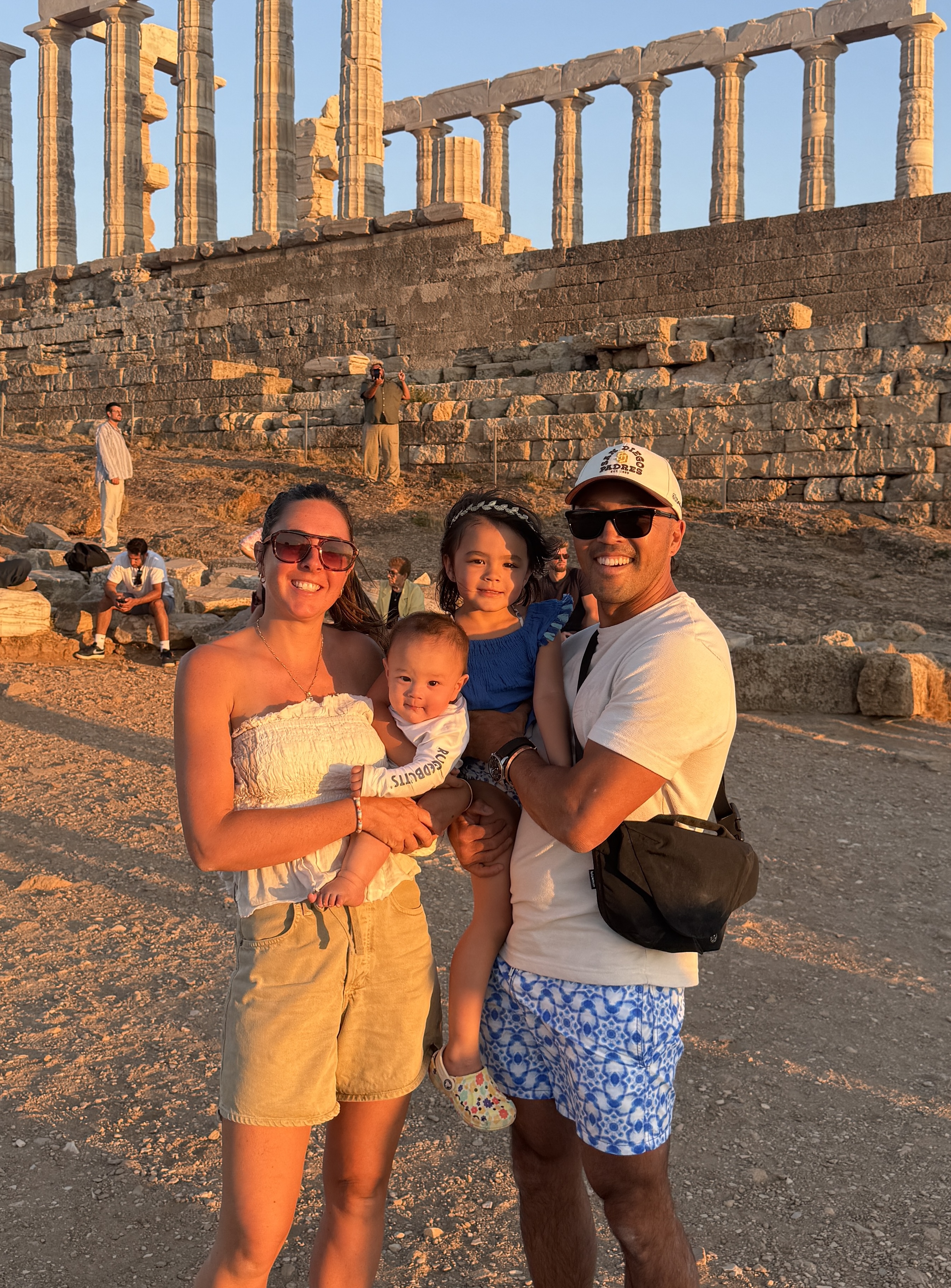
A Family Life Built Alongside The Movement Warehouse
Michael met Meagan through the studio, she became his coaching partner, and their children have grown up alongside the business. These photographs show the family beyond the training floor: the personal life, travel, and shared moments that have developed alongside the nine-year Movement Warehouse story.
Why This Matters In Pacific Beach
Pacific Beach is both an advantage and a constraint. The outdoor setting lets members spend much of the year training in San Diego weather, but the neighborhood is geographically tight and crowded with fitness businesses. Hamanaka recalled roughly eighteen gyms on Garnet Avenue when he opened in 2017 and described the current market as similarly competitive.
He also described a narrow practical radius. The Pacific limits the west, traffic complicates the east, and access often comes from La Jolla, Ocean Beach, or Point Loma. Some members who move farther away stop making the commute, while others travel much longer distances because they want to keep the same training environment.
For someone comparing strength training in Pacific Beach, outdoor group fitness in San Diego, or a beginner-friendly way to start resistance training, the useful distinction is not that The Movement Warehouse claims to be the hardest room in the neighborhood. It is that the studio has organized its coaching and class flow around whether people can keep coming back.
FAQ
Who Is Michael Hamanaka?
Michael Hamanaka is the owner-operator of The Movement Warehouse in Pacific Beach, San Diego. He opened the studio in 2017 after working in restaurants, earning a personal training certification, completing fitness internships, and coaching in other facilities.
What Is The Movement Warehouse Known For?
The studio is known for outdoor large-group strength training, a repeatable weekly split of upper-body, lower-body, and conditioning days, six-week strength blocks, and a culture Hamanaka describes in the order culture, community, fitness.
Is The Movement Warehouse Beginner Friendly?
According to Hamanaka, yes. The studio regularly sees people who have never lifted weights. Coaches ask about previous injuries and training history, modify exercises to the member’s current range of motion and comfort, and prioritize control before adding load.
Do Members Need Prior Strength-Training Experience?
No prior strength-training experience is required based on Hamanaka’s description of the onboarding process. Some people begin with personal training for additional one-on-one instruction before moving into group classes, while others start directly on the group floor.
What Makes The Movement Warehouse Different In Pacific Beach?
Hamanaka points to the outdoor floor, the form-before-load coaching standard, the long-standing weekly split, and the social structure of timed stations. Recovery periods inside a group class create repeated opportunities for members to talk and build relationships.
What Programs And Services Does The Movement Warehouse Offer?
The source material describes large-group strength classes, personal training, six-week structured programming, golf performance work and simulator access, plus manual therapy, massage, and stretching services.
What Is The Best First Step For A New Member?
Hamanaka’s recommendation is to try a class. He said a consultation can explain the space and philosophy, but the workout and the experience of the trainers are what best communicate what the studio is.
Key Takeaways
Hamanaka orders the studio’s priorities as culture, community, and fitness, using enjoyment and connection to support training consistency.
Coaches modify movements to the member and establish control before increasing resistance, reflecting Hamanaka’s mobility-first philosophy.
Upper-body, lower-body, and conditioning days remain stable while six-week strength blocks change the specific performance focus.
Timed group stations create natural rest periods that members often spend talking, making the social environment part of how the class operates.
Conclusion
There is a version of The Movement Warehouse story that is only about programming: a fixed split, six-week strength blocks, exercise modification, and a group floor built for repeatable work. It would be accurate, but incomplete. Hamanaka’s stronger argument is that programming cannot be separated from the environment in which people are asked to repeat it.
That is why the workout comes third. The first two priorities, culture and community, are the conditions he believes make the third one sustainable. Members are greeted, coached, given room to recover, and expected to talk to the people around them. For a Pacific Beach studio competing in one of San Diego’s busiest fitness corridors, the differentiator is not a promise to make every hour harder. It is a system designed to make people want another hour.
Michael & Meagan Hamanaka
Michael Hamanaka built the studio around a form-first training philosophy and a priority order that places culture and community ahead of the workout. Meagan Hamanaka coaches alongside him and helps carry that standard across the weekly schedule.

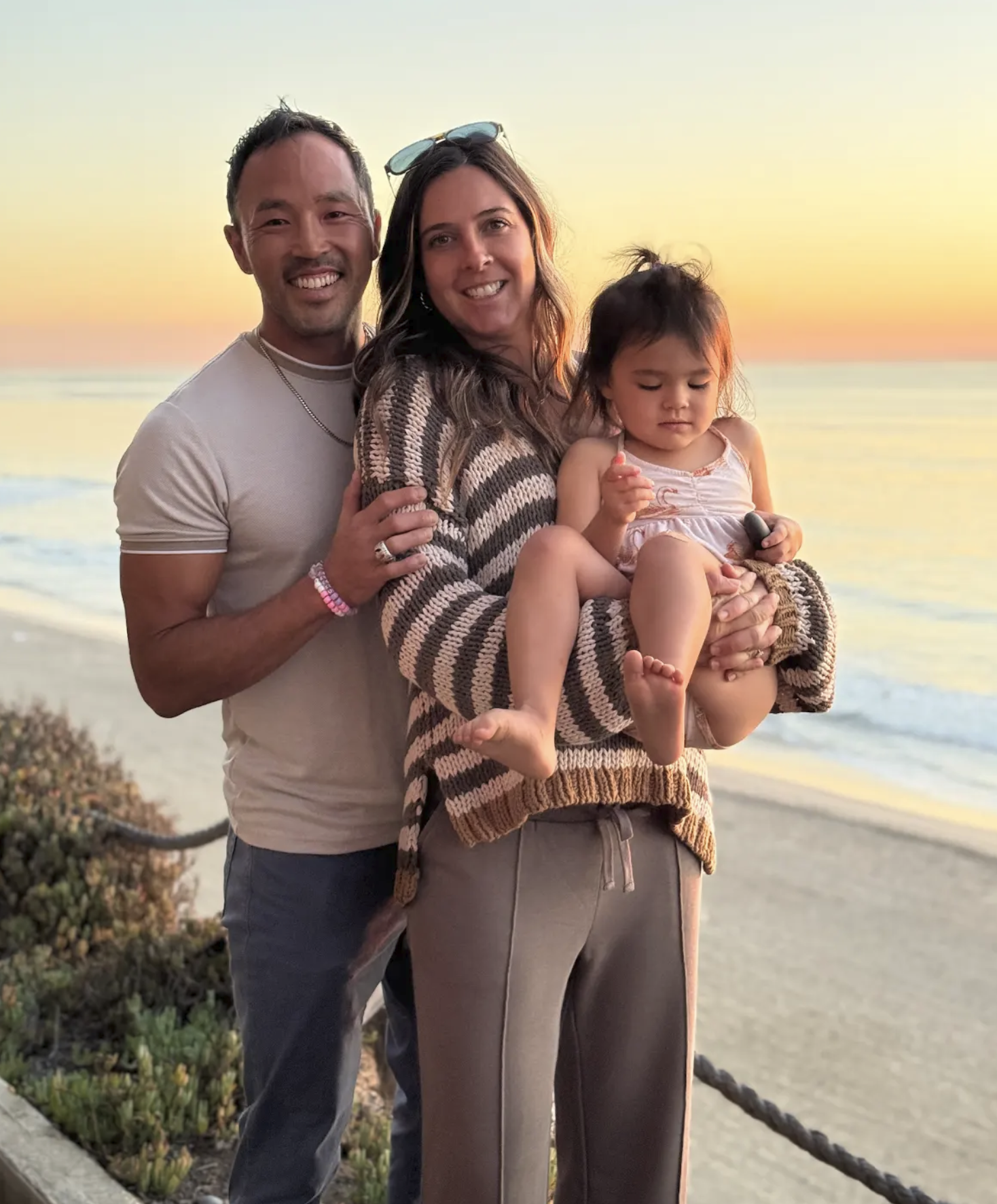
Michael Hamanaka is the owner-operator of The Movement Warehouse in Pacific Beach. He opened the studio in 2017 after a personal training certification, internships, and coaching roles changed how he thought about strength and movement. Meagan is his wife and coaching partner. Their family and the studio have grown alongside one another, while Michael continues to coach strength, work with golf clients, and shape the programming philosophy.
Meet the member where they are, establish the movement before adding load, and make the training experience enjoyable enough to sustain. Michael’s long-standing motto is that strength is meaningless without mobility.
The source material emphasizes connection, coaching attention, movement quality, and consistency. Services include large-group strength training, personal training, six-week programming, golf performance work, simulator access, and manual therapy or stretching services.
About This Spotlight
Fitness Living Magazine™ selected this Spotlight for the longevity of its member relationships, Hamanaka’s clearly stated culture-community-fitness hierarchy, the studio’s form-before-load coaching standard, and the specific way its outdoor group format turns recovery time into human connection.
Fitness Living Magazine™ publishes these features to place independent fitness owners on the record about how their programs operate, what new members experience, what standards guide the coaching, and what makes the business relevant to its local community.
Source material for this migration consisted of the recorded Fitness Living Magazine™ editorial interview with Michael Hamanaka, the existing published The Movement Warehouse Spotlight and its approved photo and member-review material, and the canonical Fitness Living Magazine™ Spotlight model supplied for the WordPress migration. The rebuilt article preserves source-supported business facts while removing duplicate legacy schema and avoiding precise outcome claims that could not be reconciled confidently across the supplied materials.
This feature is editorial content and is not medical advice. Training descriptions, methods, and outcomes reflect the featured expert’s account and individual experience, and results differ from person to person. Readers should consult a qualified healthcare professional before beginning any new exercise program.