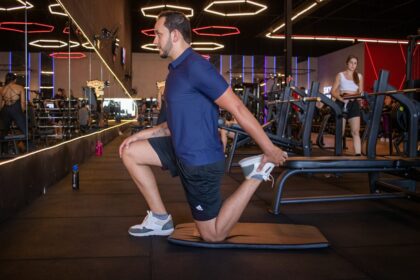
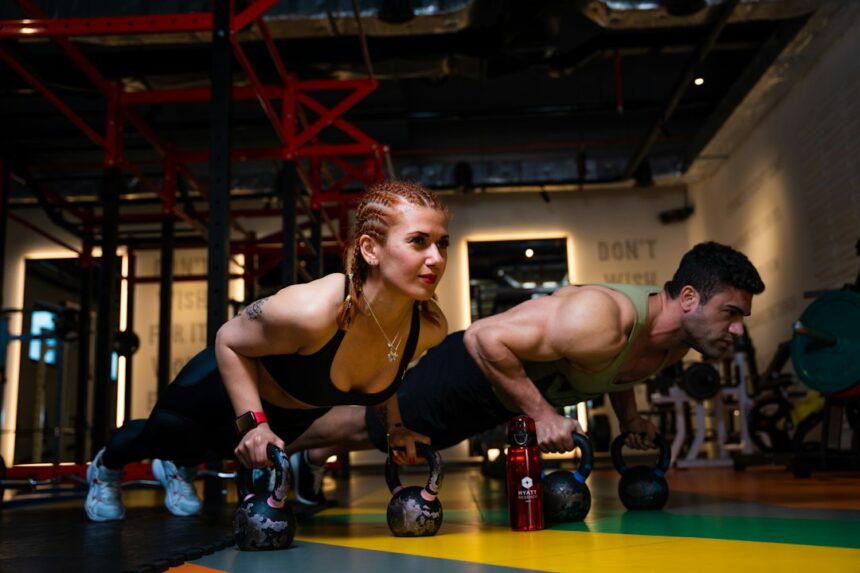
A new systematic review pooled 31 controlled trials to ask what core training actually delivers for young competitive athletes. Balance and trunk endurance improved most consistently, while the transfer to jumping and sprinting looked thinner than coaches often assume.
Core Training occupies a strange place in youth sport. Almost every program includes it, almost no one agrees on what it is for, and the evidence has been scattered across small trials for two decades. A systematic review and meta-analysis published on October 15, 2026 in Scientific Reports gathers that literature and reports a more selective picture than the usual sales pitch.
The authors, based at the National University of Physical Education and Sports of Ukraine in Kyiv and at Taishan College of Science and Technology in China, searched PubMed, Web of Science, the Cochrane Library, Embase and Scopus. Thirty-one controlled trials met their criteria, covering 818 athletes aged 10 to 19.
Every included athlete was classified as McKay Tier 2 or above, a framework that distinguishes trained competitors from recreational participants. Results were pooled using random-effects models with Hedges g, and the review was registered in advance on PROSPERO as CRD420261379288.
Across that pool, core training was associated with improvement in nine separate outcomes: countermovement jump, standing long jump, sprints of 20 metres or more, change of direction, dynamic balance, static balance, core stability, dynamic core endurance and isometric core endurance. One outcome refused to settle.
At a Glance
- Published October 15, 2026 in Scientific Reports; registered on PROSPERO as CRD420261379288.
- Thirty-one controlled trials, both randomized and non-randomized, were included.
- 818 athletes aged 10 to 19, all classified McKay Tier 2 or above.
- Five databases searched: PubMed, Web of Science, Cochrane Library, Embase and Scopus.
- Nine outcomes improved against control, spanning jumping, longer sprints, change of direction, balance and trunk endurance.
- Evidence for sprints of 10 metres or less was reported as inconclusive.
- Main caveat: the certainty of evidence ranged from moderate to very low across outcomes.
What the Core Training Review Pooled
The scope is worth stating plainly, because reviews of core training often blur trained athletes together with untrained teenagers. This one did not. Restricting inclusion to McKay Tier 2 and above means the comparison groups were already doing organised sport training, so the measured effect is what core work added on top of an existing program.
That distinction changes how a coach should read the result. Adding core training to a sedentary teenager and adding core training to a competitive one are different questions, and the second is harder to move. Our earlier report on suspension training in 71 untrained teenagers sits on the other side of that line.
Where the Gains Were Most Consistent
The authors are explicit that the benefits were steadier for balance and core-specific measures than for jumping, sprinting and change of direction. Static balance, dynamic balance, core stability and both endurance measures behaved as a coherent group, which is what you would expect if the training is doing what it says on the label.
Trunk endurance improving after trunk work is not a trivial finding, even if it sounds circular. Trunk endurance is a measurable quality in its own right, and it is the quality most directly implicated in posture under fatigue. We reported a similar pattern from a different angle in our coverage of slackline training and trunk endurance in a 40-adult trial.
A Ten-Year Age Span Inside One Estimate
The pooled sample runs from 10 to 19 years old. That is a decade of growth and maturation compressed into a single estimate, and a 10-year-old and a 19-year-old do not respond to core training the same way, nor do they test the same way on balance, jump or sprint measures.
An age spread of that size is one of the standard reasons pooled certainty falls. It does not invalidate the direction of the finding, but it does mean the average effect reported here may describe no individual athlete especially well. A coach working with one age band is reading a number assembled from several.
The published abstract does not report a dose-response breakdown across that range, and the authors frame their recommendation at the level of program structure rather than a prescription. How much core training a 13-year-old needs, and whether that differs from a 18-year-old, remains open.
Athletes aged 10 to 19 were pooled across 31 controlled trials, making this one of the larger syntheses of core training in trained youth to date.
The Short Sprint That Would Not Resolve
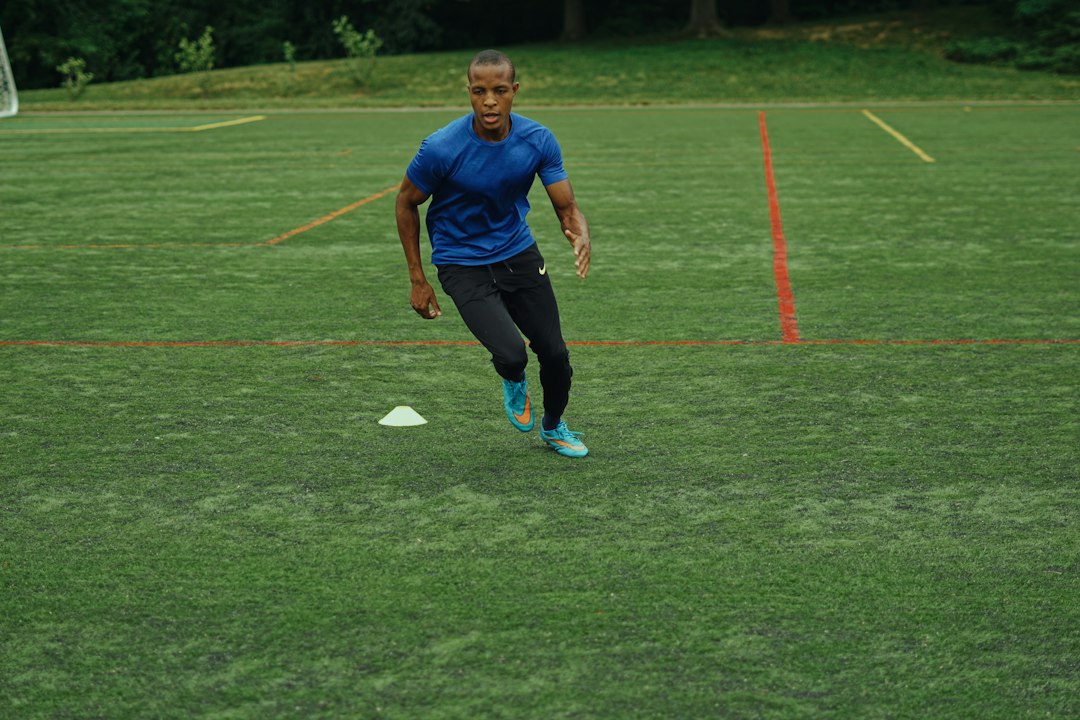
Sprints of 20 metres or more improved. Sprints of 10 metres or less did not produce a conclusive answer. That split is informative rather than inconvenient, because the two distances test different things: a short sprint is dominated by the first few steps and raw force production, while a longer one gives postural control more time to matter.
It is also the distance where measurement noise bites hardest. Differences over 10 metres are small in absolute terms, timing methods vary between studies, and pooling across 31 trials with mixed protocols makes a faint signal harder to recover. The review labels the evidence inconclusive rather than negative, and those are not the same claim.
Why Certainty Ratings Matter More Than the Outcome List
A list of nine improved outcomes reads like a strong endorsement until the certainty grading is placed beside it. The review reports that certainty ranged from moderate to very low. A very low rating means future research is likely to change the estimate substantially, and it attaches to real entries on that list.
Part of the reason is the study pool itself. The review included both randomized and non-randomized controlled trials, a decision that widens the evidence base and also lowers its average quality. Small samples, varied control conditions and inconsistent outcome testing all push certainty downward, a problem we examined in our report on how widely countermovement jump testing varied across 117 studies.
None of this makes core training a bad use of time. It means the honest summary is directional rather than precise: the practice points toward better balance and trunk endurance in trained adolescents, and the size of that benefit is not yet pinned down.
How Core Training Fits a Youth Program
The authors land on a recommendation that matches their own data. They position core training as a supplement to regular sport and strength work rather than a replacement for it, which is a meaningfully different claim from the one implied by programs that build a whole session around trunk circuits.
For coaches and parents reading the headline rather than the certainty table, a few practical points follow from what the review actually supports:
- Treat core training as an addition to sport practice and general strength work, not as a substitute for either.
- Expect the clearest return in balance and trunk endurance, the outcomes with the most consistent evidence.
- Do not promise a faster 10-metre start, since the review could not resolve that outcome.
- Keep testing simple and repeatable, because inconsistent measurement is part of why the certainty ratings are low.
Young athletes also respond to the broader training load around them, not to one isolated block. Readers comparing options can look at our report on a nine-week basketball warm-up program tested in 65 teenagers, which addressed several of the same qualities through a different route.
What a Review Like This Can and Cannot Settle
A meta-analysis is a summary of existing trials, not a new experiment. It inherits every weakness of the studies it pools, and no amount of statistical care converts 31 modest trials into one large definitive one. What it can do is show whether results point in a consistent direction, and here they largely do.
What it cannot do is tell an individual coach how much core training to program, in what form, or at what point in a season. Those questions need dose-response trials that this literature has not yet produced, an absence also visible in our report on resistance training and muscle growth across 1,443 young people.
The Fitness Living Takeaway
Pooling 31 trials of 818 trained athletes aged 10 to 19, core training was linked to better balance, trunk endurance, jumping, longer sprints and change of direction, with certainty ranging from moderate to very low.
The clearest and best-supported gains sit in balance and core endurance, exactly where the training is aimed. Transfer to explosive qualities looks real but less consistent, and sprints under 10 metres could not be resolved at all. The authors recommend core work as a supplement to regular training rather than a replacement, which is the most defensible reading of their own numbers.
Research & Sources
- Scientific Reports: Effects of core training on physical fitness in trained adolescent athletes
- Study DOI
- Images: Akram Huseyn / Unsplash; Nigel Msipa / Unsplash
This article summarizes peer-reviewed research for general information and is not individualized medical or exercise advice.