
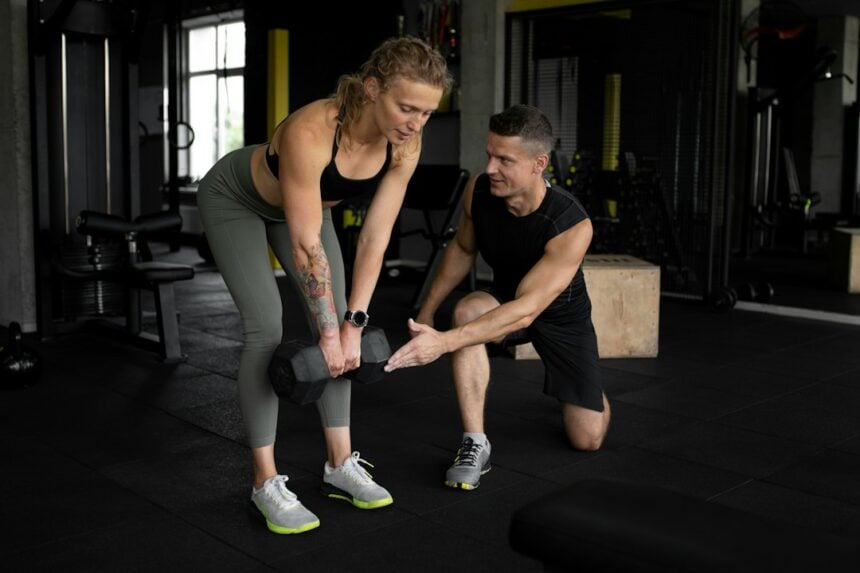
A three-centre randomised trial reported diabetes remission in 54 percent of adults who followed a low-energy diet alongside supervised exercise. In the comparison group, who continued usual care, diabetes remission reached 4 percent.
Diabetes remission was achieved by 54 percent of participants on a combined low-energy diet and supervised exercise programme, according to the RESET for Remission trial published in The Lancet Regional Health – Americas in October 2026.
The trial randomised 96 adults aged 18 to 45 who had early-onset type 2 diabetes and obesity and were not taking insulin. Forty were enrolled in England and 56 in Canada, across three centres: the University of Leicester, McGill University in Montreal and the University of Alberta in Edmonton. Recruitment ran from 24 September 2021 to 6 June 2025.
Fifty adults were assigned to the diet and exercise programme and 46 to usual care. Mean age at entry was 38 years, mean body mass index was 35.2, and 47 percent of participants were women. All had received their diagnosis within the previous six years. Eighty-six people, or 90 percent of those randomised, attended the final assessments at 24 weeks.
At that final visit, 27 of the 50 intervention participants met the trial definition of remission, against 2 of the 46 receiving usual care. In the adjusted analysis, the intervention group were reported as 21 times more likely to reach diabetes remission.
At a Glance
- Published in The Lancet Regional Health – Americas in October 2026, and presented at the European Association for the Study of Diabetes annual meeting in Milan.
- A randomised, open-label, blinded endpoint efficacy trial run across three centres in England and Canada.
- 96 adults aged 18 to 45 with early-onset type 2 diabetes and obesity, mean age 38 and mean body mass index 35.2.
- Diabetes remission at 24 weeks: 27 of 50 on the programme, against 2 of 46 on usual care.
- Weight fell 8.4 kg in the intervention group and 1.2 kg in usual care, an adjusted difference of 7.5 kg.
- Cardiorespiratory fitness rose 10.3 percent more, and handgrip strength 7.6 percent more, than in usual care.
- Main caveat: only adults aged 18 to 45 were enrolled, and the open-label design meant participants knew their assignment.
How the Programme Was Structured
For the first 12 weeks the intervention group followed a low-energy diet of 800 to 900 kcal a day, made up of 30 percent protein, 50 percent carbohydrate and 20 percent fat. Glucose-lowering and blood-pressure-lowering medicines were stopped when the diet began, unless albuminuria was present.
Exercise ran alongside the diet rather than after it. Participants attended two supervised one-hour sessions a week, split evenly between aerobic and resistance work, and completed one further session on their own. From week 13 to week 24 they moved to a weight-maintenance diet with independent exercise, supported by a dietitian and an exercise physiologist.
Why Early-Onset Disease Is the Target
Type 2 diabetes diagnosed before 45 tends to progress faster than later-onset disease and carries a longer lifetime exposure to complications. That makes diabetes remission a more valuable goal in this age band, and also a harder one, because younger patients are often managing work and family alongside treatment.
The trial was built around that reality. Supervised sessions were scheduled twice weekly rather than daily, and the third session was left flexible. Whether a diabetes remission programme of this intensity can be delivered at scale in routine care is a separate question from whether it works under trial conditions.
What Diabetes Remission Meant Here
The primary outcome was strict. Diabetes remission required an HbA1c below 6.5 percent, or 48 mmol/mol, with no glucose-lowering medication for at least 12 weeks. Anyone with missing data was counted as not in remission, which pushes the estimate down rather than up.
On that definition, 54 percent of the intervention group and 4 percent of the usual-care group were in diabetes remission at 24 weeks. At the 12-week mark the figures were 58 percent and 4 percent, so a little ground was given back during the maintenance phase.
Diabetes remission at 24 weeks in the diet and exercise group compared with usual care, on a definition that counted missing data as no remission.
Weight, Fat and the Metabolic Picture
Mean body weight fell from 100.7 kg to 92.3 kg in the intervention group. In usual care it moved from 103.2 kg to 102.0 kg. That is 8.4 kg against 1.2 kg, an adjusted difference of 7.5 kg, of which 6.6 kg was fat mass.
Imaging filled in the detail. Fat mass measured by DXA fell 16.5 percent more in the intervention group. Absolute liver fat dropped 9.1 percent more, and the pancreatic fat fraction 1.3 percent more. HbA1c fell by 0.7 percentage points more than in usual care.
Fitness and Strength Held Up
Fat-free mass and muscle volume were similar between the groups, despite the size of the energy deficit. Handgrip strength rose 7.6 percent more in the intervention group, and cardiorespiratory fitness relative to body mass rose 10.3 percent more by week 24.
Everyday movement told a more mixed story. Step counts and moderate-to-vigorous activity were higher in the intervention group at 12 weeks, but by 24 weeks that difference had gone. The supervised phase, in other words, lifted habitual activity only while it lasted.

Side Effects and Adherence
Adverse events were common in the intervention group: 43 of 50 reported at least one, against 6 of 46 in usual care. Most were early effects of the low-energy diet, including constipation, headache, dizziness and fatigue, and they resolved. No severe adverse events were reported among those who reached diabetes remission.
Adherence was high. Participants attended a median of 10 of 11 dietitian sessions, 17 of 20 supervised exercise sessions and 4 of 5 maintenance sessions. Those figures describe a closely supported programme rather than a self-directed one, which matters when judging how far the diabetes remission result would travel outside a trial.
How These Diabetes Remission Rates Compare
The authors noted that their remission rates sit at the upper end of those previously reported in the literature for trials of similar duration. Much earlier diabetes remission work has concentrated on older adults with longer-standing disease, so a younger group diagnosed within six years may simply have more metabolic reserve to recover.
Fitness Living Magazine has covered neighbouring ground. Earlier reporting found that cardio and strength training were linked to lower diabetes risk, and that activity and diet were linked to lower diabetes risk even at high genetic risk. A separate randomised trial found that time-restricted eating with exercise did not cut liver fat in 187 adults.
On blood pressure, a network meta-analysis ranked cardio plus lifting first in metabolic syndrome. Read together, these results suggest the diet is doing much of the work on glucose, while training protects the tissue that a steep deficit would otherwise cost.
Where the Evidence Goes Next
Two questions follow directly. The first is durability: the trial measured diabetes remission at 24 weeks, and remission rates in other weight-management work have tended to erode as weight returns. The second is whether the exercise component is doing independent work, which a diet-only comparison arm would be needed to answer.
Yates has pointed to that gap explicitly. Because every participant in the intervention group received both the diet and the training, the trial cannot apportion credit between them. What it does show is that adding structured training to a steep deficit did not blunt the diabetes remission result, and appears to have protected lean tissue while it was happening.
What This Does and Does Not Mean
The finding is about a specific population: adults aged 18 to 45, diagnosed within six years, not on insulin, carrying obesity. It does not establish that the same programme produces diabetes remission in older adults, in people with longer-standing disease, or in those using insulin.
It also does not show that an 800 kcal diet is safe to attempt unsupervised. Medicines were withdrawn under clinical oversight, and adverse events were frequent early on. General points a reader can take from the design, rather than instructions to copy, include the following.
- Resistance work was built in from week one, not added later, and muscle volume was preserved.
- Supervision was dense, and activity gains faded once it stopped.
- Fitness and grip strength improved even during substantial weight loss.
Anyone with type 2 diabetes who is considering a low-energy diet, particularly while taking glucose-lowering or blood-pressure medicines, needs their own clinician involved before changing anything.
The Fitness Living Takeaway
A 24-week programme pairing an 800 to 900 kcal diet with supervised aerobic and resistance training produced diabetes remission in 54 percent of younger adults, against 4 percent on usual care.
The trial was modest in size at 96 participants and open-label, and follow-up stopped at 24 weeks. Its most transferable detail may be that fat-free mass, grip strength and cardiorespiratory fitness all held up or improved during a steep energy deficit, which is not the usual pattern. Whether diabetes remission persists, and whether it travels to older patients, remains open.
Research & Sources
- NIHR Leicester BRC: RESET for Remission trial release
- Healio: low-energy diet plus exercise and type 2 diabetes remission
- ScienceAlert: diet and exercise in early-onset diabetes
- Journal reference: The Lancet Regional Health – Americas, DOI 10.1016/j.lana.2026.101664.
- Images: maxhome fitness / Unsplash; Gard Pro / Unsplash
This article summarizes peer-reviewed research for general information and is not individualized medical or exercise advice.