

A UK Biobank analysis of 56,964 older adults reports that meeting the weekly activity guideline was linked to lower type 2 diabetes rates at every level of genetic risk. The work, released ahead of this week’s European diabetes meeting in Milan, suggests genetic risk sets a starting point rather than a verdict.
Genetic Risk for type 2 diabetes is usually described as something a person simply inherits and carries. Findings released on September 26, 2026 ahead of the 62nd Annual Meeting of the European Association for the Study of Diabetes, which opened in Milan on September 28, put that framing under pressure.
The analysis drew on 56,964 adults enrolled in UK Biobank, with an average age of 69.5 years and 42.3 percent men. A team led by Wenxin Xu at City University of Hong Kong followed them for an average of 7.8 years. During that window, 926 participants developed type 2 diabetes.
Two everyday exposures sat at the centre of the work. Diet was captured by questionnaire and scored using the Nova system, which sorts foods by degree of industrial processing. Physical activity came from wrist-worn trackers rather than recall, so moderate-to-vigorous minutes were measured instead of remembered.
Participants who met the World Health Organization recommendation of at least 150 weekly minutes of moderate-to-vigorous activity were 39 percent less likely to develop type 2 diabetes than those who moved less. That gap persisted after participants were sorted by inherited genetic risk.
At a Glance
- Released September 26, 2026, ahead of the 62nd Annual Meeting of the European Association for the Study of Diabetes in Milan, Italy.
- 56,964 UK Biobank adults, average age 69.5 years, 42.3 percent male.
- Average follow-up of 7.8 years, during which 926 people developed type 2 diabetes.
- Meeting the 150-minute weekly activity guideline was linked to 39 percent lower risk.
- Among participants at high genetic risk, a low ultra-processed diet combined with regular activity was linked to 49 percent lower risk.
- Every 10 percent rise in ultra-processed food intake was linked to 7 percent higher risk.
- The design is observational, and the authors state it cannot prove cause and effect.
How the Study Sorted Participants by Genetic Risk
Genetic data already held in UK Biobank were used to estimate how susceptible each participant was to type 2 diabetes. That estimate placed people along a spectrum, from those carrying few risk-associated variants to those carrying many.
Sorting a cohort this way allows a straightforward question. If lifestyle only helped people who were already genetically fortunate, the benefit would shrink as inherited genetic risk climbed. That is not the pattern the researchers describe.
Activity Mattered Across the Genetic Risk Spectrum
The headline figure applies to the group most likely to be told that biology has the final word. Among participants whose genetic risk was highest, combining a low ultra-processed intake with regular activity was associated with 49 percent lower risk of developing the condition.
Across the full cohort, the combination performed more strongly still. Participants eating low ultra-processed diets while meeting the activity recommendation were up to 70 percent less likely to develop type 2 diabetes than those doing neither.
Wenxin Xu framed the result plainly, saying that ‘our genes are not our destiny’ and that healthy lifestyle choices ‘may help reduce the risk whatever your genetic background’.
Lower odds of developing type 2 diabetes among participants at high genetic risk who both ate a low ultra-processed diet and met the weekly activity guideline.
The Ultra-Processed Food Gradient
Diet showed a dose pattern rather than a threshold. Every 10 percent increase in the share of ultra-processed food in the diet was associated with a 7 percent increase in type 2 diabetes risk over the follow-up period.
That shape matters for how the finding is read. A gradient implies there is no single line to cross, and that shifting a portion of the weekly shop toward less processed options may register even without a wholesale change.
The Nova system groups foods by how far industrial processing has carried them from their original form, so the category spans packaged breads and reconstituted meats as well as confectionery. That breadth is a strength for population work and a weakness for translation, because two people with identical scores may be eating quite differently in practice.
Why Wrist Trackers Change What Activity Means Here
Most large cohorts have asked people to estimate their own activity. Self-report tends to overstate vigorous minutes and understate sedentary time, which blurs any dose relationship an analysis is trying to find.
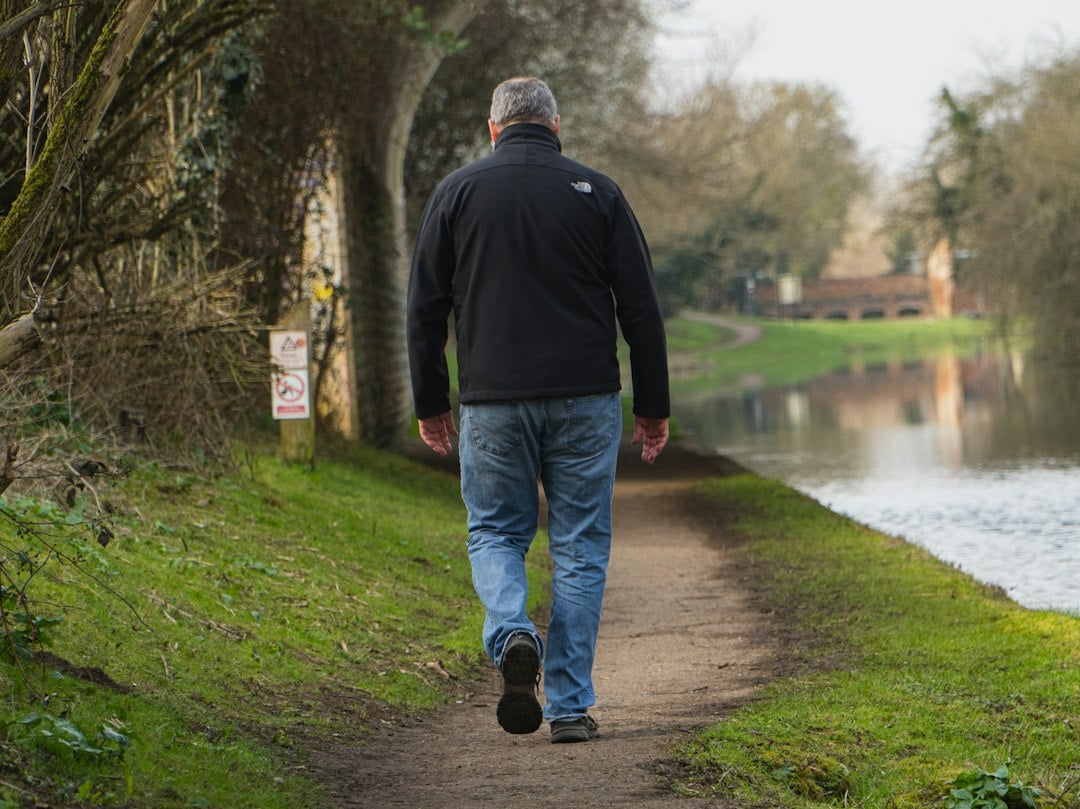
Wrist-worn devices remove much of that noise. They also capture activity accumulated outside deliberate exercise, which is how many adults in their late sixties reach the guideline in the first place. Similar accelerometer work has reshaped how researchers read short bursts of vigorous activity against longer moderate sessions.
The trade-off is that a wrist device sees resistance training poorly, and it infers intensity from motion rather than physiological strain. A cohort at this age will contain people for whom a brisk walk is metabolically demanding and people for whom it is not, and the device records both the same way.
What Genetic Risk Scores Can and Cannot Tell an Individual
A genetic risk estimate is a population instrument. It describes how often an outcome appears among people carrying a given pattern of variants, not whether one particular person will develop a condition.
That distinction is easy to lose. Being placed in a high genetic risk band does not mean a diagnosis is coming, and being placed in a low band is not protection. The present analysis is best read as evidence that the everyday variables sat alongside genetic risk rather than underneath it.
What an Observational Cohort Cannot Settle
The authors acknowledge that the findings are observational and so cannot prove cause and effect. People who exercise regularly and eat fewer ultra-processed foods tend to differ from those who do not in ways that are difficult to measure fully.
Reverse causation is also worth naming. Early metabolic changes can reduce energy and appetite for movement well before a diagnosis, which would make lower activity look like a cause when it is partly a consequence. The cohort’s average age of 69.5 years further limits how far the numbers travel to younger adults. This is a familiar constraint in large population work, including UK Biobank analyses of concentrated weekend activity patterns.
Timing matters too. A conference presentation arrives before peer review has finished, and figures quoted in a press release can move once reviewers have seen the full model specifications and the sensitivity analyses that sit behind them.
How to Read This Alongside Your Own Week
The practical content here is modest and familiar, which is part of why it is worth stating. The activity threshold in the analysis is the same one public health agencies already publish, and it was met by ordinary accumulated movement rather than structured athletic training.
The Centers for Disease Control and Prevention recommends 150 minutes of moderate-intensity activity a week, or 75 minutes of vigorous activity, plus at least two days of muscle-strengthening work covering the major muscle groups. Nothing in this analysis argues for more than that.
- Treat the 150-minute figure as a floor to reach consistently rather than a target to exceed heroically.
- Count walking, cycling to errands and stairs; the trackers did not distinguish deliberate exercise from the rest.
- Approach ultra-processed intake as a gradient, replacing a share of items rather than attempting an overhaul.
- Do not read a family history as a reason to skip the effort; in this cohort the effort was associated with the largest absolute benefit where genetic risk was highest.
None of this is individualised advice, and anyone with existing metabolic concerns should work through changes with a clinician. Readers weighing how to split their week between modalities may find our earlier coverage of cardio and strength training in relation to diabetes risk a useful companion, alongside work on estimated cardiorespiratory fitness and long-term disease risk.
The Fitness Living Takeaway
In 56,964 UK Biobank adults, meeting the weekly activity guideline was linked to 39 percent lower type 2 diabetes risk, and the benefit was largest in absolute terms among those at high genetic risk.
This is an observational analysis presented at a conference, so it establishes association rather than cause. What it does supply is a useful counterweight to fatalism about inherited genetic risk. The activity dose involved is the standard public health recommendation, not an athletic one.
Research & Sources
- EurekAlert: Reducing ultra-processed food intake and being physically active can cut risk of type 2 diabetes, regardless of genetic make-up
- EASD: 62nd Annual Meeting, Milan, 28 September to 2 October 2026
- CDC: Physical activity guidelines for adults
- Images: Brian Kungu / Unsplash; Caspar Rae / Unsplash
This article summarizes peer-reviewed research for general information and is not individualized medical or exercise advice.