A new meta-analysis pooled 26 controlled trials to test whether exercise improves bone health at the wrist and forearm, sites that fracture often but are studied rarely. The pooled estimate favored exercise, yet the authors graded the certainty of the upper-limb bone health evidence as very low.
Bone Health research has concentrated for decades on the hip and the spine, leaving the far end of the forearm comparatively unexamined. A systematic review and meta-analysis published on September 22, 2026 in Current Osteoporosis Reports set out to close that gap, pooling 26 controlled trials that measured what exercise does to bone in the upper limb.
The review was led by Gonzalo Reverte-Pagola, Jose Luis Gil-Delgado and Borja Sañudo of the Departamento de Educación Física y Deporte at the Universidad de Sevilla, working with David Wing of the University of California, San Diego. Their premise was stated plainly: distal radius fractures are common fragility fractures in women, but exercise-related evidence has focused mainly on the hip and spine.
Twenty-six controlled trials involving 1,880 women were included. The pooled estimate favored exercise with a standardized mean difference of 1.05 and a 95% confidence interval running from 0.68 to 1.43, at p below 0.001. The authors describe that as a large positive average effect.
The direction of effect was positive in the majority of trials, and the pooled estimate stayed statistically significant in every leave-one-out analysis. That is the encouraging half of the result. The cautious half is that between-study heterogeneity reached 91% and the prediction interval crossed the null.
At a Glance
- Published September 22, 2026 in Current Osteoporosis Reports, a peer-reviewed review journal.
- Twenty-six controlled trials involving 1,880 women were pooled.
- Standardized mean difference of 1.05, with a 95% confidence interval from 0.68 to 1.43 and p below 0.001.
- Between-study heterogeneity was very high at I² = 91%.
- The prediction interval ran from −0.96 to 3.06 and crossed the null.
- Within-category estimates were positive for combined and dynamic weight-bearing programs and for high and moderate-to-high-intensity programs.
- GRADE certainty for the assessed bone health evidence was very low, and the effect on fracture rates remains unknown.
What the Review Actually Measured
The pooled outcome was distal radius bone mineral density or bone mineral content, measured by dual-energy X-ray absorptiometry at the end of each intervention. Those scans report how much mineral sits in a defined segment of bone. They are the working currency of bone health research, and they are not the same thing as a wrist fracture avoided.
That distinction matters because the review states it directly. The analyzed outcomes were surrogate measures of bone health, and the effect of exercise on distal radius fracture incidence remains unknown.
Why the Wrist Has Been Left Out of Bone Health Research
Hip and spine scans dominate osteoporosis practice because fractures at those sites carry the heaviest consequences. The forearm has been treated as secondary. Yet a distal radius fracture is frequently the first fragility fracture a woman sustains, which makes it an early signal rather than a minor event.
Exercise trials have followed the same pattern, testing walking, jumping and lifting against hip and lumbar spine outcomes. The result is a body of bone health evidence with a gap sitting exactly where many women break first.
Women across 26 controlled trials contributed the upper-limb bone health data pooled in this review.
How Large the Effect Was, and How Uncertain
A standardized mean difference of 1.05 is a large effect by conventional benchmarks, and a confidence interval from 0.68 to 1.43 never approaches zero. Taken alone, that reads as a firm result.
The prediction interval tells a different story. Running from −0.96 to 3.06, it describes the range a new trial might plausibly land in, and it includes no effect at all. Heterogeneity of 91% is the reason: the trials differed enough that the average conceals wide variation.
Leave-one-out testing did add reassurance. No single trial was carrying the pooled result, which rules out one common way a meta-analysis can mislead its readers.
Which Exercise Types Looked Most Promising
Exploratory within-category estimates were positive for combined programs and for dynamic weight-bearing interventions, and positive again for high-intensity and moderate-to-high-intensity programs. Combined programs typically pair resistance work with impact or weight-bearing movement rather than relying on either one alone.
The authors attach a caveat to their own subgroups. These intensity categories were modality-specific operational classifications rather than directly comparable measures of skeletal loading, which means a high-intensity label in one trial may describe a very different mechanical stimulus than the same label in another. The dose questions here echo those raised in our coverage of a 23-study review of resistance training in young people.
How Mechanical Loading Reaches the Forearm
Bone responds to strain rather than to effort. The cells that build and remodel it register the mechanical deformation produced when load passes through the tissue, which is why the sites that get loaded are the sites that adapt. A brisk walk delivers repeated strain to the hip and the spine and almost none to the radius.
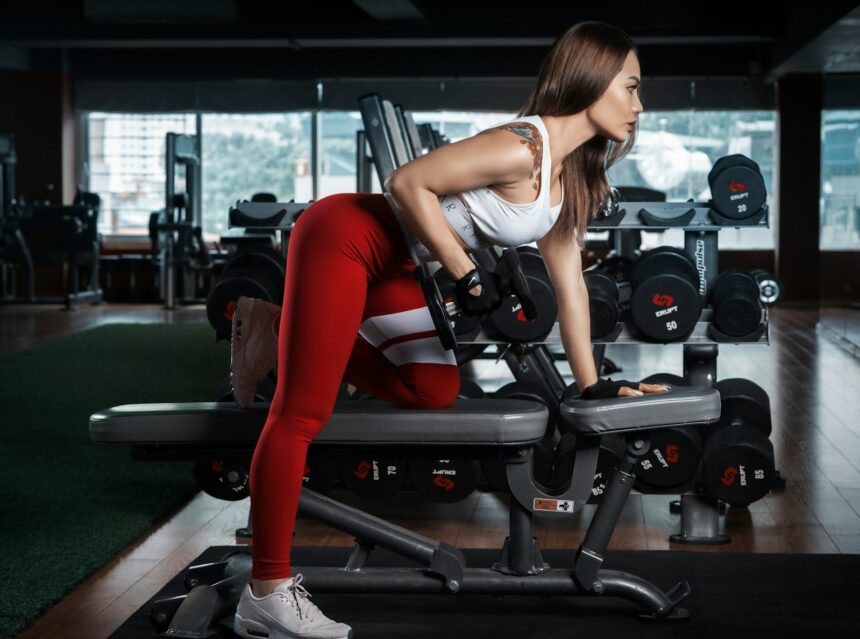
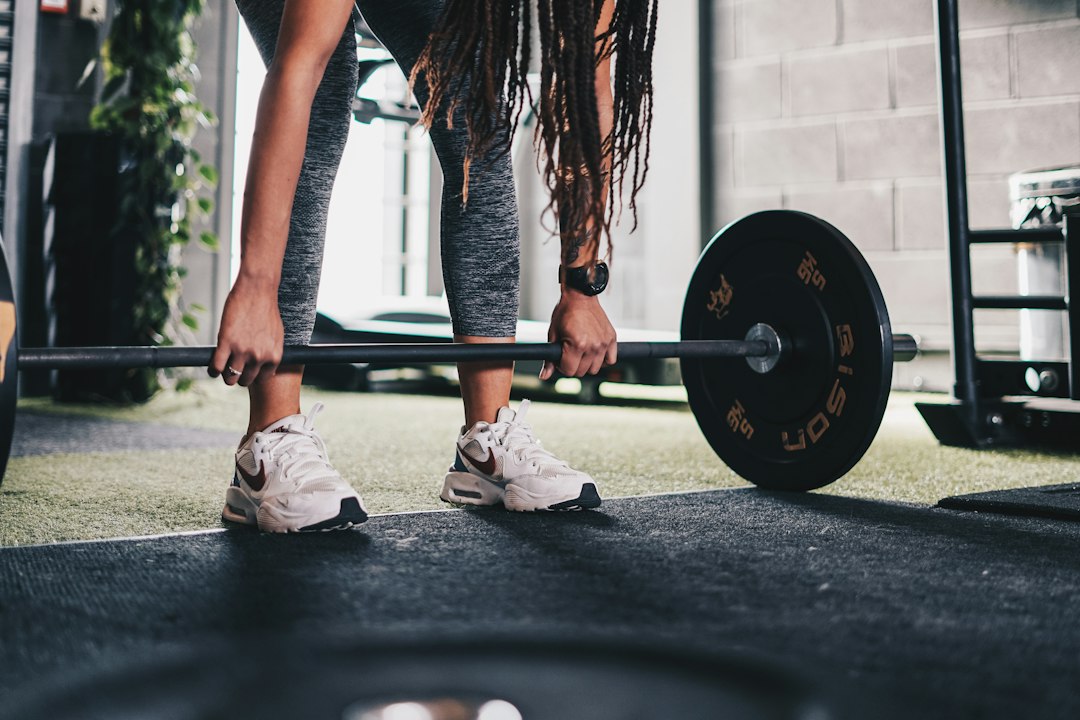
That is the mechanical logic behind the interest in combined and weight-bearing programs. Pressing, pulling, carrying and supporting body weight through the hands all route force into the forearm in a way that walking cannot. The authors are careful to call this reasoning hypothesis-generating rather than demonstrated, since their subgroups were not designed to isolate a mechanism.
It also explains why upper-limb bone health may need a prescription of its own. A program built around lower-body work can look complete on paper and still leave the radius largely unloaded, which is a plausible reason the wrist has lagged behind the rest of the skeleton in bone health practice as well as in research.
What Very Low Certainty Means for Bone Health Advice
GRADE certainty was rated very low for the specifically assessed body of evidence on distal radius bone mineral density or content measured by DXA at the end of the intervention. Very low is the bottom rung of that scale. It signals that the true effect could differ substantially from the pooled estimate.
The rating does not mean the finding is wrong. It means the evidence base is thin, varied and short on the large, long, well-controlled trials that settle a question. The practical translation is that exercise remains a reasonable bet for bone health at this site without yet being a proven one.
Where This Sits Alongside Other Research in Women
Bone is one of several systems that respond to training across the menopausal transition. Our report on aerobic exercise after menopause and executive function covered a trial in a similar population with a different outcome, and the contrast is instructive. Cognitive and cardiorespiratory endpoints often move faster than skeletal ones.
Fracture risk is also not a bone health question alone. A wrist fracture usually follows a fall, and reactive balance training in older adults addresses the other half of that equation. The two lines of research are complementary rather than competing, and neither substitutes for the other.
What the Finding Does and Does Not Support
The review supports continued investigation and a general preference for loaded, weight-bearing work over unloaded movement when bone health is the goal. It does not support a specific prescription, a guaranteed gain, or any claim about preventing fractures at the wrist.
For most adults the sensible reading is that this evidence adds to the existing case for strength and impact work without changing it dramatically. General principles that already have support elsewhere still apply.
- Include resistance training and weight-bearing activity rather than relying on walking alone.
- Progress load gradually over months, since the positive subgroups involved progressively intensified programs.
- Treat forearm and wrist loading as part of a whole-body plan, not a replacement for hip and spine work.
- Ask a clinician before starting loaded training if you have diagnosed low bone density or a fracture history.
Consistency matters more than any single session, and even short repeated efforts can accumulate, a pattern explored in our review of exercise snacking for strength and mobility in older adults. The National Institute of Arthritis and Musculoskeletal and Skin Diseases describes weight-bearing and resistance work as the two categories of activity that make bone work harder.
The Fitness Living Takeaway
Pooling 26 controlled trials in 1,880 women, exercise was linked to better upper-limb bone health, with a large average effect that the authors themselves rate as very low certainty.
The signal is encouraging, and it held when individual trials were removed one at a time. But heterogeneity was very high, the prediction interval crossed zero, and every outcome was a scan measure rather than a fracture. Treat this as a reason to keep loading the skeleton, not as proof that a particular program protects the wrist.
Research & Sources
- Current Osteoporosis Reports: Exercise Improves Upper-Limb Bone Health in Women
- Study DOI
- NIAMS: Exercise for Your Bone Health
- Images: Cathy Pham / Unsplash; Rick Barrett / Unsplash
This article summarizes peer-reviewed research for general information and is not individualized medical or exercise advice.