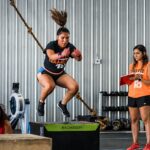

A Rutgers analysis of a randomized exercise trial suggests that aerobic exercise after menopause can improve executive function—the mental skills used to plan, switch tasks and stay focused—with measurable gains appearing within three months.
Aerobic exercise after menopause may offer a meaningful cognitive benefit beyond its well-established effects on heart and metabolic health. Researchers studying 93 healthy women found that postmenopausal participants assigned to aerobic training improved executive-function performance more than women assigned to stretching and toning, and more than premenopausal women completing the same aerobic program.
The study was a post hoc analysis of a six-month randomized controlled exercise trial. Participants ranged from ages 20 to 67, and 43% were postmenopausal. All began with below-average cardiorespiratory fitness and were not exercising regularly, which makes the sample more representative of women beginning a program than of lifelong endurance athletes.
At a Glance
- 93 healthy women ages 20 to 67 took part; 43% were postmenopausal.
- Participants were assigned to six months of aerobic exercise or stretching and toning, four days per week.
- Postmenopausal women in the aerobic group showed the clearest gains in executive function.
- Improvements appeared by three months and continued through six months.
- The benefit was specific to executive function; memory and other cognitive domains did not improve in the same way.
What Aerobic Exercise After Menopause Changed
Executive functions are the cognitive processes used to organize behavior: switching between tasks, managing competing information, suppressing errors and sustaining goal-directed attention. These skills are central to everyday independence and can feel less efficient for some women during and after the menopause transition.
In the Rutgers analysis, the strongest improvements were seen in standardized tasks that measured task-switching speed and error management. The researchers reported that gains were already detectable after three months of aerobic training and continued to strengthen across the six-month intervention.
The exercise intervention lasted half a year, with participants scheduled for four sessions per week. About eight in ten completed at least three months and roughly seven in ten completed the full program.
Why Menopausal Status May Matter
Menopause is accompanied by substantial hormonal change, including a decline in estrogen. Researchers are increasingly interested in whether this transition changes how the brain responds to exercise, especially because women account for a larger share of Alzheimer’s disease diagnoses and midlife is viewed as an important window for long-term brain-health habits.
This study does not show that menopause causes cognitive decline or that aerobic training prevents dementia. It asks a narrower question: whether menopausal status changes the cognitive response to a structured exercise program. Within this sample, postmenopausal women appeared to gain more in executive function than the other groups.
What the Study Did Not Prove
The analysis involved only 93 women, and the menopause finding came from a secondary analysis rather than the trial’s original primary question. That means the result should be considered promising rather than definitive.
The study also did not find across-the-board cognitive improvement. The effect was concentrated in executive functions. Memory and processing-speed measures did not show the same pattern, which argues against overstating the results as a general brain boost.
The women were cognitively healthy and medically able to exercise. These findings should not be used to self-diagnose memory concerns or to substitute exercise for medical evaluation when cognitive symptoms are new, progressive or disruptive.
How the Program Was Structured
Participants in the aerobic arm exercised four days each week for six months. The program was designed to improve cardiorespiratory fitness rather than simply increase casual movement. Rutgers’ practical guidance based on the trial describes aerobic options such as brisk walking, jogging, cycling and elliptical training, with exercise intensity progressed over time.
The comparison group completed stretching and toning. That is important because the study did not compare exercise with complete inactivity; it compared a cardiovascular training stimulus with a lower-intensity movement program.
What This Means for Fitness Programming
For women entering or moving beyond menopause, the study adds another reason to protect aerobic capacity alongside strength, mobility and bone-loading work. A balanced fitness plan does not need to choose between cardio and resistance training. Each addresses different components of healthy aging.
Women who are currently inactive do not need to begin with four demanding sessions per week. Starting with shorter bouts, increasing total weekly time gradually and choosing an activity that is sustainable are more realistic ways to build toward the type of fitness improvement tested in the study.
Our recent coverage of prolonged sitting and vascular function reinforces the same broader idea: one workout does not define the entire health picture. Structured exercise, everyday movement, sleep and recovery work together.
Why This Story Matters Today
The Rutgers findings are receiving renewed attention today because the university highlighted the study as part of its current brain-health reporting. For Fitness Living readers, the most practical takeaway is that improving aerobic fitness may support cognitive skills that matter for daily function during a life stage when many women reduce activity because of symptoms, responsibilities or uncertainty about what kind of exercise is most useful.
It is also a reminder that fitness research is becoming more specific. Instead of asking whether exercise is generally “good for the brain,” researchers are increasingly asking which type of exercise, for which population, and which cognitive outcome.
The Fitness Living Takeaway
Aerobic exercise after menopause improved executive function in this small randomized-trial analysis. The gains appeared by three months and continued through six months, while other cognitive domains did not show the same benefit. The finding supports regular cardiovascular training as one part of a broader healthy-aging plan, but it does not prove that cardio prevents dementia or reverses cognitive decline.
Research & Sources
- Journal of Alzheimer’s Disease / PubMed: randomized trial analysis
- Rutgers University research summary
- Rutgers Brain Health Institute practical guide
- Image: McCarthy Beckan
This article reports on peer-reviewed research for general information and is not individualized medical advice.
The Fitness Living Weekly
New Fitness Living Spotlights, important fitness news, research and independent reporting, delivered directly to your inbox.
One considered edition each week.
Do You Lead a Fitness Business Worth Knowing?
Fitness Living Magazine features independent gym owners, fitness trainers, and Pilates studio owners strengthening their local communities.