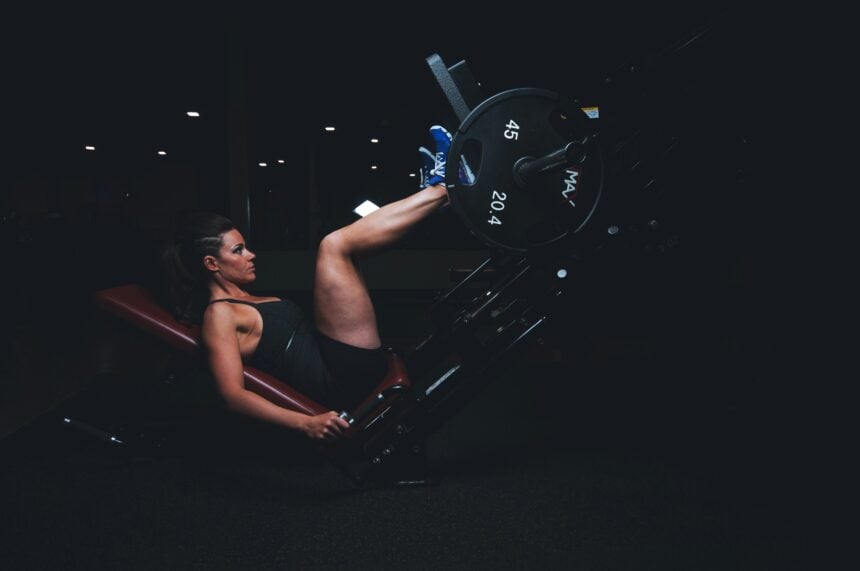
Twenty men and twenty women were monitored through three working sets of leg press. Brain artery pulsatility climbed in both groups during resistance exercise, even though the men produced a markedly larger blood pressure response.
Resistance Exercise increased pulsatility in the middle cerebral artery in both sexes, with no statistically significant difference between men and women, according to a study published in Artery Research on September 22, 2026.
The work came from the Clinical Vascular Research Laboratory in the Department of Kinesiology and Health at Iowa State University, with Wesley K. Lefferts as corresponding author. It was designed to test whether the brain circulation responds differently by sex during a single bout of lifting.
That question has a practical origin. As the authors note, resistance exercise is recommended to reduce the risk of cardiovascular and cerebrovascular disease, and existing evidence suggests that women who train regularly may receive a greater benefit than men. Whether acute responses explain any of that was unknown.
The answer, at least for the brain, was no. Men pushed their blood pressure higher during the sets, but the cerebral consequences of that pressure looked much the same in both groups.
At a Glance
- Published September 22, 2026 in Artery Research, from Iowa State University.
- Twenty men, aged 25 plus or minus 6 years, and twenty women, aged 23 plus or minus 5 years, with similar body mass index values.
- Protocol: two warmup sets, then three sets of leg press at 65 percent of one-repetition maximum for 12 repetitions.
- Men showed larger increases in mean arterial pressure than women during resistance exercise, interaction p equal to 0.003.
- Compared with rest, resistance exercise increased middle cerebral artery pulsatility and cerebral pulsatile damping, both p less than 0.001, and carotid beta-stiffness, p equal to 0.01, in both groups.
- No significant interaction effects were observed for those cerebrovascular measures, meaning the increases did not differ by sex.
- Main caveat: 40 young, healthy participants, one exercise, one body position, and more than 20 percent missing data for some vascular variables.
What the Team Measured During Each Set
Middle cerebral artery pulsatility index, cerebral pulsatile damping and carotid beta-stiffness were assessed using Doppler ultrasound and tonometry. Beat-to-beat blood pressure was captured by photoplethysmography. Measurements were taken at rest and again during the first and third working sets.
Pulsatility index describes how much the flow velocity in an artery swings between each heartbeat. Pulsatile damping describes how much of that swing the circulation absorbs before it reaches smaller vessels. Carotid beta-stiffness is a measure of how rigid the carotid artery behaves under the pressure it is carrying.
Taken together, these are the variables that would show whether the pressure spikes generated during resistance exercise are being transmitted into the brain circulation or buffered before they arrive.
How the Resistance Exercise Protocol Worked
Participants completed leg press resistance exercise: two warmup sets followed by three sets at 65 percent of their one-repetition maximum for 12 repetitions. Strength was established indirectly. After a warm-up set, participants self-selected a weight aiming to complete roughly 10 to 12 repetitions, and the load was adjusted over about six further sets until a five-repetition maximum was identified. One-repetition maximum was then estimated using the Brzycki equation.
The sample was deliberately clean. Participants did not smoke or vape, and had no history of stroke, cardiovascular event, concussion within the previous three months, or pulmonary, renal, neurological or metabolic disease. All procedures were approved by the Iowa State University Institutional Review Board.
That screening makes the physiology easier to interpret, and it also narrows who the findings describe. This is a young, healthy sample performing one machine-based movement.
Where Men and Women Actually Differed
The clearest sex difference was in the pressure response itself. Men exhibited larger increases in mean arterial pressure compared with women, with an interaction p value of 0.003. The pressor response to resistance exercise, in other words, was not equal.
There were also baseline differences. Men showed higher resting middle cerebral artery pulsatility and resistive indices, but lower conductance, than women, with a sex effect p value of 0.01. Those gaps existed before anyone lifted anything.
What did not differ was the change. Middle cerebral artery pulsatility index and resistive index rose, and conductance fell, from rest to set one and again to set three, with no significant interaction by sex. Heart rate and end-tidal carbon dioxide both increased in both groups, although post-hoc comparisons were not statistically significant.
Young, healthy adults, evenly split by sex, monitored with ultrasound and tonometry while performing three working sets of leg press.
Why a Null Result Is Worth Reporting
A finding that two groups responded the same way is easy to overlook, but it carries information. If women gain more from regular lifting than men, as some evidence suggests, this study indicates that the explanation probably does not lie in a gentler acute cerebrovascular response to resistance exercise.
It also rules in a puzzle. Men generated more pressure during resistance exercise, yet did not show a proportionally larger rise in cerebral pulsatility. The authors argue this warrants further work on sex-specific pressor responses and their consequences for vascular adaptation over time.
Null results in small physiology studies deserve a particular caution, however: 40 participants can miss a real but modest difference. Absence of a detected difference is not the same as evidence that no difference exists.
How This Fits Alongside Other Vascular Findings
Acute vascular responses to lifting have become a small but active research area. Our earlier report on static stretching and vascular recovery after lifting looked at what happens in the minutes afterward, while our coverage of cardiac remodeling in elite weightlifters examined the structural end of the same spectrum, years into a training career.
Between those two timescales sits the question this study raises: whether repeated acute exposures accumulate differently depending on the pressure generated. The authors put it carefully, writing that sex differences in hemodynamic sensitivity to acute increases in pressure during resistance exercise may contribute to differential adaptations to repeated bouts, if performed regularly.
Our report on prolonged sitting and leg blood vessel function is a reminder that vascular measures also respond to what happens between sessions, not only within them.
What This Means for Resistance Exercise in Practice
For most healthy lifters, nothing here changes what a session should look like. The rises in pulsatility and carotid stiffness were measured during the sets themselves, in a healthy young sample, and the study reports no adverse events or lasting effects.
What it does offer is a clearer picture of what a hard set does while it is happening. A few reasonable points follow from that:
- Pressure responses to the same relative load vary between individuals, and sex was one source of that variation here.
- The brain circulation buffered those pressure swings similarly in men and women, at least during a machine-based lower-body lift.
- Breath-holding tends to amplify pressure spikes during resistance exercise, which is why controlled breathing is standard coaching advice.
- People with known cerebrovascular or cardiovascular conditions were excluded from this study, so it says nothing about them.
Anyone with high blood pressure, a history of stroke, or another cardiovascular diagnosis should get individual clearance and programming guidance from a qualified clinician before starting or changing a lifting program. Our coverage of isometric resistance training and rapid force production covers a different corner of the same field.
The Fitness Living Takeaway
In 20 men and 20 women, a single bout of leg press resistance exercise raised cerebral pulsatility, pulsatile damping and carotid stiffness to a similar degree in both sexes, despite men generating a larger blood pressure response.
The result argues against a simple acute explanation for reported sex differences in the long-term benefits of lifting. It is also a small, tightly screened sample using one exercise in one body position, with substantial missing data for several vascular measures. The authors present it as grounds for further study rather than a settled conclusion.
Research & Sources
- Artery Research: Cerebrovascular Responses During an Acute Bout of Resistance Exercise Do Not Differ Between Sex
- Study DOI
- Images: Scott Webb / Unsplash; Rifki Dwi Achsani T / Unsplash
This article summarizes peer-reviewed research for general information and is not individualized medical or exercise advice.