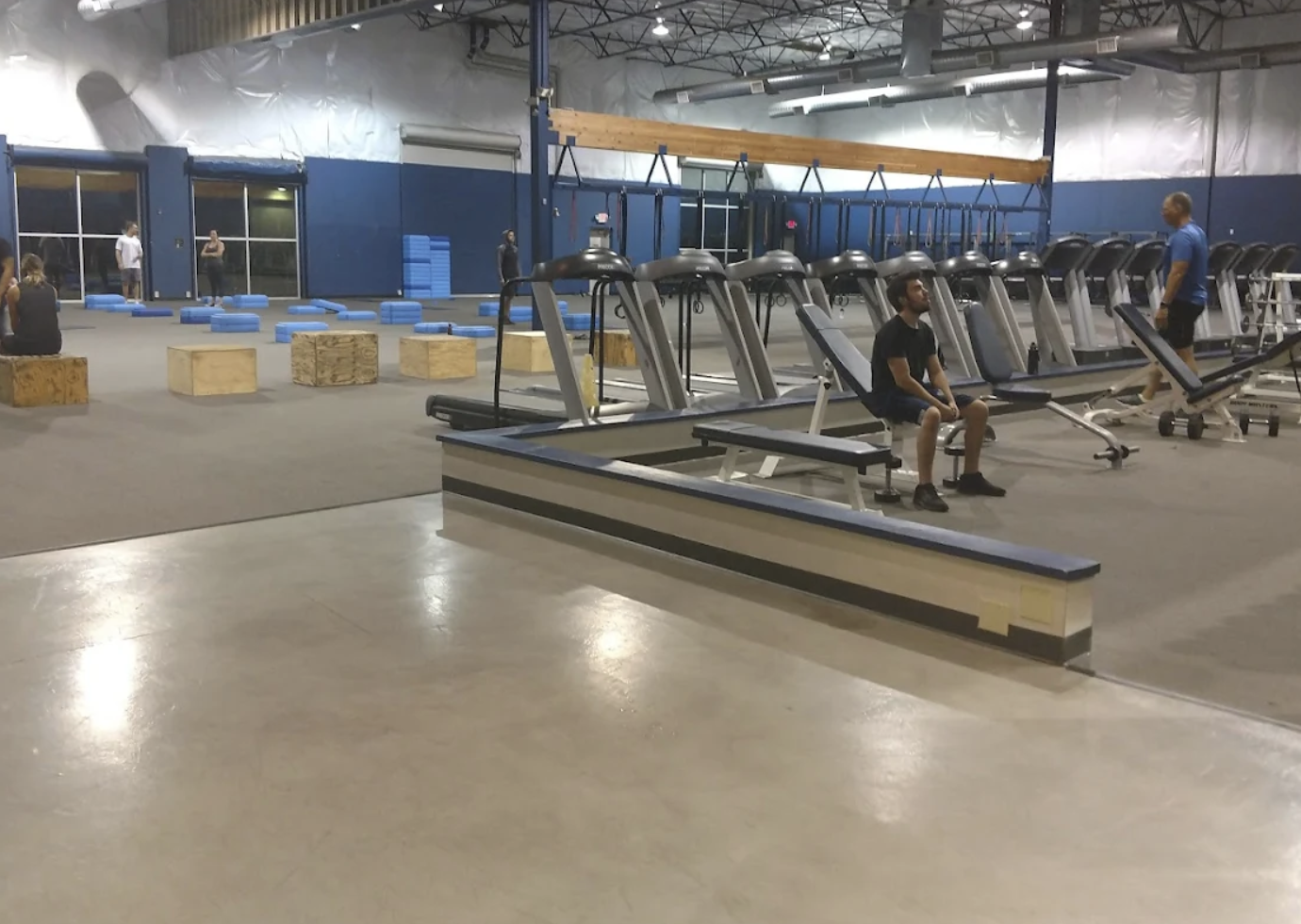
Kawahata started with a small group of people training together before Fitness MD was incorporated in 2007. What grew from that beginning is a roughly 22,000-square-foot Roseville facility where his signature Fit Club model tries to bring the guidance of personal training into a group environment at a more accessible cost.
“Everything’s kind of guided and customized, even though we’re in a group.”David Kawahata, Owner and Head Trainer / Fitness MD
The first thing a prospective Fit Club member encounters is not a generic workout. Kawahata described a detailed intake that includes body-composition and circumference measurements, discussion of goals and injury history, and a broad movement screen used to identify mobility and stability limitations.
Inside the group sessions, the customization remains visible. Kawahata described coaching a room of roughly fifteen people while running several variations of the same training idea at once, changing the exercise or difficulty according to the person’s level, goals, needs, and limitations.
The environment is also deeply personal. Kawahata’s wife manages much of the administrative side, his children have spent time in and around the gym, and he has watched young athletes grow up, leave for college, and later return as adult members.
Kawahata’s order of operations is to identify what a member wants, identify what the member appears to need, and build the plan where those two meet. The program is meant to be individualized without requiring the member to purchase one-on-one training for every session.
The operating premise is not that every member needs a different gym. It is that every member deserves a different prescription. Fitness MD keeps the shared schedule and group energy while asking the assessment to determine how each person participates.
That distinction turns customization from a marketing adjective into an operating system: measure first, decide second, then coach the version that fits the person in front of you.
What Individualized Group Training Actually Requires
Fitness MD sits between two familiar fitness models. An open gym gives members freedom but little built-in guidance. One-on-one personal training gives close attention but can become expensive. Kawahata built Fit Club to borrow from both: a shared training environment with individual assessment, trainer accountability, and exercise choices that can differ from person to person.
Fitness MD is a Roseville, California fitness facility led by David Kawahata, whose signature Fit Club membership delivers customized programming inside structured group training.
Each Fit Club member begins with an intake that combines body-composition measures, goals, injury history, and movement testing. Kawahata then uses those findings to help determine what the member should work on and how the program should be adjusted.
The model is designed for people who want coaching and accountability without assuming that everyone in a group should perform the same exercise in the same way.
Kawahata grew up in the area, studied kinesiology at Sacramento State, completed graduate work through A.T. Still University, and later finished doctoral study in health and human performance. He also described publishing research, continuing to work on new research, and teaching as an adjunct professor. The business itself began as a small training group before Fitness MD was incorporated in 2007.
Inside The Fitness MD Approach
This profile examines how a Roseville gym uses assessment, individualized programming, diverse weekly training, and long-term relationships to make group coaching more specific to the person.
The group schedule is shared, but the plan is not. Members can perform different variations based on goals, ability, needs, and limitations.
The model is built for general members who want guidance, accountability, and a broad approach to fitness rather than one narrow training style.
Kawahata combines nearly two decades of local operation with formal study, teaching, research, and a large member community that includes families and longtime relationships.
From A Small Training Group To A 22,000-Square-Foot Gym
Kawahata’s path into fitness was gradual rather than dramatic. He grew up playing sports, began training on his own in high school, and kept returning to health, nutrition, kinesiology, and the question of how to help people exercise more effectively.
He saw two problems at once: many people needed more guidance than they were getting on their own, while one-on-one training could become expensive. The early version of Fitness MD was simply a small group training together with Kawahata coaching them. Over time, that idea expanded into a large Roseville facility and the Fit Club model that still defines the business.
Why The Assessment Comes Before The Program
The most distinctive mechanism at Fitness MD is the intake that comes before the training plan. Kawahata described collecting familiar measures such as body weight, body composition, and circumferences, then adding a broad movement screen and a discussion of goals, history, and limitations.
He uses that information to separate what a member wants from what the member may need to work on. Appearance and body-composition goals can matter, but so can mobility, stability, strength, power, cardiovascular capacity, and the ability to move comfortably through daily life.
The practical consequence appears on the floor. A group may be following the same training theme, yet several exercise variations can be running at once. Kawahata described one room where five people might do one version, five another, and five a third, so the class stays shared without pretending the members are interchangeable.

Coached As An Individual Inside The Group
A Fit Club member is not asked to arrive and guess which version of the workout fits. The intake establishes the starting information, and Kawahata said members are linked to a trainer who is responsible for helping guide the process over time.
During class, that personalization becomes operational. Exercise selection, difficulty, range of motion, and emphasis can change according to the member’s goals, fitness level, history, and current needs. The experience is group training in atmosphere, but individual coaching in prescription.
Constant Betterment As The Governing Philosophy
Kawahata does not like boxing himself into one training doctrine. His broader philosophy is to keep assessing what can improve, work on it, and then move to the next priority. He describes the idea as constant improvement or constant betterment rather than loyalty to one branded method.
That helps explain why the weekly program is deliberately broad. Strength days sit beside power, plyometric and agility work, core training, and endurance. Kawahata also argues that fitness is often made more complicated than it needs to be: the best program, in his view, is ultimately the one a person can perform consistently enough to move toward a real goal.
The sophistication of the Fitness MD model is not that members are asked to understand more complexity. It is that the staff absorbs the complexity of assessment and program design, then gives the member a clearer job: show up, train the appropriate version, and keep improving.
What Fitness MD Offers
Based on Kawahata’s interview and the existing published Spotlight, Fitness MD combines open-gym access with a more structured Fit Club membership built around individualized coaching inside group sessions.
“There is no other gym like it. I have been going to FMD for 3 years now and I love it. The trainers and the classes are amazing. A little over a year ago I had back surgery and was out for a bit. David, not only checked on me, but when I came back he ensured I was doing things correctly. He modifies exercises and helps correct me. I am thankful for FMD! I even moved out of the area and continue to come.”
Built For People Who Want More Than A Gym Membership
Kawahata built Fit Club for the space between training alone and paying for continuous one-on-one coaching. The open-gym membership still exists for people who prefer independence, but the coached model is where assessment, accountability, and customization become part of the membership itself.
The program is also intentionally varied. In a typical week, Kawahata described two strength days, a power, plyometric and agility day, a core day, and lower-intensity endurance work. The objective is not to make every member a specialist in one style; it is to keep improving across several qualities that matter to general fitness.
That breadth is paired with a strong community identity. Kawahata said some members who moved away became emotional about leaving the gym, and he has watched children he trained years ago return later as adult members. For him, those relationships are evidence that the place has become more than a room full of equipment.
What Consistency Produces
Kawahata says the first weeks can simply feel hard: soreness, fatigue, and the adjustment to regular training. After that, he tends to notice members describing a general sense of feeling better and moving through the gym with more energy.
He also described published research involving Fitness MD participants that measured changes across body composition and behavior-related variables such as exercise-habit strength, self-discipline, and exercise identity. Those findings are part of his research record, but they are not a guarantee of what any individual member will experience.
The broader lesson in his interview was simpler than any single metric. Exercise works through repetition. Kawahata’s preference is to make the program specific enough to be useful, varied enough to stay engaging, and structured enough that members can keep showing up long enough for progress to accumulate.
A Family Business That Became A Community
Fitness MD is woven into Kawahata’s family life. He said his wife manages much of the administrative side while he leads the training side, their children have spent time working and training around the gym, and longtime member families have grown alongside the business.
Why This Matters In Roseville
Kawahata’s connection to the area predates the business. He grew up locally, studied kinesiology at Sacramento State, and now lives in Roseville. Fitness MD was incorporated in 2007 after beginning as a smaller training practice, giving the program a long operating history in the same community.
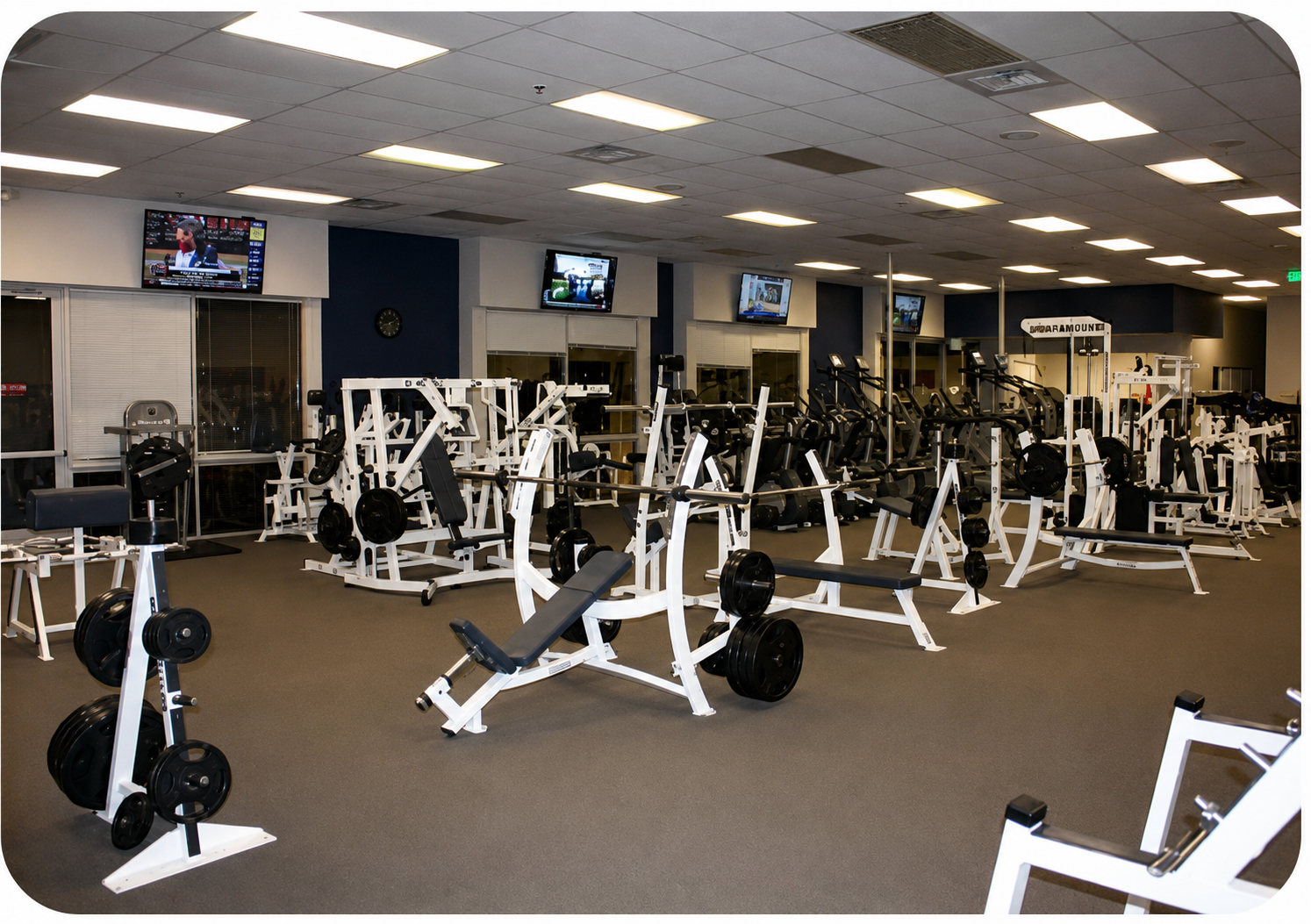
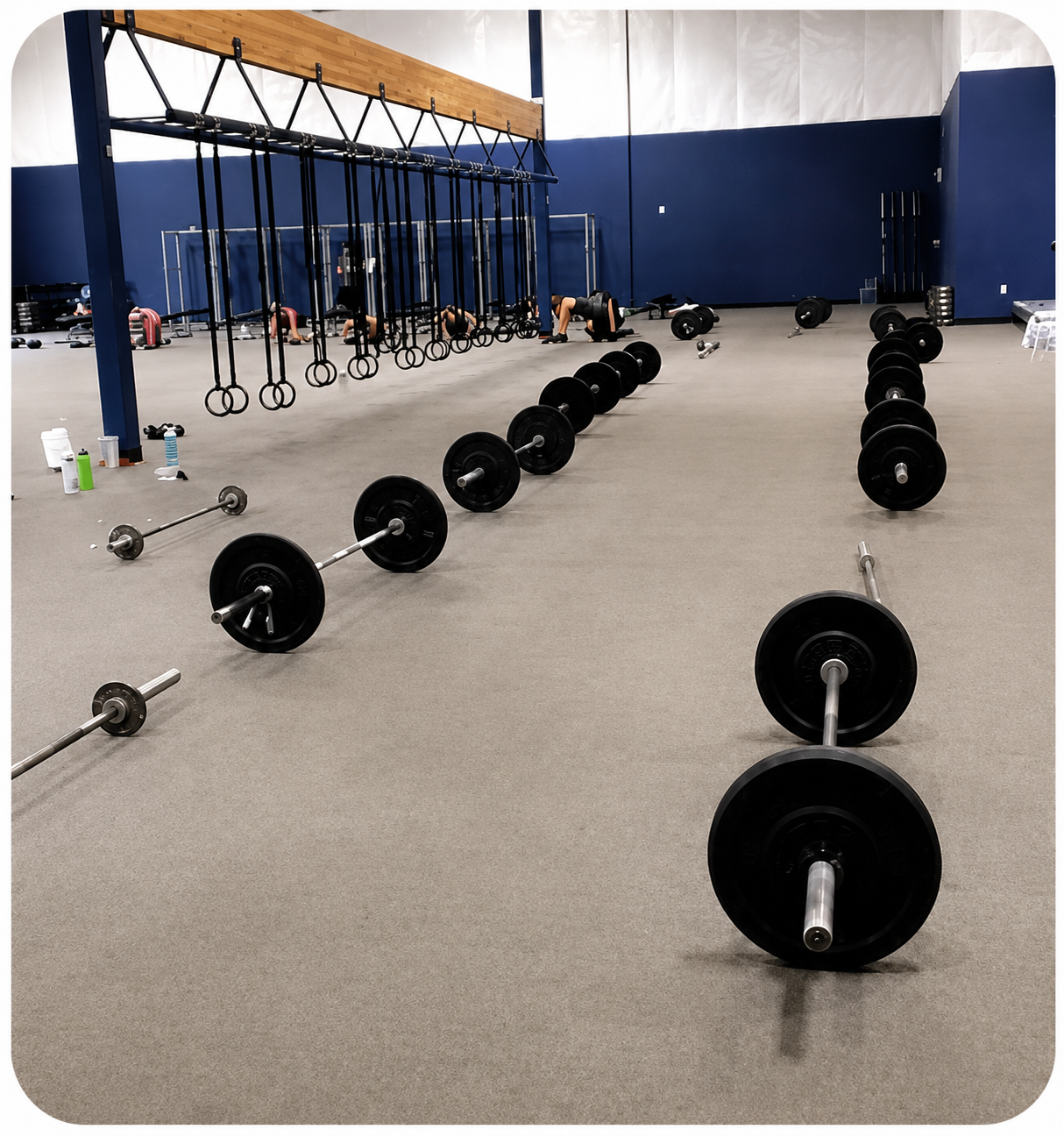
Scale is part of the local story as well. Kawahata described a facility of roughly 22,000 square feet and estimated about 1,000 Fit Club members plus roughly 1,000 open-gym members at the time of the interview. Those figures reflect his own estimate rather than an audited membership count.
For a Roseville resident comparing group training, personal training alternatives, or a gym membership with more built-in guidance, Fitness MD’s clearest distinction is the combination of assessment and customization: the room can be shared without requiring the program to be generic.
FAQ
Who Is David Kawahata?
David Kawahata is the owner and head trainer of Fitness MD in Roseville, California. He studied kinesiology at Sacramento State, completed graduate work through A.T. Still University, and described doctoral study in health and human performance, published research, and adjunct teaching.
What Is Fitness MD Known For?
Fitness MD is best known in this Spotlight for its Fit Club model: customized group training in which an assessment helps guide an individualized plan and members can perform different exercise variations inside the same structured session.
Is Fitness MD Beginner Friendly?
The source material supports a flexible starting point rather than a one-size-fits-all entry standard. Kawahata described assessing each person first and scaling exercise choices according to fitness level, goals, needs, and limitations.
Do Members Need Prior Training Experience?
Kawahata did not describe prior experience as a requirement for Fit Club. The intake is designed to establish the member’s current starting point so the training plan and exercise variations can be adjusted from there.
What Makes Fitness MD Different In Roseville?
Its distinguishing combination is assessment-led intake, trainer-linked individualized programming, a broad weekly training mix, and delivery inside a group environment intended to lower the cost of continuous coaching.
What Programs And Services Does Fitness MD Offer?
The supplied sources describe Fit Club customized group training, open-gym membership, movement and body-composition assessment, youth workouts, and a diverse weekly schedule that can include strength, power, plyometrics and agility, core, and endurance work.
What Is The Best First Step For A New Member?
Kawahata recommends experiencing the environment. Fitness MD offers a standing three-day pass, and prospective members can also contact him directly or review the current schedule on the official website.
Key Takeaways
Fit Club begins by collecting goals, history, body-composition measures, and movement information before the training prescription is finalized.
Multiple exercise variations can run inside the same session so members share the class without being forced into identical work.
Kawahata favors a broad but understandable approach and argues that the useful program is the one a member can perform consistently enough to progress.
Fitness MD is tied closely to Kawahata’s family, longtime members, and multiple generations of local clients who have grown up around the gym.
Conclusion
Fitness MD is built around a simple contradiction that Kawahata has spent years trying to solve: group training is more affordable and social, but people are not interchangeable. His answer is to move the individualization upstream into assessment, program design, and exercise selection, then let members train together without pretending they all need the same thing.
That is why the assessment matters more than any single workout. It gives the coach a reason for the variation, gives the member a clearer starting point, and gives the group model enough flexibility to remain personal. For someone in Roseville looking for guidance beyond a standard gym membership, the standing three-day pass offers a practical way to see whether that system fits.
David Kawahata
David Kawahata leads Fitness MD with an exercise-science background and a training model centered on assessment, individualized program design, and constant improvement inside a group environment.

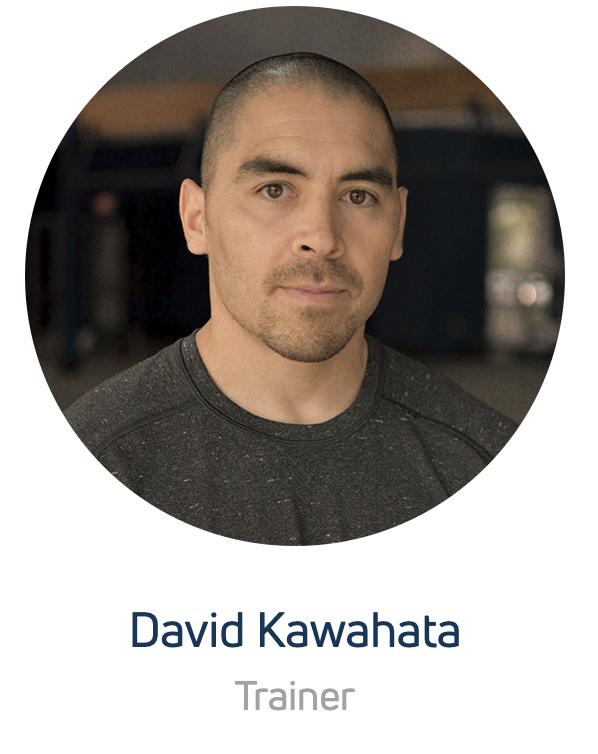
David Kawahata is the owner and head trainer of Fitness MD in Roseville. He studied kinesiology at Sacramento State, completed graduate work through A.T. Still University, and described doctoral study in health and human performance, published research, and adjunct teaching. He began training a small group before the business was incorporated in 2007 and has grown the operation into a facility he estimates at roughly 22,000 square feet.
Assess the individual, identify what they want and what they need, build a plan from both, and keep moving from one useful improvement to the next. Kawahata describes the broader standard as constant betterment.
The source material emphasizes movement assessment, individualized program design, group-based coaching, strength and conditioning, broad fitness development, research-informed practice, and long-term member relationships.
About This Spotlight
Fitness Living Magazine™ selected this Spotlight for the depth of Fitness MD’s assessment process, the way individualized programming is delivered inside group sessions, Kawahata’s exercise-science and research background, and the longevity of the business in the Roseville market.
Fitness Living Magazine™ publishes these features to place independent fitness owners on the record about how their programs operate, what new members experience, what standards guide the coaching, and what makes the business relevant to its local community.
Source material for this migration consisted of the recorded Fitness Living Magazine™ editorial interview with David Kawahata, the existing published Fitness MD Spotlight and its approved photography and client-perspective material, and the official Fitness MD website identified in the legacy article. The rebuilt article preserves the original July 28, 2026 publication record and avoids presenting owner-described research findings as guaranteed individual outcomes.
This feature is editorial content and is not medical advice. Training descriptions, methods, and outcomes reflect the featured expert’s account and individual experience, and results differ from person to person. Readers should consult a qualified healthcare professional before beginning any new exercise program.