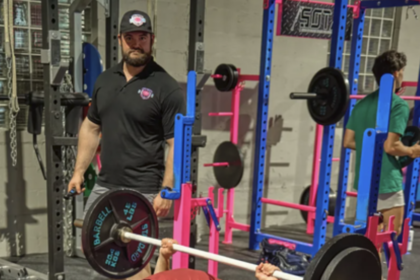
Fenwick sees some clients only once a week and expects them to train on their own between appointments. That is why technique is explained, sets and repetitions are recorded, and the written program is handed to the client. The appointment is meant to improve what happens when the trainer is not standing there.
“Strength training is a learned experience. Come to my gym and you will learn.”Dan Fenwick, Owner And Trainer / Small Box Fitness
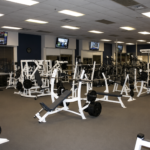
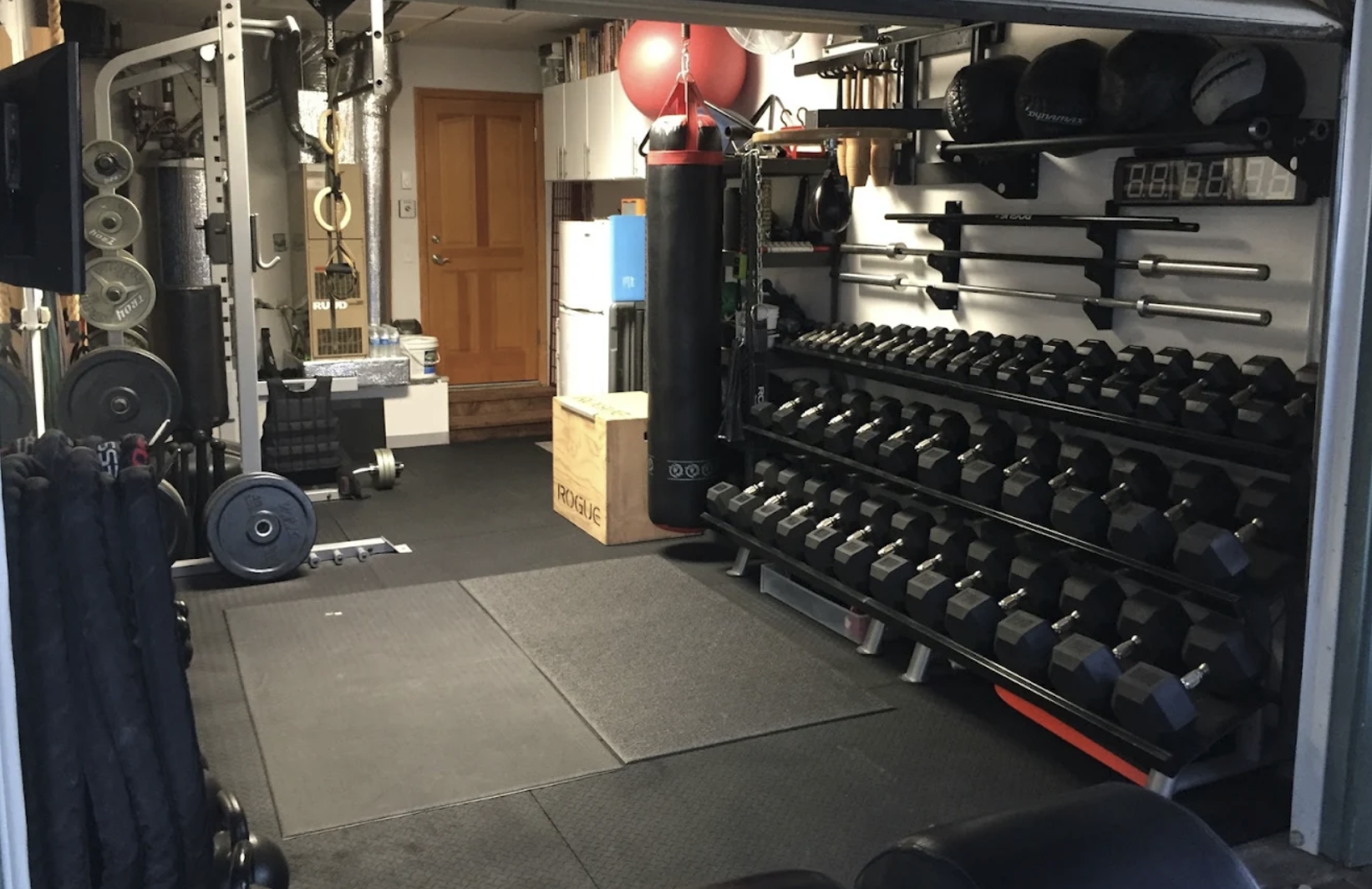
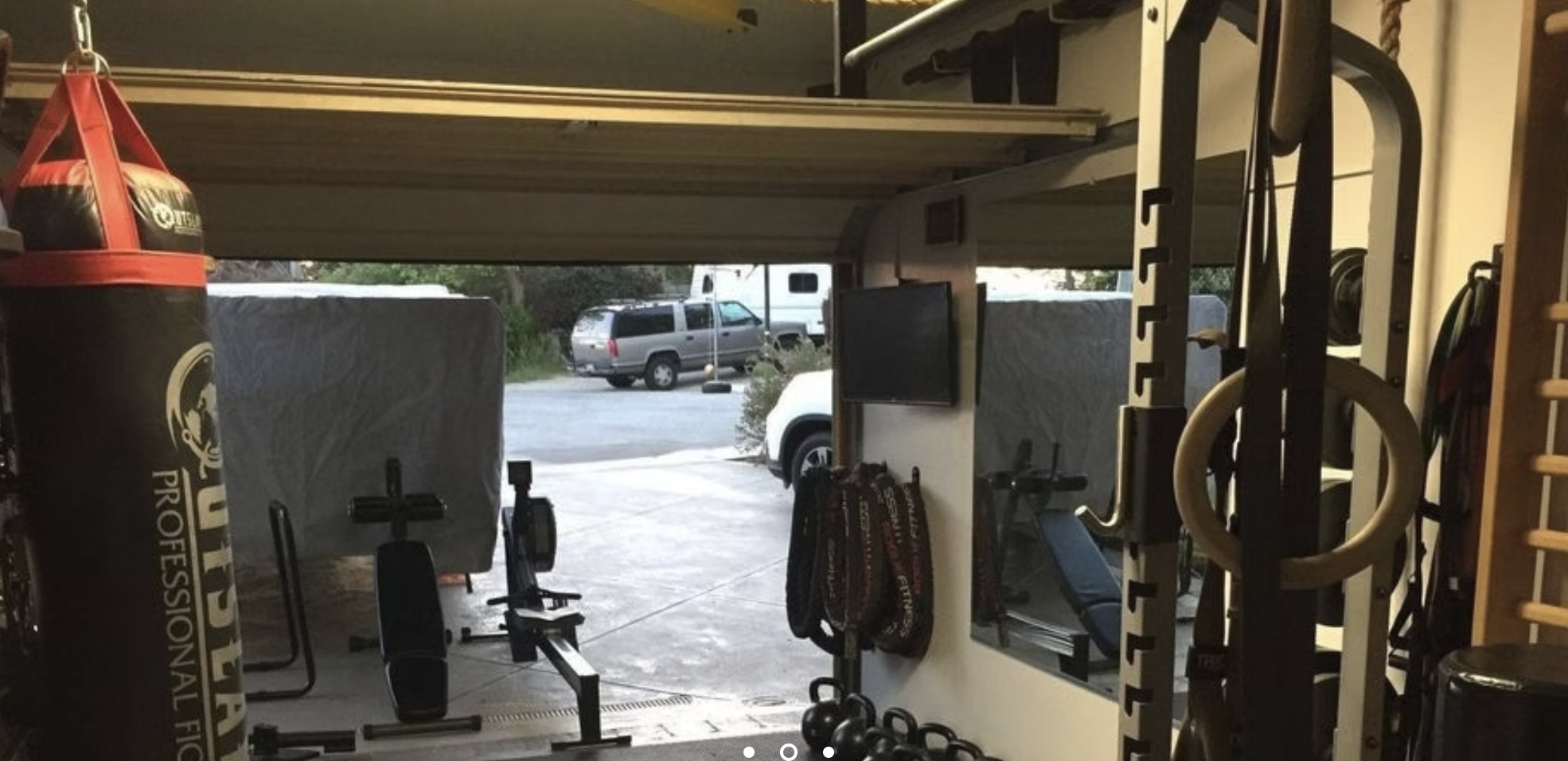
The first impression is scale. Small Box Fitness operates by appointment in a remodeled garage space, with training delivered one-on-one or in groups of no more than three. The room is intentionally small enough for Fenwick to watch the work closely rather than manage a crowd.
A new client is not rushed into unfamiliar movements. Fenwick said he starts nervous or apprehensive clients slowly, asks what they are worried about, looks at prior injuries and training history, and begins with movements that already feel familiar enough to create early success.
The deeper difference appears when the session ends. Clients keep a copy of the program Fenwick writes, including sets, repetitions, and progressions, so the instruction can continue between meetings rather than disappearing when the appointment is over.
Fenwick built the practice around a simple test: can the client eventually perform the work correctly without him? That standard keeps the coaching deliberately small, instructional, and specific, because the real product is competence rather than dependence on the trainer.
The operating premise is unusually clear. Small Box Fitness does not treat the appointment as the finished product. It treats the appointment as a teaching session that should improve what a client can do safely and correctly when Fenwick is no longer in the room.
That makes independence, not dependence, the measure of whether the coaching has worked.
Instruction Is The Product, Not The Hour
Most gyms sell access. Fenwick’s practice is organized around instruction. He believes strength and conditioning require study, and he structures the experience accordingly: private capacity, direct correction, certified kettlebell teaching, and written programs clients can understand well enough to repeat. The less often he sees someone, the more important that transfer of knowledge becomes.
Small Box Fitness is a private, appointment-only strength training gym in Santa Cruz County, California, led by owner and trainer Dan Fenwick.
Training is delivered one-on-one or in groups of up to three and centers on expert kettlebell instruction, powerlifting, general conditioning, movement assessment, and written programming clients can follow between sessions.
The environment is designed for people who want close instruction and a gradual path into strength work, including nervous beginners, experienced trainees, and clients across a wide age range.
Fenwick describes himself as a “gym nerd.” The habit began long before Small Box Fitness. He spent twenty-five years in software engineering, including work at Apple, while road cycling, mountain biking, and experimenting with strength methods in his own time. When he retired in 2009 at age fifty-one, he moved quickly into certifications and coaching.
Inside The Small Box Fitness Approach
This profile examines how a one-trainer gym in Santa Cruz County uses instruction, written programming, small-group capacity, and technical kettlebell coaching to make clients more capable of training on their own.
The session is treated as a lesson. Technique, progression, and the logic of a program are explained rather than kept behind the trainer’s clipboard.
Fenwick works from preteen through advanced senior and adjusts training to the person’s history, current capacity, apprehensions, and goals.
Small-group capacity stays at three or fewer, while certified kettlebell instruction and written take-home programming create a level of specificity difficult to reproduce in a crowded gym.
From Software Systems To Strength Coaching
Fenwick’s first career was in software. He said he spent twenty-five years doing that work and retired from Apple in 2009, burned out enough to want something more directly fulfilling. Fitness had already been the parallel interest: cycling, strength training, equipment experiments, and the habit of asking what a movement or method actually did.
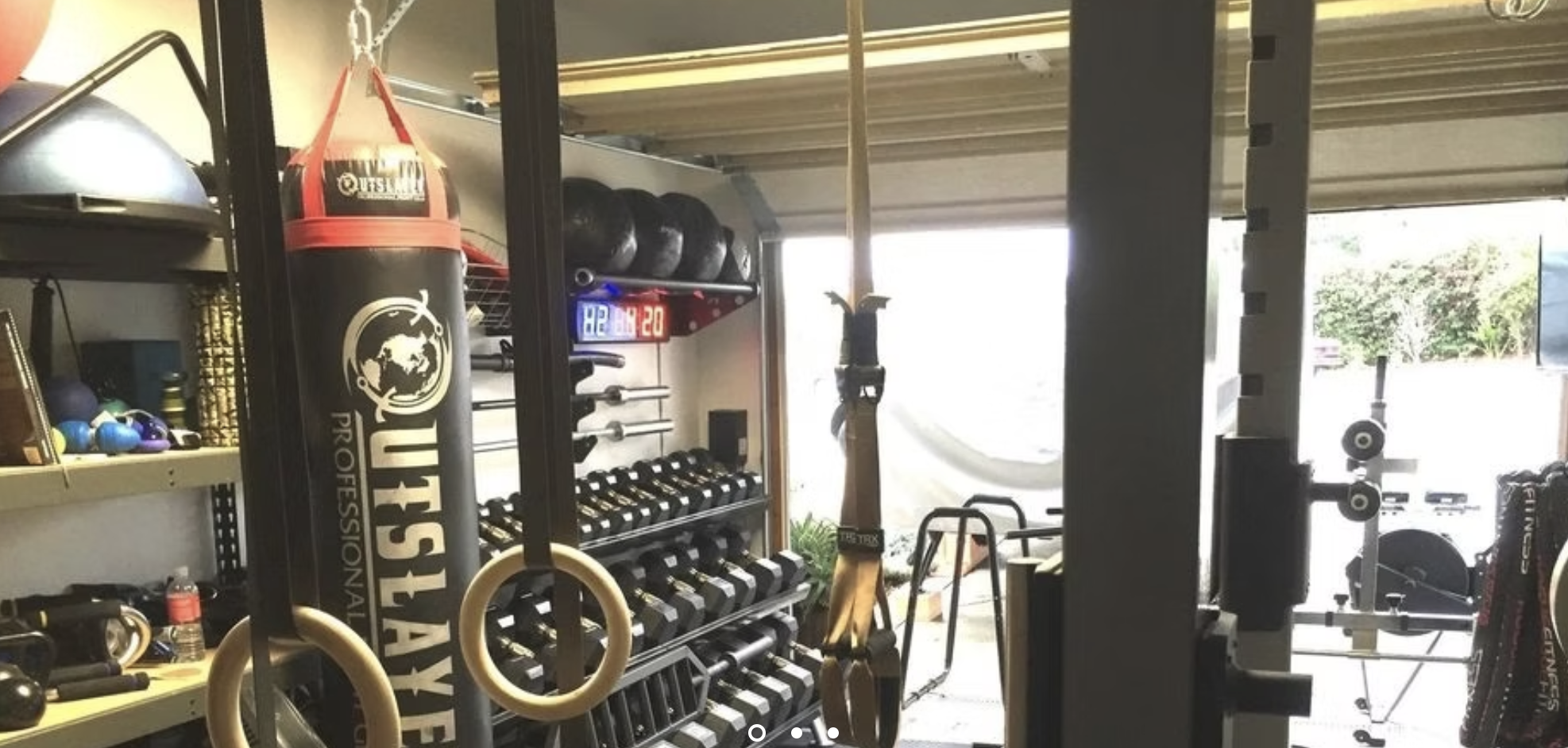
The second career began at a pace he quickly discovered was unsustainable. Fenwick said he initially trained eight to ten people a day, then reduced the schedule to roughly three or four because the work was more physically and mentally demanding than he expected. At the same time, he kept buying and testing equipment until half of his garage became a training space. The name followed naturally: not a big-box gym, but a very small box.
Why The Logbook Matters Between Sessions
Fenwick’s most revealing piece of equipment may be the least dramatic one: the training log. He expects clients to understand how sets, repetitions, and progressions are written because the program has to make sense on the days they train without him.
When he writes the work during a session, the client receives a copy. That changes the role of the appointment. Instead of turning the trainer into the only person who knows what comes next, the session becomes a transfer of information: what to do, how to do it, how much to do, and how to progress it.
Kettlebell instruction follows the same logic. Fenwick sees the implement as highly useful but technically demanding, and he believes hands-on teaching is essential. The goal is not simply to complete swings or lifts while he watches. It is to learn them well enough that the skill remains usable years later.
Prepared Before They Train Alone
A nervous client is not asked to prove readiness. Fenwick said he first tries to understand the source of the apprehension, including previous injury or unfamiliarity, then starts slowly and brings in movements the person already knows so the first sessions contain recognizable success.
The operational experience is just as deliberate. Sessions stay small, movements are watched closely, and the program is written down. The emotional goal is confidence; the practical goal is competence. Clients should leave knowing more about how to train than they knew when they arrived.
Consistency Is The Governing Philosophy
Asked for his overall training philosophy, Fenwick put consistency first and safety immediately beside it. A lift performed once and then abandoned for two weeks cannot build much on the previous exposure. Repeated work can, provided the movement is appropriate and the progression is earned.
He applies the same restraint to exercise selection. Being physically capable of attempting something does not mean the body is prepared for that particular movement. New patterns need a strategic progression, even when general strength is already present. In Fenwick’s framework, effort matters, but effort only becomes useful when it can be repeated without turning the next week into recovery from a preventable mistake.
The distinction is the combination of teaching and restraint. Fenwick wants clients to work hard enough to progress, but only after the movement is understood and the body is prepared for it. That makes safety part of performance rather than an argument against it.
What Small Box Fitness Offers
Based on Fenwick’s interview and the existing published Spotlight, Small Box Fitness is built for people who want private, technically attentive strength coaching rather than general gym access.
Programming Across The Decades
Fenwick treats age as a programming variable, not a reason to stop training. At sixty-eight during the interview, he pointed to his own experience as useful perspective and said he has trained people in their seventies and eighties as well as clients in their teens and twenties.
That range matters because readiness is not identical across decades. Fenwick watches how someone moves, uses a basic mobility screen, asks about prior experience and injury history, and builds from what the person can handle now. The program is supposed to fit the client, not force the client to resemble a template.
The same principle applies to goals. Aesthetics, strength, confidence, conditioning, and learning a technical skill can all be legitimate reasons to train. His stated job is to understand the goal first, then decide whether his small private format is the right way to pursue it.
What Consistency Produces
The most defensible outcome in Fenwick’s story is not a dramatic before-and-after. It is retained capability. He described former clients contacting him years later and telling him they still use the techniques and exercises he taught them.
That is exactly the result his teaching model is built to produce. Consistent training makes strength easier to build because one session can develop from the previous one, while written programs and technical instruction reduce the chance that progress depends entirely on memory or supervision.
Fenwick also described clients who came to him apprehensive after previous back problems and reported feeling stronger or better over time. Those accounts are individual experiences, not medical claims or guaranteed outcomes. The broader editorial point is narrower: careful progression and a willingness to work around limitations can help people keep training instead of treating every setback as the end of the program.
A Second Career Built Around Visible Impact
Before Small Box Fitness, Fenwick spent twenty-five years in software engineering and said he touched code behind text rendering on the Mac. He left that career wanting work whose effect he could see more directly. The gym became that second act: smaller in scale, more personal, and built around the satisfaction of teaching someone a skill they may still be using years later.
Why This Matters In Santa Cruz County
Small Box Fitness does not depend on a large advertising machine. Fenwick said many clients find him through the StrongFirst instructor directory, where certified kettlebell instruction is relatively uncommon in the Santa Cruz area. Others arrive through word of mouth or ordinary local search.
That makes the local proposition unusually specific. The gym is not trying to be the largest place to train, the busiest class schedule, or an all-purpose club. It is a private room for people who value hands-on instruction, technical kettlebell work, strength coaching, and a trainer who expects the learning to continue between appointments.
For someone comparing personal training in Santa Cruz County, kettlebell instruction in the Santa Cruz area, or a quieter way to learn strength training, Small Box Fitness is best understood by its scale: one trainer, very small groups, and a program built to be taken home.
FAQ
Who Is Dan Fenwick?
Dan Fenwick is the owner and trainer at Small Box Fitness in Santa Cruz County, California. He spent twenty-five years in software engineering, retired in 2009 at age fifty-one, and then moved into certifications and personal training.
What Is Small Box Fitness Known For?
Small Box Fitness is known for expert kettlebell instruction, powerlifting, general conditioning, written programming, and a private one-on-one or small-group format capped at three people.
Is Small Box Fitness Beginner Friendly?
Based on Fenwick’s interview, yes. He said nervous clients are started slowly and carefully, with attention to what makes them apprehensive and with familiar movements used to build confidence before more unfamiliar work is introduced.
Do Clients Need Prior Strength-Training Experience?
No prior strength-training experience is required based on Fenwick’s description. Programming is adapted to the person’s history, current capacity, readiness, and goals.
What Makes Small Box Fitness Different In Santa Cruz County?
Fenwick points to certified kettlebell instruction, very small training capacity, programming across a wide age range, movement screening, and a teaching model in which clients keep written programs to follow on their own.
What Programs And Services Does Small Box Fitness Offer?
The source material describes one-on-one and small-group personal training, expert kettlebell instruction, powerlifting, general conditioning, movement assessment, and off-site training by arrangement.
What Is The Best First Step For A New Client?
Fenwick recommends a direct phone call or email. The first conversation is used to discuss goals, training history, limitations, and whether his one-on-one or small-group format is a good fit.
Key Takeaways
Fenwick measures the session by what the client learns well enough to repeat without him.
One-on-one and groups capped at three give the trainer room to watch, explain, and correct the work closely.
Progress depends on repeated training, but only when movements and loads are introduced with enough restraint to keep the work repeatable.
Clients keep written sets, repetitions, and progressions so the training week does not depend on the appointment alone.
Conclusion
Small Box Fitness can be described as a private gym, a kettlebell practice, a strength room, or a converted garage. All are accurate. None quite reaches Fenwick’s central idea. The business is a teaching environment built around the belief that strength and conditioning are skills, and that a trainer’s value should survive after the client walks out the door.
That is why the logbook matters, why the group size stays small, and why nervous clients are started with familiarity instead of spectacle. Fenwick is not trying to make the session indispensable. He is trying to make the client more capable. For a Santa Cruz County reader deciding what kind of coaching is worth paying for, that is the useful distinction: the point is not only what happens during the hour. It is what the hour leaves behind.
Dan Fenwick
Dan Fenwick built Small Box Fitness around the idea that strength training should be taught clearly enough for clients to carry the knowledge into the rest of their lives.
Dan Fenwick is the owner and trainer at Small Box Fitness in Santa Cruz County. He spent twenty-five years in software engineering before retiring in 2009 and moving into fitness certifications and coaching. His supplied credentials include StrongFirst Level 1 Certified Kettlebell Instructor, Functional Movement Screen Level 2, AFAA Personal and Group Certified Instructor, and Mad Dogg Spinning Level 3 Elite Instructor. He trains clients from preteen through advanced senior and continues to study, test, and revise the methods and equipment used in the gym.
Treat strength and conditioning as learned skills. Build consistency, keep safety in view, teach clients how to understand their own program, and progress movements strategically rather than assuming that general strength equals readiness for every exercise.
Certified kettlebell instruction, powerlifting, general conditioning, movement assessment, programming across age groups, training around limitations, small-group attention, and written programs clients can keep and use independently.
About This Spotlight
Fitness Living Magazine™ selected this Spotlight for Fenwick’s teaching-first training model, the private one-to-three coaching format, his source-supported kettlebell expertise, the use of written programs clients keep, and the specific way he frames consistency and safety as learned parts of strength training.
Fitness Living Magazine™ publishes these features to place independent fitness owners on the record about how their programs operate, what new clients experience, what standards guide the coaching, and what makes the business relevant to its local community.
Source material for this migration consisted of the recorded Fitness Living Magazine™ editorial interview with Dan Fenwick, the existing published Small Box Fitness Spotlight and its approved image assets, and the canonical Fitness Living Magazine™ Movement Warehouse V22 Spotlight supplied for the WordPress migration. No client review or testimonial was available; at the publisher’s explicit direction, the canonical Client Perspective module was omitted rather than fabricated.
This feature is editorial content and is not medical advice. Training descriptions, methods, and outcomes reflect the featured expert’s account and individual experience, and results differ from person to person. Readers should consult a qualified healthcare professional before beginning any new exercise program.