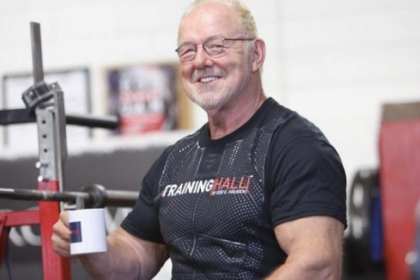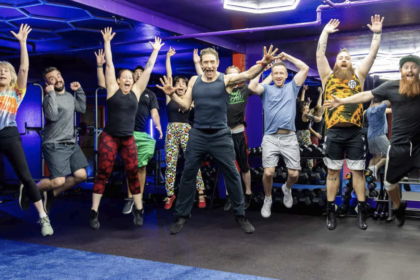
That structure grew from Melody’s own experience. She used the slow-motion method for years before taking over the Toluca Lake studio in 2012, and she still describes herself as the kind of client the business is meant to serve: someone who wants strength training to be effective, efficient, closely coached, and sustainable over time.
“We make it quick, we make it safe, and we make it count. In that thirty minutes, we make it the most meaningful thirty minutes of your week.”Sheila Melody, Owner / The Strength Code
A new client is not expected to figure out the room alone. The introductory process starts with an intake form and a conversation about goals, injuries, concerns, and what the person wants to be able to do more comfortably in everyday life.
The client then completes a body-composition scan before the trainer introduces the equipment. Resistance, range, and pace are set by the coach, and the first visit may include only a few exercises if that is enough for the person to understand how the method feels.
The other surprise is the atmosphere. The studio sits inside a medical-office building, is roughly one thousand square feet, and is intentionally calm rather than loud or crowded. Clients train by appointment, usually with their own trainer, so there is no open floor to navigate and no routine to invent.
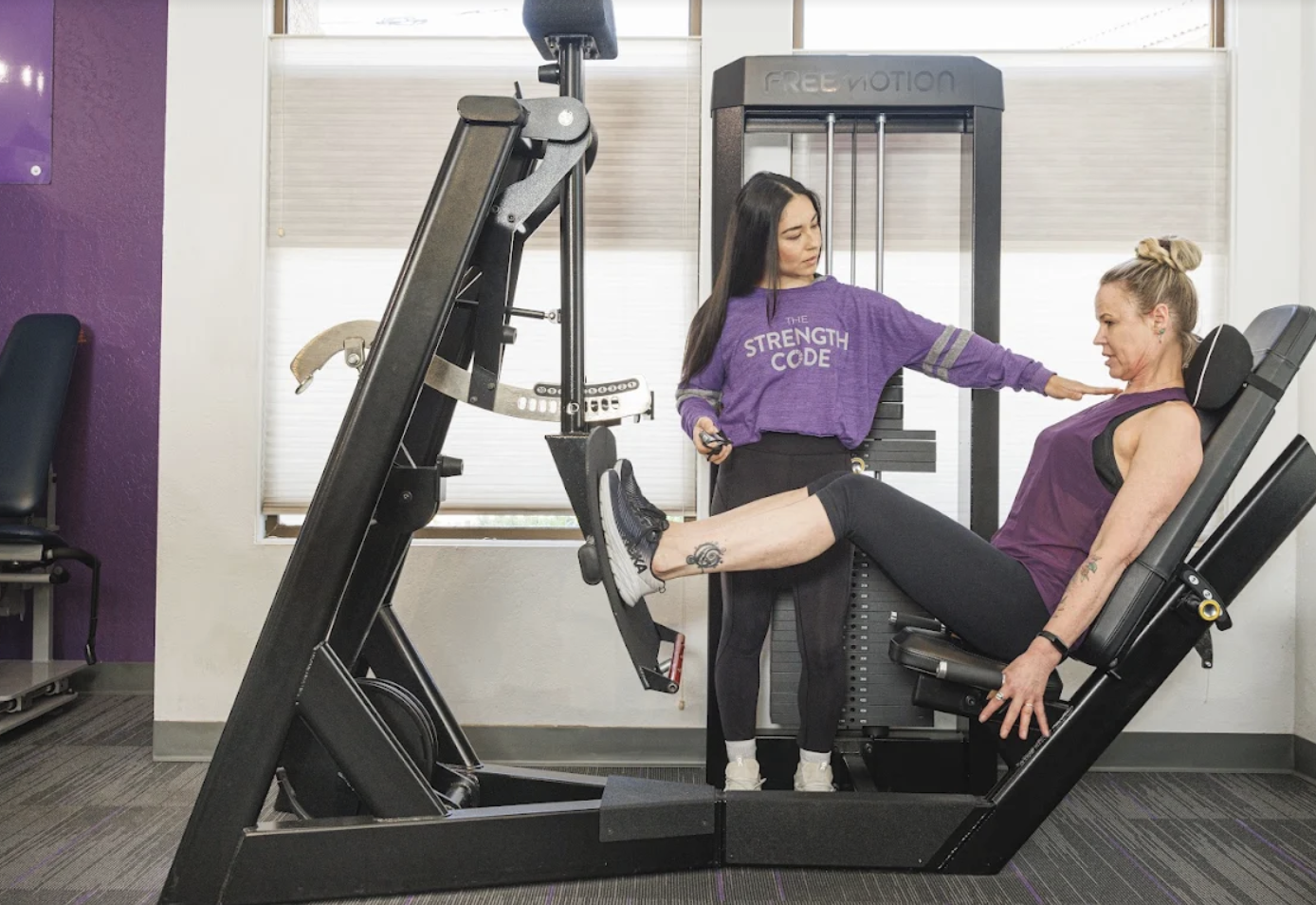
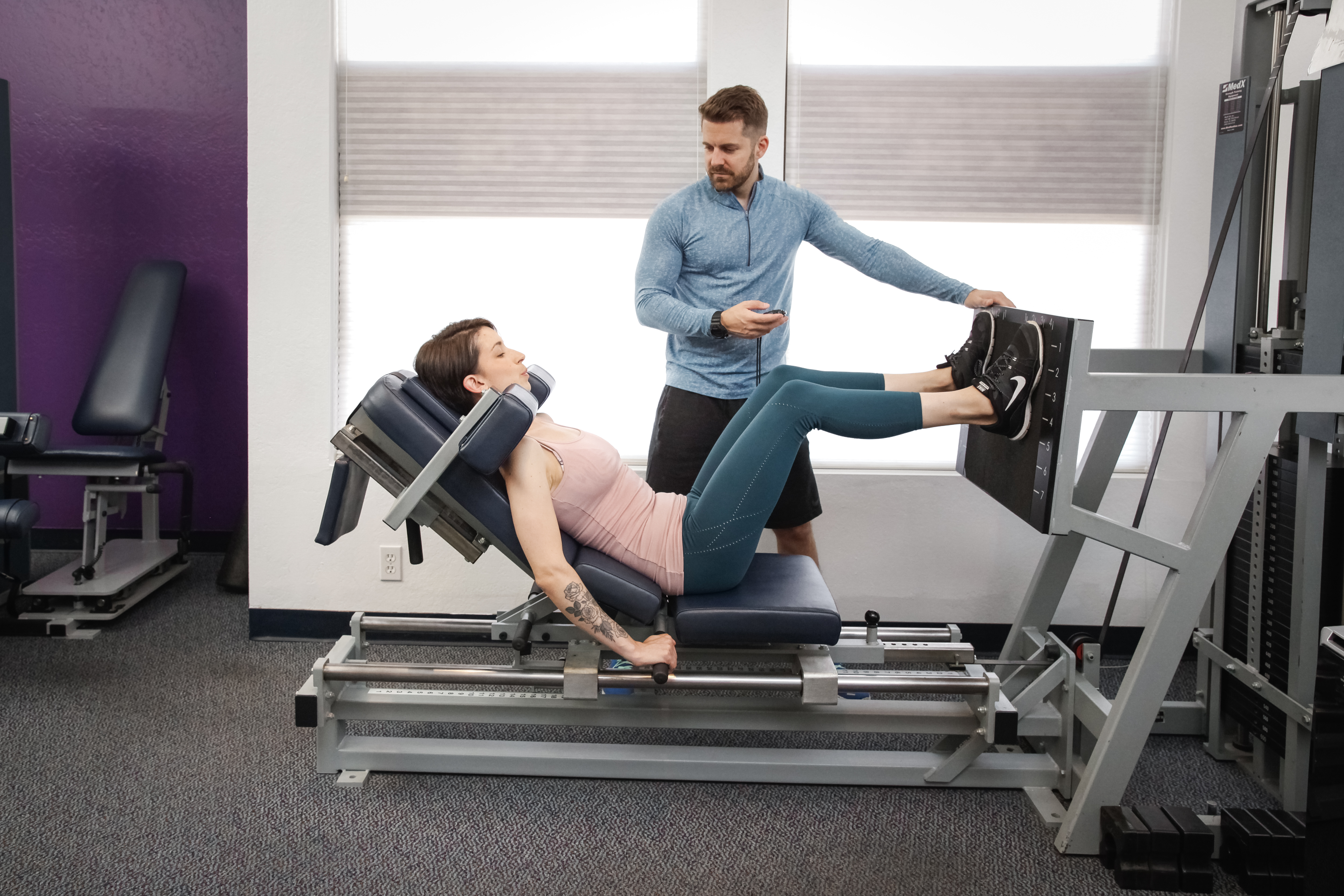
Melody’s operating philosophy is unusually concise: make it quick, make it safe, and make it count. She pairs that with another rule, consistency over intensity, because the thirty-minute session only matters if clients can keep returning and progressing from one appointment to the next.
The operating premise is simple: the client should spend the appointment training, not deciding what to do. The plan, equipment settings, timing, and progression are handled by the coach before and during the session.
That division of labor changes the experience for people who have avoided conventional gyms. The work can still be demanding, but the uncertainty is removed from the room.
Why The Half Hour Feels Different
The central promise at The Strength Code is not that strength training becomes effortless. It is that effort becomes focused. Clients are asked to work deeply, but they are not asked to navigate a gym, design a program, remember equipment settings, or decide when to increase the load.
The Strength Code is an appointment-based strength studio in Toluca Lake, California, owned by Sheila Melody since 2012 and built around thirty-minute one-on-one resistance sessions.
Training uses slow, controlled repetitions on specialized supported equipment, with the coach setting resistance, tracking performance, and adjusting the next session from written records.
The environment is designed for busy adults, active retirees, beginners, and other clients who want meaningful strength work without having to manage a conventional gym floor on their own.
Melody’s path began long before she owned a studio. She grew up in Illinois, was a high-school cheerleader, taught fitness classes at a small women’s facility and at Chicago Health & Racquet Club, then moved to Los Angeles in her early twenties. Fitness stayed part of her life while she worked in music and location-based entertainment and raised a young son. Around two decades ago, she discovered the SuperSlow method as a client. When the opportunity came to take over management of a boutique studio using the method, she said yes because she already believed in the training.
Inside The Strength Code Approach
This profile examines how a Toluca Lake studio uses slow-motion resistance, one-on-one coaching, written progression, and a low-friction appointment system to make strength training more repeatable for people who do not want a conventional gym experience.
The trainer controls the setup, cadence, progression, and records while the client performs slow repetitions on supported equipment without relying on momentum.
Busy professionals, parents, active retirees, and other adults who value efficiency, privacy, and direct coaching, including people who feel intimidated by ordinary gyms.
Clients and trainers stay for years, appointments are held consistently, and the method is measured through both exercise records and body-composition data.
A Studio Built From Personal Conviction
Melody often describes herself as the studio’s own typical client. She had already spent years training with the slow-motion method before she began running the business, so the decision was rooted in personal use rather than a franchise concept. During the 2020 shutdown, the studio moved clients online temporarily, but Melody said being unable to use the equipment herself reminded her how strongly she valued the method.
That experience also shaped the standard she applies to the business: she wants the studio to offer the kind of practice she would keep in her own life. The result is deliberately narrow. The Strength Code is not trying to be every kind of gym. Its primary job is to deliver structured strength training in a format that clients can schedule, understand, and repeat.
Why The Two-Minute Set Matters
The distinctive mechanism is not simply that the repetitions are slow. The trainer asks the client to move a challenging resistance without momentum, keeping the target muscles under continuous tension until they reach a point of deep fatigue. Melody said the studio generally works toward temporary muscle failure within roughly two minutes, adjusting the target to the individual rather than treating one number as dogma.
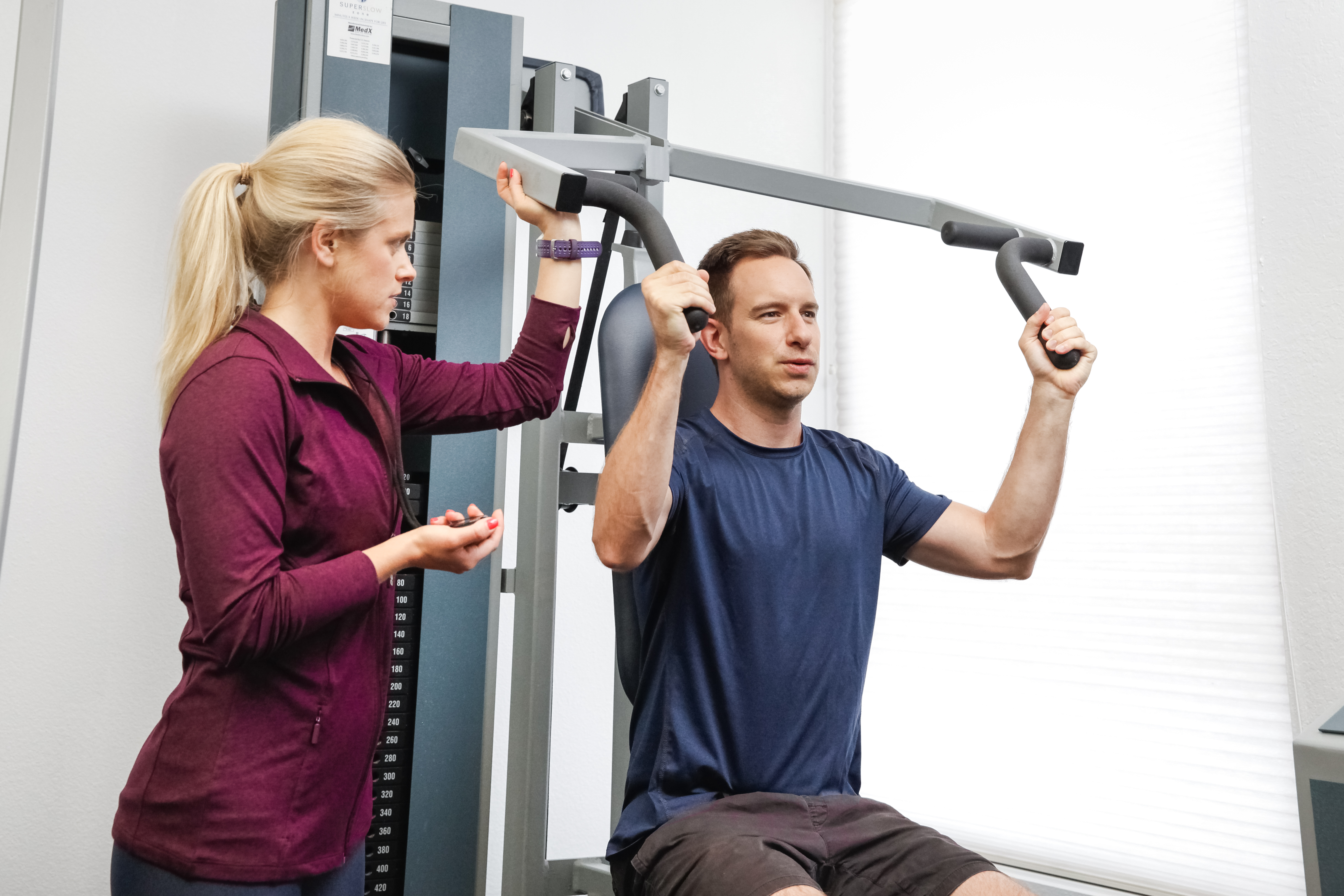
Supported equipment changes what the coach can control. The client is stabilized, the machine can be fitted to the person, and resistance can be adjusted in small increments. That allows the trainer to watch breathing, position, pace, and the moment when technique begins to change, then decide whether the next appointment needs more load, more control, or a different range.
The written record gives the method continuity. Resistance and time to fatigue are charted from session to session, so progression does not depend on memory. Melody described increases as small as two pounds when that is the appropriate next step. The goal is not to chase novelty; it is to make the next half hour slightly more specific than the last.
The Plan Is Already Waiting
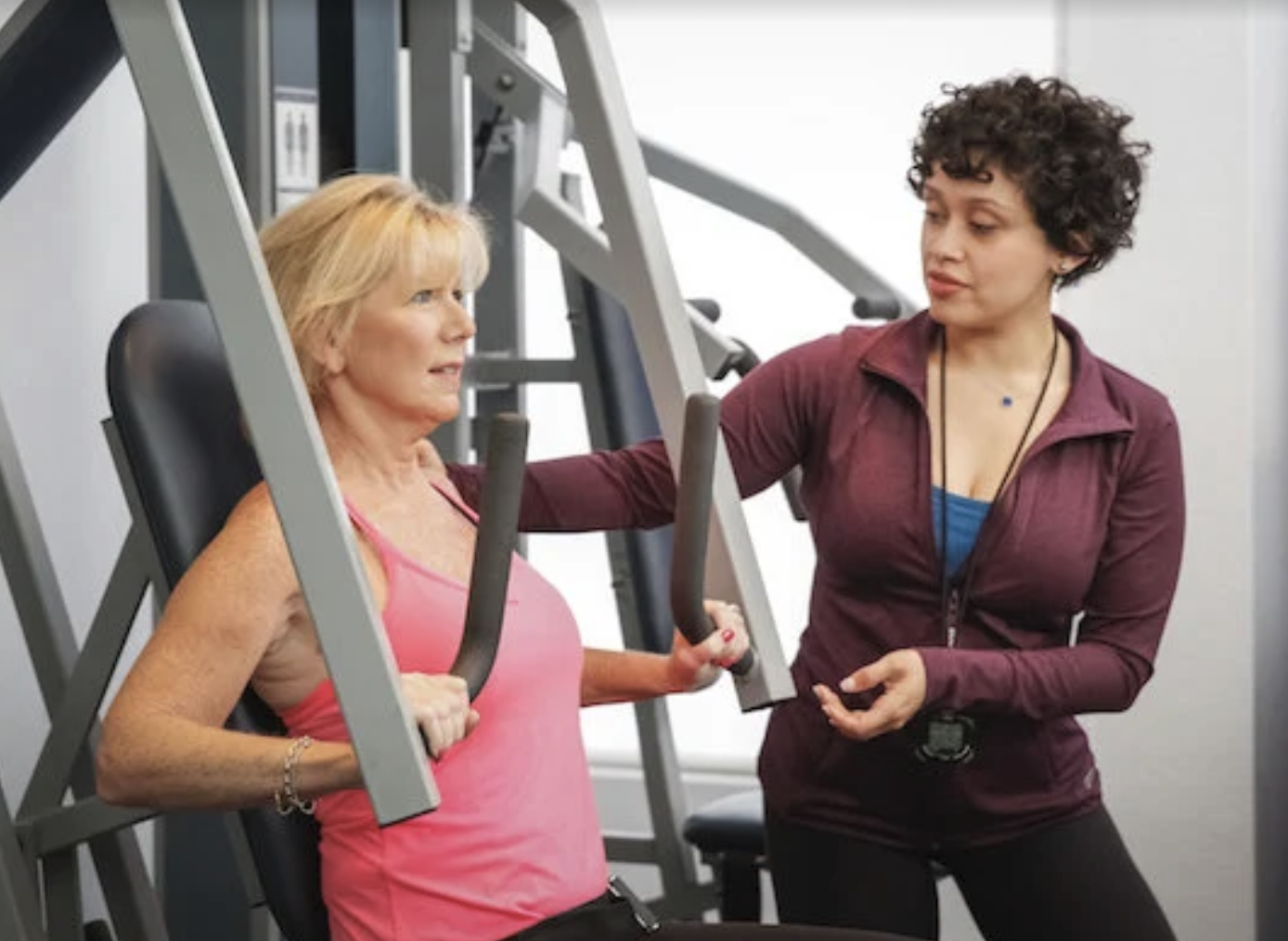
A client does not need to remember a routine, select a machine, or decide how much weight belongs on it. The trainer has the record, sets the equipment, explains the movement, and stays beside the set. Melody’s shorthand is simple: all the client has to do is show up.
That attention is especially important at the beginning. If a client arrives nervous, with an old injury, or simply unsure whether strength training is for them, the coach can start conservatively and change the session immediately. Confidence is built through completed work, not through being asked to prove readiness before receiving help.
Value Over Volume
Melody’s governing philosophy is to make the work meaningful rather than simply make it long. She describes the studio’s approach as value over volume: use the half hour well, keep the movements controlled, and then let the client go live the rest of the day instead of treating the gym as the destination.
That principle sits beside consistency over intensity. The studio can add cables, dumbbells, bands, hip thrusts, or more advanced techniques when a client needs them, but the slow-motion foundation remains stable. Progress is meant to accumulate without requiring every appointment to become a test of how much discomfort someone can tolerate.
The Strength Code separates intensity from confusion. The muscles may be asked to work very hard, but the client is not asked to solve the logistics of training at the same time. Appointment structure, equipment setup, written records, and a familiar coach all exist to make the demanding part easier to repeat.
What The Strength Code Offers
The service menu is intentionally focused. One-on-one slow-motion strength appointments remain the center of the business, with measurement, flexible scheduling options, and a small number of complementary formats supporting the core experience.
“I am not a go to the gym kind of person, but the intimacy of the one-on-one trainer experience at The Strength Code is awesome. … The entire team of trainers are the most professional, attentive and supportive group of people.”
Built For People Who Feel Intimidated By Gyms
Melody said some people arrive frightened by the idea of strength training itself. They assume they are too weak, too old, too inexperienced, or too far behind to begin. The studio’s response is not to talk them into acting confident. It is to reduce the number of things they have to manage and let confidence come from completing the work.
The room helps. There is no clang of dropped weights, no dark open floor, and no expectation that a newcomer should already know the equipment. A client can arrive, meet the trainer, move through a prepared sequence, and leave with a clear ending to the appointment.
Melody also described the method as empowering for clients who have never thought of themselves as strong. A first hundred-pound chest press or a heavier leg press becomes memorable not because the studio is a bodybuilding environment, but because the number reveals a capacity the client did not expect to have.
What Consistency Produces
The studio’s progress stories are usually ordinary-life stories. Melody hears about clients carrying objects that used to feel heavy, returning to gardening, walking farther on trips, lifting grandchildren with more confidence, or catching themselves when they stumble. Those anecdotes are not guarantees; they are examples of how clients describe strength showing up outside the appointment.
Inside the studio, progress is documented more quietly. Trainers compare current resistance and time under load with previous sessions, while body-composition testing gives another reference point. After a year, Melody sometimes shows clients their beginning weights so they can see how much easier the old baseline has become.
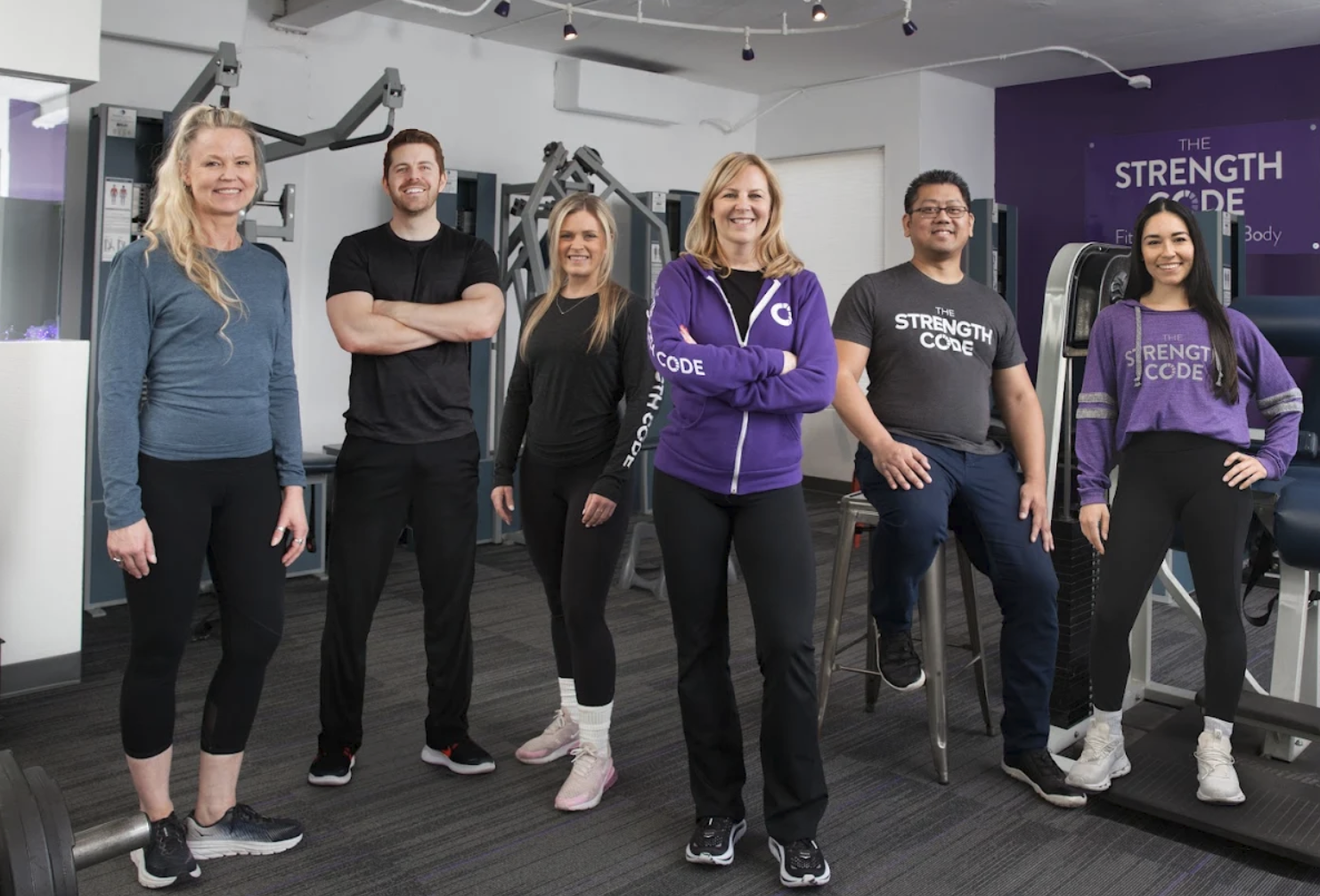
The longer result is continuity. The Strength Code serves about 200 clients and roughly 1,100 sessions a month, and Melody said some clients have trained there for more than a decade. Three trainers have also been with the studio since its early years. That stability makes the appointment feel less like a transaction and more like a recurring relationship.
A Familiar Place Built On Long Relationships
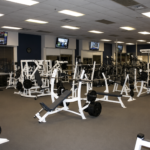
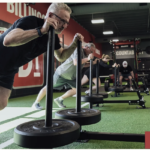
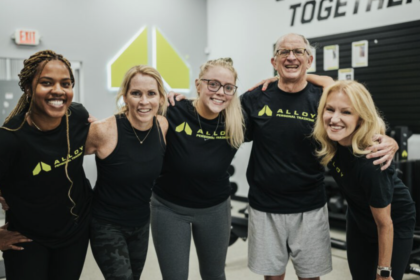
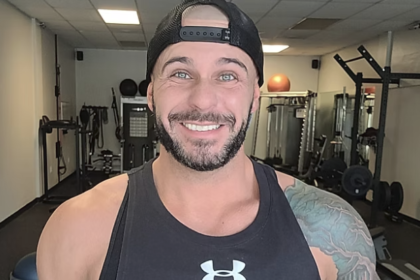
The human context at The Strength Code is continuity. Melody has used the method herself for roughly twenty years, three trainers have been part of the studio since its early years, and some clients have held appointments for a decade or more. These images place the owner and the small Toluca Lake studio beside the relationships that give the business its private-club familiarity.
Why This Matters In Toluca Lake
The Strength Code operates in Toluca Lake, within the Burbank area of Los Angeles, where Melody sees convenience as part of whether a routine survives. The studio offers parking, scheduled appointment times, and a quiet indoor setting rather than asking clients to build an extra layer of logistics around the workout.
The business also participates in both the Burbank and Toluca Lake chambers. Referrals often travel through existing clients, couples, friends, and relatives, which fits a studio where appointment continuity and familiar trainers matter more than high daily foot traffic.
For someone comparing strength training in Toluca Lake or Burbank, the practical distinction is specific: this is not an open gym membership. It is a coached half hour with a reserved time, a written record, a trainer beside the set, and a method that is difficult to understand fully until it is experienced.
FAQ
Who Is Sheila Melody?
Sheila Melody is the owner of The Strength Code in Toluca Lake, California. Her background includes early fitness instruction in Illinois, work in music and location-based entertainment in Los Angeles, and roughly two decades of personal experience with the slow-motion method. She took over the studio in 2012.
What Is The Strength Code Known For?
The Strength Code is known for thirty-minute, one-on-one strength appointments using slow, controlled repetitions on supported equipment. Trainers manage setup, cadence, progression, and recordkeeping so clients can focus on the work itself.
Is The Strength Code Beginner Friendly?
Yes, based on Melody’s interview. The introductory process begins with conversation, a body-composition scan, and a guided workout. Trainers can start conservatively and adjust resistance, range, and exercise choice to the client’s current ability.
Do Clients Need Prior Strength-Training Experience?
No prior strength-training experience is required. Melody said many clients arrive unsure about strength training or uncomfortable in conventional gyms, and the studio is designed to teach the method one exercise at a time.
What Makes The Strength Code Different In Toluca Lake?
The studio combines reserved thirty-minute appointments, one-on-one coaching, slow-motion resistance training, supported equipment, written progression, long-tenured trainers, and a quiet environment with convenient parking.
What Programs And Services Does The Strength Code Offer?
The source material describes one-on-one strength appointments, memberships one to three times per week, flexible session packages, body-composition testing, CAROL Bike access for clients on memberships, and a limited small-group circuit class of up to eight people.
What Is The Best First Step For A New Client?
Melody recommends the two-session intro offer: a consultation, body-composition test and report, and two customized Strength Code workouts. A fifteen-minute studio tour is available for people who want to see the space before purchasing the intro.
Key Takeaways
The trainer prepares the session, sets the equipment, watches the work, and records progression so the client can spend the half hour training rather than planning.
The method removes momentum, uses supported equipment, and tracks resistance and time under load to inform small, repeatable changes.
Melody treats a sustainable routine as more valuable than occasional all-out effort, especially for clients who want strength to support everyday independence.
Long-tenured trainers, recurring appointment times, and clients who have stayed for years turn the studio into a familiar coaching relationship rather than an anonymous gym visit.
Conclusion
There is a version of The Strength Code story that is only about slow repetitions and specialized machines. It would be accurate, but incomplete. Melody’s stronger idea is that effective training depends just as much on what the client does not have to manage: no wandering the gym, no guessing at the weight, no building a program, and no wondering whether anyone noticed their form.
That is why the thirty minutes can feel larger than the clock suggests. The trainer controls the details, the records carry progress forward, and the client is asked to bring effort to a sequence that is already prepared. For adults who know strength matters but do not want fitness to take over their lives, The Strength Code turns efficiency into a reason to keep showing up.
Sheila Melody
Sheila Melody built The Strength Code around a method she had already trusted as a client for years: slow, controlled resistance training delivered in a private, appointment-based setting where the trainer handles the details.
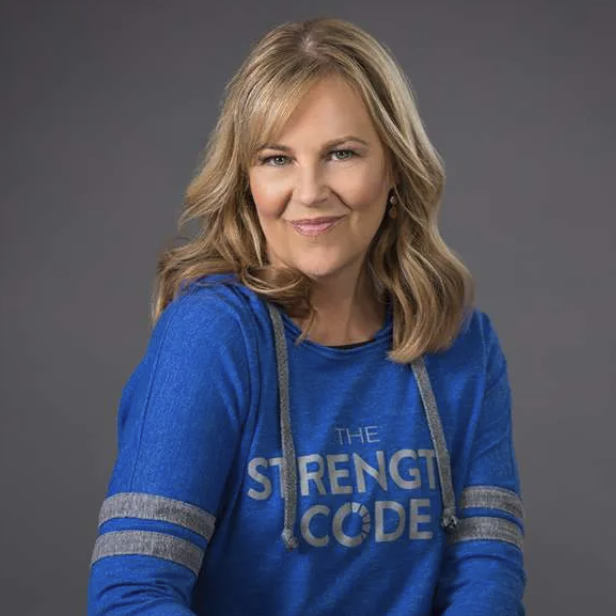
Sheila Melody is the owner of The Strength Code in Toluca Lake, California. Her fitness background began with cheerleading and early class instruction in Illinois, then continued alongside a career in music and location-based entertainment after she moved to Los Angeles. Around two decades ago, she discovered the slow-motion method as a client. In 2012, she took over the studio and developed it into an appointment-based practice with long-tenured trainers and clients across several generations.
Make it quick, make it safe, and make it count. Melody pairs that rule with value over volume and consistency over intensity, aiming to give clients a demanding but sustainable strength practice that supports the rest of their lives.
Slow-motion high intensity resistance training, one-on-one coaching, supported equipment, written progression, body-composition analysis, flexible membership frequencies, and an emphasis on building client confidence without conventional gym intimidation.
About This Spotlight
Fitness Living Magazine™ selected this Spotlight for The Strength Code’s fourteen-year local operating history, its thirty-minute one-on-one coaching model, long trainer and client relationships, documented progression, and a clearly articulated effort to make serious strength training accessible to people who do not identify with conventional gym culture.
Fitness Living Magazine™ publishes these features to place independent fitness owners on the record about how their programs operate, what new clients experience, what standards guide the coaching, and what makes the business relevant to its local community.
Source material for this migration consisted of the recorded Fitness Living Magazine™ editorial interview with Sheila Melody, the existing published The Strength Code Spotlight and its supplied photo and client-review material, and the latest approved Fitness Living Magazine™ canonical Spotlight used as the WordPress design and architecture model. The rebuilt article preserves source-supported business facts while removing duplicate legacy schema and theme-owned header elements.
This feature is editorial content and is not medical advice. Training descriptions, methods, and outcomes reflect the featured expert’s account and individual experience, and results differ from person to person. Readers should consult a qualified healthcare professional before beginning any new exercise program.