A new German analysis measured what university sports sessions actually deliver in steps and in effort, using devices worn during play rather than questionnaires filled in afterwards. The average session covered 3,134 steps at an intensity that sat squarely in the moderate range.
University sports programs are one of the few settings that reach large numbers of young adults with structured, supervised exercise, and a study published on September 20, 2026 in Discover Public Health put a number on what a single session contributes. Across 593 students at Heidelberg University in Germany, sessions averaged 3,134 steps and an intensity of 3.58 metabolic equivalents, or MET.
The analysis was carried out by Christina Roth of the Institute of Sports and Sports Sciences at Heidelberg University. Rather than asking students to recall how hard they had worked, the study fitted participants with a multi-sensor device that recorded activity during the sessions themselves. Data were gathered between 2023 and 2025 across the regular university sports timetable.
Not every student produced complete records. Of the 593 participants, 531 returned valid step counts and 513 returned valid intensity data. The mean of 3,134 steps per session carried a standard deviation of 1,303, and the paper reports that figure as roughly 44.77 percent of a 7,000-step benchmark.
Programs were grouped into six sport categories, and two-way analyses of variance examined the effect of sport category and of gender. Team sports produced the highest values, and the spread between categories was wide enough to matter for anyone building a timetable.
At a Glance
- Published September 20, 2026 in the peer-reviewed journal Discover Public Health.
- Cross-sectional observational study of 593 students at Heidelberg University, Germany.
- Activity was measured objectively with a multi-sensor device worn during sessions, with data collected from 2023 to 2025.
- 531 students returned valid step-count data and 513 returned valid intensity data.
- Sessions averaged 3,134 steps, standard deviation 1,303, described as about 44.77 percent of a 7,000-step benchmark.
- Mean intensity was 3.58 MET, standard deviation 1.07, which the author describes as predominantly moderate-intensity activity.
- Main caveat: single sessions at one university, measured in volunteers who were likely more active than students in general.
What One University Sports Session Delivered
The step count is the headline number. A mean of 3,134 steps in a single session is not a full day of movement, but it is a large block of one, and the paper frames it as about 44.77 percent of a 7,000-step benchmark. For a student whose other walking is the distance between lecture halls, one booked hour shifts a real share of the daily total.
The intensity figure supplies the other half of the picture. At 3.58 MET on average, university sports sessions sat in the moderate band rather than the vigorous one. That is the zone most national guidance counts toward weekly activity targets, and the zone most people can hold for an hour without specialist conditioning.
Why Steps and Intensity Answer Different Questions
Steps and MET are not interchangeable. A step count rewards sports that move players around a court or a field, while MET reflects how hard the body works per minute regardless of ground covered. A racket sport built on short, sharp exchanges can post a respectable MET value without a high step total, and a long, easy walk can do the reverse.
Reporting both is what makes this university sports dataset useful. It shows not only that students moved, but how that movement split between volume and effort, which is the distinction that separates a brisk session from a merely busy one.
How the University Sports Data Were Captured
Self-reported activity tends to be generous, and it is the weak point of most campus surveys. Here the measurement came from a multi-sensor device worn during the session itself, recording movement and estimated intensity directly rather than relying on memory or on a student judging what counts as hard work.
That choice matters for how much weight the numbers carry. Objective measurement narrows one large source of error, which is why a mean of 3,134 steps per university sports session can be read as a measured quantity rather than an impression. It also explains the incomplete records: of the 593 participants, 62 did not produce usable step data and 80 did not produce usable intensity data.
The collection window running from 2023 to 2025 means the sample spans several semesters rather than one cohort or one season of the university sports calendar, which reduces the chance that a single unusual term drove the averages.
Team Sports Topped the Six Categories
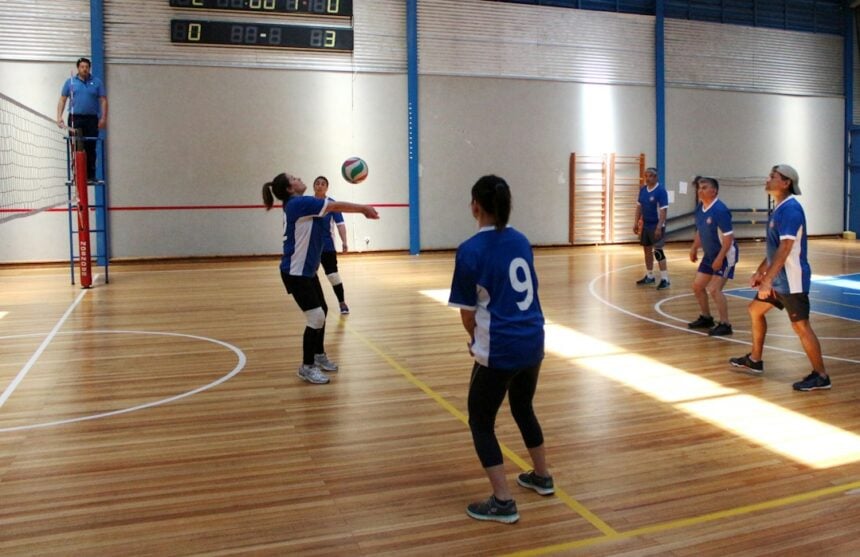
The six categories did not perform alike. Team sports recorded the highest values, and the statistical effect of category was substantial: a partial eta squared of 0.26 for steps and 0.18 for intensity. Put plainly, which sport a student books explains a noticeable share of how much activity the session ends up producing.
That is a practical result for anyone who runs a university sports program. If the goal is to move students, the timetable itself is a lever, and the balance of offerings shapes the outcome before a whistle is blown.
Average steps recorded in a single university sports session, reported as roughly 44.77 percent of a 7,000-step benchmark.
The Gender Difference Was Real but Small
Gender showed a statistically significant effect on intensity, but a small one: a partial eta squared of 0.01, against 0.18 for sport category. Significance and magnitude are different things, and this is a clean illustration of the gap between them.
The narrow reading is the right one. Across this sample, men and women recorded slightly different mean intensities in university sports sessions, and that difference was dwarfed by the difference between one sport and another. The choice of activity carried far more weight than the demographic split did.
Where University Sports Fit in a Weekly Activity Budget
The background to this work is not in dispute: insufficient physical activity remains common among young adults, and university students show particularly low adherence to World Health Organization recommendations. That is the gap university sports programs are meant to help close.
What the Heidelberg numbers offer is a realistic unit of measurement. One moderate-intensity session is a contribution, not a solution, and a student relying on a single weekly class is covering a fraction of a weekly target. Intensity is one way to close that gap faster, as accelerometer work on short bursts of vigorous activity and mortality risk has suggested.
Frequency is the other lever, and frequency is a habit problem more than a fitness one. Analyses of what keeps people attending coached and group sessions point to booked, scheduled formats as the ones people return to, which is close to how most campus timetables already work.
How Much a Single-Session Snapshot Can Carry
This is a cross-sectional study, so it describes what happened during university sports sessions rather than what those sessions changed. It cannot say whether the students who attended became fitter, slept better or sat less, only what a device recorded while they played.
Nor does it capture the rest of the week. A student may log 3,134 steps in a university sports session and then spend nine hours seated, or may arrive having already cycled across town. Research linking regular exercise and more restful sleep in large adult samples deals with habitual patterns, which is a different question from a one-session measurement.
What Students Can Reasonably Take From This
It is worth separating what a university sports program is for from what it can measure. Attendance, enjoyment and social contact are reasons students come back, and none of them appear in a step count. The Heidelberg figures describe the physical dose of a session, not the reason anyone signed up for it.
None of this is individualized advice, and a single German dataset should not be read as a prescription. But the numbers do support a few general, low-risk conclusions for anyone deciding how to use a university sports timetable.
- Treat one session as a meaningful block of daily movement, not as the whole week.
- If the aim is volume, a team sport is a reasonable default, since those posted the highest step and intensity values here.
- Booked, scheduled sessions are easier to repeat than unplanned ones.
- Moderate intensity is the realistic setting for an hour of play; treat higher efforts as a bonus rather than a requirement.
The same logic applies well beyond campus. Structured activity for younger people has shown benefits that reach past fitness alone, including work linking physical fitness and arithmetic fluency in adolescents, though that research addresses a different population and a different outcome.
The Fitness Living Takeaway
A single university sports session at Heidelberg averaged 3,134 steps at 3.58 MET, roughly 44.77 percent of a 7,000-step benchmark and squarely in the moderate-intensity range.
Team sports produced the highest values across six categories, with a large effect of category and only a small effect of gender. Because the design is cross-sectional, single-session and drawn from volunteers at one university, the figures describe what campus sport delivers rather than what it changes over time.
Research & Sources
- Discover Public Health: University sports programs as a health promoting setting contribute to physical activity recommendations
- Study DOI
- Images: Alejandro Stuardo / Unsplash; Wan San Yip / Unsplash
This article summarizes peer-reviewed research for general information and is not individualized medical or exercise advice.