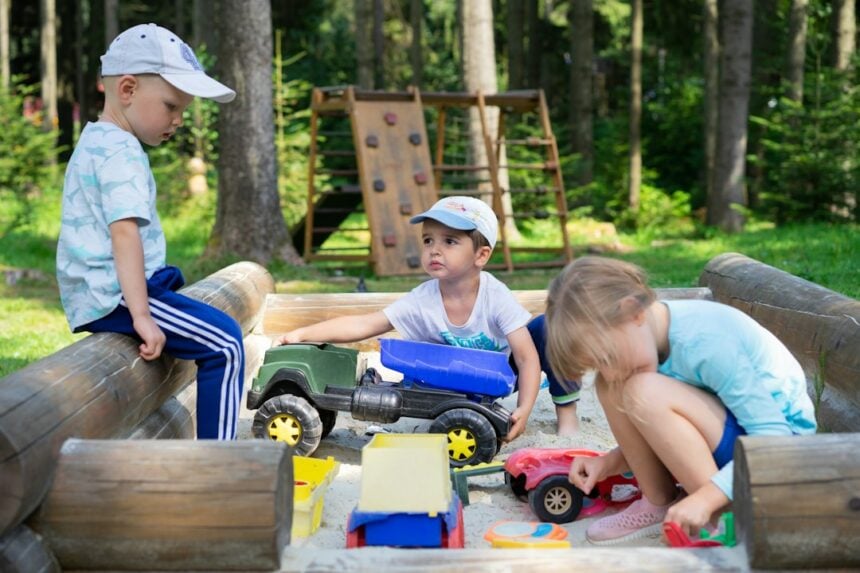
A six-month preschool activity policy introduced across public preschools in Stockholm left three- to five-year-olds moving no more than children at sites that changed nothing. The trial measured preschool activity directly, with accelerometers worn by 3,751 children.
Preschool Activity rules are one of the few levers a city can pull on behalf of every young child at once, and a pragmatic cluster randomized clinical trial published on October 27, 2026 in JAMA Network Open suggests that pulling the lever is not the same as moving the children.
The trial was led from Karolinska Institutet and Region Stockholm, with coauthors at the University of Granada, Aarhus University, Linkoping University, the University of Lethbridge, the University of Hawaii at Manoa and the Stockholm School of Economics. Of 156 public preschools invited, 124 were randomized. Children were recruited in 2020 and followed for six months, half of them at sites that adopted a cocreated preschool activity policy and half at sites continuing usual practice.
Three primary outcomes were set in advance, all of them recorded by accelerometer during preschool hours: moderate to vigorous physical activity, total physical activity and step count. On all three, the two groups finished the six months in the same place.
Moderate to vigorous activity differed by 0.3 minutes per day in favor of the policy group (95% CI, -0.7 to 1.3; P = .57). Total activity differed by -0.3 minutes per day (95% CI, -3.3 to 2.7; P = .84). Steps differed by 8 per day (95% CI, -118 to 133; P = .90). No child withdrew because of an adverse event.
At a Glance
- Published October 27, 2026 in JAMA Network Open, volume 9, issue 10, article e2640617.
- Design: a single-blind, parallel-group, pragmatic cluster randomized clinical trial in public preschools in Stockholm, Sweden, registered as NCT04569578.
- Scale: 156 preschools invited, 124 randomized, 3,751 children aged 3 to 5 years, recruited in 2020 and followed for six months.
- Intervention: a cocreated preschool activity policy held in place for six months, compared against usual practice.
- Moderate to vigorous activity: a difference in change of 0.3 minutes per day (95% CI, -0.7 to 1.3; P = .57).
- Total activity and steps: -0.3 minutes per day (95% CI, -3.3 to 2.7; P = .84) and 8 steps per day (95% CI, -118 to 133; P = .90).
- Main caveat: the authors name contamination between groups, concurrent public health influences and a relatively short follow-up period.
What the Preschool Activity Policy Asked Staff to Do
The intervention was not a curriculum handed down from a ministry. Researchers worked with preschool staff to cocreate a written preschool activity policy at each participating site, which is the model public health teams increasingly prefer on the theory that staff who help write a rule are more likely to live by it.
Each policy then stayed in force for six months. Control preschools received nothing and carried on with usual practice, which in Sweden already involves a substantial amount of outdoor time in most settings. That detail matters for how the null result should be read.
How the Trial Measured Preschool Activity
Rather than ask teachers to estimate how much the children moved, the team captured preschool activity with accelerometers. Devices recorded during preschool hours only, which is the correct window: a policy that governs the preschool day cannot fairly be judged on what happens at home in the evening.
That design choice is what makes this null result hard to wave away. Self-reported measures tend to drift toward what adults believe ought to be happening, and they are a persistent weakness in early-childhood activity research. Device-measured preschool activity data on 3,751 children is a sturdier foundation than almost anything else in this literature.
Outcomes were expressed as differences in change between the two groups, so each preschool effectively served as its own baseline rather than being compared against a national average.
Three Null Results, and What the Intervals Show
The point estimates are close to zero, but the confidence intervals carry more information than the averages do. The interval for moderate to vigorous activity ran from -0.7 to 1.3 minutes per day, so even the most generous reading of this preschool activity data allows barely more than a minute of extra vigorous movement.
The step interval is similar. A range of -118 to 133 steps per day would be undetectable in a three-year-old day that already contains thousands of steps. These are not underpowered results waiting for a larger sample; they are reasonably precise estimates of something very near nothing.
That distinction matters for how the trial should be cited in future. A wide interval around zero invites the argument that a larger study would eventually find something. A narrow one, as here, says instead that whatever the policy did to preschool activity was too small to register at the scale of a single child day.
The difference in daily moderate to vigorous activity between policy preschools and control preschools after six months, with a confidence interval running from -0.7 to 1.3 minutes.
Why a Cocreated Policy Can Still Change Nothing
Several explanations fit. The first is a ceiling: Swedish preschools already send children outdoors often, and a written policy cannot add movement to a day that is already full of it. Preschool activity levels in Stockholm may simply have had little headroom.
The second is that a policy document is several steps removed from a child running. It has to change what staff plan, then what staff do, then what children do. Each step leaks.
The third is contamination, which the authors list first among their own limitations. Preschools in one city talk to each other, and staff move between them.
A fourth possibility is measurement scope. A policy might change what children do in the opening weeks of a new routine, or on the days a particular teacher is present, without moving a six-month average of preschool activity by any detectable amount. Averages are what trials are built on, and averages are also where small, intermittent gains tend to disappear.
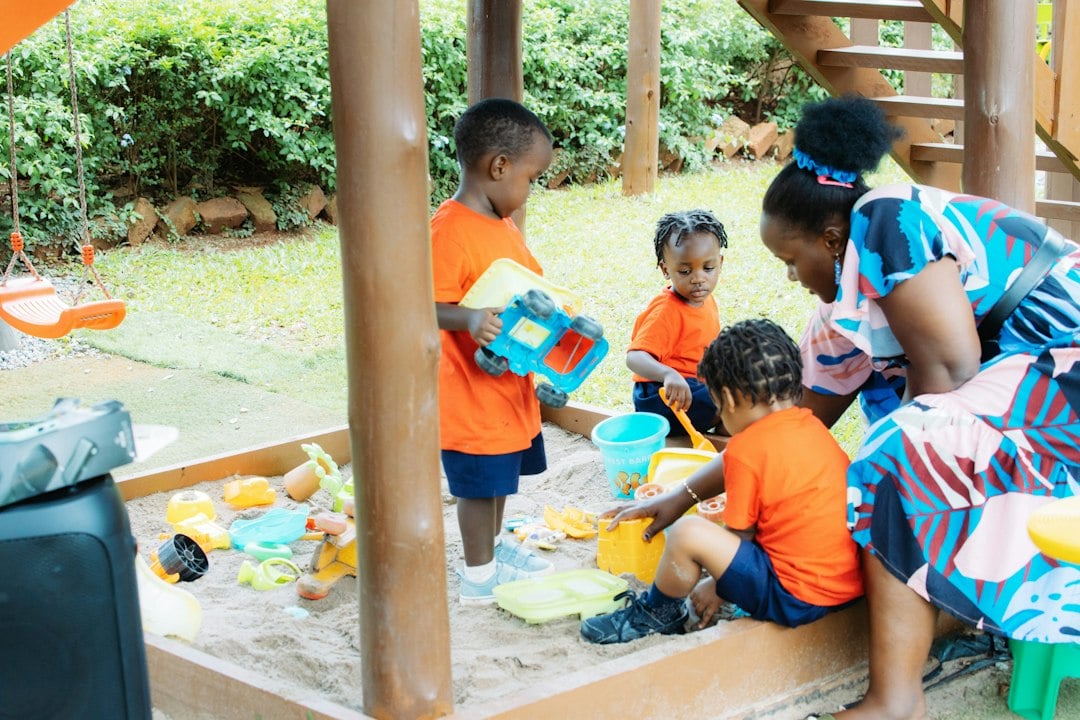
The authors report contamination between groups and concurrent public health influences among their limitations, along with a relatively short follow-up period. They also note that children with and without follow-up data differed on some baseline characteristics, so selection or attrition bias cannot be excluded, and that pandemic-related changes are likely to have affected both study arms. External validity, they write, is greatest in systems resembling Sweden.
Where This Sits in Early-Childhood Activity Research
Null policy trials are easy to ignore and expensive to run, which is a bad combination for the evidence base. This one is useful precisely because it was pragmatic: it tested the version of an intervention a city would actually deploy, not an intensive program delivered by researchers.
It also fits a wider pattern in which measured fitness and activity in young people prove stubborn. Work on body fat and motor fitness in 306 children and on coordination training and working memory in children both point to how much depends on dose and delivery rather than intent. Survey work on cardiovascular health among high school students shows the same gap between guidance and practice at the other end of childhood.
Read together, those lines of work suggest that preschool activity research and school-age fitness research keep arriving at the same wall. Measurable change appears to require a specific, supervised dose, and institutional guidance on its own rarely delivers one.
What Preschool Activity Research Means for Families
A null trial is not a reason to stop caring about young children moving. It is a reason to be skeptical of announcements that a policy has been adopted, and to ask instead what changed in the day.
The finding does not say that preschool activity is unimportant, that outdoor time is wasted, or that staff cannot influence how much children move. It says that a written policy, held for six months in a system with high baseline activity, did not shift three measured outcomes.
For families, the practical reading is narrow and safe:
- Ask what the preschool day looks like in practice rather than whether a policy exists.
- Treat time outdoors and freedom to run as the thing being measured, not the paperwork around it.
- Remember that this trial measured preschool hours only, so the hours after pickup remain entirely yours to shape.
None of this is individualized advice, and a single trial in one city should not override guidance from a pediatrician who knows a particular child. The broader evidence that habitual movement matters across the lifespan, including work on physical fitness and arithmetic fluency in adolescents, is not disturbed by one null policy result.
The Fitness Living Takeaway
A cocreated preschool activity policy held for six months across 124 Stockholm preschools produced no measurable change in 3,751 children, with moderate to vigorous activity differing by 0.3 minutes per day.
The estimates are precise enough that a meaningful hidden effect is unlikely, and the trial tested the realistic version of the intervention rather than a research-grade program. It remains one trial, in one city, in a system where baseline outdoor time is already high, and the authors themselves flag contamination between groups and a short follow-up.
Research & Sources
- JAMA Network Open: Preschool Physical Activity Policy and Children Physical Activity
- JAMA Network Open: current issue contents, October 2026
- JAMA Network Open: Physical Fitness and All-Cause Mortality in Older Adults
- DOI: 10.1001/jamanetworkopen.2026.40617. Trial registration: NCT04569578.
- Images: Alexandr Podvalny / Unsplash; Rewired Digital / Unsplash
This article summarizes peer-reviewed research for general information and is not individualized medical or exercise advice.