Recognized by Fitness Living Magazine™ For calisthenics specialization, four-client small-group coaching, individualized progressions, performance-first training, and local fitness leadership in New York City.
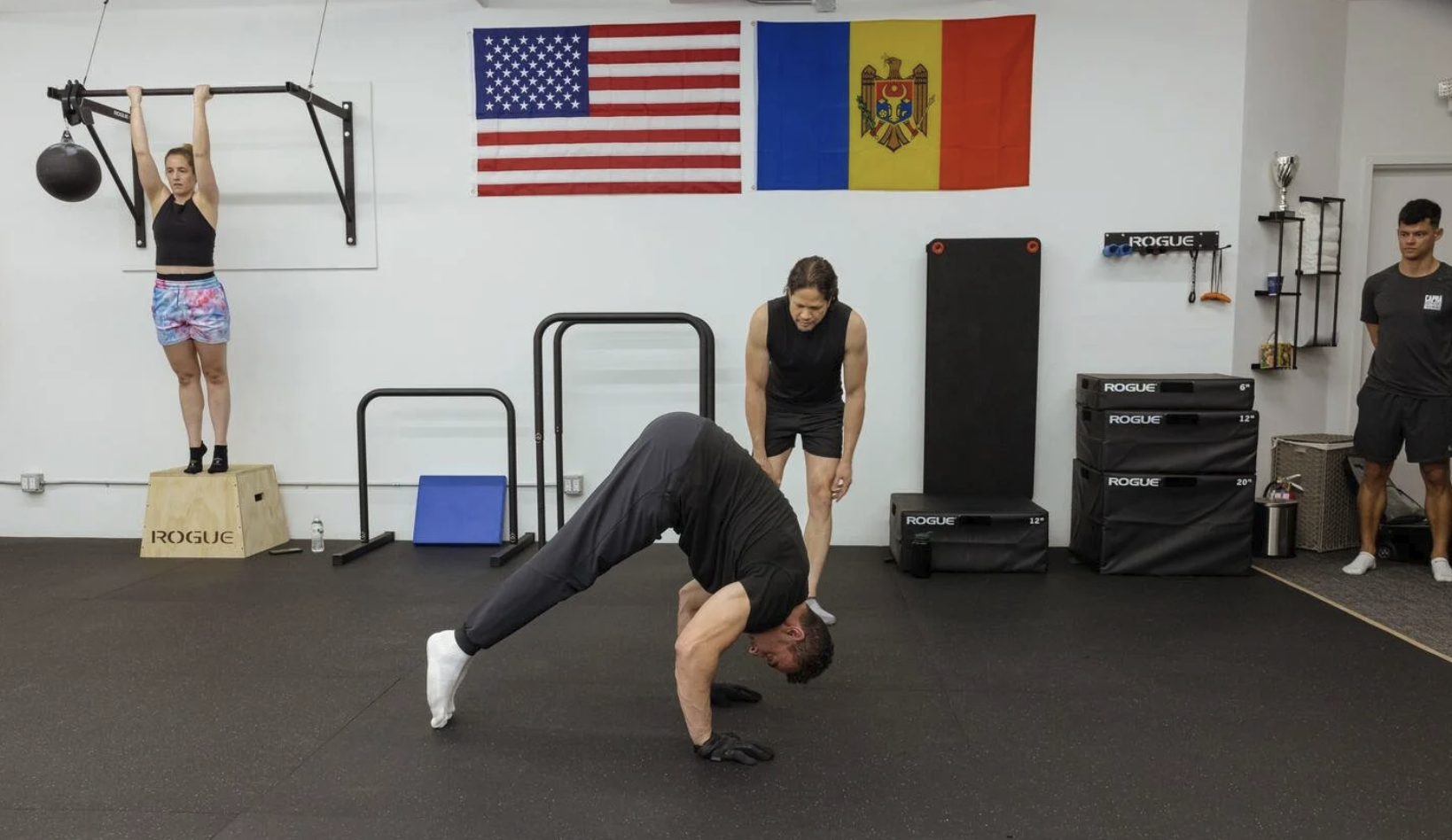
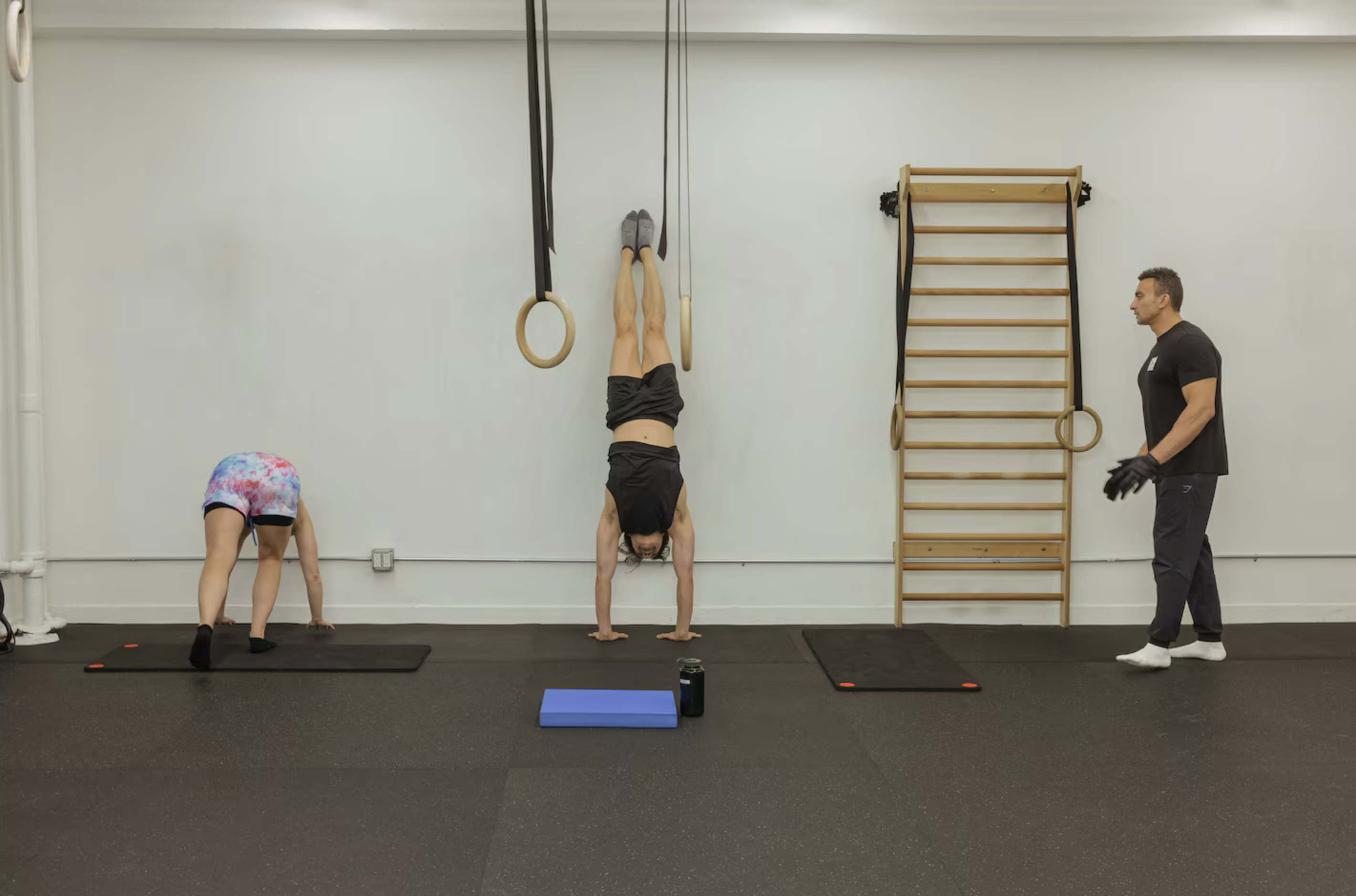
The second difference is harder to see from a photograph. Capra’s most popular format is small-group personal training capped at four clients per coach, yet the four people are not doing one shared workout. Each follows an individual program built around current strength, mobility, experience, and goals. A beginner learning a first clean push-up can train beside someone working toward a muscle-up or front lever without either person being pushed into the other’s plan.
“The best fitness equipment ever created has been around this whole time, and it’s just the human body.”Alex Ceban, Owner and Founder / Capra Bodyweight Training
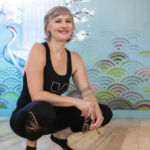
The first impression is space. Ceban described Capra’s studios as open and uncrowded, with equipment concentrated on the walls, high ceilings for skills such as muscle-ups, and room for handstand work. In the interview, he also said the studios do not use mirrors, a deliberate choice that keeps attention on performance rather than appearance.
The next signal is coaching density. Small-group sessions stop at four clients per coach. That ceiling is meant to leave enough time for form corrections, demonstrations, progressions, regressions, and the small adjustments that let people at very different skill levels train in the same hour.
For Ceban, the point is not simply to make calisthenics look impressive. He wants the training to be enjoyable enough to sustain and practical enough to become independent. The client is meant to leave with skills and body awareness that can travel beyond the studio.
Ceban has stepped back from most day-to-day coaching to build the coaching bench itself. His stated long-term mission is to make progressive calisthenics available in major cities across the United States and, eventually, in smaller markets as well.
Why the Equipment Disappears
Ceban came to calisthenics after years inside conventional personal training. He had worked around barbells, dumbbells, kettlebells, and machines, then attended a calisthenics workshop and watched coaches perform difficult bodyweight movements with a level of strength and control that changed his idea of what training could be. The absence of weights became a specialization, not a rejection of every other method.
Capra Bodyweight Training is a calisthenics-focused personal training studio in New York City founded by Alex Ceban, with small-group sessions capped at four clients per coach and individual programs built around each client’s current level and goals.
Clients can begin with basic push-up and pull-up progressions or work toward advanced skills such as handstands, muscle-ups, front levers, and the human flag. Different clients can pursue different programs during the same small-group session.
The current New York location is in Midtown Manhattan. Capra’s website presently invites prospective clients to book a free introductory session before choosing regular small-group or one-on-one training.
Ceban’s own route into fitness was indirect. He grew up in Moldova and moved to the United States at age twenty. Restaurant work took him from busboying to waiting tables and bartending, with an early idea that he might eventually become a sommelier or own a restaurant. He changed direction when he began questioning whether serving alcohol night after night was the kind of impact he wanted to make.
Inside the Capra Approach
This profile examines how Capra combines calisthenics-only training, individualized progressions, four-client coaching groups, performance-first goals, and a founder mission built around making bodyweight skill more widely available.
The resistance comes from the client’s own body, while leverage, range of motion, assistance, and skill progression create the training challenge.
Complete beginners can train alongside experienced clients because each person follows a separate program and the coach can regress or progress the movement to fit the individual.
Small groups stop at four clients, the studio stays performance-focused and mirror-free, and the long-term aim is to teach skills clients can continue outside the gym.
A Founder Who Left Sales Targets Behind
Ceban fell in love with personal training, became a fitness manager, and eventually found himself in a job he no longer enjoyed. He described the commercial environment as increasingly focused on money and monthly targets, while the reason he entered fitness had been to help people get stronger and fitter. When he searched for another team, he said he could not find one aligned closely enough with his priorities around client goals, service, and avoiding preventable setbacks.
Working for himself became the answer. Calisthenics arrived at almost the same moment and gave the new business a clear identity. Ceban says he has now trained this way personally for roughly twelve years, while Capra’s broader mission is to bring the method to more people and develop coaches who can carry the standard beyond his own sessions.
Why Progressions Come Before Skills
A new client may arrive asking for a handstand, muscle-up, front lever, human flag, or handstand push-up. Ceban does not treat the requested skill as the starting exercise. He described the early phase as building enough strength, mobility, coordination, and body awareness to make the next progression appropriate.
That can mean a regression of a familiar movement or a more basic strength pattern that prepares the same tissues and positions. The coach’s job is to keep the person moving forward without turning patience into delay. Ceban said that once the client is ready for the next progression, the team should take that opportunity rather than hold the person at an easier level simply to extend the process.
The mechanism matters because Capra trains mixed levels at the same time. In one four-person group, a beginner may be building toward a first pull-up while another client is practicing handstands and another is preparing for an advanced lever. The session is shared, but the progression is personal.
Coached, Not Processed
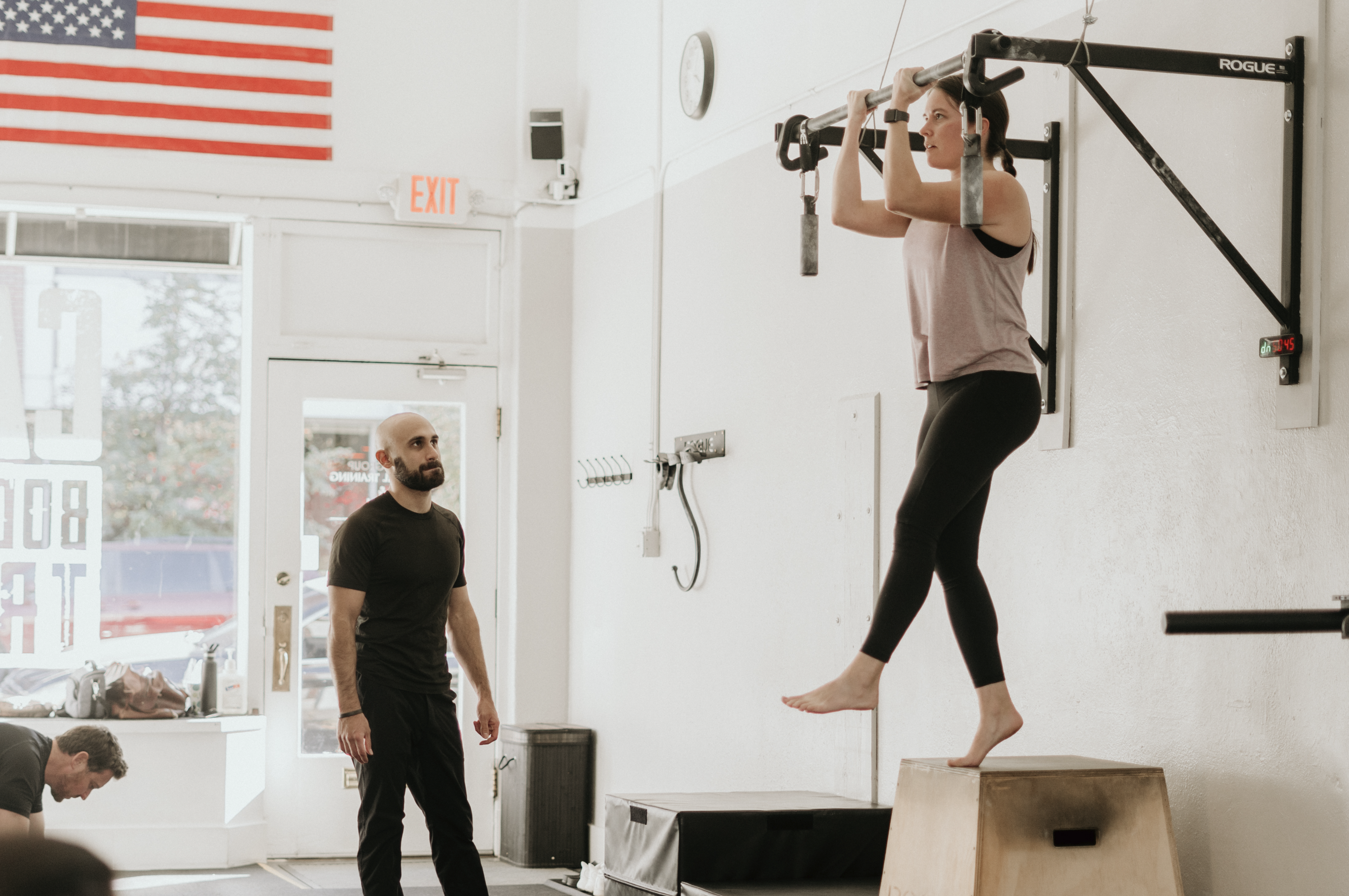
A Capra client is meant to feel like an individual inside a shared hour. Four people may train together, but each has a separate plan, and the coach moves among them correcting form, changing a progression, answering questions, and keeping the work tied to the person’s actual goal.
Emotionally, Ceban wants the experience to be fun enough that consistency does not depend entirely on willpower. Operationally, the studio keeps groups small, makes programs individual, and uses progressions so a client can experience movement as something to learn rather than a workout to survive.
Build Strength You Can Keep
Ceban’s governing philosophy is minimalist: the human body is a complete training tool, and learning to use it creates freedom. He does not argue that weights are ineffective. In the interview he repeatedly acknowledged that barbells, dumbbells, and kettlebells work. His distinction is that calisthenics can make strength feel more like acquiring a skill than moving a number on a bar.
That changes the end point. Ceban does not want clients to feel held hostage by a facility or a subscription. Once they understand the progressions, he wants them able to practice in a local park, at home, or while traveling, then pass those skills to friends or family. In his view, the studio succeeds when the client owns more of the process.
Capra’s distinction is not simply the absence of weights. It is the operating logic that follows: individualized progressions, a four-client ceiling, performance rather than mirror feedback, and an explicit goal of giving the client enough skill to become more independent over time.
What Capra Bodyweight Training Offers
The service mix centers on progressive calisthenics and individualized coaching, with small-group and one-on-one formats built around the client’s current strength, mobility, schedule, and skill goals.
“Alex is a tremendous discovery! He is the best personal trainer I have worked with and is meticulous and highly effective.”
The Case for Performance Over Appearance
Ceban deliberately moves the conversation away from physique as the primary goal. He said Capra’s studios do not use mirrors and described the training as performance-focused: stronger push-ups, pull-ups, legs, core control, handstands, levers, and the next skill the client wants to earn.
That does not mean appearance never changes or that clients never care about it. Ceban’s point is about what the program measures emotionally. He would rather a client notice that a movement became possible, cleaner, or more controlled than spend the hour judging a reflection. The training goal becomes capability.
The same restraint applies to safety claims. Ceban strongly emphasized careful progression and avoiding injuries in his interview. Fitness Living Magazine™ treats that as his coaching priority, not as a guarantee that bodyweight training is injury-free or medically safer for every person.
What Consistency Makes Visible
Asked what results clients usually see, Ceban resisted giving a universal timeline. He described too many variables: attendance, sleep, nutrition, stress, body weight, current strength, and the difficulty of the skill being pursued. The consistent theme was that clients who show up, trust the program, and support the work with reasonable lifestyle habits create more opportunity to progress.
For one person, progress may mean a first clean push-up or pull-up. For another it may be a stable handstand, stronger pistol squat, muscle-up, front lever, or human flag. Capra’s coaching system is designed to make the next progression visible while keeping the person’s current capacity in view.
Anthony’s Progress: From Ambitious Goals to Advanced Skills
Ceban points to New York client Anthony as a clear example of what can happen when an ambitious skill list is matched with patient progression, consistent work, and a coach who keeps the standard intact after a handoff.
Anthony began with Ceban and arrived wanting to learn a front lever, muscle-up, handstand push-up, and human flag. Ceban said goals of that level can feel demanding for a coach because the client is ready to work and expects the program to create a credible path toward movements that require substantial strength, control, and technique.
When Ceban stepped away from day-to-day coaching to focus on managing the business, Ahmed took over Anthony’s program. According to Ceban’s interview account, Anthony went on to master muscle-ups with form Ceban described as crisp, achieved the human flag and front lever, and continued working toward a handstand push-up. Ceban estimated that this progress occurred over roughly a year of training.
The story matters beyond the skill list. Ceban was initially concerned about handing off a client whose goals he had accepted himself. Anthony’s continued progress became evidence, in Ceban’s view, that the coaching standard could survive the founder stepping off the floor.
A Coaching Culture Built Around the Next Progression
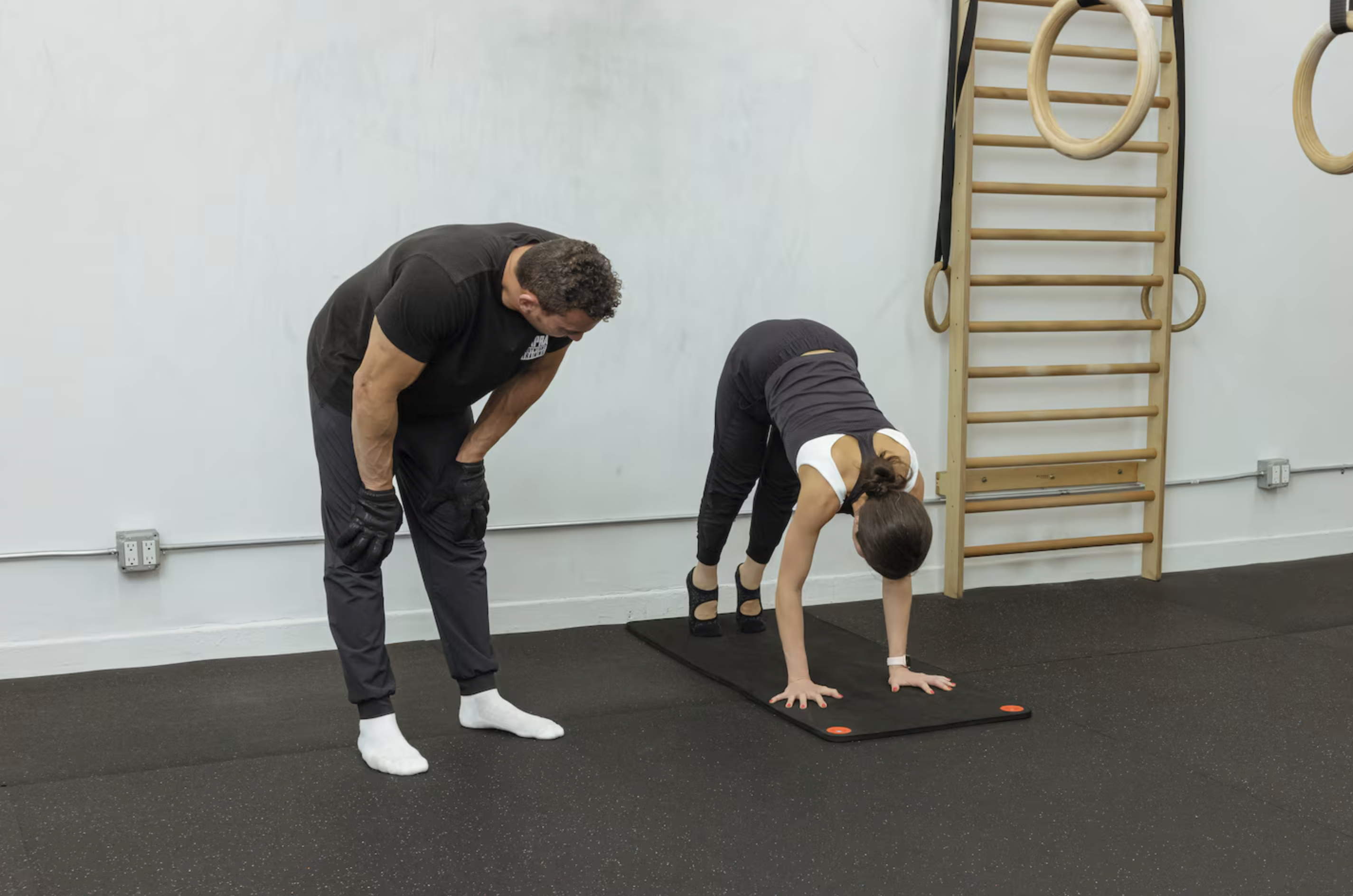
As Capra expands, Ceban’s role increasingly centers on developing coaches who can preserve the same close attention he valued in one-on-one personal training. The New York floor shows that standard in practice: one coach, a small number of clients, and different skills being taught side by side.
Why This Matters in New York City
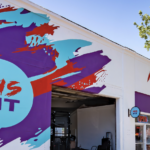
Capra’s New York studio sits in Midtown Manhattan near 37th Street and Eighth Avenue, a location the business chose for subway access. The practical local proposition is unusually specific: a private, appointment-only calisthenics studio where clients can train bodyweight strength without joining a conventional open gym.
Ceban said the vast majority of Capra clients find the business online, often because they are already searching for a handstand coach, calisthenics training, or another skill-based service. That search behavior fits the studio’s niche. People are not being persuaded to choose calisthenics from a menu of unrelated classes; many arrive because calisthenics is already the thing they were looking for.
For someone comparing personal training in New York City, the distinction is easy to test: four-client groups, individualized programming, a calisthenics-only method, and an introductory session that lets the prospective client see how the coach evaluates goals, mobility, and current ability before regular training begins.
Questions Readers Ask
Who Is Alex Ceban?
Alex Ceban is the owner and founder of Capra Bodyweight Training. He grew up in Moldova, moved to the United States at age twenty, worked in restaurants, became a personal trainer and fitness manager, then founded Capra after deciding to build a service more closely aligned with his priorities around client goals, coaching quality, and calisthenics.
What Does This Capra Bodyweight Training New York Review Highlight?
Capra is known for calisthenics-focused personal training that uses bodyweight progressions to develop strength, mobility, body awareness, and skills such as pull-ups, handstands, muscle-ups, front levers, and the human flag.
How Does Small-Group Training Work at Capra?
Small groups are capped at four clients per coach. The session is not a workout-of-the-day class. Each client follows an individual program, and the coach divides attention among the group for technique correction, progression decisions, and feedback.
Is Capra Bodyweight Training Suitable for Beginners?
Ceban says yes. Beginners can start with regressed versions of movements and build strength and mobility before advancing. The same session can include a beginner working toward a first pull-up and a more experienced client training an advanced skill because the programs are separate.
What Results Can Clients Expect?
Capra does not promise a universal timeline. Ceban described results in terms of stronger and cleaner movement, improved mobility and body control, and progress toward the client’s chosen skills. The pace depends on the person’s starting point, attendance, recovery, lifestyle, and goal difficulty.
What Is the Best First Step for a New Client?
Capra’s current website invites prospective clients to book a free introductory session. The studio uses that meeting to discuss goals and medical history, assess mobility and current ability, and finish with a workout before regular training begins.
Key Takeaways
Capra specializes in bodyweight training rather than offering calisthenics as one class among many unrelated methods.
Small groups stop at four people, and every client follows an individualized program rather than a shared workout of the day.
Clients build strength, mobility, and control first, then move toward harder skills when the coach believes the next progression is appropriate.
Ceban wants clients to leave with bodyweight skills they can practice beyond the studio, not with permanent dependence on a specific room or machine.
Conclusion
Capra Bodyweight Training is not distinctive merely because the dumbbells are gone. The stronger idea is what replaces them: a progression system, small coaching groups, individual programs, performance goals, and a founder who wants clients to become more capable outside the gym rather than more dependent on it.
Ceban’s core message is simpler still. Calisthenics should be fun. He believes that joy matters because training people enjoy is easier to return to, and return is what gives strength and skill time to accumulate. In Capra’s New York studio, that philosophy is visible in the room itself: open space, a bar, a coach, and the next movement waiting to be learned.
Alex Ceban
Alex Ceban built Capra around a minimalist premise: use the human body as the training tool, keep coaching personal enough to match the progression to the individual, and teach skills clients can carry with them long after the session ends.
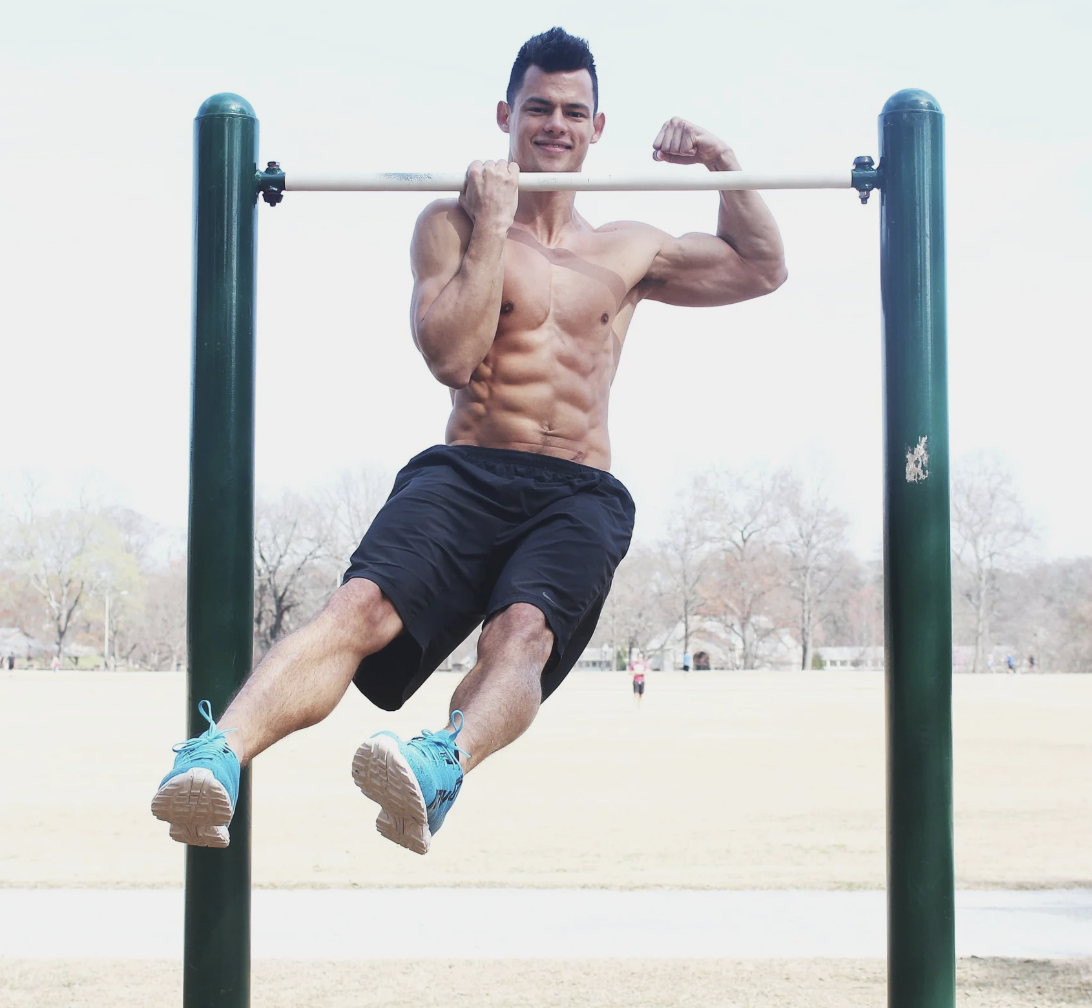
Alex Ceban grew up in Moldova and moved to the United States at age twenty. He worked in restaurants before becoming a personal trainer, later moved into fitness management, and eventually left the commercial gym environment to work for himself. A calisthenics workshop changed how he thought about strength, and he has trained with the method personally for roughly twelve years. Today his role increasingly centers on business development and coaching development as Capra expands into additional cities.
Promote progressive calisthenics widely, help clients get stronger with minimal equipment, make training enjoyable, and teach enough skill that people can eventually practice independently in parks, homes, and other simple environments.
Calisthenics-only personal training, small-group coaching capped at four clients, individualized program design, strength and mobility progressions, body awareness, handstands, pull-ups, muscle-ups, front levers, human flags, coach development, and performance-first training.
About This Spotlight
Fitness Living Magazine™ selected this Spotlight for Capra Bodyweight Training’s exclusive focus on calisthenics, four-client small-group coaching model, individualized progressions, performance-first studio philosophy, source-supported client success story, and Ceban’s stated mission to expand access to progressive bodyweight training.
Fitness Living Magazine™ publishes these features to place local fitness leaders on the record about how their programs operate, what clients experience, what standards guide the coaching, and what makes the business relevant to its local community.
Source material for this Spotlight consisted of the recorded Fitness Living Magazine™ editorial interview with Alex Ceban, the existing published Capra Bodyweight Training Spotlight and its approved photo/caption assets, the current Fitness Living Magazine™ article URL, and Capra Bodyweight Training’s official website used to confirm the present New York location, contact details, introductory-session language, and the client review quoted above.
This feature is editorial content and is not medical advice. Training descriptions, methods, and outcomes reflect the featured expert’s account and individual experience, and results differ from person to person. Readers should consult a qualified healthcare professional before beginning any new exercise program.