Nutrition & Performance · Research Explainer · November 26, 2026
A recovery claim should answer a practical question: did people regain their ability to produce force, or did a laboratory measurement simply change?
What the researchers tested
A double-blind, randomized, placebo-controlled trial in Age and Ageing studied 43 healthy women and men aged 65–85. Participants took algae-derived omega-3 oil or placebo for eight weeks, then performed 100 leg extensions emphasizing the lowering phase. Researchers assessed quadriceps force, soreness, muscle-damage markers and inflammation.
The authors reported no improvement in functional recovery with omega-3s. Force was lower in the supplement group at 24 and 72 hours, but the overall time-by-group interaction was not statistically significant (P=.064). Those individual comparisons should not be presented as decisive evidence that omega-3s worsen recovery.
Overall group differences in creatine kinase and the measured inflammatory markers were also not significant. Exploratory analyses suggested that sex and habitual activity might influence molecular responses; these observations need confirmation. The small sample, modest muscle-damage response and single exercise protocol limit generalization. This was not a test of months of training progress or every omega-3 formulation. Read the study abstract.
Separate food choices from recovery claims
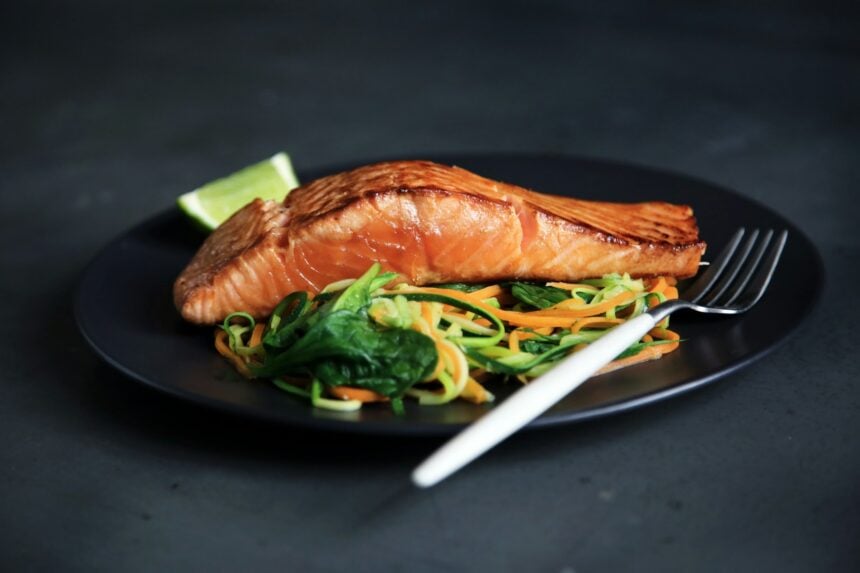
The NIH Office of Dietary Supplements identifies salmon, sardines and other fatty fish as sources of long-chain omega-3s. Walnuts, chia seeds and some plant oils supply a different omega-3, ALA. NIH advises meeting nutritional needs primarily through food.
That nutritional context is distinct from a promise that a supplement will speed recovery after a workout. A meal and a concentrated oil are different interventions. The photograph accompanying this article illustrates food, not the algae-oil treatment tested in the trial.
NIH also notes that supplement formulations vary, making the types and amounts on the label important. Supplements can cause gastrointestinal discomfort and may interact with medicines. People taking regular medication should discuss possible interactions with their health care provider.
Ask what “recovery” actually means
Our editorial interpretation is to ask for the outcome behind the claim. Less soreness, a different blood marker and restored force are separate findings. Before buying a product for recovery, ask whether the evidence measures the benefit you want and includes people whose age and training resemble yours.
A result that does not establish a benefit is also not proof that every possible effect is absent. For a discussion with a sports dietitian, bring your training schedule, usual meals and the specific product label. This explainer does not recommend a supplement dose or a change to prescribed treatment.
Sources and reporting scope
Li and colleagues, Age and Ageing, November 2026 issue. The publisher lists November 7, 2026 as publication date. DOI: 10.1093/ageing/afag323. Study reporting uses the publisher’s indexed abstract; full text was not accessible. NIH guidance was reviewed November 26, 2026.
Explore more Nutrition & Performance articles.