A 25-minute self-paced exercise test put trained men in their late fifties alongside trained and untrained men in their twenties. The older trained group matched the young trained group on distance and was the steadiest of the three in self-paced exercise sprints.
Self-Paced Exercise performance held up with age among trained men in a three-group cycling study published in Pflügers Archiv – European Journal of Physiology on November 19, 2026.
The study, by Ee Von Chia, Jack Cannon and Frank E Marino, compared 28 healthy men in three predefined groups: eight young trained men averaging 26.3 years, eleven older trained men averaging 57.5 years, and nine young untrained men averaging 24.8 years.
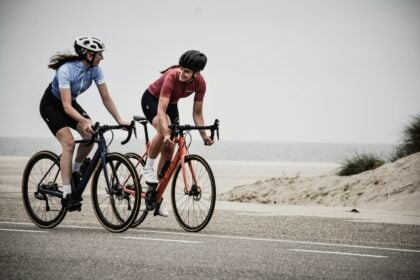
Each man completed a familiarisation trial and then a second trial 7 to 10 days later, which supplied the main results. The protocol was a 25-minute self-paced cycling time trial built from five 4.5-minute lower-intensity sections, each one followed by a 30-second maximal sprint.
Total distance differed between the groups in the self-paced exercise trial. The older trained men rode 12.87 km, the young trained men 12.46 km and the young untrained men 11.48 km, a group effect significant at P = 0.037.
At a Glance
- Published online November 19, 2026 in Pflügers Archiv – European Journal of Physiology, volume 478, issue 12.
- 28 healthy men in three groups: young trained (n = 8, 26.3 years), older trained (n = 11, 57.5 years) and young untrained (n = 9, 24.8 years).
- Protocol: a 25-minute self-paced exercise time trial on a cycle ergometer, with five 4.5-minute lower-intensity blocks each capped by a 30-second maximal sprint.
- Distance covered in the self-paced exercise trial: older trained 12.87 km, young trained 12.46 km, young untrained 11.48 km (P = 0.037). Older trained beat young untrained by 1.40 km (95% CI 0.35 to 2.44).
- Sprint power variability: 7.8% in older trained men, 12.2% in young trained, 28.4% in young untrained (P = 0.025).
- Peak heart rate was lower in the older trained group at 164 bpm, against 179 bpm in young trained and 178 bpm in young untrained men (P = 0.024).
- Main caveat: there was no older untrained group, so ageing and training cannot be separated.
How the 25-Minute Self-Paced Exercise Trial Worked
Most laboratory cycling tests fix the workload and measure how long a rider lasts. This one did the opposite. In self-paced exercise the rider controls the output, so the data describe the choices a rider makes as well as the capacity they have.
That design makes pacing itself an outcome. Across five lower-intensity blocks and five all-out sprints, the researchers could see how each group distributed effort, and whether a group spent itself early and faded. Pacing data of this kind are the main reason self-paced exercise protocols are used at all.
The authors are explicit that this was a comparison of three predefined phenotypes rather than a full age by training factorial design. Without an older untrained group, the study cannot say how much of any difference in self-paced exercise belongs to age and how much belongs to training.
Older Trained Riders Covered the Most Ground
On the headline measure of self-paced exercise, the older trained men were not disadvantaged. Their 1.40 km margin over the young untrained men had a confidence interval of 0.35 to 2.44 km and an adjusted P value of 0.035.
Against the young trained men, their 0.41 km advantage was well inside the noise, with an interval running from minus 0.96 to 1.79 km and a P value of 0.529. The fair reading is parity between the two trained groups, not superiority.
Power output during the self-paced exercise blocks told the same story. In the lower-intensity blocks the older trained men produced 51.8 W more than the young untrained men (95% CI 18.8 to 84.7, adjusted P = 0.012), while their 27.5 W edge over the young trained men was not statistically clear (adjusted P = 0.422).
The gap in sprint power variability between older trained men and young untrained men during self-paced exercise, from 7.8% to 28.4%.
The Sprint Numbers Separated the Groups
Sprint power showed both a group effect (P = 0.002) and a group by stage interaction (P = 0.012), meaning the groups did not merely differ in strength but changed differently as the self-paced exercise trial wore on.
Variability is where the contrast was starkest. The coefficient of variation across the five sprints was 7.8% in the older trained men, 12.2% in the young trained men and 28.4% in the young untrained men (P = 0.025).
The 20.6 percentage point gap between the older trained and young untrained groups had a confidence interval of 6.2 to 35.0 and an adjusted P value of 0.030. Notably, there was no group difference in variability during the lower-intensity blocks (P = 0.790): the inconsistency was specific to maximal efforts.
A Lower Peak Heart Rate at a Higher Output
Peak heart rate differed across the groups (P = 0.024). The older trained men reached 164 bpm, about 15.0 bpm below the young trained men (95% CI minus 25.4 to minus 4.5, adjusted P = 0.023) and 13.9 bpm below the young untrained men.
A lower peak heart rate with age is expected physiology rather than a performance signal on its own. What makes it interesting here is the pairing: the older group produced equal or greater output in self-paced exercise while topping out at a lower heart rate.
Heart rate alone is therefore a poor way to compare effort across ages. Readers tracking intensity by heart rate may find that threshold-based measures travel better, as in work showing that lactate accumulation rate was linked to threshold power in 182 cyclists and triathletes.
What Self-Paced Exercise Revealed About Effort Ratings
Perceived effort behaved differently by group. In the lower-intensity blocks there was a group by stage interaction of P = 0.001: ratings climbed by 7.3 units from the first block to the fifth in the young untrained men, against 3.9 units in the older trained men.
That difference of 3.37 units (95% CI 0.86 to 5.87, adjusted P = 0.023) describes a drift in how hard the same kind of work felt. For sprints, the interaction was also present (P = 0.024), but no individual sprint comparison survived adjustment.
Where the Groups Looked the Same
Several physiological measures did not separate the groups during self-paced exercise, and those null results matter. Blood lactate rose across the sprints (P < 0.0001) with no group effect (P = 0.148) and no interaction (P = 0.210).
Core temperature rose through the trial (P < 0.0001) with no group effect (P = 0.642), and skin temperature showed none either (P = 0.347). The older trained men did lose 0.421 L/h more fluid than the young untrained men (P = 0.045).
Near-infrared spectroscopy found no significant group by stage interactions for cerebral or muscle oxygenation, with P values of 0.150 and 0.345 for cerebral signals and 0.481 and 0.318 for muscle signals. Maximal voluntary contraction differed between groups (P = 0.038), with the young trained men above the older trained men, but muscle quality did not (P = 0.276).
What This Means for Training After 50
The useful signal for a reader over 50 is not that age is irrelevant; it is that continued training appears to preserve the ability to produce and repeat hard efforts in self-paced exercise. With 28 men in three unequal groups, this is a small study and should be read as one data point.
A few cautious reads, none of them individualized advice:
- Consistency across repeated hard efforts may be a more informative progress marker than a single peak number.
- Peak heart rate is not a fair cross-age yardstick for effort during self-paced exercise.
- Perceived effort can drift upward within a session even when output holds, so rating effort at one point is not the whole picture.
Response to training also varies between people, which is why group averages travel poorly to individuals. In one 12-month programme, 46% of 288 older adults were high responders for knee strength. Fatigue likewise shows up in movement before it shows up in results, as when neuromuscular fatigue lowered shoulder height 31 mm in 19 elite rowers, and environmental load changes fuel use, as when cyclists used 27% less ingested carbohydrate riding in 40C heat.
The Fitness Living Takeaway
In a 25-minute self-paced exercise time trial, trained men averaging 57.5 years matched trained men in their twenties for distance and power, and repeated their sprints far more evenly than untrained young men.
The striking number is sprint variability during self-paced exercise: 7.8% in the older trained group against 28.4% in the young untrained group. Because the study had no older untrained group and only 28 participants in unequal groups, it cannot separate the effect of ageing from the effect of training, and it should be read as a small, carefully measured snapshot rather than a verdict.
Research & Sources
- Pflügers Archiv: Comparative physiological responses to self-paced exercise in men across age and training status
- Study DOI
- Images: Krzysztof Kowalik / Unsplash; Tom Wheatley / Unsplash
This article summarizes peer-reviewed research for general information and is not individualized medical or exercise advice.