Nutrition & Performance · Research Explainer · November 4, 2026
Choosing a protein supplement means asking what the evidence actually measured. A short laboratory test and months of strength training answer different questions.
Three drinks, one short observation window
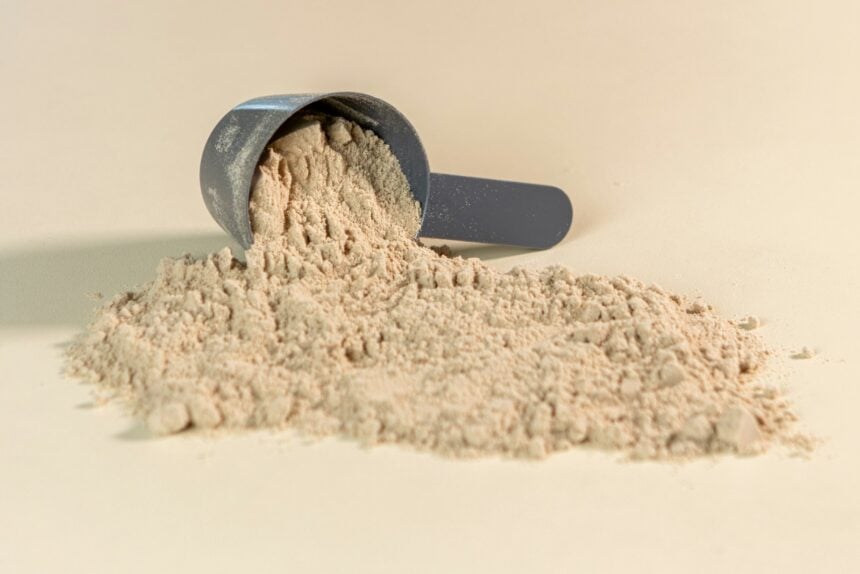
A randomized, double-blind trial in 45 healthy men, averaging 69 years old, compared three drinks: 20 grams of soy–pea protein, that blend with two additional grams of leucine, or 20 grams of whey. Blood and muscle samples tracked responses for four hours. The study appeared in the October 2026 issue of The Journal of Nutrition.
None of the groups showed an increase in muscle protein synthesis over fasting values. Rates also did not differ significantly among groups. Whey produced greater circulating essential amino acid availability; added leucine produced the highest peak leucine concentration. Those blood responses did not translate into a higher measured synthesis rate.
What the result leaves open
This was a small, single-dose experiment in older men, not a long-term strength or muscle-growth trial. It cannot establish that protein is ineffective, that these products are interchangeable in every setting, or that women and younger adults respond identically. A nonsignificant difference is not proof of identical effects. Nor does this dose establish your personal requirement.
Put the scoop back into the whole diet
The NIH Office of Dietary Supplements describes protein as supporting muscle maintenance, repair, and training adaptation. It places supplements within a foundation of adequate food and hydration. Its guidance also cautions that results from a particular ingredient or study population may not apply to different products or exercise settings.
Our editorial takeaway is to separate three questions when reading a supplement claim: Who was studied? What did researchers measure? How long did they observe participants? A claim about a laboratory marker deserves a different interpretation from a demonstrated improvement in everyday function.
A useful next step: bring your usual meals, supplement labels, and training routine to a registered dietitian. Ask what nutritional gap, if any, a supplement would address. This study offers no reason to automatically increase your serving size.
Explore more Nutrition & Performance reporting.
Research & Sources
Kuin and colleagues. The Journal of Nutrition, October 2026;156(10):101789. Study abstract · DOI: 10.1016/j.tjnut.2026.101789.
NIH Office of Dietary Supplements. Exercise and athletic performance fact sheet, accessed November 4, 2026.
Reporting is based on the published abstract and NIH guidance; the full study text was not accessible during preparation. Interpretation is editorial, not individualized medical or nutrition advice.