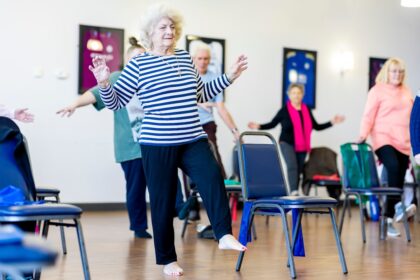

A small pragmatic randomized trial found that adding simple group nutrition counseling to a twice-weekly community exercise program improved fasting glucose in older adults with hypertension, without requiring calorie restriction or specialized exercise equipment.
Exercise and nutrition counseling are both standard parts of cardiometabolic health advice, but a newly published trial asked a practical question: does a modest nutrition program add anything when older adults with hypertension are already exercising?
The answer was encouraging but narrow. In the 12-week trial, the group that combined exercise with six biweekly nutrition sessions finished with fasting glucose about 10 mg/dL lower than the exercise-only group. Systolic blood pressure also fell within the combined group, but the difference between groups was not statistically significant.
The study was published September 3 in the Journal of Human Hypertension and was designed as a real-world community program rather than a tightly controlled laboratory intervention.
At a Glance
- Thirty-two adults ages 50 to 80 with physician-diagnosed hypertension were randomized; 29 completed the 12-week intervention.
- Both groups exercised twice weekly for 60 minutes using calisthenics plus walking or running.
- One group also attended six 30-minute nutrition counseling sessions focused on food quality and reducing ultra-processed foods.
- Fasting glucose was about 10 mg/dL lower in the exercise-plus-nutrition group than in the exercise-only group after the intervention.
- Systolic blood pressure dropped within the combined group, but there was no significant between-group difference for blood pressure.
What the Exercise and Nutrition Counseling Program Looked Like
The exercise prescription was deliberately accessible. Participants trained twice per week on an outdoor athletics track. Each 60-minute session combined about 30 minutes of bodyweight resistance work with 30 minutes of walking or running.
The strength portion included push-ups, squats, inverted rows, calf raises, unilateral balance work and sit-ups. Participants generally completed two to three sets of 12 to 20 repetitions, with perceived effort targeted around “somewhat hard” to “hard.” The program did not require gym machines or specialized testing equipment.
The nutrition component was equally pragmatic. Participants attended six small-group sessions over 12 weeks. The counseling emphasized food processing, label reading, sodium, added sugar, fat, cooking skills and healthier eating patterns. There was no individualized meal plan and no prescribed calorie restriction.
After 12 weeks, fasting glucose was about 10 mg/dL lower in the exercise-plus-nutrition group than in the exercise-only group.
Why the Fasting Glucose Result Matters
Fasting glucose was the study’s primary outcome, meaning the trial was specifically powered around that question. The combined group experienced a significant reduction, while glucose rose in the exercise-only group over the same period. The adjusted between-group difference favored the exercise-plus-nutrition group.
The average baseline glucose level in the combined group was in the prediabetes range. That makes the result relevant to cardiometabolic risk, because hypertension and impaired glucose regulation often cluster together as people age.
Still, the study does not show that six nutrition classes prevent diabetes. It measured fasting glucose at the start and end of a 12-week program. It did not track diabetes incidence, heart attacks, strokes or long-term medication changes.
What Happened to Blood Pressure
Systolic blood pressure decreased by about 10 mmHg within the exercise-plus-nutrition group. That is a meaningful numerical change, but the comparison between the two groups did not reach statistical significance.
This distinction matters. A within-group change tells us what happened over time in one group. A between-group comparison is what tells us whether one intervention clearly outperformed the other. Here, the trial supports a stronger conclusion for fasting glucose than for blood pressure.
The authors also note that participants began with relatively well-controlled systolic blood pressure, around 129 mmHg on average. That may have limited how much additional improvement was possible.
The trial was small and was not powered to prove a blood-pressure advantage. The authors describe the blood-pressure finding as exploratory and call for larger studies.
Why the Study Is Useful for Real-World Fitness
Many lifestyle trials use tightly supervised diets, frequent clinic visits or exercise equipment that is difficult to reproduce outside research settings. This study intentionally used a low-cost format that could plausibly fit a community program, senior center or primary-care referral model.
That makes the intervention interesting for ordinary fitness enthusiasts as well. The program did not depend on a perfect diet or a high training frequency. It paired two manageable habits: twice-weekly combined exercise and periodic education about food quality.
The new findings fit with broader evidence that mixed aerobic and strength activity can support metabolic health. In earlier Fitness Living reporting on cardio, strength training and type 2 diabetes risk, adults who met both aerobic and muscle-strengthening guidelines had substantially lower odds of developing diabetes in a long-running cohort.
They also complement our coverage of meal timing and cardiovascular risk, which shows how nutrition-related habits can influence the broader fitness picture beyond calories alone.
What the Trial Cannot Tell Us
The sample was small—32 people were randomized, and 29 completed the program. Participants were 50 to 80 years old, had diagnosed hypertension and had previously taken part in a community exercise program before a three-month break. The findings may not apply to sedentary beginners, younger adults or people with more complex medical conditions.
The study also was not registered in a public clinical-trial registry. The authors acknowledge that this limits independent verification of the prespecified outcomes and analysis plan.
Dietary intake was not objectively measured, so researchers cannot say exactly which food changes drove the improvement in fasting glucose. The counseling focused on healthier food choices and reducing ultra-processed foods, but the trial did not quantify calories, fiber, sodium or macronutrient changes with enough precision to isolate a mechanism.
Fasting glucose was measured with a capillary glucometer rather than a laboratory assay, and glycated hemoglobin was not measured. Exercise volume and intensity also were not progressed during the 12 weeks, which may have limited improvements in fitness and blood pressure.
What Fitness Enthusiasts Can Apply
The study supports a simple principle: training and nutrition can work together even when neither approach is extreme. You do not need a high-frequency gym routine or aggressive calorie restriction to improve every health marker.
For someone already exercising, the next useful step may be improving food quality rather than simply adding more workouts. That can mean cooking more often, reading labels, reducing ultra-processed foods, increasing minimally processed foods and paying attention to sodium and added sugar.
For people with hypertension, medication and medical care remain central. Lifestyle changes should complement prescribed treatment, not replace it. Because the trial involved adults with diagnosed hypertension, anyone making major exercise or dietary changes should consider their own medications, blood-pressure response and clinician guidance.
The Fitness Living Takeaway
In a 12-week community trial, older adults with hypertension who combined twice-weekly exercise with six group nutrition sessions finished with lower fasting glucose than those who exercised alone.
The blood-pressure signal was less certain, and the study was small. But the result makes a useful practical point: modest nutrition guidance can add measurable value to an accessible exercise program without requiring calorie restriction, specialized equipment or an all-or-nothing lifestyle overhaul.
Research & Sources
- Journal of Human Hypertension: Effects of combined exercise training with or without nutritional counseling on cardiovascular risk factors in older adults with hypertension
- Permanent DOI for the pragmatic randomized trial
- Brazilian Ministry of Health: Dietary Guidelines for the Brazilian Population
- Image: Richard Sagredo / Unsplash
This article reports on peer-reviewed health and exercise research for general information. It is not individualized medical or nutrition advice.
The Fitness Living Weekly
New Fitness Living Spotlights, important fitness news, research and independent reporting, delivered directly to your inbox.
One considered edition each week.
Do You Lead a Fitness Business Worth Knowing?
Fitness Living Magazine features independent gym owners, fitness trainers, and Pilates studio owners strengthening their local communities.