This IBFit Indian Land review looks at AJ Passmore’s strength-focused coaching, six-week challenge, nutrition and habit accountability, app-supported programming, and community-centered approach to sustainable fitness.
That operating idea grew out of Passmore’s own return to fitness. After years of football, basketball, and wrestling, a move during his senior year of high school pulled him away from sports and training. About two years later, he realized he had gained roughly 45 pounds. A trial at a group fitness gym reminded him how much he had missed training, and the experience eventually led him into coaching, gym operations, online coaching, and the studio he now leads.
“They’re going to get amazing results because we focus on building them long-lasting, sustainable habits.”AJ Passmore, Owner And Coach / IBFit
Passmore says members most often talk about the community and culture. His description is closer to a family than a transaction: people hold one another accountable, feel safe when they walk in, and are meant to feel welcomed rather than evaluated before they have even started.
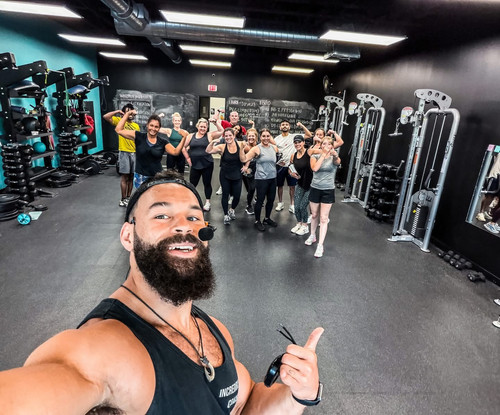
The training room itself is high-energy and strength-focused. Group classes can include up to 20 people, but the coaching extends beyond the class hour through nutrition support, app-based programming, habit tracking, and accountability that follows members into the rest of the week.
For Passmore, the emotional standard matters as much as the programming. He wants people to remember what it feels like to be capable again, then build enough evidence through training that confidence stops feeling theoretical.
Passmore says the business means everything to him because fitness gave him direction when he did not know what came next. His stated purpose now is to help other people find that feeling again: more confidence, more belief in what they can do, and a stronger sense that they can feel better than they feel right now.
Why The Workout Is Only Part Of The System
Passmore describes IBFit as a place where the workout is important but incomplete on its own. The physical work is built around strength, while the larger coaching model asks what happens during the other hours of the week: how much someone moves, how consistently they eat for their goals, whether they drink enough water, whether they recover, and whether they can keep going when a roadblock appears.
IBFit is a strength-focused coaching studio serving Indian Land, South Carolina, led by AJ Passmore and built around group training, personal training, online coaching, nutrition guidance, accountability, and sustainable habit change.
The studio’s current website describes a hybrid model combining in-person strength training with the IBFit app, nutrition onboarding, coach accountability, and programming that can extend into the rest of the week.
Passmore’s own path gives that system its context. He grew up active in football, basketball, and wrestling, then stopped training after moving to a different state during his senior year of high school. About two years later, he realized he had gained roughly 45 pounds. A trial membership at a group fitness gym became the wake-up call that brought him back.
He asked the head coach how to become more involved, got certified, and moved through increasingly responsible roles as the gym company expanded. He later helped open locations in multiple states, worked as a head coach, supported pre-sale operations, and learned how a fitness business functions from the inside. After he and his wife decided to try building their own company, they started with online coaching, where Passmore says they learned more deeply about fitness, nutrition, and accountability before finding the studio that became IBFit.
Inside The IBFit Approach
This profile examines how IBFit connects strength training, nutrition, habit tracking, coach accountability, community, and technology inside one Indian Land-area fitness system.
The program deliberately extends beyond the class hour, using the app and coach contact to connect workouts with food, steps, water, sleep, mobility, and other habits.
Passmore describes a mixed-level environment where beginners can start without needing to look like the fittest person in the room and experienced lifters can still be challenged.
Community, referrals, a coach-led strength focus, app-supported accountability, and an explicit sustainable-habit message give the studio a clear operating identity.
A Coach Who Had To Find His Way Back First
Passmore did not enter fitness from a distance. He remembers what it felt like to stop moving, gain weight, and lose some of the structure that sports had given him. When training returned, so did direction. That experience helps explain why he talks less about fitness as punishment and more about helping people feel like themselves again.
The business grew from that personal meaning into an operating system. Online coaching taught him how much work happens outside the gym. In-person training gave the team a physical community. The result is a hybrid model in which the room creates energy while the app and coaching relationship create continuity.
Why The Basics Keep Winning
Asked which training approach works especially well, Passmore did not name a complicated method. He named the basics: get at least three workouts in each week, aim for daily activity such as 10,000 steps, eat intentionally, get enough protein to support the strength work, drink enough water, and stay consistent.
The simplicity is intentional. Passmore’s point is not that every person needs an identical prescription. It is that progress often depends on a small number of behaviors being repeated long enough to matter. The coach’s role is to make those behaviors clearer, more appropriate to the person, and harder to abandon when life gets inconvenient.
That is also where accountability becomes practical rather than motivational language. Members can use the app to log food and workouts, sync steps from a phone or watch, track water and sleep, and keep the coach close enough to see when the plan is working or when it needs to change.
Welcomed, Safe, And Accountable
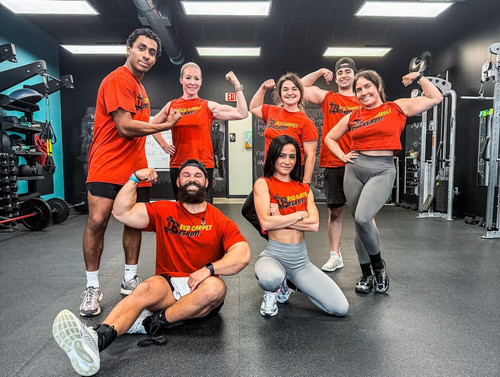
Passmore wants a member to feel that the room is for them before they have proved anything to it. He says people should feel good, safe, welcomed, and supported by a community that will still challenge them to follow through.
That matters because intimidation is one of the biggest barriers he sees. Some prospects look at fit members and assume they do not belong yet. Passmore’s answer is that many of those people had their own first day, and the only way to discover what is possible is to begin from the level they are actually at.
Strength Training With A Lifestyle System
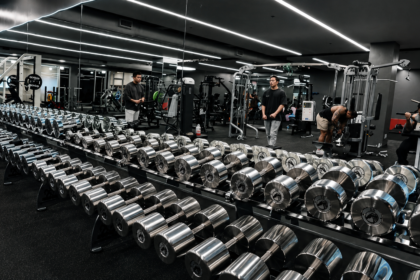
Strength training is the physical center of IBFit. Passmore said group training is the studio’s most common service, with classes of up to 20 people and a high-energy format. He also described personal training and online coaching for people who are not local or who need programming delivered through the app.
The lifestyle system is what keeps the strength work from becoming isolated. Passmore wants members to move more during the day, step away from sedentary routines, use mobility work where it helps, and make nutrition and recovery decisions that support the work they are doing in the gym. On the current IBFit website, that hybrid idea is summarized as fitness, accountability, nutrition, community, and education.
IBFit’s distinction is the connection between physical training and follow-through. The workout creates the stimulus; the nutrition, activity, tracking, accountability, and community are meant to make the member’s response to that stimulus more consistent from one week to the next.
What IBFit Offers
The service mix centers on coach-led strength training with nutrition, accountability, and app support layered around it so members can work on the same goals inside and outside the studio.
“I came for a 6 week challenge and never looked back. The workouts are great, but the environment is even better.”
Designed For People Who Feel Intimidated By The Gym
Passmore says one of the biggest growth challenges is not retention or programming. It is getting an interested person through the door for the first time. Fitness asks for participation, and many leads are still deciding whether they are ready to make the lifestyle change they are considering.
That is why the studio’s beginner message matters. The room may contain people who look fit, but Passmore wants a new member to understand that many of those people did not begin there. The relevant comparison is not to the strongest person in class. It is to the member’s own starting point and the next behavior they are prepared to repeat.
What Consistency Makes Visible
Passmore describes results in both physical and mental terms. In the six-week challenge, he said members pursuing body-fat loss may see very different outcomes depending on their starting point and consistency; in the interview he cited a broad range from eight to 25 pounds for some participants. He also emphasized visible muscle definition, strength, mental clarity, confidence, and the belief that a person can do more than they previously thought.
Those figures are not a promise or a universal expectation. Passmore’s larger point is that the basics create a direction: strength work, activity, nutrition, hydration, and consistent follow-through. The more important long-term test is whether the member can keep moving when a setback appears instead of treating one difficult week as the end of the process.
Sarah’s Return: More Than 80 Pounds And A New Role In The Room
Passmore points to member Sarah as a story that stayed with him because her progress echoed part of his own: an athlete who stepped away from training, lost some of that structure, and decided to find it again.
According to Passmore’s interview account, Sarah had been a college swimmer. After college she stopped swimming and working out, arrived at IBFit out of shape and overweight, but brought the same high-performance mindset she used in her professional life to the goal of rebuilding her fitness.
Passmore said she had been with IBFit for about two years at the time of the interview and had lost more than 80 pounds. Just as important to him, she kept showing up consistently and became the kind of member who notices when someone else is struggling, reaches out, and helps other people in the gym.
The story matters because it shows how IBFit defines success beyond a number. The physical result is substantial, but Passmore also notices the return of consistency and the way a member who once needed support can become part of the support system for someone else.
A Culture Members Bring Other People Into
Passmore says referrals are one of IBFit’s strongest discovery channels. To him, that matters because a referral is more than a lead source: it means members feel strongly enough about their own experience to bring friends, relatives, and coworkers into the same environment.

Why This Matters In Indian Land
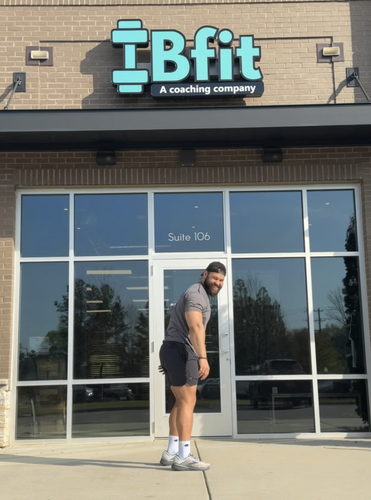
IBFit describes its in-person studio as serving Indian Land, South Carolina. Its official website lists the street address as 2024 Bridgemill Drive, Suite 106, Fort Mill, South Carolina 29707, a postal detail worth keeping clear for readers who are deciding whether the studio is practical for them.
The local proposition is more specific than simply having classes nearby. Passmore is offering a strength-focused room combined with coaching outside the room, and he is trying to lower the intimidation barrier that keeps some people from ever testing whether a gym fits them. The current website reinforces that positioning by describing group training as beginner friendly and by offering a free Goal Setting Consultation as an entry point.
For someone comparing fitness options around Indian Land, the questions are therefore straightforward: Do you want coach-led strength training? Do you want nutrition and habit accountability tied to the program? Does a community-oriented group environment help you stay consistent? And do you want a system that can continue through an app when the class is over?
Questions Readers Ask
Who Is AJ Passmore?
AJ Passmore is the owner and coach featured in this IBFit Spotlight. He grew up playing football, basketball, and wrestling, returned to fitness after gaining weight when he stopped training, became certified, worked in coaching and gym operations across multiple states, and later built IBFit after a period of online coaching.
What Does This IBFit Indian Land Review Highlight?
The review highlights IBFit’s strength-focused group training, nutrition and accountability support, app-based habit tracking, six-week challenge, personal and online coaching, member culture, and Passmore’s emphasis on sustainable basics rather than short-lived intensity.
Is IBFit Beginner Friendly?
Passmore says the studio is intended for people at different starting points, and the current IBFit website describes its workouts as beginner friendly while allowing experienced lifters to level up. He also says intimidation is a common barrier and wants prospective members to understand that many fit people in the room had their own starting point.
How Does IBFit Use Nutrition And Accountability?
Members can receive nutrition guidance, track food and habits in the IBFit app, monitor steps and other daily behaviors, and stay connected to coaches for accountability. The exact level of nutrition support varies by program, so prospective members should confirm current details during the consultation.
What Results Can Members Expect?
There is no universal outcome. Passmore described changes in body fat, muscle definition, strength, confidence, and mental clarity, while emphasizing that results depend on starting point and consistency. Individual outcomes vary, and the studio’s reported member stories should not be treated as guarantees.
What Is The Best First Step For A New Member?
The clearest current entry point on IBFit’s official website is a free in-studio Goal Setting Consultation. The site also offers a free group class, but the consultation is the more complete option for discussing goals, the coaching model, and which program may fit.
Key Takeaways
IBFit centers its in-person work on coach-led strength training, with group classes capped at 20 and additional personal and online options.
Nutrition, activity, water, sleep, habit tracking, and coach accountability are treated as part of the same result rather than separate lifestyle advice.
Passmore’s method emphasizes repeatable fundamentals: strength workouts, daily movement, protein, hydration, intentional eating, and consistency.
Passmore points to referrals and member support as evidence that people are not only attending workouts; they are inviting others into the culture that helps them keep going.
Conclusion
IBFit is not distinctive because strength training, nutrition, steps, or accountability are new ideas. The stronger case is that Passmore puts them in the same system and gives them a shared purpose: help a person create enough consistency to feel stronger, more capable, and more in control of what happens next.
His own history keeps that idea grounded. He knows what it feels like to step away from training and to find direction by returning to it. The message he wants people to remember is similarly uncomplicated: sustainable habits are what make good results more repeatable. In Indian Land, IBFit turns that belief into a room, an app, a coaching relationship, and a community built to keep people moving.
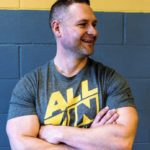
AJ Passmore
AJ Passmore built IBFit around a practical premise: strength training works better as a long-term lifestyle when the member also has support for nutrition, daily activity, accountability, and the habits that determine whether the plan survives outside the gym.


Passmore grew up active in multiple sports, stopped training after a major move in high school, and later returned to fitness after realizing he had gained about 45 pounds. He became certified, worked in coaching and gym operations across multiple states, then started online coaching with his wife before the business expanded into the studio that became IBFit. His current role combines coaching, leadership, programming, and the ongoing work of helping members build habits they can sustain.
Help people feel like themselves again by showing them they are capable of more than they think, then support that belief with strength training, nutrition, daily activity, and consistent habits.
Strength-focused group training, personal and online coaching, nutrition guidance, habit tracking, accountability, beginner support, community, and sustainable lifestyle change.
About This Spotlight
Fitness Living Magazine™ selected this Spotlight for IBFit’s strength-focused coaching model, integration of nutrition and accountability, member-community emphasis, source-supported member success story, and Passmore’s stated commitment to helping people build long-lasting habits rather than rely on a short burst of motivation.
Fitness Living Magazine™ publishes these features to place local fitness leaders on the record about how their programs operate, what members experience, what standards guide the coaching, and what makes the business relevant to its local community.
Source material for this Spotlight consisted of the recorded Fitness Living Magazine™ editorial interview with AJ Passmore, the existing published IBFit Spotlight and its supplied image and review assets, and IBFit’s official website used to confirm current service language, the studio address, the current free Goal Setting Consultation, the booking contact information, and the current hybrid-coaching description.
This feature is editorial content and is not medical advice. Training, nutrition, body-composition, and weight-change outcomes depend on the individual. Readers should confirm current programs, pricing, availability, and suitability directly with the business and, when appropriate, with a qualified health professional.