
A 12-week randomized trial in Brazil asked whether ordinary gym work changes how forcefully older adults can breathe in and out. Respiratory muscle pressures rose in the training group, and two markers of immune balance shifted alongside them.
Respiratory muscle strength improved after 12 weeks of supervised resistance training in community-dwelling adults aged 60 to 75, according to a randomized clinical trial published on October 19, 2026 in Journal of Functional Morphology and Kinesiology. The program included no breathing exercises at all.
The trial enrolled 60 older adults and assigned them one to one to a control group of 30 or a resistance training group of 30. The work was led from the Laboratory of Pulmonary and Exercise Immunology at the Evangelical University of Goias in Anapolis, Brazil, with co-authors at the Federal University of Sao Paulo, Santo Amaro University and Universidad Autonoma de Chile. It is registered on ClinicalTrials.gov as NCT06682221, entered in March 2025.
Control participants averaged 69.46 years with a standard deviation of 6.42, and the training group averaged 67.70 years with a standard deviation of 6.08. Roughly two thirds of each group were women. None had taken part in structured physical activity or resistance training in the previous six months, and the authors report no dropouts across the 12 weeks.
The primary respiratory muscle outcomes were maximal inspiratory pressure and maximal expiratory pressure, the two measures clinicians use to judge how hard the breathing muscles can pull air in and push it out. Both shifted in favor of the training group, and so did a one-minute sit-to-stand test of lower-body endurance.
At a Glance
- Published October 19, 2026 in Journal of Functional Morphology and Kinesiology, volume 11, article 434.
- Sixty community-dwelling adults aged 60 to 75, randomized one to one to a control group or a resistance training group of 30 each.
- Twelve weeks, three supervised sessions a week, seven machine and free-weight exercises, four sets of 8 to 15 repetitions.
- Both respiratory muscle pressures improved: maximal inspiratory pressure showed a group-by-time interaction of p = 0.002 with a partial eta squared of 0.159, and maximal expiratory pressure gave p = 0.010 and 0.109.
- The training group gained 8.03 more repetitions on the one-minute sit-to-stand test, a 95% confidence interval of 2.19 to 13.86.
- Interleukin-6 fell and interleukin-10 rose, at p = 0.007 and p = 0.001, and circulating alpha-Klotho rose at p = 0.002.
- Main caveat: 60 people over 12 weeks, with TNF-alpha and oxygen saturation differences not reaching significance and the sit-to-stand advantage losing significance after baseline adjustment.
How the Respiratory Muscle Pressures Were Tested
Maximal inspiratory pressure and maximal expiratory pressure are measured with a handheld manometer. The participant breathes out fully, then pulls in as hard as possible against a closed valve, and the reverse for the expiratory test. The pair is the simplest clinical window onto respiratory muscle function, and both fall with age. Weaker respiratory muscle output is one of the quiet reasons stairs and hills get harder after 65.
In this trial the group-by-time interaction for maximal inspiratory pressure was F(1,58) = 10.95, p = 0.002, with a partial eta squared of 0.159. The within-group improvement in the training arm came in at p = 0.0034. For maximal expiratory pressure the interaction was F(1,58) = 7.10, p = 0.010, partial eta squared 0.109, with a within-group value of p = 0.0014.
One limit on reading those results closely: the published text reports the interaction statistics rather than the pre and post pressure means, which sit in the figures. So the size of the respiratory muscle change in centimeters of water cannot be taken from the article text itself.
A Whole-Body Program, Not Breathing Practice
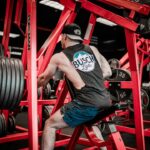
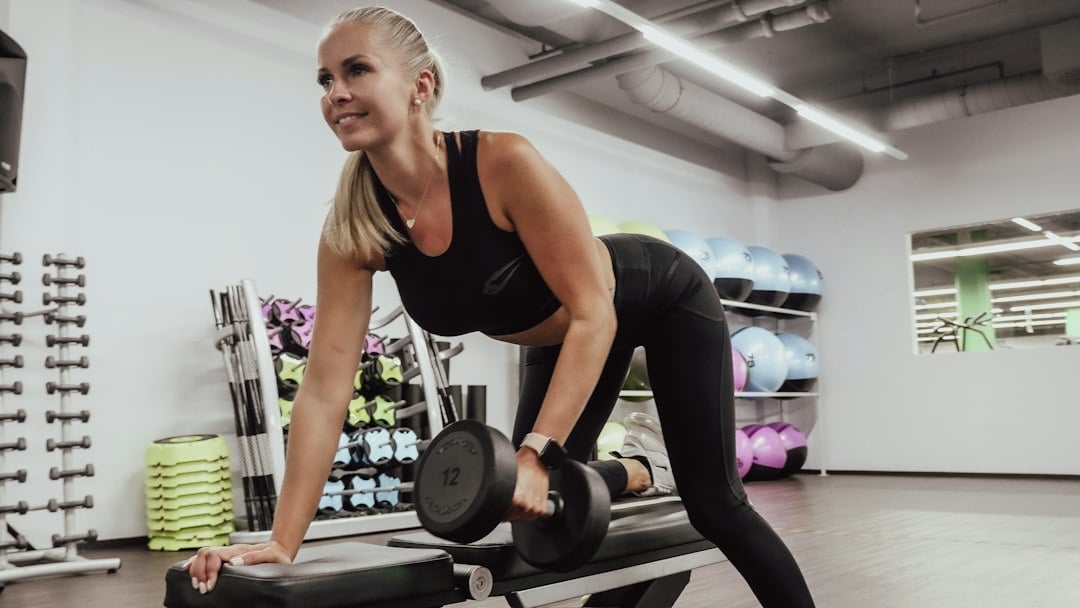
The intervention was a conventional gym block. Participants trained three times a week for about 60 minutes across 12 weeks, working through lat pulldown, machine chest press, lateral shoulder raise, biceps curl, triceps pushdown, leg extension and leg curl.
Each exercise ran for four sets of 8 to 15 repetitions with one to two minutes of recovery between sets. Loads started near 65% of each participant one-repetition maximum and progressed toward roughly 80% over the block, rising by about 2% to 10% once someone completed the prescribed repetitions with correct technique in two consecutive sessions. Nothing in that list targets the respiratory muscle group on purpose.
Supervision was close. Week one was given to familiarization, groups of ten were split into subgroups of five, and the authors describe about one supervisor for every five participants. Training participants had to attend at least 80% of sessions to be included.
Where the Immune Markers Moved
The trial tracked three cytokines and one aging-related protein. Interleukin-6, often read as a general inflammatory signal, showed a group-by-time interaction of F(1,56) = 7.82, p = 0.007, partial eta squared 0.123, with the training group falling relative to controls.
Interleukin-10, which has an anti-inflammatory role, moved the other way: F(1,56) = 12.00, p = 0.001, partial eta squared 0.176. That direction of travel matches the broad pattern in an umbrella review of exercise and inflammatory biomarkers, which found small but consistent reductions across 21 pooled reviews.
Tumor necrosis factor alpha did not follow. Its interaction reached only p = 0.057, and the between-group change was a drop of 31.20 pg/mL with a 95% confidence interval of minus 64.37 to 1.96 and a p value of 0.065. Hematological parameters did not change significantly either. So the immune shift was partial, and it cannot be assumed to explain the respiratory muscle gains.
Extra repetitions on the one-minute sit-to-stand test in the training group, an unadjusted between-group difference that shrank to 4.71 and lost statistical significance once baseline scores were accounted for. The respiratory muscle results held up better than this one.
The Klotho Result and Why It Draws Attention
Circulating alpha-Klotho rose in the training group, with a group-by-time interaction of F(1,56) = 10.64, p = 0.002 and a partial eta squared of 0.160. Klotho has become a magnet for aging research because lower levels track with poorer physical function in older cohorts.
Two cautions belong beside that. The article text again gives interaction statistics rather than the magnitude of the change, so how far the protein moved is not readable from the prose. And a blood marker is not an outcome a reader experiences; nothing here tested disability, illness or survival. The Klotho rise is a parallel observation, not a mechanism for the respiratory muscle change.
What Did Not Change
The trial measured oxygen saturation during exertion, and the between-group difference was 0.43 percentage points with a 95% confidence interval of minus 0.45 to 1.30 and a p value of 0.335. That is a null result, and it sits awkwardly beside abstract language about attenuated exercise-induced desaturation.
The sit-to-stand finding needs the same care. The primary analysis gave F(1,52) = 7.62, p = 0.008, partial eta squared 0.128, and a between-group difference of 8.03 repetitions. After adjusting for baseline scores, the difference fell to 4.71 repetitions with a confidence interval of minus 0.57 to 9.99 and p = 0.079.
Handgrip strength is reported as improved, but no figures appear in the text for it, and the authors describe the anthropometric changes as modest. A reader looking for body-composition effects will not find much here, and the respiratory muscle pressures were the clearest winners in the data set.
How This Fits Respiratory Muscle Training Research
Most work on the breathing muscles uses a device that loads inhalation directly. That literature is mixed: a review of inspiratory muscle training and heart rate variability found signal changes but rated the evidence as very uncertain.
What makes this trial interesting is the absence of any such device. The participants pushed and pulled weights, braced through sets, and the respiratory muscle pressures moved anyway. Loaded lifting recruits the trunk and the muscles that stabilize it, which is the most straightforward explanation on offer.
It is also a reminder that older adults respond to small doses of resistance work. Research on exercise snacking in older adults and on one isometric session a week points the same way: modest, repeatable loading produces measurable change.
What Older Adults Can Reasonably Take From This
The honest reading is narrow. One supervised 12-week program in 60 people improved two pressure measures, shifted two cytokines and raised one protein. It does not show that stronger respiratory muscle pressures prevent pneumonia, reduce breathlessness in daily life, or substitute for medical care of a lung condition.
What it does support is unremarkable and useful: a basic machine-based program, done three times a week with gradual load increases, is a reasonable way for a previously inactive older adult to build strength, and the respiratory muscle result is one more reason not to treat the trunk as an afterthought.
- Seven exercises covering the whole body, four sets of 8 to 15 repetitions, is the shape the trial used.
- Progress load only after two clean sessions at the target repetitions, which is how this program advanced.
- Supervision mattered here; one coach to five people is a useful benchmark for a beginner group.
- Anyone with a diagnosed heart or lung condition should clear a new program with their own clinician first, whatever the respiratory muscle data suggest.
For context on how whole-body training compares with cardio for population-level outcomes, our report on cardio plus lifting in a metabolic syndrome review covers the ranked evidence.
The Fitness Living Takeaway
Twelve weeks of ordinary supervised resistance training improved maximal inspiratory and expiratory pressures in 60 adults aged 60 to 75, with no breathing-specific exercise in the program.
The immune picture moved in a favorable direction for interleukin-6 and interleukin-10, and alpha-Klotho rose, though TNF-alpha and oxygen saturation did not separate the groups. With 60 participants, a single site and 12 weeks of follow-up, this is a promising signal rather than a settled finding. The respiratory muscle outcome deserves replication in a larger and longer trial before anyone rewrites a guideline around it.
Research & Sources
- Journal of Functional Morphology and Kinesiology: Resistance Training Improves Respiratory Muscle Strength and Immune Response in Older Adults
- Study DOI
- Images: Tony Woodhead / Unsplash; Michael Faix / Unsplash
This article summarizes peer-reviewed research for general information and is not individualized medical or exercise advice.