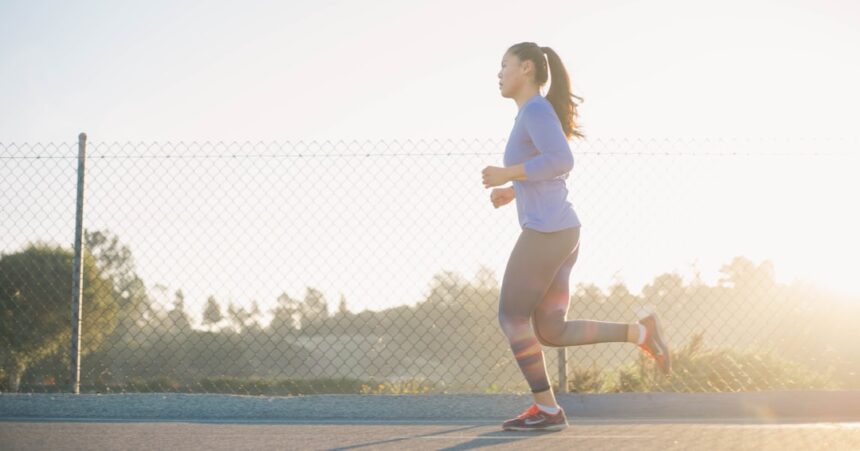
A newly published randomized crossover trial found that 6 mg of caffeine per kilogram of body weight, taken about an hour before testing, was associated with roughly 1.5% faster 30-meter sprint times in female collegiate team-sport athletes.
Caffeine sprint performance research has often centered on endurance exercise or male athletes. A study published September 7 in Sport Sciences for Health tested a higher-end ergogenic dose in 21 NCAA Division II women from basketball, soccer and softball teams.
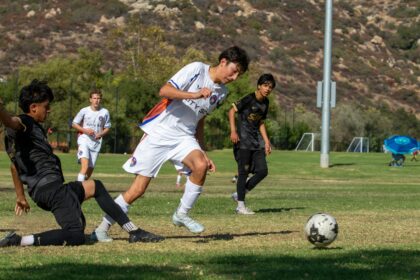
The athletes completed two testing sessions in randomized order. Before one, they took anhydrous caffeine at 6 mg/kg. Before the other, they received an identical placebo. Capsules were taken 60 minutes before a standardized warm-up and three maximal 30-meter sprints on the same grass field.
Researchers used each athlete’s fastest sprint from each session as the main outcome. The caffeine condition was associated with a 1.51% faster sprint time than placebo, with a 95% confidence interval from 0.46% to 2.56% faster. The result was statistically significant, but the study was small enough that the authors explicitly described it as preliminary.
At a Glance
- 21 trained female NCAA Division II athletes completed the double-blind crossover trial.
- The caffeine dose was 6 mg/kg, taken 60 minutes before sprint testing.
- Athletes completed three maximal 30-meter sprints in each condition.
- Caffeine was associated with about a 1.5% improvement in fastest sprint time versus placebo.
- The study was smaller than the authors’ own target sample for adequate statistical power.
- No structured adverse-event questionnaire was used, so the absence of reported side effects should not be read as proof of complete tolerability.
What the Caffeine Sprint Performance Trial Tested
This was a within-person crossover study, which is useful because every athlete served as her own comparison. Stable differences in body size, training history and baseline speed therefore mattered less than they would in a standard parallel-group trial.
Participants were instructed to avoid caffeine and other stimulants for 24 hours before each session, reproduce their pre-test food and fluid intake, avoid vigorous exercise that day and maintain their usual sleep schedule. Testing took place at similar times of day and at roughly the same outdoor temperature.
The 6 mg/kg dose is not trivial. For a 60-kilogram athlete it equals 360 mg of caffeine; for a 70-kilogram athlete, 420 mg. That is substantially more than a typical cup of coffee and sits at the upper end of commonly cited sport-performance dosing.
The estimated improvement in 30-meter sprint time with caffeine versus placebo. In short sprinting, a small percentage change can matter, but this effect needs replication in a larger sample.
Why the Result Is Interesting
Short sprints depend heavily on acceleration, rate of force development and neuromuscular output. Caffeine is thought to influence performance largely through adenosine-receptor antagonism in the nervous system, which can alter perceived effort, alertness and motor output.
Most athletes do not need a supplement to improve sprint speed, but the finding is useful because female athletes remain underrepresented in sports-nutrition trials. This study specifically tested trained women in team sports rather than assuming results from male samples apply directly.
Fitness Living has recently covered what happens inside the body after repeated sprint exercise and how strength and rapid force can change with training. The caffeine study asks a different question: whether an acute pre-exercise strategy can shift performance on a single day.
The Dose Deserves Context
Caffeine effects are highly individual. Some people tolerate 3 to 6 mg/kg without major problems, while others experience anxiety, gastrointestinal distress, elevated heart rate or disrupted sleep. Genetic differences, habitual caffeine intake, timing and sensitivity all influence the response.
Athletes should also distinguish between an ergogenic dose used in research and ordinary coffee consumption. Because brewed coffee varies widely in caffeine content, translating a precise mg/kg protocol into cups can be unreliable.
For recreational exercisers, a smaller dose may provide alertness or performance benefits with fewer side effects. The new trial did not compare 6 mg/kg with lower doses, so it cannot tell us whether less caffeine would have produced the same sprint effect.
Important Limitations
The biggest limitation is sample size. The authors’ own power calculation indicated that 34 participants would be preferable for detecting the pre-specified effect size, but only 21 completed the study. Small trials can overestimate effects and are especially vulnerable to unstable subgroup findings.
The apparent differences among basketball, soccer and softball athletes were exploratory, and the softball subgroup contained only four women. Those sport-specific results should be considered hypothesis-generating, not evidence that caffeine works better for one sport than another.
The study was not prospectively registered in a public trial registry, although the authors reported that the primary outcome and design were fixed at institutional review-board approval and made the dataset and analysis code openly available.
Menstrual-cycle phase and oral-contraceptive use were not controlled. The authors argued that contemporary evidence does not support large systematic cycle effects on acute strength and power for most women, but the trial was not designed to answer that question.
Finally, side-effect monitoring was informal. No adverse events were reported, but the researchers explicitly cautioned that this does not demonstrate that the dose is symptom-free.
People with heart rhythm disorders, uncontrolled high blood pressure, anxiety disorders, pregnancy, medication interactions or strong caffeine sensitivity should not treat a performance study as individualized dosing advice. Competitive athletes should also verify current sport-governing-body rules and supplement purity.
What Fitness Enthusiasts Can Take From It
The practical message is narrower than a headline like “caffeine makes you faster.” In this small group of trained collegiate women, a 6 mg/kg dose taken an hour before testing improved one specific performance measure: the fastest 30-meter sprint.
That is enough to make the study noteworthy, especially because it fills a gap in female-athlete research. It is not enough to prove that everyone should use that dose, that the effect persists over repeated games or workouts, or that caffeine improves every kind of power performance.
For most people, the bigger performance gains still come from consistent sprint practice, strength training, sleep, fueling and recovery. Caffeine may be an additional tool for some athletes, but the smallest effective dose is generally more sensible than automatically starting at the top of the research range.
The Fitness Living Takeaway
In a randomized crossover trial of 21 female collegiate team-sport athletes, 6 mg/kg of caffeine taken 60 minutes before testing was associated with about 1.5% faster 30-meter sprint times than placebo.
The result is promising but preliminary. The study was under its target sample size, used a relatively high caffeine dose and cannot show that the same benefit applies to recreational exercisers, lower doses or repeated competition.
Research & Sources
- Sport Sciences for Health: caffeine and 30-meter sprint performance trial
- Study DOI
- Image: Andrew Tanglao / Unsplash
This article reports on peer-reviewed sports-performance research for general information and is not individualized medical or supplement advice.