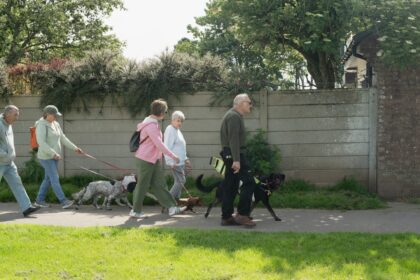

A systematic review of 45 studies from low- and middle-income countries links structured exercise programmes to a 10.23 mmHg fall in office blood pressure among adults with hypertension. The same review found far smaller movement in 24-hour readings, which limits how far the office blood pressure result travels.
Office Blood Pressure fell by roughly 10 points of systolic pressure when adults with hypertension in low- and middle-income countries joined structured physical activity programmes, according to a systematic review with meta-analysis published on 11 November 2026 in Frontiers in Cardiovascular Medicine.
The review was led by Julian D. Pillay and Martins Nweke of the Durban University of Technology in South Africa, with Nweke also affiliated with the Department of Physiotherapy at David Umahi Federal University of Health Sciences in Uburu, Nigeria. It was registered with PROSPERO under CRD420261325274 and followed PRISMA 2020 reporting standards.
The authors searched PubMed, MEDLINE, CINAHL, the Cochrane Library and Academic Search Complete from inception through February 2026. Forty-five studies met the inclusion criteria, and 40 of them, covering 2,304 participants, contributed data to at least one pooled analysis. Eligible trials were run in countries the World Bank classifies as low- or middle-income.
Rather than pooling everything together, the team split the evidence into four groups: chronic controlled trials measuring office blood pressure, chronic controlled trials measuring 24-hour ambulatory pressure, uncontrolled before-and-after studies, and acute crossover trials. The headline estimate comes from the first group, and only that group earned a moderate certainty rating.
At a Glance
- Published 11 November 2026 in Frontiers in Cardiovascular Medicine, volume 13, article 1898221.
- Systematic review with meta-analysis; 45 studies included, 40 studies and 2,304 participants pooled.
- Primary analysis: 17 controlled trials, 1,571 participants, office blood pressure systolic mean difference of -10.23 mmHg (95% CI -12.56 to -7.89).
- Office blood pressure diastolic: 16 trials, 1,511 participants, -4.68 mmHg (95% CI -6.11 to -3.25).
- 24-hour ambulatory systolic pressure moved only -2.50 mmHg (95% CI -5.76 to 0.76), across six trials and 261 participants.
- Heterogeneity was high in the office blood pressure analyses: I-squared of 83 percent for systolic and 79 percent for diastolic.
- GRADE certainty was moderate for systolic office blood pressure and low or very low for every other pooled outcome.
What the Review Pooled, and From Where
Most hypertension exercise evidence comes from high-income settings. The authors argue in their introduction that low- and middle-income settings differ in baseline pressure, access to medication, supervision and facilities, and even in where trials get published, so whether high-income effect sizes carry over needs to be examined directly rather than assumed.
That framing matters for reading the result. This is not a claim that exercise works differently in different economies. It is an attempt to find out whether the trials actually run in those settings produce the same size of effect that clinicians have been quoting from elsewhere.
Office Blood Pressure Moved More Than Ambulatory Readings
In the primary group of 17 controlled trials, systolic office blood pressure fell 10.23 mmHg more in exercise groups than in controls. Diastolic office blood pressure fell 4.68 mmHg. Both intervals excluded zero, and the authors summarise the picture as approximately 10 mmHg systolic and 5 mmHg diastolic.
The ambulatory picture is quieter. Across six trials and 261 participants, 24-hour systolic pressure fell 2.50 mmHg with a confidence interval running from -5.76 to 0.76, which crosses zero. Diastolic ambulatory pressure fell 1.61 mmHg, with an interval of -2.77 to -0.45 that does not cross zero but is small.
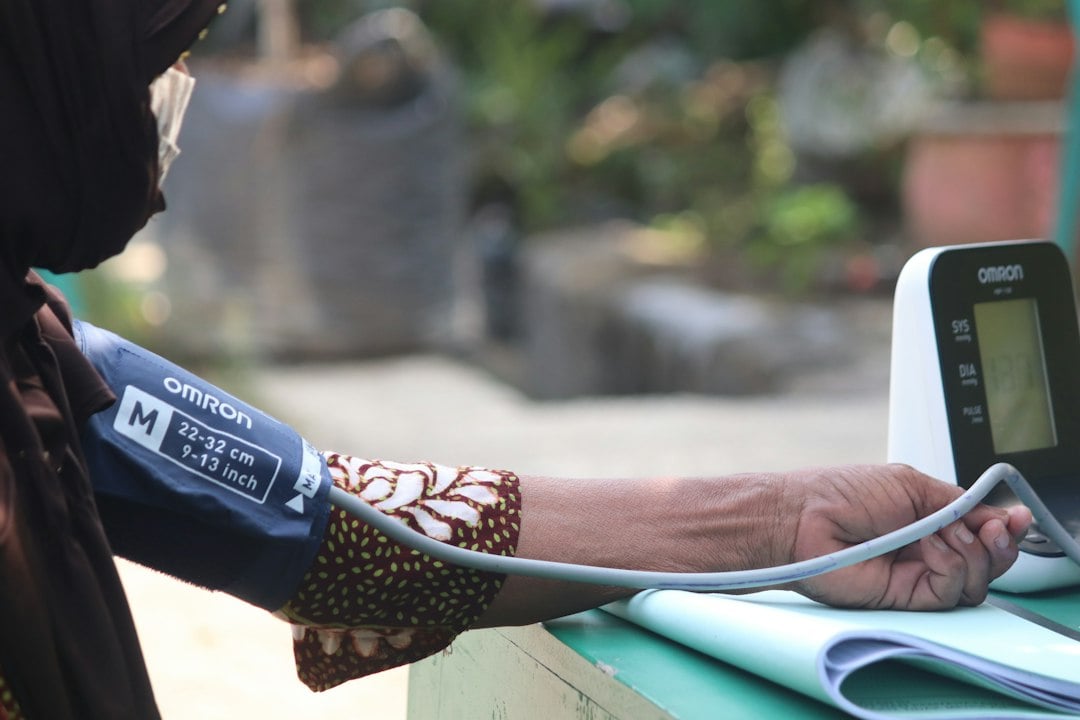
That gap between clinic-measured and 24-hour readings is the single most important feature of this review. Office blood pressure is measured in a specific place, at a specific moment, often by someone the participant has met before. Ambulatory monitoring follows the person through an ordinary day and night.
The pooled systolic office blood pressure reduction across 17 controlled trials and 1,571 adults, with a 95 percent confidence interval of -12.56 to -7.89 mmHg.
Why the Certainty Ratings Outrank the Effect Sizes
The review applied GRADE to every pooled outcome. Only systolic office blood pressure reached moderate certainty. Diastolic office blood pressure and both ambulatory outcomes were rated low. The uncontrolled before-and-after studies and the acute crossover trials were all rated very low.
Those lower ratings are not a formality. The uncontrolled studies produced a systolic fall of 6.66 mmHg across 14 studies and 466 participants, but without a control group there is no way to separate the intervention from regression to the mean or from background trends, a point the authors make explicitly.
The acute crossover analysis is smaller still: four studies and 63 participants for systolic, three studies and 51 participants for diastolic. The diastolic estimate there ran from -19.98 to 9.72 mmHg with an I-squared of 92 percent, which is a result too unstable to act on.
Heterogeneity Was High, and the Prediction Interval Says Why
I-squared reached 83 percent for systolic and 79 percent for diastolic office blood pressure. That means the trials disagreed substantially about the size of the effect. The authors used random-effects models with the Hartung-Knapp adjustment, which widens intervals to reflect that disagreement.
They also reported prediction intervals, which estimate the range a new similar trial might land in. For systolic office blood pressure that interval ran from -18.91 to -1.55 mmHg, entirely below zero. For diastolic it ran from -9.55 to 0.18 mmHg, crossing zero at the upper end.
Read plainly: a future trial of a comparable programme would be expected to lower systolic office blood pressure, though by anywhere from a trivial amount to a large one. For diastolic pressure, a future trial showing no benefit would not be surprising.
Supervised Programmes Dominated the Office Blood Pressure Estimate
The authors note that the primary analysis consisted mostly of supervised programmes. Effects did not differ clearly by intervention type, by study design or by geographical region, which is useful but also reflects how few trials sit inside each subgroup once the pool is divided.
Supervision is the practical catch. A supervised programme implies staff, a venue and a schedule. The authors explicitly flag that high-certainty evidence for long-term, community-delivered programmes remains limited, and that is precisely the delivery model most health systems would need in order to scale anything.
What the Risk-of-Bias Picture Adds
Most randomised trials carried some concerns, driven mainly by the randomisation process and by deviations from the intended intervention. Three trials were rated high risk. Non-randomised studies were mostly at serious risk, chiefly from confounding.
Tests for small-study effects came back clean, with Egger p-values of 0.29 for systolic and 0.94 for diastolic office blood pressure. The authors note the test had limited power with this number of studies, so a clean result there is reassuring rather than conclusive.
What This Does and Does Not Mean for Training
For a reader who exercises to manage blood pressure, this review supports something already well established, and it does so using trials run in the settings where most of the world lives. It does not establish that a clinic reading taken after a training block predicts what a monitor would record over 24 hours.
A few general points follow from the design rather than from any single number:
- The trials that produced the largest office blood pressure effect were mostly supervised, so structure and a schedule appear to be part of what was being tested.
- Clinic readings and 24-hour readings answer different questions, and this review moved them by very different amounts.
- Nothing here speaks to medication decisions, which belong with a clinician who can see the full picture.
FLM has covered adjacent evidence before. A review of aerobic exercise and blood pressure after menopause looked at a narrower population, while a trial on isometric training frequency and blood pressure tested a very different stimulus.
The delivery question raised here also runs through our reporting on community exercise programmes for chronic disease prevention and on how exercise access tracks with mortality across counties, both of which turn on whether programmes reach people rather than on whether exercise works.
The Fitness Living Takeaway
Structured exercise programmes lowered systolic office blood pressure by 10.23 mmHg across 17 controlled trials in low- and middle-income countries, at moderate certainty.
The same review found a 24-hour ambulatory systolic change of just 2.50 mmHg, with a confidence interval crossing zero, from only six small trials. Heterogeneity in the office blood pressure analyses was high, and the trials behind the headline number were mostly supervised. The direction of the finding is well supported; the size of it depends heavily on which measurement you trust.
Research & Sources
- Frontiers in Cardiovascular Medicine: Physical activity intervention for blood pressure reduction in low and middle-income countries
- Study DOI
- Research summary of the meta-analysis findings
- Images: Ilya Semenov / Unsplash; Mufid Majnun / Unsplash
This article summarizes peer-reviewed research for general information and is not individualized medical or exercise advice.