The science of a workout reaches beyond calories and heart rate. A new molecular map helps researchers investigate why movement matters.
Exercise proteins are the focus of research published October 12 in Nature Metabolism. Nigel Kurgan and colleagues, including researchers at the University of Copenhagen, tracked blood plasma, saliva and urine in 25 healthy men. More than 3,000 proteins changed after exercise, with different patterns across fluids and time. Read the study record.
At a Glance
- The work connects protein responses with immune activity and tissue remodeling.
- Independent data supported many blood-protein responses across sexes, ages and exercise types.
- Genetic analyses and fruit-fly experiments helped identify candidates for further investigation.
Why Scientists Are Mapping Exercise Proteins
A stopwatch can tell you how long you moved. A laboratory can ask a different question: which biological signals changed, where did they appear, and how long did they last? Those questions help separate the act of exercising from the processes that might explain its effects.
This is also the purpose of the National Institutes of Health’s Molecular Transducers of Physical Activity Consortium, or MoTrPAC. The separate initiative combines human and animal research to build a map of exercise-related molecular changes. Its design considers age, sex, body composition and fitness rather than assuming one response fits everyone.
Animal work lets investigators examine organs that cannot easily be sampled in people. Human samples provide the complementary evidence needed to understand responses in actual participants. NIH describes more specific exercise recommendations as a possible future application of this research, rather than a tool already ready for routine use.
The discovery group was small and male. Short-term molecular changes are not proof of reduced disease risk. The authors disclose that two coauthors work for Novo Nordisk A/S. These findings are a starting point for testing mechanisms, not a validated personal exercise prescription.
A Broader Way to Think About a Workout
For readers, the useful distinction is between measuring a session and judging its value. Minutes, distance and repetitions describe what you did. They do not, by themselves, answer every question about health, recovery or long-term progress.
That distinction also matters when fitness research reaches social media. Before treating a laboratory headline as advice, ask three questions: what was actually measured, who was studied, and did the researchers test the outcome being promised? A result about a biological marker should be described as a result about that marker.
Our editorial view is that new research should make those questions easier to answer. A precise finding is more useful than a sweeping promise, especially when a headline could otherwise become a sales pitch for a supplement, test or training method.
What the Evidence Means for Your Week
For practical planning, the CDC’s adult activity guidance remains a clearer reference. Adults should aim for at least 150 minutes of moderate aerobic activity each week, or 75 minutes of vigorous activity, or an equivalent combination. Muscle-strengthening activity should cover the major muscle groups on at least two days.
Those minutes can be spread across the week and divided into smaller sessions. Brisk walking counts toward the moderate-intensity target; running is one example of vigorous activity. Some movement is better than none, and doing more than the minimum can provide additional health benefits.
A practical example is a 30-minute brisk walk on five days, alongside two strength sessions. That example comes from established public-health guidance. It is not a training schedule tested by the new protein study, and it should be adapted to a person’s abilities and circumstances.
Readers interested in the gap between a measurement and a useful conclusion can also explore FLM’s reporting on smartwatch calorie estimates and cardiorespiratory fitness and health outcomes.
The Fitness Living Takeaway
Look for research that explains its measurements and limits. Build your routine around established activity guidance while scientists investigate the biology behind it.
Research & Sources
- Kurgan and colleagues. Nature Metabolism, October 12, 2026. DOI: 10.1038/s42255-026-01621-w. PubMed record.
- NIH Common Fund: MoTrPAC program overview — background context.
- CDC: Adult Activity—An Overview — established activity recommendations.
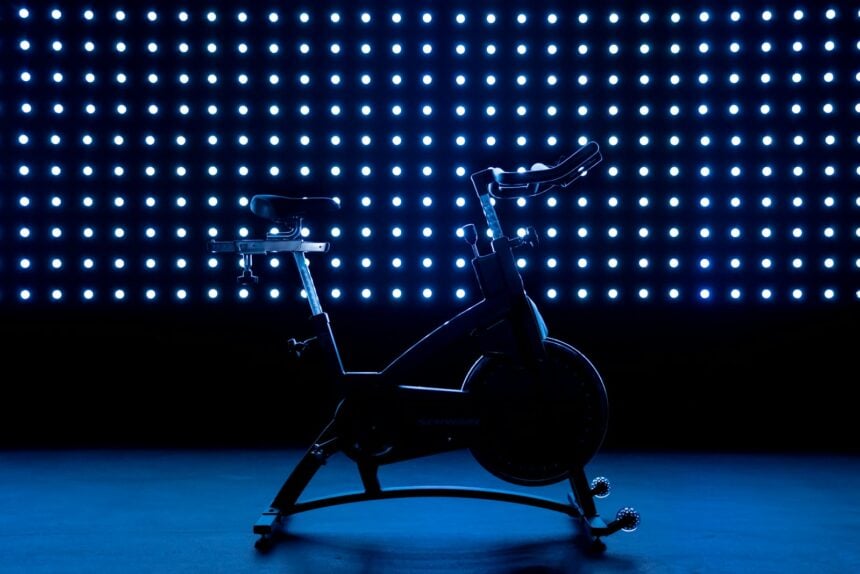
- Featured photograph: Gastro Editorial / Unsplash. Representative exercise equipment; not a photograph from the study.
This article provides general information, not individualized medical or exercise advice.