Recognized by Fitness Living Magazine™ For assessment-first coaching, movement quality, and a private training model built around long-term relationships.
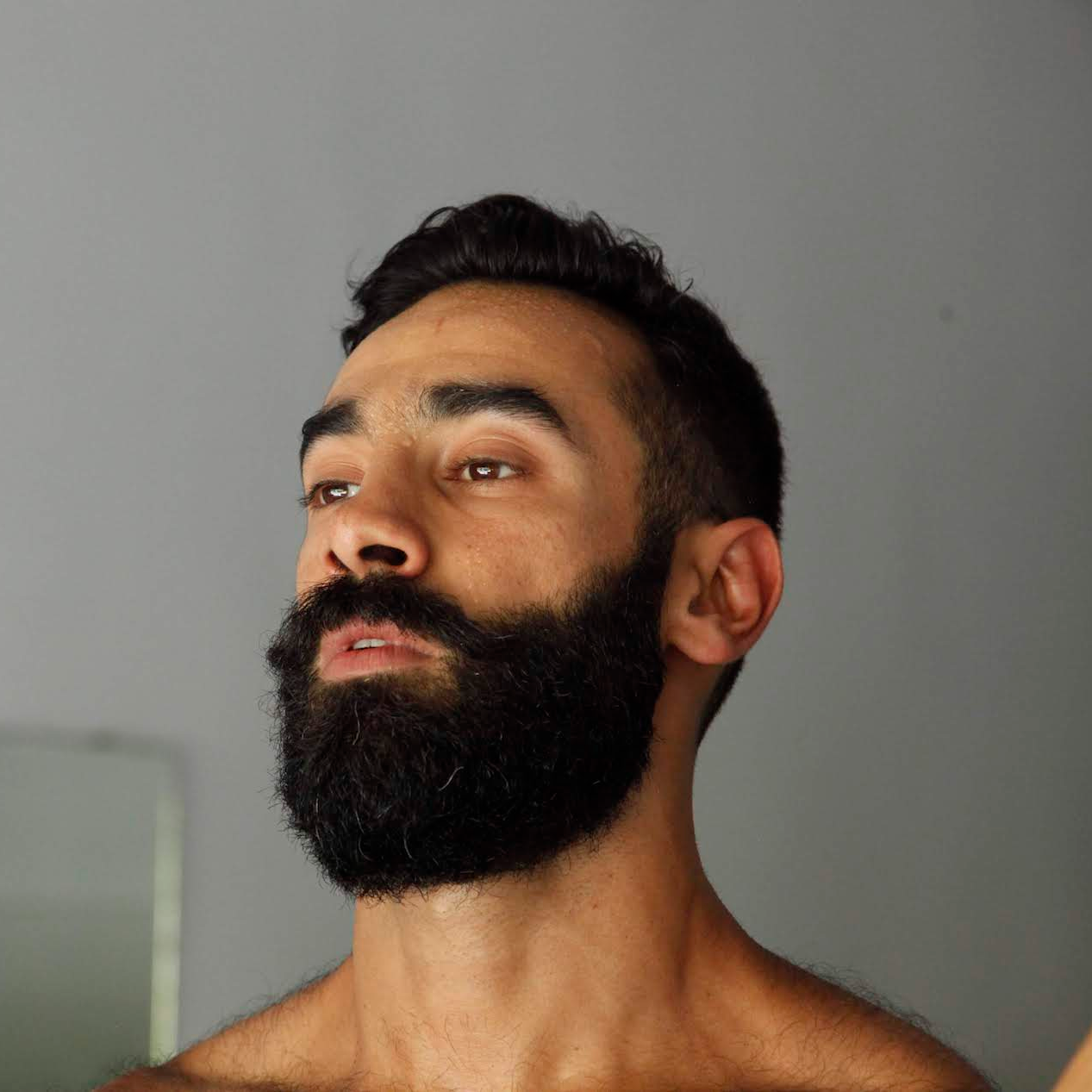
He calls that feeling imposter syndrome, and it set the next sixteen years in motion. Kettlebells, calisthenics, gymnastics, dissection labs, and his own long list of injuries taught him something the certifications did not: most people are not limited by effort. They are limited by what their bodies will not yet let them do.
“Whatever moves you make, make it with emotion behind it.”Farid / Owner and Coach, e-Motion Training
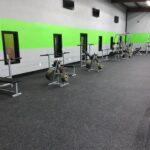
The studio is small, private, and full of plants, tucked into a quiet part of Woodland Hills away from traffic. A client might arrive to an espresso or a smoothie. The equipment is unusual — a professional vibration machine, a VersaClimber, a rower, an air bike, a sled, and resistance systems Farid designed himself — and yet the room still keeps roughly twenty-five feet of open floor so people can actually move.
What follows is quieter than most first sessions. Farid asks what the client actually wants, then questions the answer. Someone asking to train their core is asked whether they want a stronger core or an end to back pain, because those are different problems. He serves eight to sixteen clients at a time, and four of them have trained with him for more than eight years. That scale is the point. If a client walks in with a headache and a hard week, the session may become thirty minutes of breath work, and it will still count as training.
Farid has shaped e-Motion Training around a simple standard: meet the client honestly, assess before prescribing, and give each person the most useful hour available to them. That owner-led tone gives the studio its private, unhurried, relationship-driven identity.
Inside e-Motion Training
The name is a deliberate double meaning. E-Motion reads as energy in motion, and it reads as emotion behind the training. Farid uses both. He believes the mind, the body, and what a person is feeling are not separate systems to manage, and that the sessions clients remember are the ones they had a reason to want.
e-Motion Training is Farid Hashemi’s private Woodland Hills coaching practice.
Assessment comes before exercise selection. Farid’s approach brings mobility, strength, power, and breath work into a coaching relationship shaped around each person’s goals and how they arrive that day.
The interview describes a small client roster and sessions that can change with a person’s needs. Readers with pain or medical concerns should discuss their situation with qualified clinicians.
Assessment, Movement Quality, and Emotion Behind Training
The e-Motion approach starts with understanding the person. This profile follows how Farid connects careful assessment, movement practice, and a flexible session structure to the goals a client brings into the room.
Why Farid’s early uncertainty pushed him deeper into movement study.
How assessment, strength, mobility, and breath work can sit inside the same hour.
How measured results and client stories are handled without turning them into guarantees.
A Practice Built on Not Knowing Enough
Farid describes the first years of training clients plainly. He was giving out workouts he could not fully explain. Rather than accept that, he went and learned — courses in kettlebells, calisthenics, and gymnastics, then further into anatomy, tissue, and rehabilitation. His own injuries pushed him the rest of the way. A broken ankle from basketball became plantar fasciitis, which became Achilles tendinopathy, which became a chain of soft-tissue problems he had to solve on himself.
What he found is the observation that now organizes his work. Clients rarely lack strength or willingness. They lack access to the strength they already have, because a hip, an ankle, a shoulder, or a breathing pattern will not let it out. That is why nothing is prescribed at e-Motion Training before it is assessed.
Assessment Before Prescription
The first appointment can take ninety minutes or more. Farid looks at breathing, mobility, and basic human movement patterns: squatting, lunging, reaching toes, bending back. He also questions the goal itself. A client who asks to strengthen their core is asked why. If the honest answer is back pain, then back pain is the goal, and the program is written for that.
From there the program blends what a person needs with what will keep them interested. A knee might be rehabilitated through isometric lunges at tolerable ranges while pull-ups build upper-body strength and light supported bounces develop elasticity. Farid's own equipment makes that possible. His resistance system lets a client run out roughly sixteen feet under load, where a standard cable machine gives six to eight, and his adjustable bars let a person who cannot yet hold their own weight still perform the movement.
Farid's programs blend rehabilitation, strength, and elasticity work inside the same session, scaled to what each client can tolerate safely.
Private, Honest, and Matched to the Day
A client at e-Motion Training is meant to leave with more energy than they arrived with. Farid describes a session that builds like a symphony — warm-up, then power and skill, then strength, then mobility and breath work to settle the nervous system. Clients tell him afterward that they are glad they came, even on the days they nearly did not.
Personal Attention That Changes the Session
Farid keeps the practice small enough to notice when a client needs something different. The conversation at the start of a session helps him decide whether to build intensity, adapt the movements, or spend more time on breathing and recovery.
Farid describes using outside measurements as feedback while treating how a client feels as part of the result. That combination gives the private coaching relationship at e-Motion Training its character.
What e-Motion Training Offers
e-Motion Training centers on a private, relationship-based coaching practice. The services described in Farid’s interview connect movement assessment, strength, mobility, and breath work.
Who e-Motion Training May Be a Good Fit For
e-Motion may fit readers who want a small, private coaching relationship rather than a membership floor.
Clients who want someone to study movement before prescribing work may be a fit.
Readers should pair training with clinical guidance where appropriate.
Farid’s public profile and interview both emphasize breath, mindset, and emotional intent.
“I have been a client with Farid for almost 2 years now. When I started working out with him I had severe lower back issues that were pretty debilitating for me in every day life. I can say that today, I am not just pain free, but am stronger than I've ever been. He does not have a cookie cutter approach to training. He will do custom work with you to treat your pain, get stronger and live pain free. He has helped me with nutrition, mobility, strength and managing my stress. There are times when we workout when all we do is deep breathing to help me manage a stressful situation at work or in my personal life. I've had personal trainers before, but none are transformative and life changing like Farid. I'm a client for life! Cannot recommend him enough!”
Results That Are Measured, Not Claimed
Farid described using independent body-composition scans, third-party blood testing, and performance measurements as feedback tools. Those measurements can help guide training, but they should not be read as guaranteed outcomes for every client.
Those are not the wins he talks about first. Ask what makes him proudest and he returns to movement: clients coming out of pain, out of injury, out of the limitations they had accepted, and expressing themselves more freely. Physique change, he says, is the easy part. The hard part is showing up consistently, which is the only variable he says truly separates results from intentions.
Farid coaches clients from their teens into their eighties, including a sixty-something client who runs hills three days a week.
A Small Roster, a Close Coaching Relationship
The scale of e-Motion Training shapes the experience. Farid describes serving eight to sixteen clients at a time, giving him room to learn their history and adjust the work as life changes.
Why This Matters Locally
Woodland Hills does not lack places to exercise. What is harder to find in the San Fernando Valley is a coach willing to assess before selling, refuse a program that does not fit, and keep the client roster small enough that nobody becomes a number. Farid has worked inside a large premium chain and describes why it did not suit him: he could not tell a client the truth there.
For people searching for a personal trainer in Woodland Hills, private training for back pain, or small group training in the Valley, e-Motion Training occupies an unusual position. It is a private studio, tucked away from traffic, run by a coach who says his main hope is simply that the people he can help know he is there.
Movement That Supports Everyday Life
Farid’s account returns to what clients can do outside the training room: move more freely, keep showing up, and find a routine that supports the rest of their lives.
Questions Readers Ask
Who Is Farid of e-Motion Training?
Farid Hashemi is the owner and coach of e-Motion Training in Woodland Hills, California. Public BuiltLean materials identify him as an LA health and fitness coach, and the interview describes a long coaching path through strength, calisthenics, gymnastics, anatomy, rehabilitation-informed training, breath work, and mindset.
How Does Emotion Improve Fitness Performance?
Farid says the name e-Motion Training carries a double meaning: energy in motion, and emotion behind the training. In his view, when a client understands why a session matters to them, the work stays with them. Sessions are built to engage the nervous system and the mind, not only the muscles.
What Does a Session at e-Motion Training Look Like?
Farid describes a session as a symphony. It builds from a warm-up into power, speed, and skill work, moves into strength training, then unwinds through mobility, specific rehabilitation work, and breath work to calm the nervous system. Sessions run from twenty minutes to two hours.
Is e-Motion Training Suitable for Clients Recovering From Pain or Injury?
The interview describes Farid’s assessment and graded-loading approach for clients with pain or injury histories. This is coaching context, not medical advice; readers with pain or injuries should involve qualified clinicians.
What Results Do Clients Usually See at e-Motion Training?
Farid described tracking movement, performance, body composition, and blood markers through outside tools. Individual results vary and should be interpreted in context.
How Can Someone Get Started?
Use e-Motion Training’s public contact channels to ask about an initial assessment. Discuss your goals, training history, and any relevant health concerns, and confirm the current location, format, availability, and pricing.
Key Takeaways
e-Motion Training is a private Woodland Hills studio where Farid coaches eight to sixteen clients at a time, several of them for more than eight years.
Every client begins with a detailed assessment covering breathing, mobility, and movement patterns before any program is written.
Sessions move through warm-up, power and skill, strength, mobility, and breath work, and can be adjusted to whatever a client brings that day.
Results are checked with independent body scans, blood testing, and performance data rather than assumed from effort alone.
Conclusion
e-Motion Training is a small business by design. Farid says openly that he dislikes selling, avoids social media, and has held himself back by refusing to market what he does. What he has built instead is a room where clients are assessed honestly, trained specifically, and known over years rather than billing cycles.
His core message is the one the studio is named for. Move with emotion behind the movement, and the work stays with you. For clients in Woodland Hills carrying old injuries, old assumptions, or a decade of training that stopped serving them, that may be the real offer here: a coach who asks what you actually want, and then tells you the truth about how to get it.
Farid Hashemi
Farid brings a background in strength, calisthenics, movement assessment, and breath work to a private coaching practice built around honest conversation.
Farid is the owner and coach of e-Motion Training in Woodland Hills, California. He arrived in the United States from Iran as a child, played basketball and trained in martial arts, and studied marketing at Cal State Northridge before working in financial advising. He moved into coaching roughly sixteen years ago and, dissatisfied with what he knew, pursued study across kettlebells, calisthenics, gymnastics, anatomy, and rehabilitation. His own injury history — a broken ankle, plantar fasciitis, Achilles tendinopathy, and rotator cuff problems — pushed him further into rehabilitation work. He now coaches private clients and small groups, designs his own adjustable training equipment, and leads breath work and meditation sessions inside the studio.
Farid believes training should be assessed before it is prescribed, and that the mind, body, and emotions are not separate systems. He sees the name e-Motion as both energy in motion and emotion behind the work. His stated purpose is reach rather than recognition: to make sure the people he can genuinely help know that this kind of coaching exists in their community.
His values include honesty, consistency, movement quality, and long relationships with a small number of clients. His specialties span thorough assessment, rehabilitation and pain management, mobility, strength and power development, sports performance, breath work and stress resilience, and measurement through independent testing. He favors variety inside a stable set of movement patterns, and he coaches clients from childhood through their eighties.
About This Spotlight
This Spotlight examines assessment-first coaching, movement quality, and a private training model built around long-term relationships.
This profile belongs to Fitness Living Magazine™’s Local Fitness Leadership Series. Its editorial basis includes the owner interview, supplied client material, and public profile information.
This Spotlight draws on the Fitness Living Magazine™ interview with Farid Hashemi, the existing editorial draft, supplied customer-review material, and BuiltLean’s public podcast interview.
Experiences described here reflect interviews, public materials, and supplied client material; individual results vary. Confirm current services, availability, pricing, and health-related decisions directly with the business and qualified professionals.