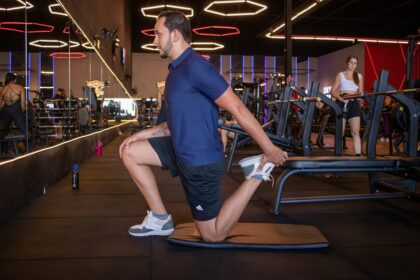

A new meta-analysis of 14 randomised trials in 693 athletes found that hamstring rehabilitation built around lengthening exercise returned players to play about 28 days sooner than conventional programmes. Only two trials supplied that hamstring rehabilitation estimate, and the re-injury picture stayed unsettled.
Hamstring rehabilitation programmes that load the muscle in a lengthened position were associated with a far shorter lay-off than conventional protocols, according to a systematic review and meta-analysis published October 5, 2026 in Scientific Reports.
The review pooled 14 randomised controlled trials covering 693 athletes whose mean ages ranged from 20.3 to 46.6 years. Six databases were searched to January 2026, the work followed PRISMA 2020 reporting standards, and the protocol was registered with PROSPERO as CRD420261387775.
Two trials compared a lengthening-focused programme, often called the L-protocol, against conventional care. Pooled across them, time to return to play was 28.29 days shorter with the lengthening approach, with a 95% confidence interval from 41.60 to 14.99 days and a p-value below 0.0001. Heterogeneity between the two was moderate at 58%.
Xiyang Peng of the School of Sport and Health Sciences at the University of Lancashire in Preston, England, was among the authors, alongside Junshuai Zhu, Shuaiwang Huang, Shuyuan Luo, Xinyun Huo, Lan Zheng and David Grecic.
At a Glance
- Published October 5, 2026 in Scientific Reports, with the DOI 10.1038/s41598-026-70693-1.
- 14 randomised controlled trials, 693 athletes, mean ages from 20.3 to 46.6 years.
- Six databases searched to January 2026; PROSPERO registration CRD420261387775.
- Lengthening-focused hamstring rehabilitation cut time to return to play by 28.29 days (95% CI 41.60 to 14.99 days, p below 0.0001) across two trials.
- Re-injury after the lengthening protocol: 0 of 65 athletes versus 3 of 66, a risk difference of 0.05 that was not statistically significant.
- Progressive agility and trunk stabilisation shaved a non-significant 6.72 days off the lay-off but was tied to fewer re-injuries, 2 of 29 versus 10 of 24.
- Main caveat: certainty was graded moderate at best and very low for some outcomes, and most comparisons rested on one or two trials.
Why Lengthening Load Dominates Hamstring Rehabilitation Research
A strained hamstring typically fails while the muscle is long and braking the swinging leg, which is why exercises that load it in that position have become the centrepiece of modern protocols. The two trials driving this estimate both tested that logic directly, and both favoured it: one reported a 23.00-day advantage and the other 37.00 days.
Those are large numbers for a single training choice, and the direction is consistent. The caution is arithmetic rather than conceptual. Two trials cannot establish an effect size, the interval around the pooled estimate spans 27 days, and the authors graded certainty for this outcome as moderate rather than high.
It is also worth being clear about what the comparison was. Conventional care in these trials was not neglect; it was the standard hamstring rehabilitation of its day, with stretching, isolated strengthening and graded running. The lengthening protocols were tested against competent practice, which makes the margin more interesting and the small trial count more frustrating.
The pooled reduction in time to return to play when hamstring rehabilitation emphasised lengthening exercise instead of conventional loading.
Who the 693 Athletes Were
Mean ages across the included trials ran from 20.3 to 46.6 years, a spread that covers academy footballers and recreational masters athletes in the same pooled estimate. Hamstring rehabilitation timelines are not obviously interchangeable across that range, and the review had too few trials to test whether age changed the answer.
Sport was similarly mixed. The trials that supplied the lengthening comparison came from sprinting and field-sport settings, where high-speed running is the demand the muscle must be returned to, while the adjunct trials drew on broader clinical samples. Any single number pulled from a hamstring rehabilitation meta-analysis of this shape is an average over those differences, not a figure for one athlete.
The Re-Injury Question the Review Could Not Settle
Returning sooner is only an advantage if the muscle holds. In the lengthening comparison, no athlete out of 65 suffered a re-injury against 3 out of 66 in conventional care, a risk difference of 0.05 with an interval running from a 0.11 reduction to a 0.02 increase. A sensitivity analysis gave an odds ratio of 0.13 but a p-value of 0.08.
With event counts that small, nothing conclusive follows in either direction. The authors themselves note that the statistical method used for sparse events can be unstable, and they say they weighted the raw counts and intervals more heavily than the pooled odds ratio.
Agility and Trunk Work Told the Opposite Story
Two further trials tested progressive agility and trunk stabilisation against conventional care. Here the lay-off barely moved, a non-significant 6.72 days with an interval from 16.81 days shorter to 3.36 days longer. Re-injuries, however, fell sharply: 2 of 29 athletes against 10 of 24, a risk difference of 0.35 that narrowly missed significance at p equal to 0.07.
Heterogeneity for that re-injury comparison was high at 72%, and the certainty rating was very low, so the contrast should be held loosely. Still, the pattern is worth noticing, because it suggests the two approaches may not be competing for the same outcome at all.
If that holds, hamstring rehabilitation planning becomes a choice about priorities rather than a search for one best method. Lengthening load appears to buy time; agility and trunk work appear to buy insurance. A programme that sequences both is the obvious hypothesis, and no trial in this review tested it.
What the Hamstring Rehabilitation Add-Ons Delivered
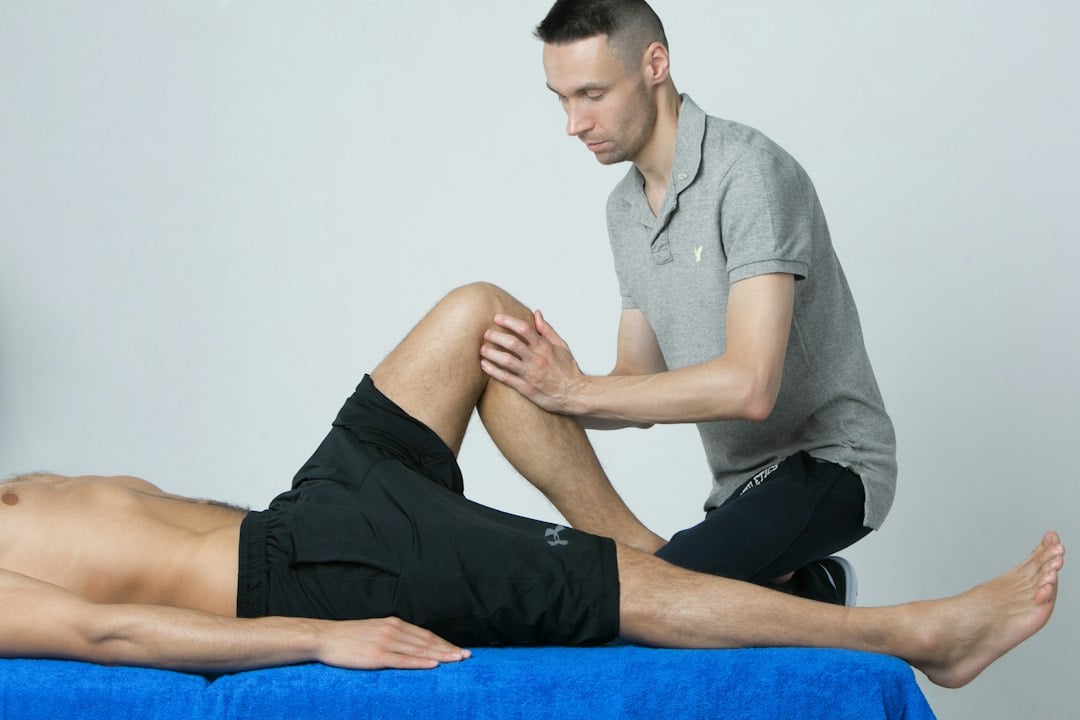
Beyond exercise, the review examined adjuncts bolted onto hamstring rehabilitation. Three trials of platelet-rich plasma produced heterogeneous results, with a heterogeneity statistic of 70%. A single trial of radial shockwave therapy showed a modest benefit, and a single trial of low-level laser therapy added nothing beyond the exercise programme it accompanied.
One trial tested rehabilitation performed up to the threshold of pain rather than strictly pain-free. Strength improved without delaying return to play, and the authors graded that evidence as moderate certainty, making it one of the firmer conclusions in the paper despite coming from a single study.
A separate marker of readiness also showed up in the lengthening trials: 35% of athletes in that arm, 13 of 37, needed extra rehabilitation before clearance, against 71%, or 27 of 38, in conventional care. That gap speaks to the quality of the recovery, not just its speed. Readers tracking the wider injury picture may want our analysis of 5.49 million exercise-related injuries across 12 years of US data.
How This Fits the Prevention Evidence
Hamstring rehabilitation begins after the fact, and the better outcome is never needing it. Programmes that build eccentric strength and sprint exposure before injury remain the first line, a theme in our coverage of a nine-week warm-up programme that cut sprint time in 65 teenagers and of eight weeks of plyometric training in under-20 players.
It is also worth setting this review beside another published the same week, a pooled analysis of 44 trials in 1,301 athletes that found core stability training favoured jump and agility outcomes but not sprint times. Both papers land on the same uncomfortable place: plausible mechanisms, encouraging point estimates and certainty ratings that will not carry a confident recommendation.
What Athletes and Coaches Should Take From It
This is pooled trial evidence about programme design, not a protocol anyone should self-administer. An acute hamstring strain needs assessment, and the decision about when to return belongs with the clinician managing it. What the review supports is asking informed questions about how a hamstring rehabilitation programme is built.
Reasonable general points, none of them individualised advice:
- Expect lengthened-position loading to feature in a modern hamstring rehabilitation plan, introduced progressively.
- Expect clearance to rest on criteria such as strength and pain-free high-speed running, rather than a date on a calendar.
- Treat adjunct therapies as unproven extras rather than accelerators.
- Remember that flexibility work alone has a thin record here, as our report on myofascial release and hamstring range in 103 athletes found.
The Fitness Living Takeaway
Across 14 randomised trials in 693 athletes, hamstring rehabilitation centred on lengthening exercise was associated with a return to play roughly 28 days earlier than conventional programmes.
That headline estimate rests on just two trials, and the re-injury data were too sparse to confirm the muscle holds equally well. Agility and trunk work moved the opposite lever, trimming re-injuries without shortening the lay-off, which is a reminder that speed back and durability are separate questions.
Research & Sources
- Scientific Reports: Rehabilitation interventions, return to play and reinjury after acute hamstring strain
- BMC Sports Science, Medicine and Rehabilitation: core stability training and lower-limb performance
- Images: Drew Darby / Unsplash; yury kirillov / Unsplash
This article summarizes peer-reviewed research for general information and is not individualized medical or exercise advice.