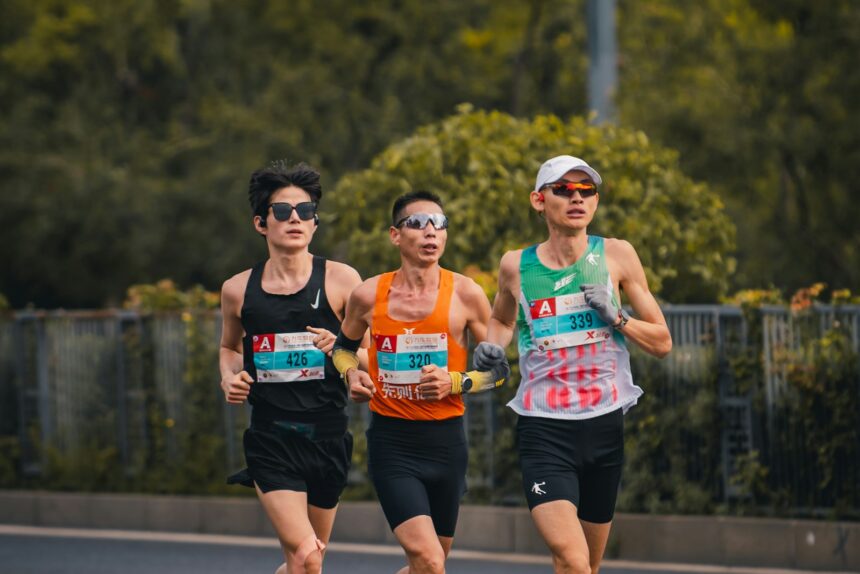
Two field studies tracking marathon and ultramarathon runners found that the body’s own cannabis-like signaling molecules remained active over extreme distances, with anandamide continuing to rise through a full marathon and staying elevated after the finish.
Runner’s high endocannabinoids may stay engaged far longer than earlier laboratory studies suggested. Research published September 1 in BMC Medicine followed experienced runners across a marathon and ultramarathons up to 230 kilometers, repeatedly measuring endocannabinoids associated with pain, mood and stress regulation.
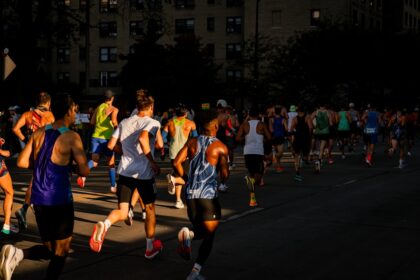
The strongest finding involved anandamide, often abbreviated AEA. In 19 experienced runners completing a marathon in Essen, Germany, AEA concentrations rose progressively during the race and were still elevated 45 minutes after finishing. When the same runners later walked for the same amount of time along the route, the increase was substantially smaller.
A second field study included 36 runners completing 100-, 160- or 230-kilometer ultramarathon events. After those extreme distances, AEA was again elevated. Another endocannabinoid, 2-AG, also increased after the ultramarathon events.
At a Glance
- The research combined two real-world field studies published September 1, 2026, in BMC Medicine.
- Nineteen experienced runners were sampled repeatedly before, during and after a marathon.
- Anandamide rose across the marathon and remained elevated 45 minutes after the finish.
- The same runners later completed a time-matched walk, which produced a much smaller anandamide response.
- Thirty-six ultramarathon runners covering 100 to 230 kilometers also showed elevated endocannabinoids after finishing.
- The studies do not prove that these molecules cause the subjective runner’s high.
How the Runner’s High Endocannabinoids Changed During a Marathon
Most previous studies of endocannabinoids and exercise have focused on sessions lasting less than an hour. That leaves an obvious question for endurance athletes: what happens when running continues for several hours rather than 30 or 45 minutes?
The researchers collected blood before the marathon, after approximately 14 kilometers, after 28 kilometers, near the finish at roughly 43 kilometers and again after 45 minutes of recovery. That repeated sampling allowed them to see the shape of the response rather than comparing only pre-race and post-race values.
Anandamide did not simply spike early and then fade. It continued rising through the race. The sustained increase is important because endocannabinoids interact with cannabinoid receptors involved in pain modulation, anxiety and reward—functions that may matter when the body is under prolonged physical stress.
The longest ultramarathon distance studied was roughly 143 miles, yet endocannabinoid signaling remained elevated after runners completed the event.
Why the Walking Comparison Strengthens the Study
One challenge in endurance research is separating the effects of exercise from the effects of time, food intake, anticipation and the simple stress of being in an experiment. The marathon study included an unusually useful comparison: the same people later walked for the amount of time it had taken them to run the marathon.
Walking the route for the same duration produced a much smaller anandamide increase. That does not isolate every difference between walking and running, but it makes a stronger case that exercise intensity contributed to the endocannabinoid response rather than elapsed time alone.
The comparison also helps explain why the runner’s high is unlikely to be a single chemical switch. The experience of sustained running combines mechanical stress, temperature, cardiovascular strain, effort, mood, expectation and pain. Endocannabinoids may be one part of that system rather than the entire explanation.
What Happened in the Ultramarathon Runners
The second study moved beyond the marathon to the 2024 TorTour de Ruhr, where 36 participants ran 100, 160 or 230 kilometers. Researchers collected blood before and after the events.
Anandamide was elevated after the ultramarathons, and 2-AG also increased. The runners reported lower anxiety after finishing, but they did not report a significant increase in euphoria. Most participants experienced pain during the race, while five reported remaining pain-free.
That mismatch between chemistry and subjective feeling is one reason the authors are cautious. Elevated endocannabinoids may participate in pain or anxiety regulation without producing a dramatic euphoric sensation in every athlete.
The Runner’s High Is Not Simply an Endorphin Story
For decades, popular fitness culture described the runner’s high as an endorphin effect. More recent work has complicated that explanation. Endorphins are large molecules that do not readily cross the blood-brain barrier, while endocannabinoids can act within the nervous system and bind to receptors involved in mood and pain.
The same research group previously showed that runner’s-high-like effects can persist even when opioid signaling is pharmacologically blocked. At the same time, endocannabinoid levels rose. The new marathon data extend that line of evidence into much longer endurance efforts.
Still, the current study did not block cannabinoid receptors during a marathon or experimentally manipulate anandamide. It therefore cannot show that the rising molecules caused the psychological experience.
Blood levels and subjective feelings changed together in some ways but not all. The ultramarathon runners showed higher endocannabinoids and lower anxiety without a significant rise in euphoria. Association is not proof that the molecules caused the mood response.
What Endurance Athletes Can Take From the Finding
The study is mechanistic, not a new training prescription. It does not show that runners should chase longer distances to produce more anandamide or that ultramarathons are required to experience mood benefits from exercise.
Earlier research has found endocannabinoid increases after much shorter bouts of moderate aerobic exercise. For most people, regular running does not need to reach marathon distance to support mood or fitness. The new work simply shows that the system continues responding when exercise becomes exceptionally prolonged.
That distinction is important because marathon and ultramarathon running create substantial physiological stress. Fitness Living recently reported that race-day air pollution was associated with slower marathon performance across millions of finishes. Environmental exposure, fueling, heat, hydration and musculoskeletal load all matter during long races; a possible runner’s high does not make those demands disappear.
Why Pain Relief Is a Complicated Part of the Story
Endocannabinoids are involved in pain signaling, which raises an obvious question: could the system help runners tolerate extreme distances? The data are compatible with that possibility, but they do not prove it.
Most ultramarathon participants still reported pain. That matters because a chemical system can modulate discomfort without eliminating it. The five pain-free runners are interesting, but the group is too small to determine whether their endocannabinoid profiles meaningfully differed from everyone else.
Future studies could measure pain repeatedly during races rather than only around the finish and pair those reports with individual changes in AEA and 2-AG. That would help test whether runners with the largest molecular responses actually experience less pain or anxiety.
What Researchers Still Need to Know
Field studies offer realism but sacrifice some laboratory control. Marathoners eat, drink, pace differently and experience changing temperature, terrain and stress. Ultramarathon events add sleep loss and much longer exposure. Those variables can influence hormones and metabolites.
The sample sizes were also modest: 19 marathon runners and 36 ultramarathon runners. Experienced endurance athletes may respond differently from beginners, recreational joggers or people with medical conditions. The findings should therefore be treated as a detailed look at trained endurance athletes rather than a universal model of exercise mood effects.
The biggest unanswered question is causality. The authors explicitly state that they cannot yet conclude that the elevated signaling molecules are responsible for runner’s high, anxiety reduction or pain perception. That will require more targeted experiments.
Why This Study Is Valuable Despite the Limits
The strongest contribution is temporal. Instead of asking only whether endocannabinoids are higher after exercise, researchers tracked the system while exercise continued for hours. That shows anandamide can continue rising rather than leveling off early.
It also challenges the idea that the biology of a marathon is simply an exaggerated version of a short treadmill session. Some signals persist, some accumulate and some subjective experiences diverge as distance becomes extreme.
For endurance athletes, that deeper biological map may eventually improve understanding of pacing, pain tolerance, stress and recovery. For now, it mainly explains why the feeling of prolonged running cannot be reduced to one old slogan about endorphins.
The Fitness Living Takeaway
Anandamide, one of the body’s own cannabinoid-like signaling molecules, continued rising across a marathon and remained elevated after the finish. Endocannabinoids were also elevated after ultramarathons up to 230 kilometers.
The research strengthens the case that the endocannabinoid system participates in prolonged endurance exercise, but it does not prove that these molecules cause the runner’s high. The most useful conclusion is biological rather than prescriptive: the system stays active even when running extends into extreme distances.
Research & Sources
- BMC Medicine: Endocannabinoid dynamics across marathon and ultramarathon running
- Permanent DOI for the peer-reviewed study
- University of Duisburg-Essen research summary
- Image: Quan-You Zhang / Unsplash
This article reports on peer-reviewed exercise science for general information. It is not individualized training or medical advice.
The Fitness Living Weekly
New Fitness Living Spotlights, important fitness news, research and independent reporting, delivered directly to your inbox.
One considered edition each week.
Do You Lead a Fitness Business Worth Knowing?
Fitness Living Magazine features independent gym owners, fitness trainers, and Pilates studio owners strengthening their local communities.