
A major new analysis led by University of Southern California researchers is challenging one of the simplest ideas in fitness: that all movement should be treated as essentially the same. The research suggests that voluntary exercise performed during leisure time may be associated with very different long-term brain-health outcomes than physically demanding activity performed on the job.
A construction worker can spend an entire day lifting, carrying and standing. A recreational runner may exercise for only 45 minutes after work. On paper, the worker might accumulate considerably more physical activity.
But does that automatically mean the worker receives more of the health benefits commonly associated with exercise?
New research suggests the answer may be more complicated than simply counting how many minutes a person moves.
A USC-led systematic review and meta-analysis published in The Lancet Public Health examined how different types of physical activity were associated with the later development of dementia.
The results point toward an increasingly important idea in exercise science: the circumstances surrounding physical activity may matter alongside the movement itself.
- The USC-led analysis included 74 cohort and case-control studies involving more than 4.2 million people.
- Participants ranged in age from 45 to 93 and came from 30 countries.
- Higher leisure-time physical activity was associated with a 24% lower risk of dementia compared with the lowest activity levels.
- Occupational physical activity was associated with a 20% higher dementia risk.
- The findings are observational and do not prove that physically demanding work causes dementia.
More Than 4.2 Million People Were Included
The size of the analysis is one reason the findings are receiving attention.
Researchers combined evidence from 74 cohort and case-control studies involving more than 4.2 million adults across 30 countries.
Participants ranged from middle age into later life, with ages spanning approximately 45 to 93 years.
The median follow-up period was about 10 years.
During those years, researchers tracked diagnoses including all-cause dementia, Alzheimer’s disease and vascular dementia.
Rather than putting every form of physical activity into one category, the research team separated movement according to where and why it happened.
That included activity performed during leisure time, activity performed at work, household activity and active commuting.
The distinction produced markedly different patterns.
Leisure-Time Exercise Was Associated With Lower Dementia Risk
The clearest favorable association appeared in recreational physical activity.
People reporting higher levels of leisure-time activity had a 24 percent lower risk of dementia than those with the lowest levels.
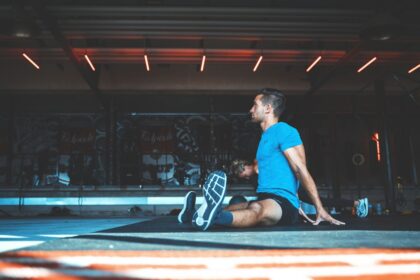
Leisure-time physical activity can include familiar forms of exercise such as walking, cycling, swimming, running and recreational sports.
The association was not simply linear forever.
Researchers observed progressively lower dementia risk as leisure activity increased, but the benefit eventually appeared to level off rather than continuing indefinitely.
That pattern is important because it suggests brain-health benefits may not require extreme exercise volumes.
Regular recreational movement may be more meaningful than constantly trying to accumulate the largest possible workload.
Physically Demanding Work Showed the Opposite Pattern
The occupational results were very different.
Higher levels of physical activity performed as part of a person’s job were associated with approximately a 20 percent higher risk of dementia.
At first glance, that may sound contradictory.
If physical activity is generally good for the brain, why would lifting, carrying, walking or standing at work not provide the same protection?
This question is part of what researchers call the physical activity paradox.
The paradox has previously appeared in cardiovascular research, where high levels of occupational physical activity have not always produced the same health outcomes seen with leisure-time exercise.
The new analysis suggests a similar pattern may extend to dementia risk.
Movement does not happen in a vacuum. The body may respond differently to exercise chosen for health and recreation than to physical work performed for hours under occupational demands.
Fitness Living MediaWhy a Hard Job Is Not Necessarily a Workout
It is tempting to think of physically demanding employment as a built-in fitness program.
But a job and a workout are structured very differently.
A well-designed exercise session usually has a beginning and an end. Intensity can be adjusted. Rest can be planned. Movements can be changed. Recovery can occur before the next training session.
Occupational activity may involve repetitive lifting, prolonged standing, awkward positions or similar movements performed again and again for many hours.
The worker may have little control over pace, recovery or workload.
A person exercising recreationally can slow down when fatigued.
A worker may still have four hours remaining in a shift.
Those differences may help explain why equal amounts of physical movement do not necessarily create equal physiological conditions.
Stress and Work Environment May Be Part of the Story
The researchers are careful not to suggest that movement performed at work is inherently harmful.
Occupational physical activity often comes bundled with other factors that are difficult to separate statistically.
Physically demanding occupations may involve lower control over working conditions, chronic psychosocial stress, noise, air pollution, heat exposure, hazardous environments or limited recovery opportunities.
Those conditions may influence long-term health independently of physical activity.
Someone finishing an exhausting physical shift may also have less time or energy available for recreational exercise, sleep, social activity or other health-supporting behaviors.
This is one reason the occupational finding should not be interpreted as evidence that people need to become less active at work.
The more useful question is whether workers receive enough recovery, autonomy and opportunities for health-promoting movement outside of work.
This research does not prove that physically demanding employment causes dementia. The underlying studies were observational, meaning researchers identified associations rather than direct cause and effect. Occupational activity is also closely intertwined with socioeconomic conditions, workplace exposures, stress, recovery and access to recreational exercise.
Exercise You Choose May Come With Other Benefits
Leisure-time exercise differs from physical labor in another important way: it is usually voluntary.
A walk through a neighborhood, a weekend bike ride, a gym session or a recreational tennis match can involve more than muscular work.
These activities may also provide enjoyment, social connection, mental stimulation and stress relief.
A recreational workout can be adjusted to the person’s ability.
Intensity can rise gradually.
Rest can be taken when needed.
Different forms of movement can be combined across the week.
That makes leisure-time exercise fundamentally different from spending eight hours repeatedly performing the same occupational task.
The Study Adds a New Layer to “Every Move Counts”
Public-health messaging often emphasizes that every bit of movement matters.
That message remains valuable, especially in societies where many adults spend large portions of their day sitting.
But the USC research suggests that a more sophisticated version may eventually be needed.
The total amount of movement matters.
So may the type of movement.
The intensity matters.
Recovery matters.
And now, researchers are asking whether the context in which activity occurs deserves more attention too.
For the fitness industry, that distinction is important.
Someone who performs heavy manual labor all day may still benefit from purposeful exercise, but the ideal program for that person may look very different from the program designed for an office worker who has been seated for eight hours.
Fitness Professionals May Need to Ask Better Questions
A traditional fitness intake often begins with a question such as, “How active are you?”
The new research suggests that question may be too broad.
A better conversation might include:
What does your workday physically demand from you?
How much time do you spend standing?
Do you lift objects repeatedly?
How much control do you have over breaks?
Are you physically exhausted when you leave work?
What type of movement do you actually enjoy?
Those answers can dramatically change what an appropriate exercise program looks like.
A delivery worker who climbs stairs and carries packages all day may not need more repetitive lower-body fatigue.
They may benefit more from mobility, controlled resistance training, cardiovascular conditioning at an appropriate intensity and deliberate recovery.
An accountant spending most of the day at a computer may need an entirely different strategy.
Household Activity Looked Promising, but the Evidence Is Thin
The researchers also examined movement performed around the home.
Household physical activity appeared to be associated with lower dementia risk.
However, that result came from only one study.
That is not enough evidence to make strong conclusions.
Similarly, active commuting showed a modest association with higher risk, but that finding was based on only two studies.
The limited evidence is important because headlines can make uncertain results sound much more definitive than they actually are.
The strongest evidence in the analysis concerned the contrast between leisure-time exercise and occupational physical activity.
Most of the Activity Data Was Self-Reported
Another major limitation is how physical activity was measured.
Nearly all of the studies relied on participants reporting their own movement habits.
Self-reported exercise information is useful in very large population studies, but it is not perfect.
People may forget how active they were, overestimate exercise or interpret questions differently.
Future research using wearable devices and other objective measurements may provide a clearer picture of exactly how intensity, duration, recovery and activity setting influence brain health.
The available evidence also came largely from higher-income countries.
That matters because working conditions and patterns of physical activity can differ substantially around the world.
This Is About Brain Health, Not Just Fitness
The study is another reminder that exercise research is moving far beyond traditional measures such as body weight, muscle size and cardiovascular endurance.
Scientists are increasingly interested in how physical activity relates to the aging brain.
Dementia develops through complex biological and environmental processes, and no single behavior can guarantee prevention.
But physical activity remains one of the lifestyle factors researchers continue to study because it affects cardiovascular health, metabolism, inflammation, blood flow, mobility and independence.
The new USC analysis does not overturn that idea.
It makes the idea more precise.
Being active may matter.
How you are active may matter too.
The Findings Could Change How We Think About Active Workers
There is another practical implication.
Someone who works a physical job may assume there is no reason to exercise because they are already moving all day.
The new research suggests occupational movement and recreational exercise should not automatically be considered interchangeable.
That does not mean a warehouse employee needs to finish a demanding shift and immediately perform a brutal gym workout.
Quite the opposite.
Purposeful exercise should account for the stress already accumulated during work.
For some people, the most beneficial session may involve walking at a comfortable pace, mobility work or low-volume strength training.
For others, recreational swimming, cycling or a social sport may provide a form of movement that feels fundamentally different from the physical demands of employment.
The goal is not simply to accumulate more fatigue.
The goal is to create useful adaptation.
Fitness Is Becoming More Context-Aware
The deeper lesson extends beyond dementia research.
Exercise science increasingly recognizes that movement cannot always be evaluated by volume alone.
Ten thousand steps taken during a relaxing day of walking are not necessarily the same experience as ten thousand steps accumulated while rushing through a stressful shift.
Thirty minutes of resistance training with planned rest is not the same as repeatedly lifting heavy objects for an entire workday.
The movements may appear similar from a distance.
The total stress placed on the person may be very different.
That is why the future of fitness may involve increasingly individualized questions about sleep, stress, work, recovery and lifestyle rather than simply prescribing more exercise to everyone.
The Fitness Living Takeaway
The newest USC research adds an important qualification to one of fitness’s most familiar messages.
Movement matters, but context may matter too.
Across more than 4.2 million people, higher leisure-time physical activity was associated with substantially lower dementia risk, while physically demanding occupational activity showed a very different pattern.
That does not mean work-related movement is harmful or that active workers should stop being active.
It means a physically exhausting job should not automatically be treated as a substitute for purposeful, recoverable and enjoyable exercise.
The larger lesson is that fitness is not simply about doing the greatest possible amount of physical work.
Good exercise creates a challenge the body can recover from, adapt to and repeat.
For long-term health, the quality and circumstances of movement may deserve just as much attention as the number of minutes spent moving.
University of Southern California: USC reporting on the newly published systematic review examining leisure-time, occupational, household and commuting physical activity in relation to dementia risk. Read the USC research report .
Primary research: Natan Feter and colleagues, Domain-specific physical activity and the risk of dementia: a systematic review and meta-analysis with 4 million participants. Published in The Lancet Public Health, 2026.
Fitness Living Media reporting is independently written from the underlying research and is intended for general informational purposes. Observational associations do not establish cause and effect, and individual exercise needs may vary according to health status, occupation, fitness level and medical history.