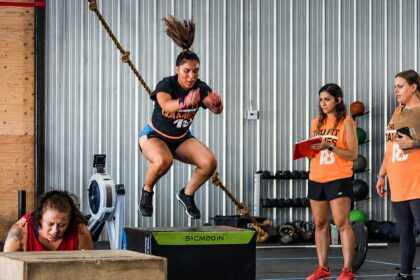
Recognized by Fitness Living Magazine™ For bringing assessed, coached, long-term sport performance training to a small town, serving young athletes from about age eight and adults into their 80s under one roof.
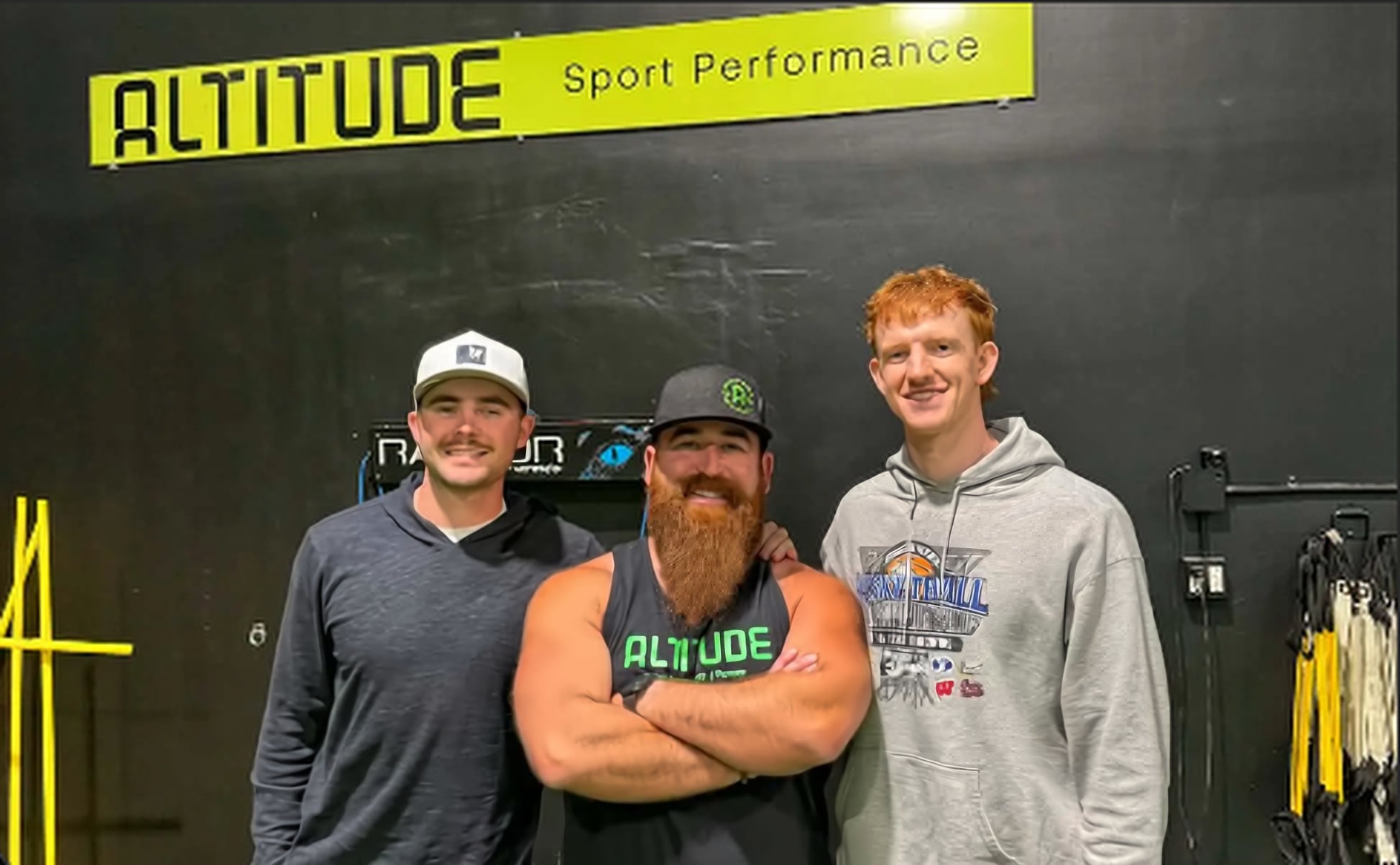
Tuolumne County has one small junior college with two sports programs and a couple of small high schools. What it did not have, Chris says, was anyone teaching its athletes proper, up-to-date training. Altitude Sport Performance is his answer: a 5,000-square-foot facility in Sonora where athletes from about age eight, and adults into their 80s, follow written programs, train in small coached groups, and measure progress over years rather than weeks.
“Bad trainers are terrified to lose clients. I want to be so good that they don’t need me anymore.”Chris Forster / Founder and Owner, Altitude Sport Performance
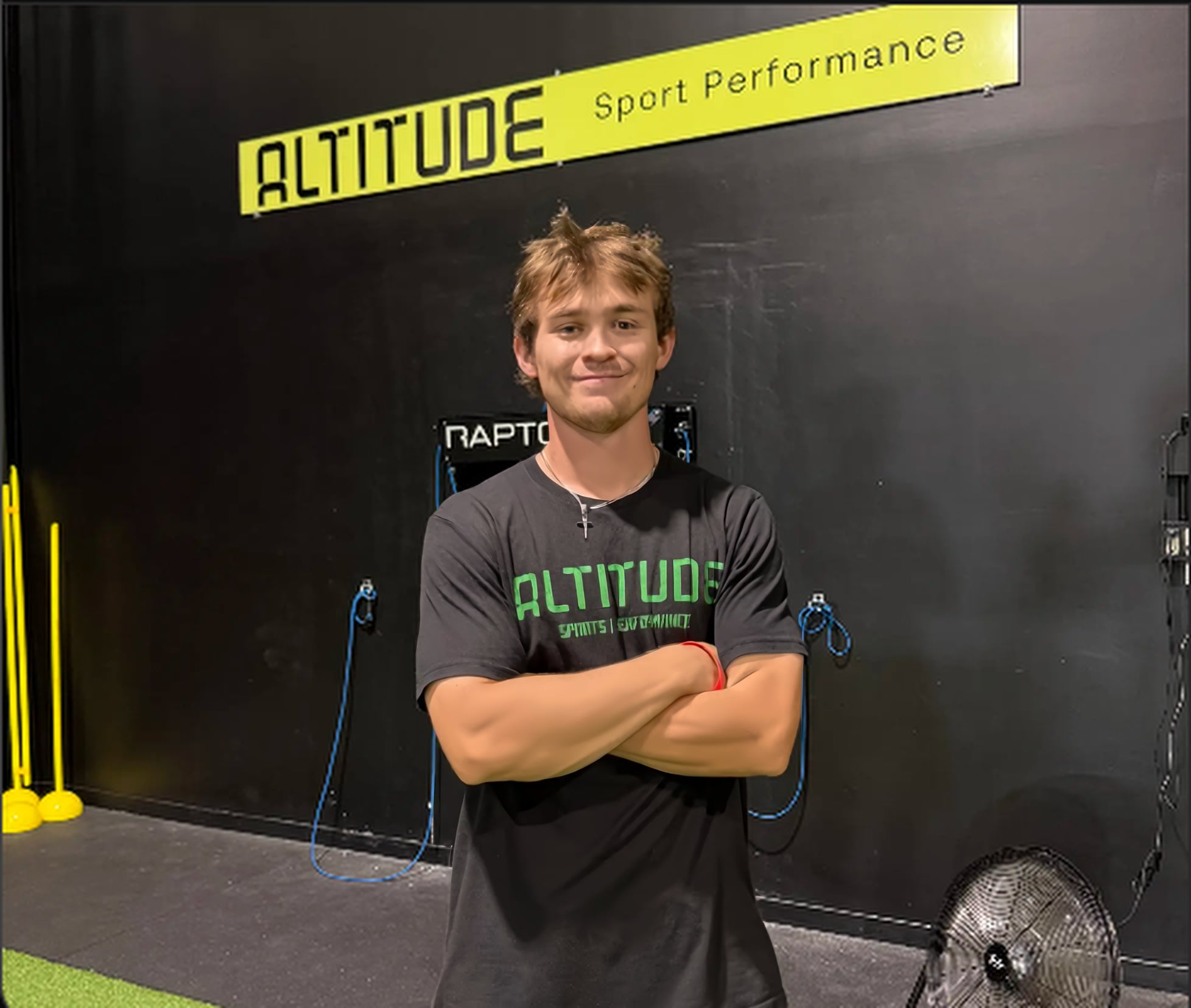
The first thing visitors notice is the room. Chris set out to build a facility that feels state-of-the-art for the county, with specialized equipment not found in commercial gyms, the names of collegiate athletes who trained there on the wall, and signed professional jerseys. In February, Altitude moved into a new, larger location with more space, equipment, and staff.
The second thing they notice is that nobody simply drops in. Every new athlete or client starts with an assessment or trial session, because Chris wants to know their background, injuries, and goals before writing anything. Athletes are tested on top-end speed, vertical jump, and change of direction, and coaches watch how they jump and run.
Once training begins, it does not look like a class. Sessions are small-group and semi-private, with one or more coaches always on the floor, and each person follows a program built for them. A 70-year-old woman trains differently than a 28-year-old man, Chris says, but both warm up, work on movement patterns and tissue quality, and get tangibly stronger in a controlled way.
Progress is retested every three to four months. The goal for a 12-year-old is simple: by 18, that athlete should be measurably stronger, more powerful, and faster. In season, when players tend to drop strength work, the goal shifts to not regressing.
Members also notice the accountability. Memberships run monthly, with options to train twice a week, three times a week, or unlimited, because Chris believes people default to the easy route when nothing is expected of them. A coach who is waiting for you, asks how your eating is going, and adjusts the plan around injuries, illness, kids, or travel is, in his words, something a printed workout sheet cannot do.
Chris Forster runs Altitude as the coach he wishes he had at 16. He writes the programs, asks how each session felt, and modifies on the spot, yet he measures his own success by whether clients eventually need him less. His stated goal is to be good enough that people leave knowing how to train, eat, and recover on their own.
How Chris Forster Brought Orange County Sport Performance Training Home to Tuolumne County
This look at sport performance training in Sonora begins with a simple comparison Chris Forster likes to make. If you set out to travel somewhere and do it blindly, you might get there, but you waste effort, resources, and time along the way. He spent his late teens and 20s traveling that way, eating wrong, lifting wrong, and recovering wrong, not because he wanted to but because nobody had shown him better. Altitude Sport Performance exists so that the athletes and adults of his hometown do not have to guess.
Altitude Sport Performance is a sport performance and strength training facility in Sonora, California, founded and owned by Chris Forster.
It trains athletes from about age eight through high school, college, and the occasional semi-professional or professional, along with adults from their late teens into their 70s and 80s, in small semi-private groups and private sessions. Every new athlete or client begins with an assessment rather than a drop-in, there is no open-gym access, and athletes are retested every three to four months to confirm that strength, speed, and power are improving.
Chris describes the difference between Altitude and a commercial gym plainly. Anyone can rent equipment with a membership, and anyone can get sweaty. What his facility sells is programming, accountability, and a coach who knows when to push and when to recognize that, some days, showing up is the win. That approach now serves athletes in sports from football and basketball to surfing, skiing, equestrian, hockey, and figure skating, and adults who simply want to be strong enough to live well.
From GNC Shifts to Orange County Internships
Chris grew up in Sonora playing sports and working out, but he describes those early years as random movements and random exercises, messing around with friends with nothing organized about it. He left for school in Colorado for a time, and when he came back, there was little to do in town except go to the gym. The sessions became more frequent, the interest in nutrition grew, and a job at GNC gave him his first real entry into the fitness world. For a few years he lifted and ate, by his own account, mostly incorrectly.
The turning point was an internship at Redline Athletics in Orange County. Chris stayed in Southern California for six to seven years, interning, working under experienced coaches, earning certifications, attending workshops, and training high-level athletes. What struck him was the competitive edge those athletes gave themselves, and how little of that science-based approach existed in the small bubble he came from. Eventually he realized he could bring all of it back to Tuolumne County and start working with the athletes there, because it was something he never had.
Inside Altitude’s Long-Term Approach to Athlete Development
This profile looks at how Altitude Sport Performance turns assessments, written programming, and patient coaching into measurable results for athletes and adults in Sonora.
Nobody trains on a whim. Every athlete and adult follows written programming in small coached groups, inside a facility that deliberately offers no open-gym access.
Athletes from about age eight through high school, college, and the occasional professional, plus adults from their late teens into their 70s and 80s.
An owner who brought six to seven years of Orange County sport performance experience home to a county with one junior college and a couple of small high schools.
A Blueprint Instead of Trial and Error
When Chris thinks about the defining idea behind Altitude, he goes back to what he did not have. He wants to give athletes and adults a blueprint so they do not spend years guessing. The blueprint applies to everyone, because in his view an 18-year-old college athlete and a 60-year-old grandmother fall under the same general umbrella of strength, movement, and fitness. Altitude trains athletes as young as eight or nine and clients in their 80s, and Chris says all of them benefit from learning how to move properly.
He is equally clear about what Altitude is not. It is not a place to get destroyed by a brutal workout, and it is not built only for future Division I recruits. Some kids come in slow and weak, and the goal for them is to get a little better, become more confident and more durable, and enjoy their sport. For adults, the goal is to stop treating fitness as a 30-day challenge and start treating it as lifelong, so that getting older means feeling good rather than blaming everything on age.
Every Rep Is a Microdose
Ask Chris for the single most important principle behind his coaching and he answers with one word: intent. Everything done in the gym, from a warm-up drill to a bodyweight exercise to a heavy compound lift, is what he calls a microdose. It either makes a person better, leaves them the same, or makes them worse. Three people can perform the same exercise, he says, and only the one moving with full intent, full range of motion, and real effort is creating the stress that forces the body to adapt.
That is why he tells his younger athletes that doing the movement by itself does nothing. If a set is meant to be challenging at five reps and the athlete could have done ten, there was no stress and no progress. The same logic reaches the kitchen. Chris reminds clients that the body does not care whether they like a food; it responds to nutrition, macronutrients, vitamins, and minerals. He does not force anyone to eat vegetables they hate, because that is not sustainable, but he works to find something they can tolerate and build on.
Sustainability is the other half of the principle. Chris does not favor aggressive boot camps, random circuits, or 30-day challenges, because a short block of intensity does not translate into a life. He would rather see 365 sustainable days than 30 brutal ones. Programs at Altitude are dosed with the hard things people need, such as stability, mobility, and core work, alongside exercises that are simply fun, because people have to enjoy the process to keep showing up.
Knowing Exactly Where They Stand
An athlete at Altitude is meant to know exactly where they stand. The first session establishes a baseline.
The program that follows is written for them, coached in a small group, and adjusted when a knee is bothering them or a season gets busy. Every few months the tests are repeated, and the numbers either move or something changes. Nobody is promised a straight line upward, but everyone is shown the direction they are heading.
Modify, Remove, Never Push Through Pain
Programs at Altitude are written to be changed. Chris says every program, no matter how well it is written at first, has flaws, so coaching becomes a conversation: How did that feel? Are you liking it? Any issues? Progress comes from small swaps between exercise variations and slight changes in reps while the direction stays constant. Athletes will always squat, hinge, push, pull, carry, and train their core in some form, but the specific exercise is always negotiable.
When something hurts, the rule is to modify or remove, not push through. As Chris puts it, there is no exercise on earth that a person has to do. If squatting hurts, there are unilateral and isolated leg exercises that build the same strength without the squat pattern. He compares training to cooking: turn the heat up too high and the dish is ruined, but cook it slowly and carefully and it becomes what it was meant to be. Ignoring an injury in the name of “no pain, no gain,” he says, is exactly how injuries happen.
Progress Measured Every Three to Four Months
For athletes, Altitude evaluates progress the way a school does, with periodic testing. Baseline numbers for vertical jump, acceleration, and other metrics are recorded at the start, and athletes retest roughly every three to four months, with the schedule flexing around holidays and how people are feeling. The goal is for the numbers to move in a positive direction. Chris is candid, though, that nobody improves all the time. The longer an athlete trains, the harder each gain becomes, and part of the work is avoiding regression, especially in season, when strength training is the first thing players tend to drop.
Two athletes illustrate what consistent work can do. Years ago in Orange County, Chris trained a baseball player from Saddleback Community College over a long stretch of development. That player transferred to the University of Hawaii as a pitcher and later signed as a free agent in professional baseball. Chris uses the story to show kids that junior college is a starting point, not an endgame.
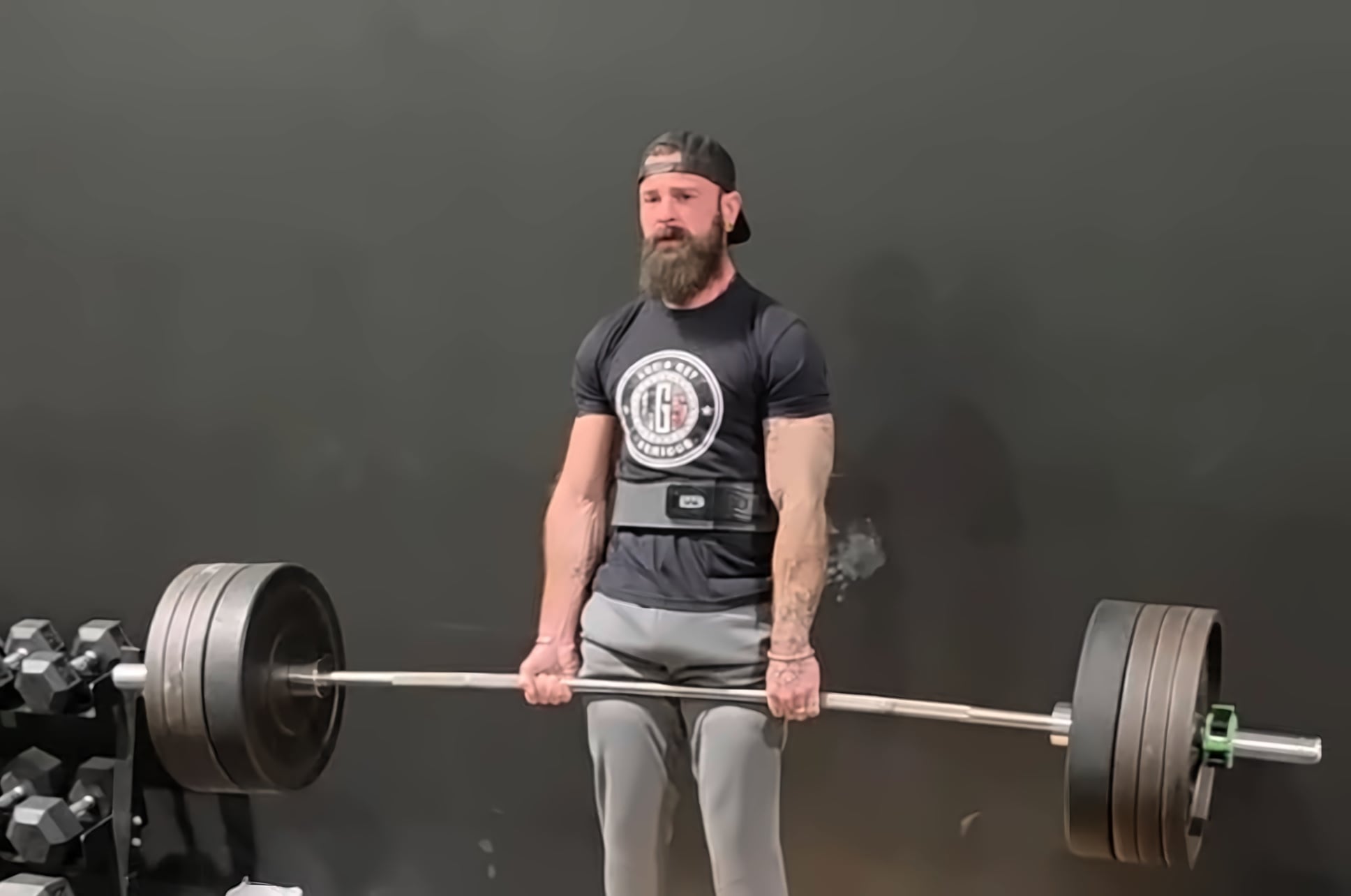
The second is a local athlete many parents remember from youth football. He arrived in high school already strong, with a heavy deadlift and a good squat, but he could not jump high or run fast. He trained with Chris consistently from age 15 into college football, and today he holds the records at Altitude for the highest deadlift, the highest vertical, the fastest 40 and 10-yard dash, and the top squat, bench, and deadlift numbers in the facility. The strength was always there, Chris says. The speed and the jump were built.
Altitude matters because it treats a 12-year-old’s first assessment and a 70-year-old’s warm-up as the same long project: measured, coached, and dosed so the person is still training, and still improving, years from now.
What Altitude Sport Performance Offers
Based on the interview and the official website, Altitude Sport Performance serves youth, high school, collegiate, and the occasional semi-professional or professional athletes, along with adults of all ages, through evaluations, semi-private training, private sessions, and team training.
Who Altitude Sport Performance May Be a Good Fit For
Altitude is built for people who will commit over time. There are no drop-ins and no open gym, and every program is written for the person following it.
Athletes from about age eight or nine who want to get a little better, become more confident and more durable, and enjoy their sport.
High school and college athletes in sports from football and basketball to surfing, skiing, equestrian, hockey, and figure skating who want measurable progress, retested every three to four months.
Adults from their late teens into their 70s and 80s who want lifelong strength, proper movement, and durability rather than a 30-day challenge.
“We’ve had a great experience so far with Altitude Sport Performance. After several injuries, I enrolled my son to help build strength and prevent future injuries. He was hesitant at first, but staff immediately made him feel comfortable and engaged. The trainer took time to review his previous injuries and took a tailored approach to his needs. The enrollment process was simple, and the team has been friendly and supportive from day one. Highly recommend for any young athlete looking to safely build strength and confidence.”
The Marine Who Did Not Believe It Would Work
One client Chris keeps coming back to is a former Marine who arrived with severe back pain and neck issues that brought on headaches. He was afraid to deadlift, and he wanted to add size, in part because he worked around bigger men and had sons of his own. The early months were spent finding ways to train that did not overload his back, while still dosing the work, because, as Chris says, doing nothing would not fix it.
Chris recalls a recent conversation in which the client said his back feels phenomenal, the neck issues and headaches are gone, and he is deadlifting again, carefully, without chasing a heavy single. The size came more slowly.
The client told Chris outright that he did not think the eating plan would work and that his body was simply built that way. Chris, who weighed 135 pounds in high school and now weighs 235, asked him to trust a process he had lived himself. The client is now up 18 to 19 pounds and, by his own account, wants to go further.
Chris is clear that none of it was dramatic. The client showed up consistently, followed a reasonable program, and answered a simple question whenever Chris asked it: What did you eat today? That question, he says, forces people to think about their choices consciously rather than follow a piece of paper. His larger point is blunt: supplements, prescriptions, and shortcuts are tools at best, and none of them replace sleep, water, whole foods, and training done properly.
A Small Town With Real Athletic Talent
Sonora is the kind of place where everybody knows everybody and every kid eventually plays against every other kid, from elementary school through high school. Chris sees plenty of athletic talent in the county. What he tries to teach families is that setting themselves apart takes more than being a big fish in a little pond. It takes proper work, done consistently, week after week and year after year, rather than practicing hard once the season arrives and stopping when it ends.
The families who understand that, he says, are the heart of Altitude’s community. They see training as an investment in their child’s future rather than an expense that competes with travel sports. Chris points out that every professional athlete has a strength coach, a strength program, and a nutritionist, and he wants young athletes to learn early what the best already know. A 12-year-old who trains at Altitude, he says, will know far more about technique, nutrition, recovery, and mindset by graduation than he ever did, and will be able to take care of himself when he moves away for college.
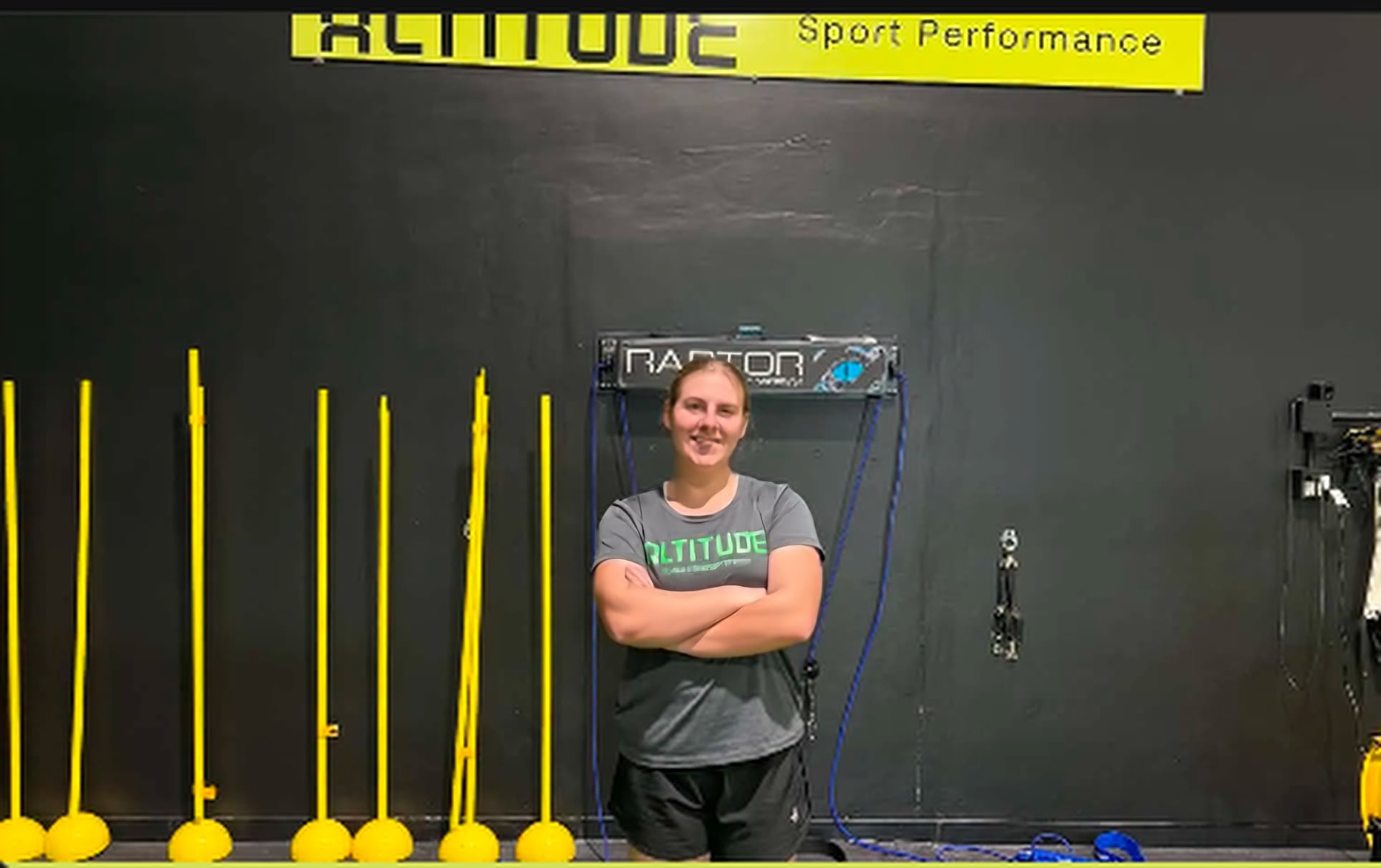
That community now includes a coaching staff. The official website lists Chris Clements, a NASM-certified personal trainer and wildland firefighter; Kendra Matyshock, a certified sport performance coach who trained at Altitude for nearly four years; and Kenny Scott, a Sonora native who trained at Altitude for three years, played college football at Pacific University, and returned as a certified sport performance coach. Chris requires every trainer to hold a certification, and he keeps studying himself. As he puts it, “Even if I’ve been training for 15 years, I don’t know everything and I never will.”
Why Strength Is a Family Matter
Chris has a personal reason for believing that strength is about more than appearance. He remembers visiting two grandparents in San Francisco as a child. They were loving people, he says, but they were severely overweight and rarely left their recliners. They never got on the floor to play, never went on walks, and never came to a game. His own parents are the opposite: active, healthy, and his son’s favorite people in the world because they play tag, visit the zoo, and work in the yard with him. His mother, who is small, can still lift her large grandson because she trains.
That contrast shapes how he talks to adults. Working out, he says, is not just for the way we look; it is for picking up, pushing, twisting, lifting, and bending every day, and for being the grandparent who can get on the floor. He frames it as choosing your hard. Training, eating well, and staying consistent is hard now. Doctor visits, prescriptions, surgeries, and rehab are the hard that arrives later. A phone, a car, or a house can be replaced, he tells clients, but nobody can buy a new body.
Why This Matters Locally
For families searching for sport performance training in Sonora, youth athlete training in Tuolumne County, or strength and conditioning for adults in the Sonora area, Altitude offers something that did not exist here when Chris was growing up: a facility built on the same assessment-based, science-informed methods he learned in Orange County, run by someone from the community.
The local relevance goes beyond convenience. In a county with one small junior college and a couple of small high schools, athletes have fewer places to learn how training, nutrition, recovery, and mindset fit together. Chris’s stated aim is to slowly bring the county’s standards in line with larger, more competitive cities, one athlete and one family at a time, and to send kids off to college knowing how to take care of themselves.
Questions Readers Ask
Who Is Chris Forster?
Chris Forster is the founder and owner of Altitude Sport Performance in Sonora, California. Born and raised in Sonora, he spent six to seven years in Orange County, including an internship at Redline Athletics, before returning home to train athletes and adults in Tuolumne County.
What Does This Altitude Sport Performance Sonora Review Highlight?
The Spotlight follows Chris’s path from random workouts and a GNC job to Orange County and back, the blueprint idea behind Altitude, what a first visit involves, the coaches and athletes who make up the community, the facility’s place in Sonora, and how to get started.
What Is Altitude Sport Performance Known For?
Altitude is known for sport performance training for athletes from youth through collegiate and professional levels, and for adult strength and conditioning, delivered in small semi-private groups with written programming, periodic athletic testing, and no open-gym access.
What Ages Does Altitude Train?
Athletes typically start around eight or nine years old and continue through middle school, high school, college, and occasionally semi-professional and professional levels. Adults train from their late teens into their 70s and 80s.
Does Altitude Offer Open Gym or Drop-In Sessions?
No. Every new athlete or client begins with an assessment or trial session, and all training is coached. Chris says the facility’s specialized equipment and the need to understand each person’s history make drop-ins impractical and unsafe.
How Does Altitude Measure Progress?
Athletes are tested at the start on metrics such as vertical jump, acceleration, and change of direction, then retested roughly every three to four months. Adults progress through controlled strength work, with programs adjusted based on how each session feels.
Can Adults Train at Altitude Sport Performance?
Yes. Adults train in the same semi-private format on individualized programs, and private one-on-one sessions are available. Chris describes the adult goal as lifelong strength, proper movement, and durability rather than short-term challenges.
What Is the Best First Step for a New Client?
Chris recommends calling, texting, or emailing, browsing the website for information, and, if you are local, coming to see the facility in person. The next step is scheduling an assessment on a day and time that works.
Key Takeaways
Altitude Sport Performance is a 5,000-square-foot sport performance and strength facility in Sonora, California, founded and owned by Chris Forster.
Chris brought six to seven years of Orange County sport performance experience, including an internship at Redline Athletics, home to Tuolumne County.
Every athlete and client starts with an assessment, trains in coached semi-private groups on a written program, and is retested every three to four months.
His coaching principle is intent: every rep is a microdose that makes a person better, leaves them the same, or makes them worse, and training must be sustainable for life.
Conclusion
Altitude Sport Performance exists because Chris Forster learned, the hard way and far from home, how athletes are properly built, and then decided his hometown deserved the same. The facility he runs today reflects that journey: assessment before training, coaching before equipment, intent before exhaustion, and progress measured in months and years.
What Chris wants people to take away is that the future version of themselves is decided by the choices they make now. For athletes and adults in Sonora who want more than a hard workout, that may be the real value of Altitude: a blueprint, a coach, and a reason to keep showing up.
Chris Forster
Chris’s background spans varsity soccer and swimming in Sonora, a GNC job, an internship at Redline Athletics, and six to seven years in Orange County sport performance, experience he now brings home to Tuolumne County.
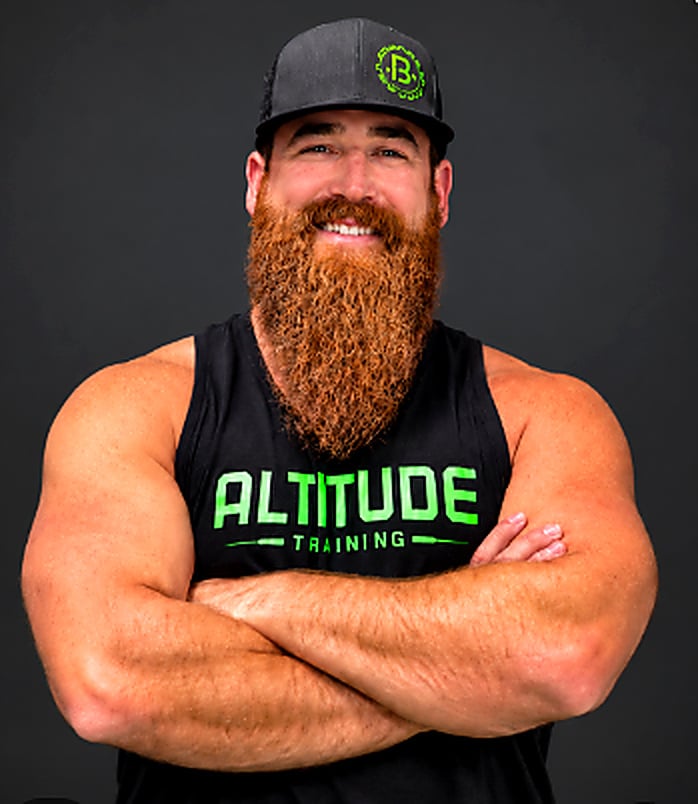
Chris Forster is the founder and owner of Altitude Sport Performance in Sonora, California. Born and raised in Sonora, where the official website notes he competed in varsity soccer and swimming, he found his way into fitness through a job at GNC and then through an internship at Redline Athletics in Orange County. He spent six to seven years in Southern California working under experienced coaches, earning certifications, attending workshops, and training high-level athletes before returning to Tuolumne County to build a facility around what he had learned. In February, Altitude moved into a new, larger 5,000-square-foot location with a growing coaching staff. A father of two, Chris still writes the programs and coaches on the floor, and he continues to study the field rather than settle for what he already knows.
Chris’s philosophy is that anyone can get a hard workout anywhere, so Altitude has to offer something more: practical, tangible improvement over time. Every rep is a microdose that either makes a person better, leaves them the same, or makes them worse, so intent matters in everything from a warm-up to a heavy lift. Training and eating habits must be sustainable for years, not 30 days, and a good trainer should aim to make clients self-sufficient rather than dependent.
His values include honesty about what a trainer can and cannot provide, certification for every coach on staff, continuous learning, and respect for the long-term development of each person. Altitude specializes in sport performance training for athletes from about age eight through collegiate and professional levels, athletic evaluation and periodic retesting, semi-private strength and conditioning for adults into their 80s, private training, and team training for local programs.
About This Spotlight
Fitness Living Magazine™ selected this Spotlight for Chris Forster’s decision to bring big-city sport performance training home to a small town, a standard that starts every athlete and adult with an assessment and a coach, a facility that serves athletes from about age eight and adults into their 80s, and a staff that includes athletes who trained there first.
This profile belongs to Fitness Living Magazine™’s Local Fitness Leadership Series, which documents independent studio owners and coaches through recorded interviews, reviewed drafts, and material supplied by the businesses themselves.
This profile was prepared from a first-person editorial interview with Chris Forster, a customer review supplied by Joelle Kewish, and the official Altitude Sport Performance website, including its staff, services, and contact pages. Program descriptions, training philosophy, athlete and client accounts, coaching staff references, and customer-review excerpts are limited to information provided in those sources. Client accounts reflect experiences described by the owner and are not medical claims.
This feature is editorial content and is not medical advice. Program descriptions, athlete accounts, and the parent review reflect Chris Forster’s account, a supplied review, and current public business information; they do not establish guaranteed results. Individual experiences vary, and readers should consult appropriate healthcare professionals before beginning or changing an exercise program, especially if they are managing an injury or a medical condition.