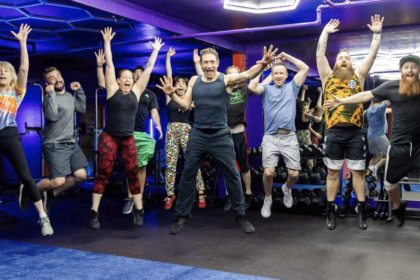
Recognized by Fitness Living Magazine™ For hybrid powerlifting coaching, progress measured on the bar, and a 24/7 gym where members find a place to belong.
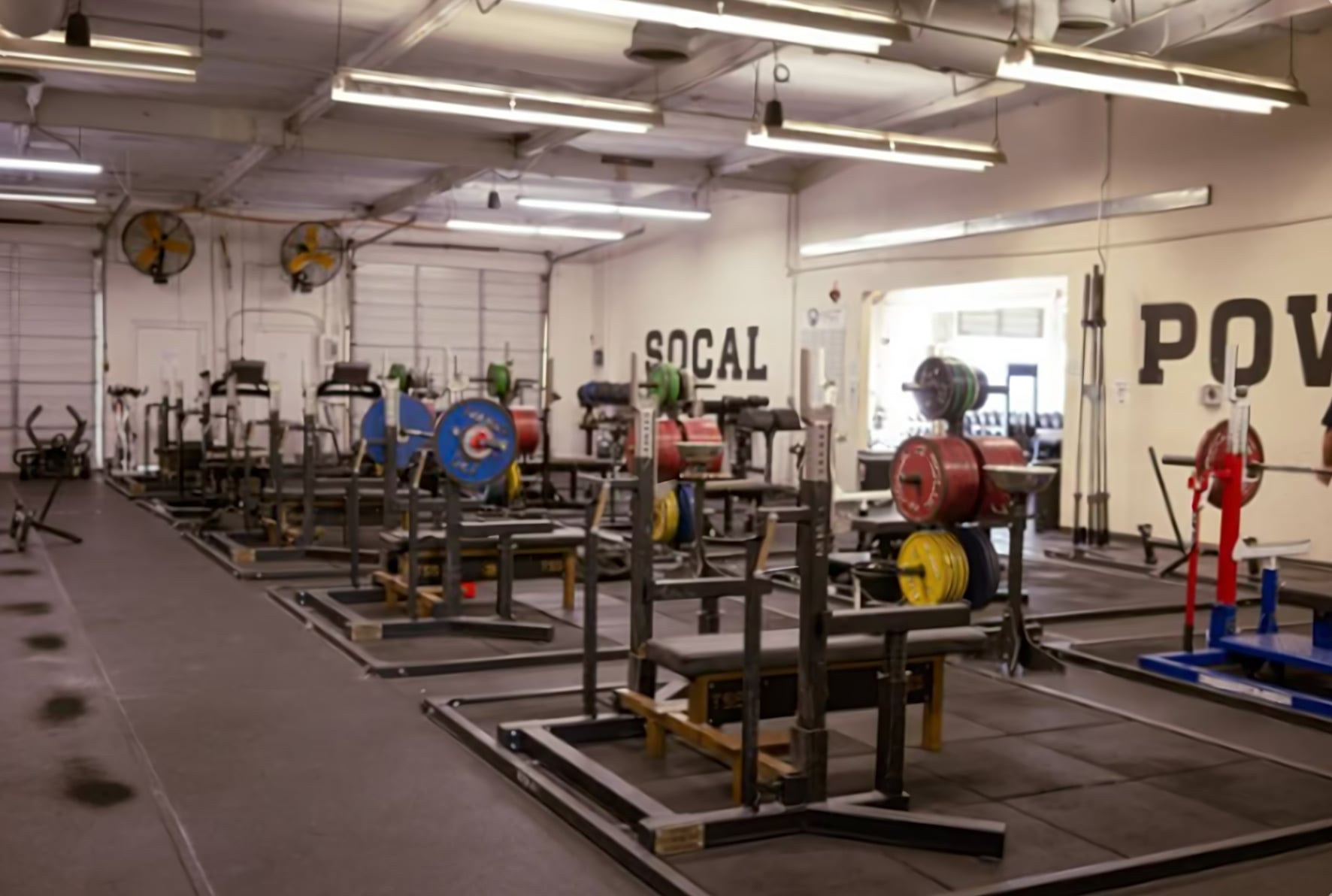
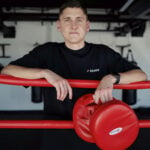
Alex owns SoCal Powerlifting, a powerlifting gym and coaching facility in Irvine, California, that is open 24 hours a day and now has well over 300 members. Its coaching is built around the squat, bench press, and deadlift. But what he set out to create, he says, is a third space: a place beyond home and work where people can belong.
“It’s the community giving people something to belong to, more than anything else.”Alex Gaynor / Owner, SoCal Powerlifting
The first visit is unhurried. Newcomers reach out through the website, schedule a time to see the facility, and tour the gym with the team. Before anyone talks about pricing, the conversation turns to their goals and their experience. Alex spent years in personal training and saw what aggressive upselling does to clients, so he would rather sell people what they actually need and keep them for five years or more.
Most new lifters then start with three, five, or seven intro sessions with a coach before joining on a monthly membership. The website calls them accelerator sessions, where coaches teach bracing, address mobility concerns, and refine movement patterns. The sessions also give a newcomer a chance to test the coach, and the coach a chance to prove they know their stuff.
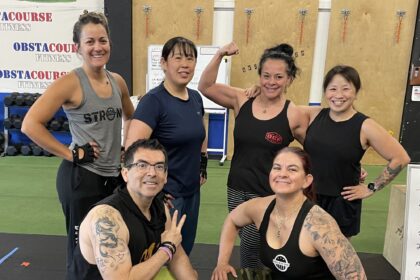
Then there is the room itself. Members range from people who have never touched a barbell to several national-level competitors, and Alex says those competitors are often the loudest voices when someone hits a first one-plate squat, because they remember what that milestone meant.
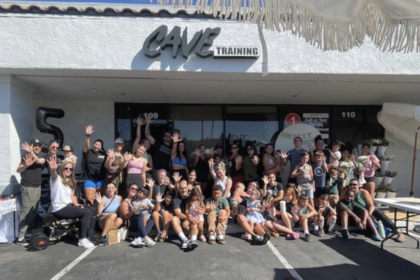
And the room is always open. Some members finish a workout and stay for hours, Alex says, because their friends are there. They show up for each other on meet days, too, filling the gym to cheer for their teammates.
Alex Gaynor coaches by the numbers but programs for real life. He tracks weights and effort, changes one variable at a time, and fits each plan around jobs, families, and recovery, because the best program is the one a lifter will actually follow.
How a Kid Who Was Picked Last Built a Powerlifting Gym Where Progress Is Measured and Every Lifter Belongs
For anyone searching for a powerlifting gym in Irvine, SoCal Powerlifting offers coached strength training built around the three lifts tested in competition: the squat, bench press, and deadlift. According to its website, the gym has served the powerlifting community since 2017 and describes itself as Orange County’s home for USAPL meets.
SoCal Powerlifting is a powerlifting gym and coaching facility on Sky Park Circle in Irvine, California, owned and operated by Alex Gaynor.
It offers in-person and online powerlifting coaching, open gym memberships, and 24/7 access, with individualized programs delivered through an app, video feedback, and recurring sessions with a coach. New lifters can book a tour or get started through the gym’s website.
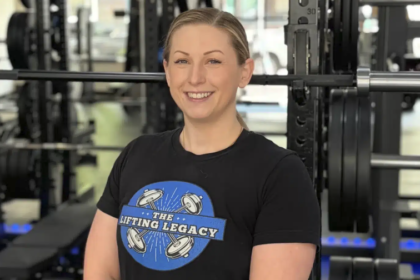
Alex calls everyone who trains at the gym a member and the people each coach works with that coach’s clients. Members have ranged in age from 14 to 86. The website lists a coaching team that includes Tim Mencias, the director of coaching performance, along with John Talaoc, Kyle Britt, and Megan Stockler.
The Skinny Kid Who Was Picked Last
Alex grew up loving sports without being especially good at them. Entering high school, he was already about as tall as he is now but roughly 80 pounds lighter, and he was often picked last. What frustrated him most was working as hard as the other kids, or harder, without the coordination to make it count.
The gym was different. If he could not bench a weight one week, he might be able to the next. That simple relationship, where the input equals the output, gave him confidence, and he started lifting in middle school.
Inside SoCal Powerlifting’s Hybrid Coaching and Third-Space Community
This profile looks at how Alex Gaynor combines measured progressive overload, flexible hybrid coaching, and a deliberate focus on belonging to help lifters in Irvine grow stronger and stay.
App-based programs, coach video feedback, and in-person sessions, more hands-on than online coaching and more flexible than daily training.
Lifters from 14 to 86, from people who have never held a barbell to competitors at the national level.
A 24/7 gym, a coaching method built on tracked progress, and a community that shows up for one another.
Earning His Life Back
Near the end of middle school, Alex faced a serious health scare. He spent weeks in the hospital, and at one point, he says, he was given two months to live. He recovered, but only after months in bed. He lost 20 pounds he did not have to lose, dealt with inflammation from being bedridden, and had to relearn how to walk.
Lifting became the way back. Alex describes it as earning back his freedom and his life, and says that was when he got hooked. The habits he built during that recovery stayed with him, and he has not had health problems like it since. Once he was back to normal, he kept going. Progress was no longer about returning to baseline but about moving beyond it.
From Changing What You Dislike to Getting Stronger
Alex believes many people come to fitness because they are unhappy with how they look. Powerlifting, the sport of lifting as much weight as possible on the squat, bench press, and deadlift, changes the question. It is performance-based, so the goal shifts from fixing what someone dislikes to getting stronger.
That flips a negative into a positive, he says. Members who arrived wanting to lose the next five pounds start marveling at what their bodies can do, and they get hooked on the progress itself.
A Corner of the Gym Becomes a Whole Room
Alex grew up training in commercial gyms, where he and two or three other powerlifters held down a corner of the floor. During his hardest stretches, whether health problems or family troubles, he told himself that if he could just make it to that corner and his friends, he would be okay.
Today he provides that feeling for well over 300 members. Members who met at the gym have gotten engaged, and Alex has been to members’ weddings, birthday parties, and baby showers. He sees the gym as a third space, after home and work, at a time when many public gathering places are disappearing or becoming harder to afford.
He first heard the term while working at Starbucks in college. Over time, he says, he watched the company drift toward efficiency and lose some of that personal touch, and he has since seen it work to bring it back. For Alex, the lesson was clear: if a company that large felt the cost of losing its third space, a small gym cannot afford to forget it.
A Clear Plan and a Coach Who Keeps Watching
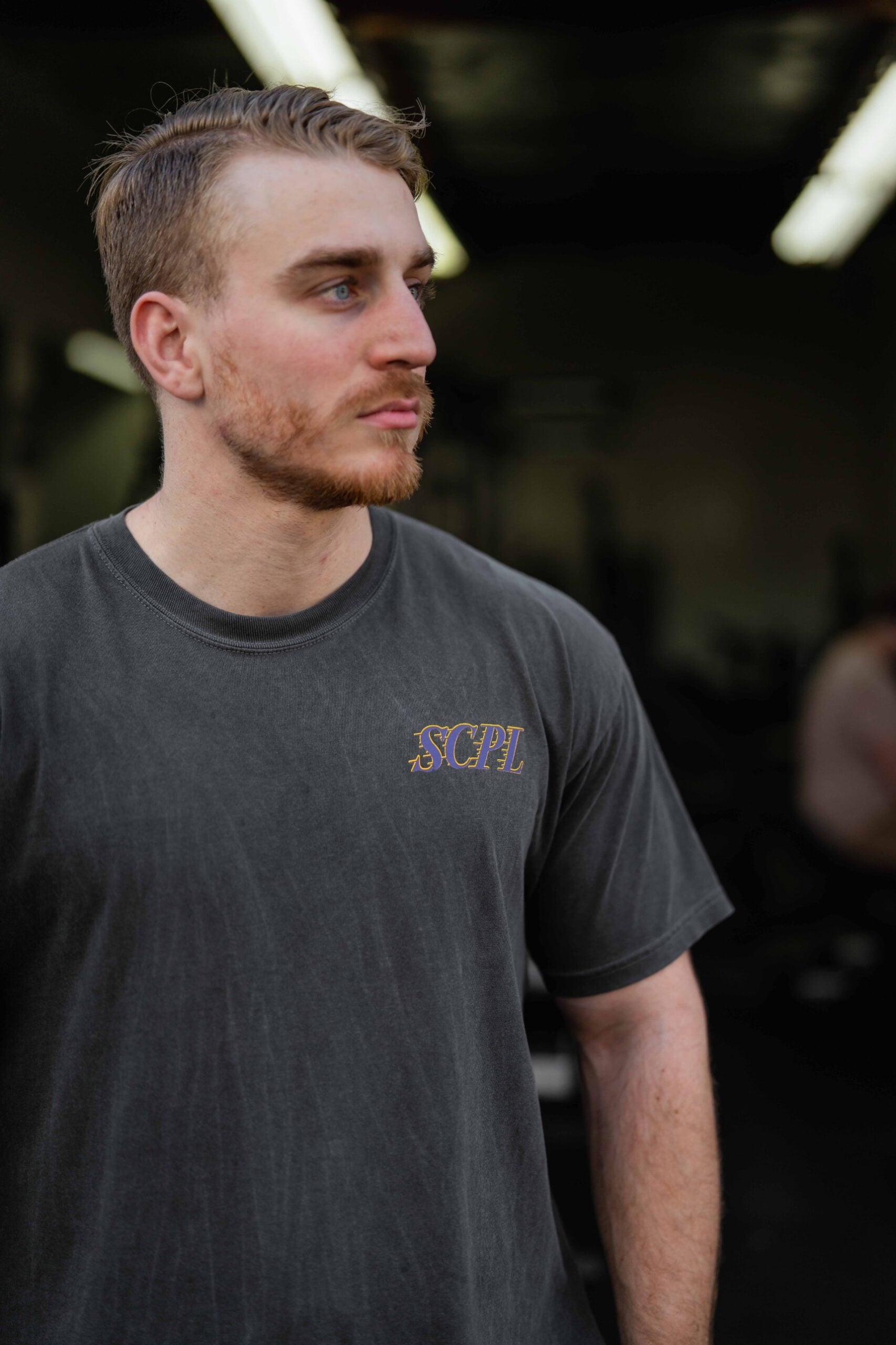
A member at SoCal Powerlifting should expect a clear plan and a coach who keeps watching. Programs live in an app, sets can be filmed for feedback, and in-person sessions are scheduled around each lifter’s needs. The gym is open around the clock, and many members say the people are the reason they stay.
Once a program begins, it lives in an app on the member’s phone. Lifters can upload videos of their sets and, Alex says, receive feedback from their coach within 24 hours on weekdays. They also meet with that coach in person a couple of times a month or as often as they need, so help never stops at the end of a session.
A Hybrid Answer to an Old Problem
Alex came to coaching from personal training at a corporate gym, where clients paid a premium for every session. He was not allowed to send them programs or correspond between sessions, because that counted as working off the clock. Few clients could afford a trainer five days a week, so on the days in between, most had no real plan and no weekly progression.
SoCal Powerlifting was built to fix that. According to its website, the gym saw only two options in the industry: daily personal training, which is costly and hard to schedule, or online coaching, which lacks community and in-person contact. Its answer is a hybrid. Most clients train in person with their full program in an app, upload videos for feedback, and meet their coach a couple of times a month. A smaller group trains through online coaching.
The Best Program Is the One You Will Follow
When a new client starts, Alex first asks what kind of lifter he is working with. Someone with years of training history can handle five or six demanding sessions a week. Someone newer may need to buy in first. Based on experience, strength, age, and recovery, he decides how often each person should squat, bench, and deadlift, then fits those sessions into the days they can actually train.
A client who can train three days a week gets a three-day plan, with accessories filling the gaps. A client who can train five or six days gets more room to separate squats and deadlifts and to add accessory work. Most people, Alex notes, have jobs and kids. A brilliant program that does not fit their lives will not help them.
Progressive Overload, One Variable at a Time
The principle at the center of his coaching is progressive overload. In a sport about getting stronger, the weight has to keep going up. Over a training block, that might mean building intensity across several weeks, then deloading or starting the next block a little lighter before building again.
Alex sees two common traps. Some lifters do whatever feels good without tracking their weights, so they cannot be sure they are doing more than before. Others train by rating of perceived exertion, or RPE, and settle into a weight that simply feels about right. Put the data on a graph, he says, and some of them have been lifting nearly the same weight for six months to a year.
So he tracks everything, including accessory volume and intensity, and changes only one variable at a time, usually intensity or volume. Dropping reps while adding weight every week can work in a short peaking cycle, he explains, but over the long term it makes it impossible to know whether a lifter is actually getting stronger.
Live Programs and Smart Variations
Every program at SoCal Powerlifting is a live document. If an exercise causes pain, it changes right away. If a lifter simply dislikes an exercise, Alex usually asks them to finish the block, typically three to five weeks, so they can look back and see whether the lift went up or down.
Between blocks, he changes things often, using variations to force better technique. A lifter who loses tension at the bottom of a squat, for example, might get pause squats, which make it impossible to collapse and bounce out of the hole. When a new issue appears, the next block includes a variation built to fix it.
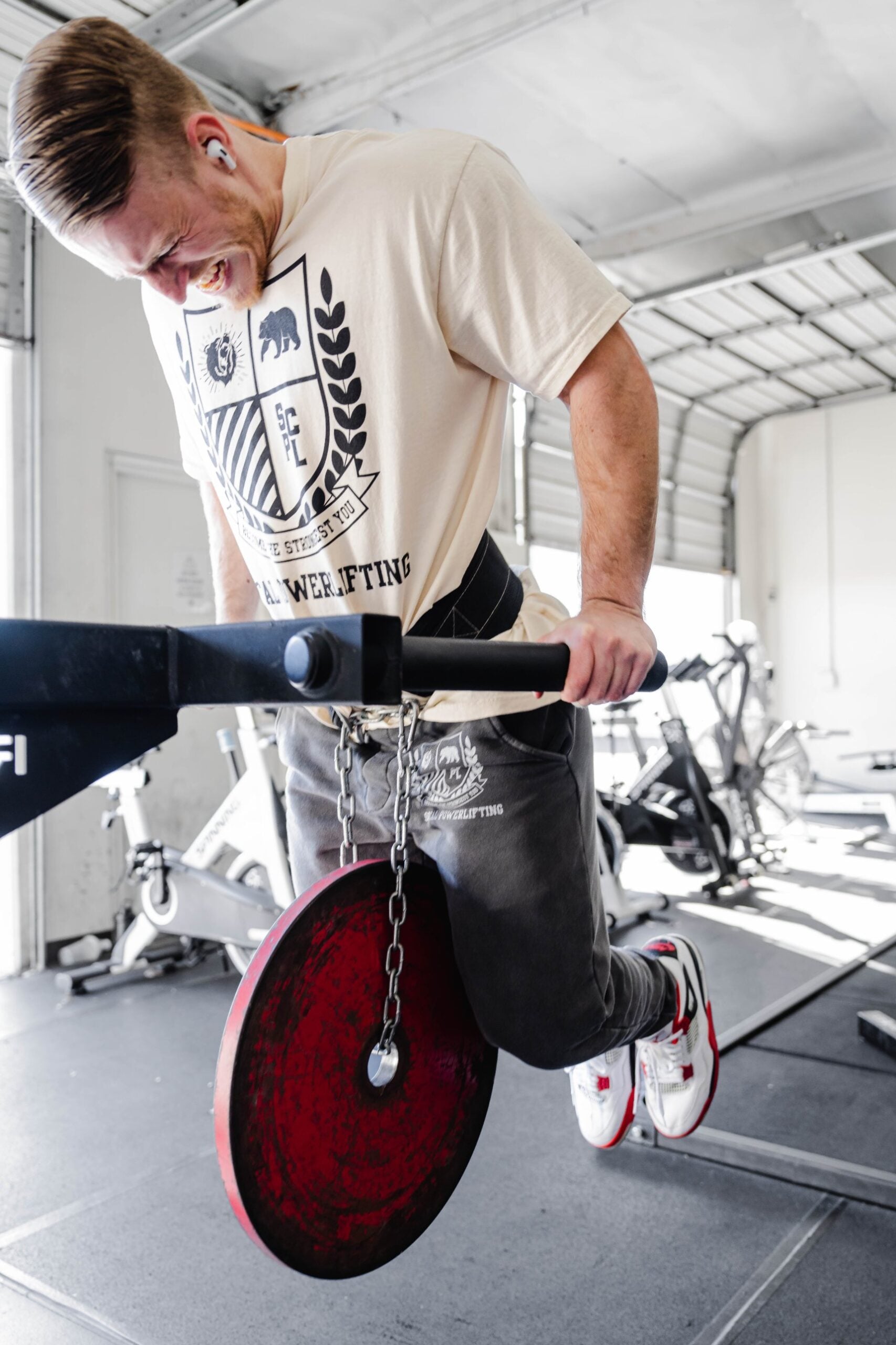
Results You Can Measure
Part of what drew Alex to powerlifting is how objective it is. In bodybuilding, he notes, results can depend on what a judge happens to prefer. In powerlifting, as he puts it, the weight on the bar is the weight on the bar. If a lifter is hitting heavier weights than at the last meet or the last max attempt, the coaching is working.
SoCal Powerlifting matters because it treats strength as something to be measured and belonging as something to be built, giving Irvine lifters both a plan they can follow and a place they want to return to.
What SoCal Powerlifting Offers
Based on the interview and the official website, SoCal Powerlifting serves lifters of all ages and experience levels through in-person and online powerlifting coaching, open gym access, and competition support in Irvine.
Who SoCal Powerlifting May Be a Good Fit For
Alex describes a membership that runs from first-time lifters to national-level competitors, and three groups stand out in how he talks about the gym.
People who have never touched a barbell, who can start with intro sessions that teach bracing, address mobility concerns, and refine movement patterns before a program begins.
Lifters training for meets, who can work with coaches on the squat, bench press, and deadlift in a gym the website describes as Orange County’s home for USAPL meets.
People with jobs and kids who need a program built around the days they can actually train, with video feedback from a coach between in-person sessions.
“I have had a great experience with SoCal Powerlifting! When I joined with them almost 6 months ago I was looking to increase my strength and correct my form. I have since benefited SO much from professional coaching. I only wish I would have sought it out sooner in my fitness journey! I have seen a consistent improvement in my strength and technique, and I don’t experience pain when lifting anymore.”
Ali, the Powerlifter
When Ali first joined about six years ago, Alex remembers him as one of the more challenging members. He did not have much gym background and questioned why things were done a certain way. Today he is one of the gym’s most essential members, the first to greet newcomers, shake their hands, and offer help, and Alex counts him as close to family.
Ali is successful by any measure. He works in venture capital and started his own business. But he told Alex that he had missed something since playing soccer at UC Irvine: being part of a team. His friends used to introduce him as Ali the banker. Now they introduce him as Ali the powerlifter. If a training partner misses a session, he texts to ask where they are, and he knows they would do the same for him.
His coaches noticed his numbers, too, and told him he could qualify for nationals at the masters level. He had never seen himself that way, but he committed and hit some impressive lifts. For Alex, hearing someone who seemed to have everything describe what that belonging meant was eye-opening.
Strong at Every Age
The gym’s youngest clients have been 14. One of its oldest, Ed, was 86 and still training five days a week with barbell lifts, Alex recalls, deadlifting 225 pounds. Watching that, and watching national-level lifters cheer a newcomer’s first big squat, is part of what Alex loves about the community.
A Father, a Son, and a Friendly Rivalry
One of Alex’s favorite coaching stories involves a father and son. The son got into powerlifting in college and started training with Alex first. Before long, he was teasing his dad about finally being stronger than him, and the father, Brad, came in to train too.
Watching them push each other took Alex back to his own beginnings. He learned to bench press from his father on an old cement weight set in the garage when he was about 12. Today the son has moved away and still works with Alex through online coaching, while Brad trains in Irvine, and the two text back and forth about who is lifting more.
Strength in His 50s
Brad had always worked out, mostly with bodybuilding-style splits, but he told Alex he never saw much from it. Focusing on strength changed that. Now, when friends need help with yard work or something heavy, he is the one they call, and he can handle it every time. His wife has noticed his arms. While some of his friends are starting to hunch, Brad says he feels better than ever.
He also has a favorite workday ritual. Brad, a teacher, sets his water bottle down at staff meetings with the SoCal Powerlifting sticker facing up. When colleagues tell him he is too old to powerlift or that he will get hurt, he shares his numbers: a deadlift in the 400s, a squat in the 300s, and a bench press in the high 200s. The room goes quiet.
The bigger moments matter more. When his mother moved, Brad, still in his 50s, carried her belongings, including a couch down the stairs. Being strong enough to help take care of his family, Alex says, is what makes stories like his special.
Members Who Keep It Going
Alex is quick to say the gym would not exist without its members. Small business is hard, he says. Before the gym hosts a meet, the floor has to be cleared and set up with chairs, tables, and a competition platform, and gym equipment is heavy. Members volunteer to help without being asked twice.
On meet day, the gym fills with members who came only to cheer for their friends. Alex tries to thank volunteers with a shirt or an energy drink, but what he has learned is simpler: when people find a supportive place to belong, they give back to keep it going.
The Coaches and Members Behind Every Lift
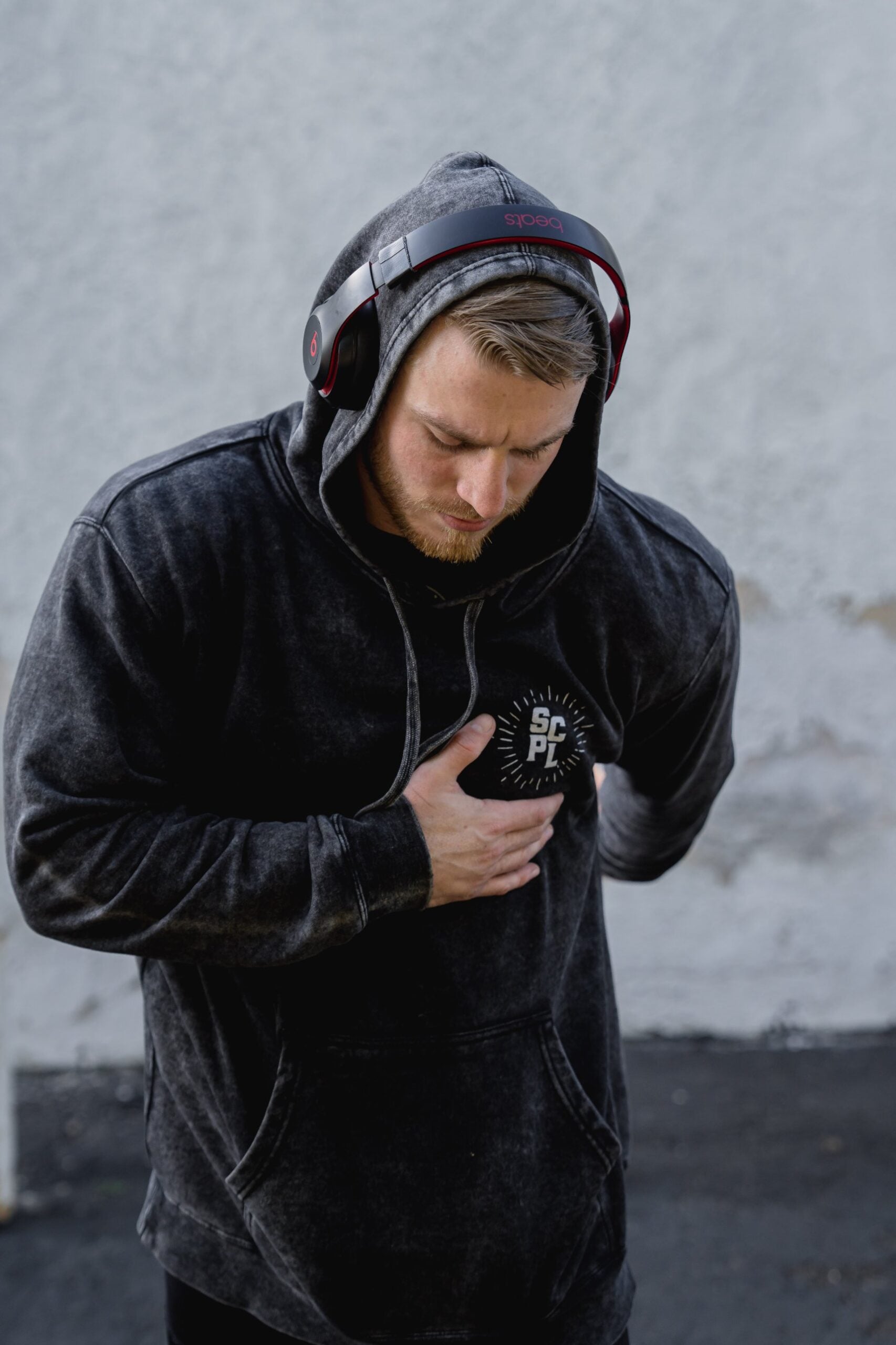
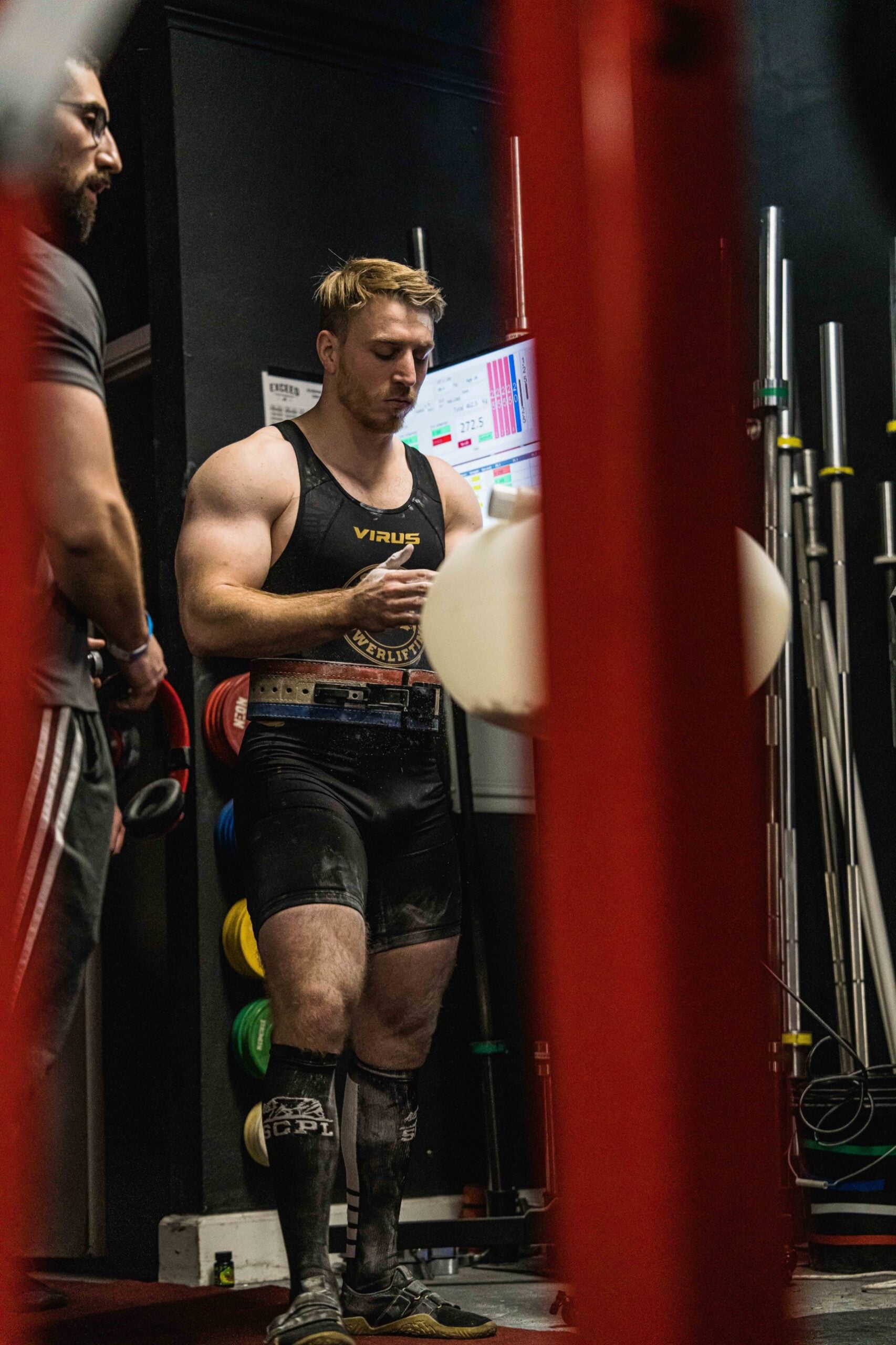
Alex owns the gym, but he is quick to credit the people around him. The website lists a coaching team led by Tim Mencias, the director of coaching performance, and members who volunteer, cheer, and welcome newcomers help keep the community going.
Why This Matters Locally
For lifters looking for a powerlifting gym in Irvine, SoCal Powerlifting offers coached programming, competition-focused training, and around-the-clock access in one place. The website lists a full range of equipment for the sport, from combo racks and deadlift platforms to specialty bars, and the gym regularly hosts meets for Orange County lifters.
Its value also reaches beyond training. In a time when Alex sees third spaces disappearing, a gym where members linger on the couch, celebrate one another’s milestones, and show up for each other’s weddings gives people something many are missing.
Questions Readers Ask
Who Is Alex Gaynor?
Alex Gaynor is the owner of SoCal Powerlifting, a powerlifting gym and coaching facility in Irvine, California. He started lifting in middle school, rebuilt his strength after a serious illness, and worked as a personal trainer at a corporate gym before building the hybrid coaching model the gym uses today.
What Does This SoCal Powerlifting Irvine Review Highlight?
The Spotlight follows Alex’s path from a skinny kid who was often picked last to the owner of a 24/7 powerlifting gym, the hybrid coaching model behind its programs, his approach to progressive overload, and the members who make the gym a third space.
Who Owns SoCal Powerlifting?
Alex Gaynor owns and operates SoCal Powerlifting, a powerlifting gym and coaching facility in Irvine, California.
Where Is SoCal Powerlifting Located?
The website lists the gym at 17855 Sky Park Cir A in Irvine, California.
Do I Need Powerlifting Experience to Join?
No. Members range from people who have never touched a barbell to national-level competitors, and new lifters usually begin with intro sessions that teach technique before starting a program.
How Does the Hybrid Coaching Work?
Each client follows an individualized program in an app, uploads videos for feedback from their coach, and meets with that coach in person regularly, typically a couple of times a month or as needed.
Is SoCal Powerlifting Open 24/7?
Yes. Alex says the gym is open 24/7, and the website lists round-the-clock access for members.
What Is the Best First Step for a New Client?
Visit the SoCal Powerlifting website and use the Get Started or Book a Tour button to schedule a visit.
Key Takeaways
SoCal Powerlifting is a 24/7 powerlifting gym and coaching facility in Irvine, owned and operated by Alex Gaynor.
Its hybrid model combines app-based programs, video feedback from coaches, and recurring in-person sessions.
Alex’s coaching centers on tracked progressive overload, changing one variable at a time, and programs that fit each lifter’s life.
The gym’s well over 300 members range from first-time lifters to national-level competitors, and community is at the core of everything it does.
Conclusion
As a teenager, Alex Gaynor only had to make it to one corner of a commercial gym, where two or three fellow powerlifters were waiting. Today he has built a whole gym around that feeling, a place where progress is tracked on paper and proven on the bar, and where the people are as much the reason to come as the training.
For lifters in Irvine, that may be the real strength of SoCal Powerlifting. The input still equals the output, but no one has to put in the work alone.
Alex Gaynor
Alex Gaynor’s background spans a start in the weight room as a skinny kid who was often picked last, a recovery that taught him to earn his strength back, and years as a personal trainer before he built SoCal Powerlifting.
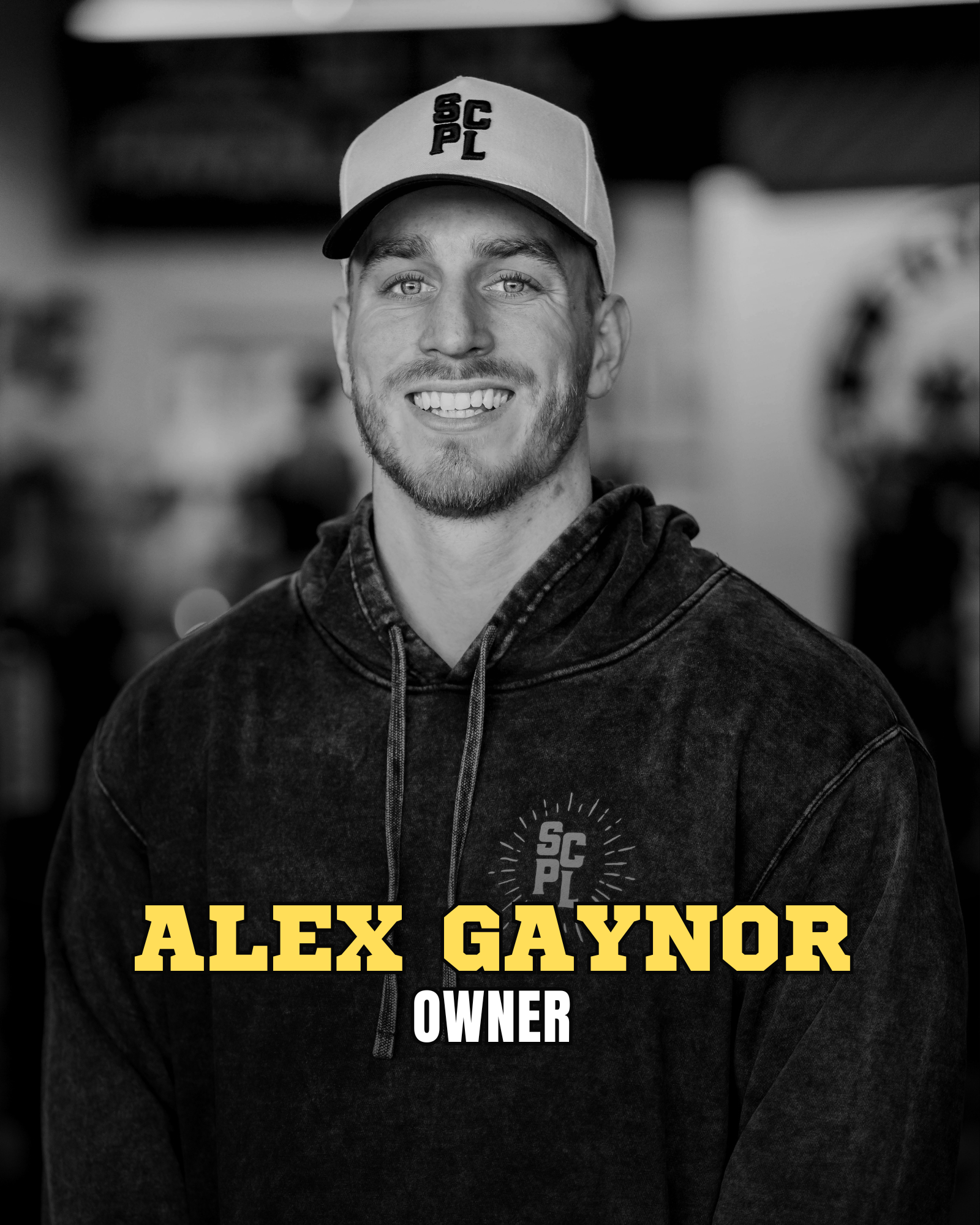
Alex Gaynor is the owner of SoCal Powerlifting, a powerlifting gym and coaching facility in Irvine, California, which according to its website has served the powerlifting community since 2017. He started lifting in middle school as a skinny kid who was often picked last in sports, and the gym became his path back after a serious illness left him bedridden and relearning how to walk. Before building his own gym, he worked as a personal trainer at a corporate gym, an experience that shaped the hybrid coaching model SoCal Powerlifting uses today. The gym now has well over 300 members and is open 24/7.
Alex wants SoCal Powerlifting to be a third space where people belong, the kind of community he relied on as a young lifter. His coaching philosophy rests on progressive overload, honest tracking, and the belief that the best program is the one a lifter will actually stick to.
He values community, honesty, objective progress, and long-term relationships over quick sales. He specializes in powerlifting coaching for the squat, bench press, and deadlift, progressive overload programming, technique correction through targeted variations, and meet preparation.
About This Spotlight
Fitness Living Magazine™ selected this Spotlight for Alex Gaynor’s path from a kid who was often picked last to the owner of a 24/7 Irvine powerlifting gym, a hybrid coaching model built to keep progress going between sessions, a method grounded in tracked progressive overload, and a community he describes as a third space.
This profile belongs to Fitness Living Magazine™’s Local Fitness Leadership Series, which documents independent studio owners and coaches through recorded interviews, reviewed drafts, and material supplied by the businesses themselves.
This profile was prepared from a first-person editorial interview with Alex Gaynor, a customer review supplied by Hannah D., and the official SoCal Powerlifting website, including its Our Story, Our Team, and coaching pages. Program descriptions, training approach, member accounts, and the review are limited to information provided in those sources. Member accounts reflect experiences described by the owner and are not medical claims.
This feature is editorial content and is not medical advice. Training descriptions, member accounts, and the supplied review reflect Alex Gaynor’s account, members’ experiences, and current public business information; they do not establish guaranteed results. Individual experiences vary, and readers should consult appropriate healthcare professionals before beginning or changing an exercise program, especially if they are managing pain, injury, or a medical condition.