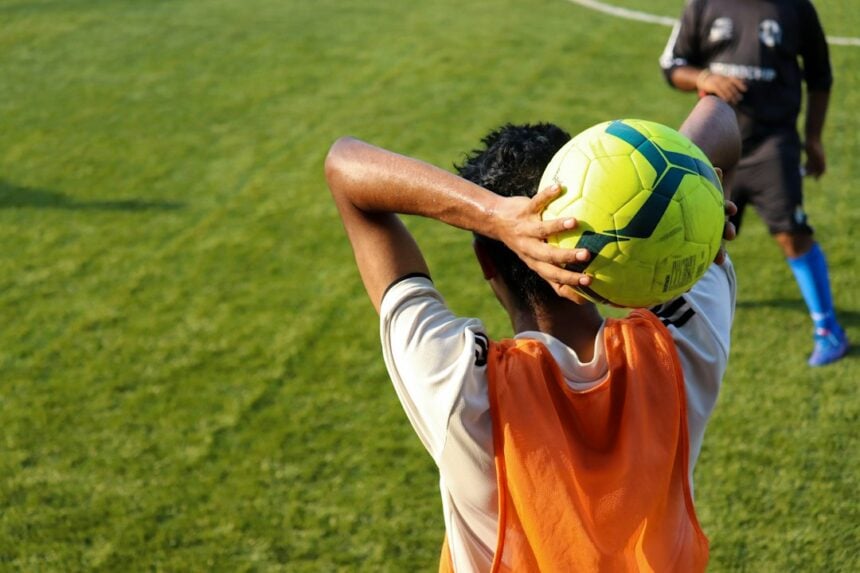
A narrative review of hot and cold weather in team sports, highlighted in a publisher release on November 3, pulls together how far temperature moves team sport performance. One study it cites found teams that prepared in comfortable conditions covered about 290 meters more per player.
Team sport performance changes measurably with the weather, according to a narrative review published in The Open Sports Sciences Journal on October 13, 2026 and promoted in a Bentham Science release on November 3, 2026.
The review was led from the University of Urbino Carlo Bo in Italy, with co-authors at Sapienza University of Rome, eCampus University, the University of L’Aquila and Maria Cecilia Hospital. Vanessa Rocco is the corresponding author, and Fabrizio Perroni, Annachiara Pingitore, Stefano Amatori and Elena Cavarretta are among the co-authors.
The authors searched PubMed, Web of Science and ResearchGate for English-language original studies, systematic reviews, meta-analyses and position statements. Their stated reason for doing so is that most thermal-stress research uses continuous endurance exercise, which does not map onto the stop-start pattern of team sport performance.
The timing is not accidental. The 2022 World Cup in Qatar was moved to November and December because of summer heat, and the 2026 tournament is spread across Canada, Mexico and the United States. The review also notes NFL findings that game-day temperature predicts outcomes when teams from different climates meet.
At a Glance
- Published October 13, 2026 in The Open Sports Sciences Journal, Volume 19, and publicized in a November 3, 2026 release.
- Narrative review of team sport performance in thermal stress, drawing on PubMed, Web of Science and ResearchGate; not a trial and not a meta-analysis.
- In soccer, air temperature above 22 C with relative humidity above 60 percent, or above 28 C in drier air, was linked to less distance covered and reduced sprinting.
- Teams that prepared in thermally comfortable environments covered about 290 meters more per player, roughly 3 km across a team.
- Manual dexterity may decline below about 15 C tissue temperature, with sensory loss reported below about 7.8 C.
- Heat acclimation: circulatory gains in 4 to 7 days, sweating adaptations in 10 to 14 days, with 60 to 90 minutes of daily exposure over 1 to 2 weeks.
- Main caveat: the team sport performance evidence is heterogeneous, heat stress is measured inconsistently, and most of it comes from laboratory endurance work.
Where Heat Starts Cutting Into Team Sport Performance
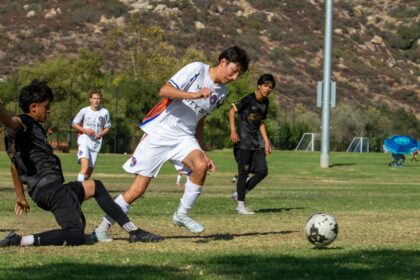
The review puts numbers on thresholds rather than leaving heat as a vague risk to team sport performance. In soccer, air temperature above 22 C combined with relative humidity above 60 percent, or above 28 C at lower humidity, was associated with reduced distance covered and poorer sprint output. Humidity above roughly 60 percent on its own was linked to less high-speed running.
One cited analysis split conditions into a thermally neutral band of 9 to 26 C and heat stress above 26 C. In baseball, extremely hot conditions were defined as above 34 C. For context, the review records Qatar 2022 ambient temperatures potentially above 45 C, with perceived temperatures possibly above 50 C, well past any band in which team sport performance holds up.
The 290-Meter Preparation Effect
The most concrete team sport performance figure in the review comes from work on the 2018 World Cup, and it concerns preparation rather than match-day weather. Teams that had prepared in thermally comfortable environments covered about 290 meters more per player during matches, which the authors scale to roughly 3 km across an eleven-player side.
That team sport performance gap is an observational comparison between squads, not a randomized manipulation, so preparation climate travels with budget, travel schedule and squad quality. Still, the direction matches the physiology: heat pushes blood toward the skin, raises cardiovascular and perceptual strain, accelerates neuromuscular fatigue and degrades decision-making.
Extra distance covered per player, in matches, by teams that had prepared in thermally comfortable environments, equal to about 3 km across a side.
Cold Is the Thinner Half of the Team Sport Performance Evidence
Cold gets less space in the review because less team sport performance research exists in the cold. What the review reports is that muscle force and power fall, agility and jump performance drop, and manual dexterity suffers once tissue temperature reaches about 15 C, with sensory impairment below about 7.8 C. Passing, catching and ball handling are the skills most exposed.
Not all cold hurts team sport performance. The review notes that 3 to 12 C may actually favor performance in some contexts, and that mild cold of minus 14 to minus 9 C produced no significant change in oxygen consumption in one study, with extreme cold at minus 20 C not clearly worse than milder conditions. The 1967 NFL Ice Bowl, at about minus 25 C, sits at the far edge.
Cold also carries hydration risk that coaches underrate. Thirst falls, fluid loss continues, and the review reports body mass losses of about 2 to 5 percent during prolonged exercise below roughly 5 C air temperature. Athletes with asthma or allergic airways face additional symptoms, with airway work cited at minus 15 C.
What the review does not do is rank sports against each other. Soccer supplies most of the thresholds, baseball and American football contribute scattered figures, and rugby, basketball and hockey appear mainly through physiology rather than match data. Readers looking for a sport-specific team sport performance number will often find the nearest soccer equivalent instead.
What the Review Says Actually Protects Team Sport Performance
Heat acclimation carries the strongest support of any team sport performance countermeasure the authors assess. The authors describe circulatory adaptations appearing in about 4 to 7 days, sweating and thermal comfort improving over 10 to 14 days, and programs of 1 to 2 weeks before competition using 60 to 90 minutes of daily exposure. Adaptations persist roughly 2 to 4 weeks after exposure stops. Cold acclimatization protocols run 1 to 3 weeks.
Hydration guidance for team sport performance is individualized rather than universal. Pre-exercise intake of 5 to 10 mL per kg of body mass across the 2 to 4 hours beforehand, post-exercise replacement of 125 to 150 percent of the estimated deficit, and 6 to 8 percent carbohydrate drinks for prolonged intermittent work. Hyperhydration is treated as context-dependent and not a first choice.
The review is equally clear on the old 2 percent rule. A body mass loss of about 2 percent was traditionally considered detrimental, but the authors state no universal threshold exists, and sweat losses in team sports run from 0.5 to more than 2.5 liters an hour, exceeding 2 to 3 liters an hour in highly trained athletes in hot-dry air.
What This Means for Coaches and Recreational Players
A narrative review cannot tell any individual athlete what to do, and the thresholds above come from elite competition rather than a Sunday league. What it does offer is a sense of when weather stops being background and starts being a team sport performance variable worth planning around.
General, non-individualized implications that follow from the team sport performance evidence assembled here:
- Warm, humid days matter earlier than most schedules assume, with effects reported from the low twenties Celsius upward.
- Acclimation needs lead time measured in days and weeks, not the morning of a match.
- Hydration plans should follow individual sweat rates rather than a single bottle count for a squad.
- In the cold, substitutes need insulation and a repeat warm-up before entering play.
- Hands and skills degrade in cold before legs do, so technical work deserves protection.
Anyone with asthma, a cardiac condition or a history of heat illness should get individual medical guidance before training in extreme conditions, and cold-water immersion is named in the review as the first-line field treatment for heat stroke, which is a medical emergency rather than a coaching decision.
How It Fits With Other Fitness Research
FLM has covered adjacent team sport performance ground. A study of heat stress during intermittent fitness testing in youth football found the same direction of effect in a controlled test setting, which is useful because testing days are where squads often draw team sport performance conclusions about condition.
On the practical side, our review of water against sports drinks for workout hydration covers the fluid question in recreational settings, and a meta-analysis of compression garments in team sport athletes examines another popular kit intervention. Warm-up design, which the review raises for cold conditions, is tested directly in a basketball warm-up trial on sprint, agility and jump output.
The Fitness Living Takeaway
Heat above roughly 22 C with high humidity and cold below about 15 C tissue temperature both measurably degrade team sport performance, and the best-supported fixes are heat acclimation over 1 to 2 weeks, individualized hydration and well-timed cooling.
This is a narrative review rather than a pooled analysis, so the numbers are drawn from individual studies with different designs and different definitions of heat stress. The 290-meter preparation finding in particular is an observational comparison between World Cup squads, not a controlled result. Treat the thresholds as planning prompts rather than cut-offs.
Research & Sources
- The Open Sports Sciences Journal: Effects of Hot and Cold Environments in Team Sports
- Study DOI
- Publisher release, November 3, 2026
- Images: Syed Ali / Unsplash; David Knox / Unsplash
This article summarizes peer-reviewed research for general information and is not individualized medical or exercise advice.