
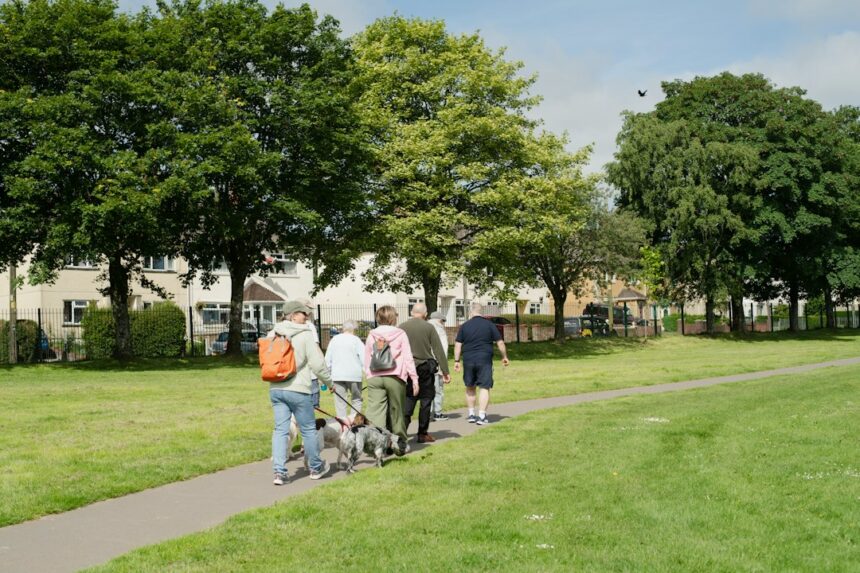
A seven-year study of 294 people with Parkinson disease reported that higher weekly activity totals went with slower change in thinking and movement scores. The weekly activity gaps were fractions of a point each year, and the design cannot establish cause.
Weekly activity totals were associated with how fast Parkinson disease symptoms advanced over as much as seven years, according to a study published October 7, 2026 in Neurology, the medical journal of the American Academy of Neurology.
The analysis drew on the Cincinnati Cohort Biomarker Program and followed 294 people with mild to moderate Parkinson disease, average age 66. Participants completed cognitive and motor assessments every year and reported the hours they spent active at work, around the home, and during hobbies or recreation.
Investigators sorted them into three bands of total activity time: low, up to four hours a week; medium, four to eight hours; and high, more than eight hours. After adjustment for age, sex and disease duration, the high band declined more slowly on both the cognitive and the motor measure than the low band.
Dong-Woo Ryu, MD, PhD, of the University of Cincinnati and The Catholic University of Korea led the work, with Alberto Espay, MD, of the University of Cincinnati among the coauthors. Support came from the Gardner Family Foundation and the Precision Medicine in Neurodegenerative Diseases Fund.
At a Glance
- Published October 7, 2026 in Neurology, the medical journal of the American Academy of Neurology.
- 294 people with mild to moderate Parkinson disease, average age 66, from the Cincinnati Cohort Biomarker Program.
- Followed for up to seven years, with cognitive and motor testing every year.
- Weekly activity bands: up to 4 hours, 4 to 8 hours, and more than 8 hours of total activity time.
- Cognitive score on a 0 to 30 scale fell an estimated 0.478 points a year in the low band and 0.007 points a year in the high band.
- Movement score on a 0 to 132 scale, averaging 23 at the start, rose an estimated 0.143 points a year in the low band and fell 0.783 points a year in the high band.
- Main caveat: activity was self-reported, and an observational design shows association, not cause.
How the Weekly Activity Bands Were Drawn
Participants estimated the hours they were active in three settings: paid work, work around the home, and hobbies or recreation. Those estimates were combined into one total, then cut at four and eight hours a week. The bands are deliberately coarse, which means the lowest one holds people who did almost nothing alongside people close to four hours.
Four hours a week sits above the familiar public-health floor of 150 minutes of moderate activity. The top band, above eight hours, describes something closer to an hour a day of movement spread across chores, work and leisure rather than concentrated in formal training sessions. That framing matters, because it is weekly activity in ordinary life being counted here, not gym attendance.
The banding also discards information. Someone reporting nine hours and someone reporting twenty-five both land in the top group, so the study cannot say whether weekly activity keeps paying off above its threshold or levels out. Nor can three bands reveal where, within the range from almost nothing to several hours a day, any benefit begins.
What Happened to Thinking and Memory Scores
Cognition was scored on a 0 to 30 scale on which lower numbers mean worse thinking and memory. Estimated annual change was a drop of 0.478 points in the low band, 0.090 points in the medium band, and 0.007 points in the high band. The most active group, in other words, was close to flat across the follow-up.
Half a point a year sounds like nothing. Carried across seven years, though, the low band would be expected to shed a little over three points while the high band lost almost none, which is the arithmetic behind the authors noting that small annual differences may grow more meaningful over time. Readers who followed our report on activity and memory across 136,503 older adults will recognise the pattern of small per-person effects that only become visible in long follow-up.
The weekly activity threshold that separated the most active band from everyone else in the 294-person cohort.
What Happened to Movement Scores
Motor symptoms were rated on a 0 to 132 scale on which higher numbers mean worse symptoms, and the group averaged 23 at baseline. Estimated annual change was an increase of 0.143 points in the low band and decreases of 0.225 and 0.783 points in the medium and high bands. The academy release describes these patterns as slower worsening of symptoms.
The sign convention deserves a flag. A falling score on that scale would normally mean improving motor function, not merely slower decline, and the summaries published alongside the paper do not reconcile the two readings. What is defensible is the ranking: more weekly activity, less unfavourable movement over seven years.
Three Ways of Measuring One Habit
The team did not rely on hours alone. It analysed total activity time, total activity volume weighting vigorous effort more heavily, and vigorous activity time on its own. Higher values on all three were associated with slower decline, which makes the result harder to dismiss as an artefact of one particular definition.
That convergence is informative but not decisive. The three measures are built from the same self-reported answers, so an error in recall would push all of them in the same direction. Our earlier coverage of device-measured vigorous activity and mortality shows how differently the same habit can look when a wearable does the counting instead of a questionnaire.
Where This Weekly Activity Finding Sits Alongside Earlier Work
Observational studies have repeatedly linked weekly activity to slower cognitive and functional decline in older populations, and a handful of earlier Parkinson disease cohorts have reported the same direction. What this cohort adds is length, annual measurement, and the use of three separate exposure definitions rather than one.
What it does not add is causal weight. A cohort of 294 people, however carefully followed, cannot do the job a randomised trial does, and the weekly activity differences reported here are small enough that confounding could plausibly produce them. The honest summary is that the evidence for weekly activity in Parkinson disease remains consistent, suggestive and still unproven.
Why Seven Years of Annual Testing Matters
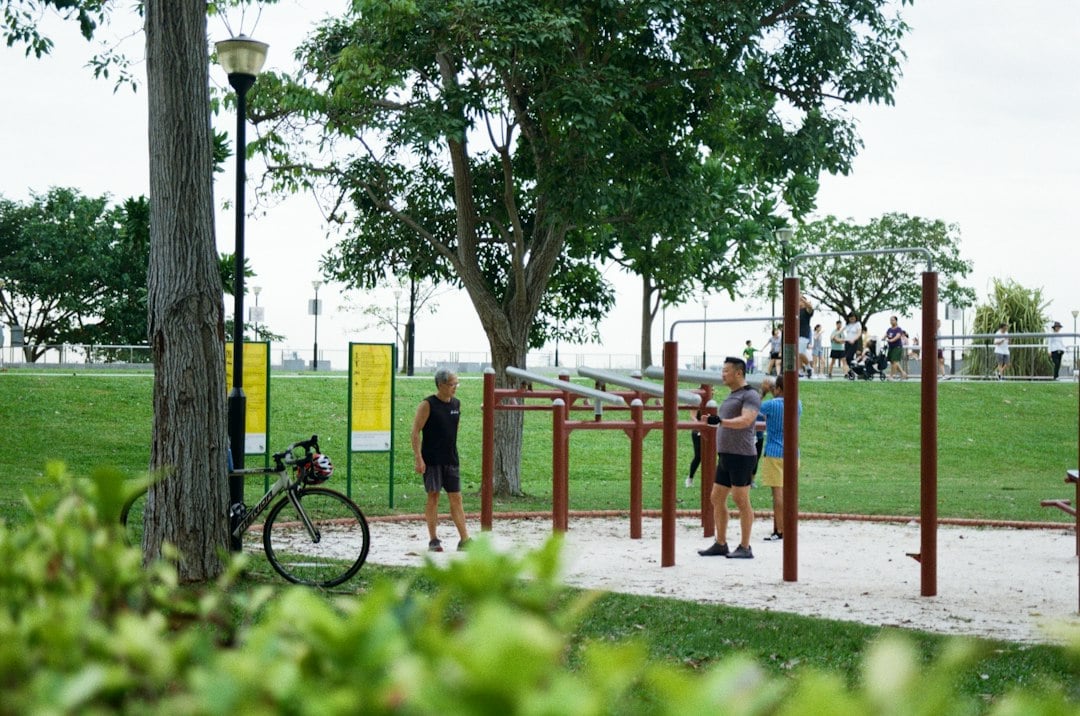
Most activity research in Parkinson disease is cross-sectional or runs for months. Annual assessment over as long as seven years allows a trajectory to be fitted for each participant rather than a single before-and-after comparison, and it lets slow divergence between groups accumulate until it is measurable.
Length cuts both ways. Longer follow-up also gives more room for habits to change, for medication to be adjusted, and for people with faster-progressing disease to drop out. None of that is addressed by adjusting for age, sex and disease duration, and it is the central reason an association of this shape cannot be read as a treatment effect. The same caution applied to the review linking leisure-time exercise to a 24% lower dementia risk.
What Weekly Activity Totals Do and Do Not Tell Patients
Nothing in this study identifies a dose that should be prescribed, and nobody with Parkinson disease should read an eight-hour threshold as a target handed down by trial evidence. What the work does support is the less dramatic position that accumulated everyday movement is worth protecting, and that the accounting can include work and household activity rather than structured exercise alone.
Practical reading, for general information only and not a substitute for advice from a clinician who knows the case:
- Count the whole week, including chores, walking and recreation, not only formal sessions.
- Treat consistency as the variable to defend, since the differences here emerged over years rather than weeks.
- Raise any change in activity with the clinical team first, particularly where balance, freezing or falls are a concern.
- Expect the honest answer about weekly activity and Parkinson disease to remain provisional until randomised work tests it.
For people whose starting point is very low, short and frequent bouts may be the realistic route in; our coverage of exercise snacking for strength and mobility in older adults reviews what that evidence currently supports.
The Fitness Living Takeaway
Over as much as seven years, people with Parkinson disease who reported more than eight hours of weekly activity changed more slowly on cognitive and movement scores than those reporting four hours or fewer.
The yearly gaps were fractions of a point on both scales, and activity was recalled rather than measured, so this is a signal and not a prescription. It also cannot rule out the reverse explanation, that milder disease made more weekly activity possible in the first place.
Research & Sources
- Neurology: Greater physical activity associated with slower progression in Parkinson disease
- University of Cincinnati: study summary and author comment
- Images: Age Cymru / Unsplash; Muhammad Syakir Sulaiman / Unsplash
This article summarizes peer-reviewed research for general information and is not individualized medical or exercise advice.