
This is a custom HTML / JavaScript Element
In order To See Your Custom HTML/JavaScript Code in Action You Must Click On The Preview Page Button, Your Code is NOT going to be active in the edit mode
|
Local Fitness Leadership Series
Editorial Spotlight / Huntington Beach, California
|
By Mark D.R. Ford
Managing Editor
|
A Training Floor WhereProgress Is Measured,Not Assumed
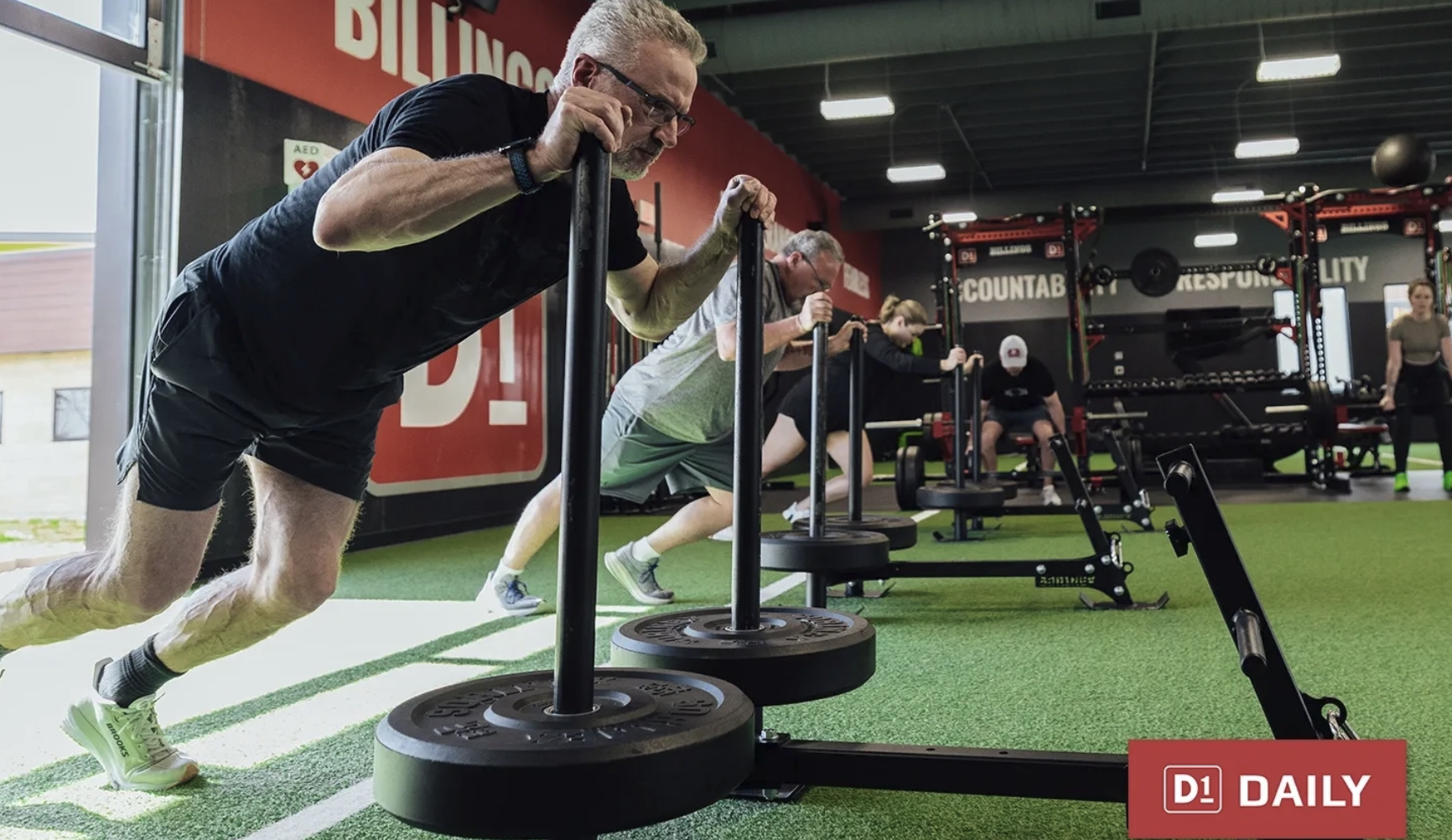
|
On the desk in Richard Glenn's office sits a testing sheet from that morning. A young athlete's five-ten-five shuttle is down six tenths of a second. Her ten-yard dash has dropped. To Richard, the paper is the whole argument: performance is not a feeling a parent hopes for, it is a number that either moves or does not.
That is the operating logic of D1 Training in Huntington Beach, California, where Richard serves as General Manager. Nothing at the facility begins with a workout. It begins with a movement assessment, a conversation with the family, and a program written for one athlete rather than a room full of them.
"We're the right fit for people who have big goals and don't know where to start."
Richard Glenn, General Manager / D1 Training Huntington Beach
What Members Notice First
The first visit is not a class. Richard meets the athlete and the family in his office, takes them through a movement assessment, and studies the details most gyms skip: how the knees, hips, and ankles behave when an athlete loads a jump, and how the landing looks. He listens to the goal, the sport, and the frustration that brought them in. Only then does a program get written. Families also notice the honesty of the answer, including when the answer is that the athlete should not be lifting the way they have been.
What follows is a handoff, not a drop-off. Richard introduces new families to Head Strength and Conditioning Coach Alonzo Davis, and the tone of the room changes with the athlete in front of it: energy and push for the one who responds to it, a lowered voice and a knee on the turf for the one who does not. With 175 members and coaches who greet athletes by name at the door, the environment reads less like a facility and more like a room that expects them back.
|
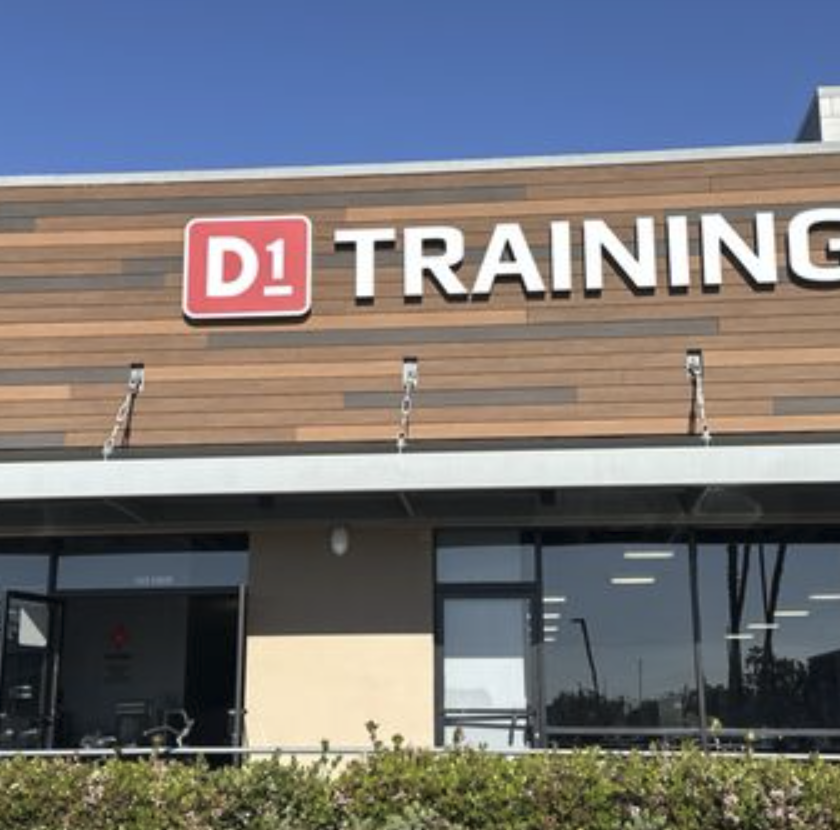
On Adams Avenue: The Huntington Beach facility, where every new athlete's first visit is a movement assessment before any program is written.
At A Glance
LocationHuntington Beach, California, on Adams Avenue.
MethodIndividualized programs built from a movement assessment.
Ages ServedYouth athletes from age seven, plus an adult community.
CoachingCore coaches with Division I strength and conditioning experience.
Manager Focus
Richard Glenn has shaped the facility around a single standard: know the athlete before you program for the athlete. That standard gives the gym its detailed, individualized, and family-inclusive identity.
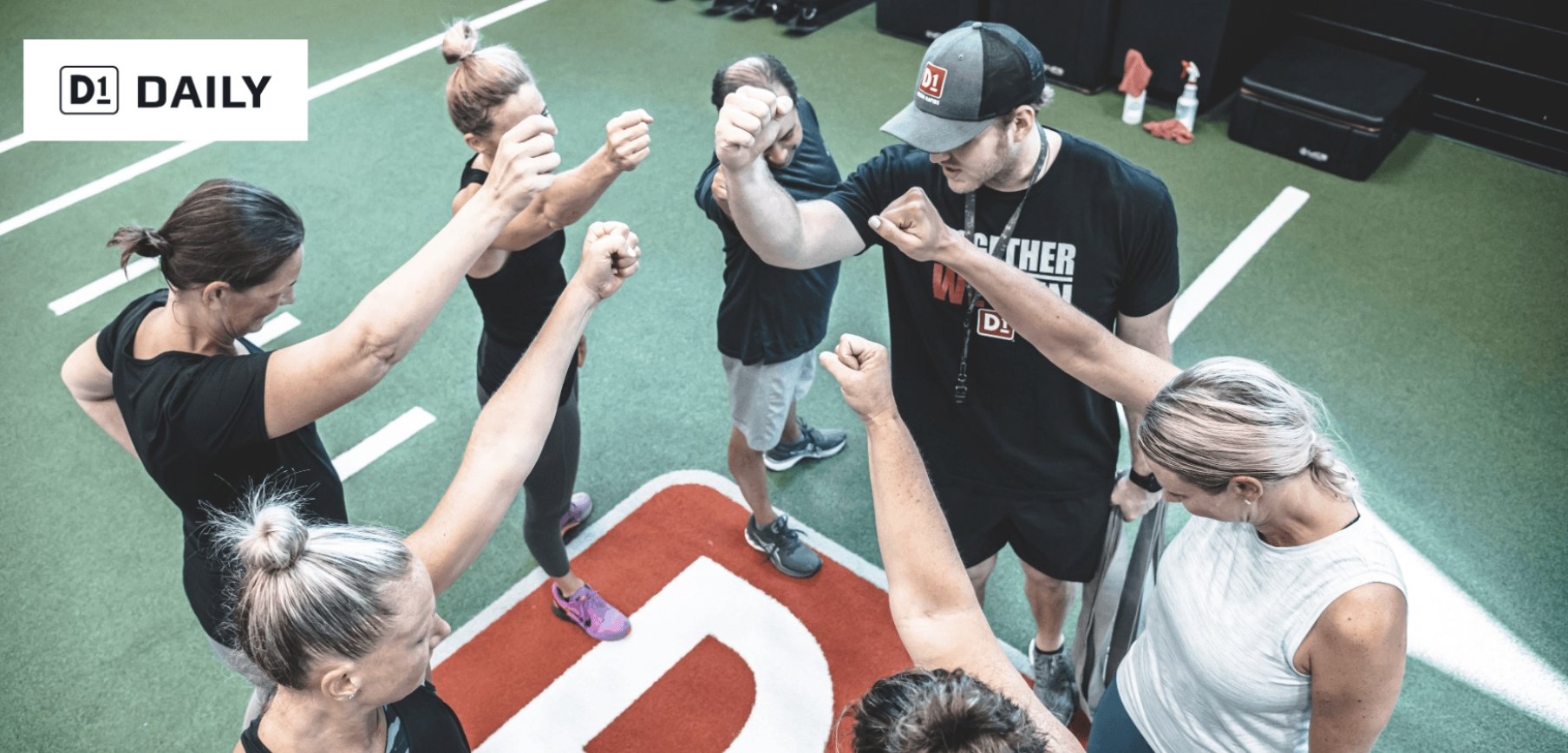
Built For The Community: Youth athletes from age seven through high school train here alongside an adult community.
D1 Training Huntington Beach Standard
Movement FirstEvery athlete is assessed before training. Weight is added only after positions can be owned, held, and repeated correctly.
Written PlanPrograms are built for one athlete's sport, mechanics, and goal, then rewritten with a new target once that goal is reached.
Coaching DepthCore coaches carry Division I strength and conditioning experience and work directly with athletes as young as seven.
Measured ProgressTesting every 30 days gives athletes and families times, scores, and repetition counts they can see change.
|
The gym makes its case in numbers rather than adjectives. A testing sheet either shows a faster shuttle or it does not, and the program that produced it was written for one athlete's movement rather than a room full of them.
This profile traces how a rebuilt facility, a general manager who has held nearly every job a gym has, and a coaching staff drawn from Division I programs produced a floor where a seven-year-old's first squat is coached with the same care as a varsity athlete's.
Personalized training transforms youth athletes' performance for a reason that is easy to state and difficult to execute: no two athletes arrive with the same body, the same sport, or the same weakness. Richard Glenn described the alternative plainly. Walk into a large gym and figure it out yourself, or walk into a class where everyone runs the same program regardless of what their hips do under load. At D1 Training Huntington Beach, the program is the output of the assessment, not the other way around.
D1 Training Huntington Beach is an athletic training facility in Huntington Beach, California, built around individualized programming for youth and adult athletes. Richard Glenn describes a model where every athlete begins with a complimentary movement assessment, receives a program written for their sport and mechanics, trains with coaches carrying Division I strength and conditioning experience, and is retested every 30 days so progress can be seen rather than assumed.
Richard's own path explains some of that conviction. He grew up an athlete in the Chicago area, played at the collegiate level, and spent a brief period in sports broadcasting before picking up personal training as a side pursuit and realizing it was the work he actually wanted. He has since competed professionally as a bodybuilder and is pursuing IFBB Pro status, the highest level of the sport. He has also, by his own account, worked every job a gym has: front desk, cleaning, sales, training, direction, management. That range shows up in how he runs the room.
This profile looks at how D1 Training combines movement assessment, individualized programming, Division I coaching experience, and 30-day testing inside a youth athletic environment.
|
Why It Is Different
The program is built from an athlete's movement, not from a template, and it is mapped out to day 30, 90, and 365. |
Who It Serves
Youth athletes from age seven through high school, local teams and clubs, and an adult community training alongside them. |
Why It Stands Out
Collegiate-level coaching, documented testing, and a staff that operates as one unit rather than as independent trainers. |
The building on Adams Avenue has been a D1 since 2023, but the facility Richard runs is not the one that opened then. It closed, was revamped, and reopened under new ownership with new management and an entirely new coaching staff. Richard started in November. Everything readers see today has been assembled in the months since.
That history is also the part of the business Richard finds most frustrating. He still meets people in Huntington Beach who believe the gym is closed. Growth, in his telling, is less a marketing problem than a visibility one, and his stated next step is simple: get out of the facility and into the community more often. The partnerships have started to reflect that, with relationships built around the local Little League and area basketball academies.
A member here is meant to feel known before they are trained. Richard describes a first visit spent in conversation and assessment, a coaching introduction rather than a handoff, and a facility where 175 members are each meant to feel like the favorite one. Parents stay for the hour. Athletes get their names called at the door.
Ask Richard about training philosophy and he starts at the assessment, not the exercise. He wants to know what happens to the knees, hips, and ankles when an athlete loads a jump, what the takeoff looks like, what the landing looks like, whether the toe everts, whether the foot lands flat or strikes on the ball. He takes the notes so the coaching staff can build from them. In his framing, movement dictates the program, and the athlete starts wherever the athlete's movement says they start.
The sequence that follows is deliberate. Athletes must get into the positions the program requires with body weight alone, get out of them, and hold them, a hundred times, as Richard puts it, before load is ever introduced. Mobility first, stability second, then strength. It is also where he pushes back on a common parental request. Speed training, he explains, is rarely a matter of telling an athlete to tuck an elbow. If a sprint mechanic is costing an athlete time, the useful question is anatomical: where is it coming from, and why. That is what the weight room and the mobility work are for.
Richard is candid that this can be discouraging at first, particularly for a high school athlete who has been squatting heavy for years and is told to go back to square one. The trade he offers is honest: rebuild it now, or carry the same movement problem forward as it compounds. The heavy squat comes back. It just comes back correctly.
Richard acknowledges the awkwardness of praising his own staff (every business tells you its people are the best) and then says it anyway, because the record is documentable. All four of his core coaches hold Division I collegiate strength and conditioning experience at programs including the University of Southern California, the University of Oregon, and Cal State Fullerton. Head Strength and Conditioning Coach Alonzo Davis holds a doctorate and was awarded the Kurt Hester Award as the top coach across a D1 system of more than 250 facilities.
What Richard finds remarkable is the pairing. A nine-year-old baseball player in Huntington Beach is coached by someone whose previous athletes competed in the College World Series. A young football player works with a coach who trained athletes who reached the NFL. That access did not exist for Richard when he graduated high school in 2010, and it is a large part of why he wanted the job.
Credentials, however, are not his measure of a coach. Communication is. He points to professional sport, where accomplished players often make poor coaches and coaches who never played at the highest level become some of the best. Knowledge that cannot be transmitted, in his view, does not count. His staff explains what an athlete is doing that day, why they are doing it, how the session went, and how it connects to the next month of work.
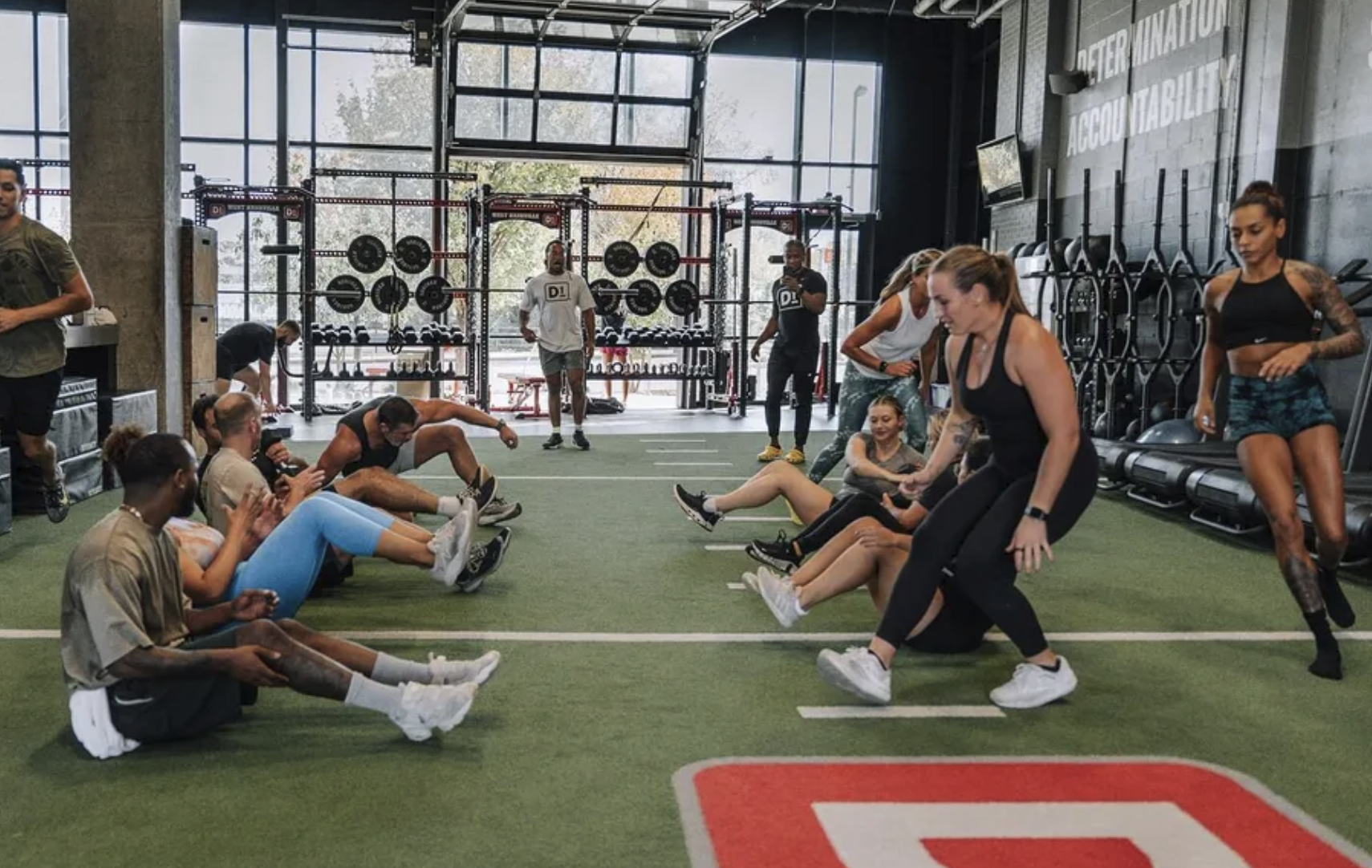
D1 Training Huntington Beach matters because it applies collegiate-level rigor to a seven-year-old's first squat: the athlete is assessed, programmed for individually, coached by people who have done it at the highest level, and then shown the numbers.
Based on the interview, the gym is built for athletes and families who want an individualized program, coaching depth, and a schedule that can flex around a season.
Asked to finish the sentence "we're the right fit for people who," Richard did not hesitate long: people who have big goals and don't know where to start. The example he offered is a junior named Michael, who arrived in late spring at roughly five-foot-ten and close to 390 pounds, wanting to play varsity football and holding a message from his high school coaching staff that he would not make it through summer two-a-days as he was.
Richard gave the family an honest answer rather than an encouraging one: three sessions a week minimum, plus work outside the facility. They took it. Michael has become the athlete the room calls out for by name, his mother stays for the full hour every session, and by mid-July his weight was down and his testing scores were up, with training camp a week away. Richard does not present it as a marketing story. He presents it as the reason he prefers this work to anything else he has done in fitness: watching an athlete come out of their shell and become, over ninety days, a visibly different person on the turf. Individual experiences vary.
Asked what the fitness industry makes unnecessarily complicated, Richard pointed at the volume of information itself. Six friends bring six feeds of contradictory advice; a phone offers a hundred more. For someone already unsure or embarrassed about starting, he argues, the effect is not education but paralysis, a bottleneck rather than a beginning.
His counter is deliberately unglamorous. Set aside the supplement debates and the meal-plan minutiae until someone is actually in the gym three times a week doing something they can sustain. He makes the same case from inside his own sport: the five bodybuilders he considers the greatest all trained differently, and all of them are still being discussed decades later. Any of the systems can work. The question is which one a person will actually keep doing.
The same restraint governs how he handles a nervous athlete. Read the person first: some need the music up and the energy raised, others need the music down and a coach on one knee speaking quietly. Then set a goal small enough to win. One push-up, done the way it was coached. High five. Next goal. Confidence, in Richard's model, is not a speech. It is a stack of completed goals.
In Huntington Beach, most new families find D1 one of two ways: an Instagram ad, or a neighbor who sends them. Richard asks every family at intake, and the answer is almost always social media or a referral. That tells him something about the market. Trust here travels between parents on a sideline faster than it travels through advertising.
For families searching for youth athletic training in Huntington Beach, speed and agility work for a young athlete, or strength and conditioning for a high school player, the local distinction at D1 Training Huntington Beach is specific rather than general: an assessment before a program, a program written for one athlete, coaches with collegiate credentials, and testing that puts the answer in numbers. Richard also runs partnerships with the local Little League and area basketball academies, the sort of presence that only matters if the training behind it holds up.
Richard Glenn is the General Manager of D1 Training in Huntington Beach, California. In his interview, he described competing as a collegiate athlete, becoming a certified personal trainer, competing professionally as a bodybuilder, and moving into facility leadership, where he now conducts movement assessments and builds individualized programs for youth and adult athletes.
The gym is known for personalized athlete programming built from a movement assessment, one-on-one and semi-private training segmented by age, team training for local clubs and schools, and a coaching staff with Division I strength and conditioning experience.
Richard Glenn said personalized training begins with a movement assessment that examines how an athlete jumps, lands, and sprints. Programs are built from what that assessment reveals, weight is only added after positions can be owned, and testing every 30 days shows athletes measurable changes in speed, strength, and repetition counts.
The facility serves athletes beginning at age seven. Group training is segmented into Rookie for ages seven to eleven, Devo for ages twelve to fourteen, and Prep for ages fifteen to eighteen, with a separate adult community for ages eighteen and up.
Richard Glenn said the first step is to reach out by phone at 714-908-9038 or through the facility's Instagram page, then schedule the complimentary movement assessment, which can also be reserved through the facility's website.
- D1 Training Huntington Beach is an athletic training facility built around movement assessment, individualized programming, and measured progress.
- Richard Glenn describes a model where no athlete is loaded with weight until they can own the positions the program requires.
- Its coaching staff carries Division I strength and conditioning experience, and Head Coach Alonzo Davis was named the top coach across a D1 system of more than 250 facilities.
- Athletes are retested on a 30-day cycle, and programs are rewritten with new targets once goals are met.
The case for personalized training is not that it is more pleasant. It is that a general program cannot answer a specific problem, and youth athletes arrive with specific problems: a hip that will not load, a foot that lands flat, a goal with a hard date attached to it. What Richard Glenn has organized in Huntington Beach is a way to find the problem first and then hand it to people qualified to solve it.
Asked what he would want an athlete to remember years from now, he did not mention a number. He said the people: the coach, and the feeling of crushing goals alongside them. It is a revealing answer from someone who keeps spreadsheets of tenths of a second. The numbers are how he proves the work happened. The coaching is why an athlete comes back to do it again.
Richard Glenn is the General Manager of D1 Training in Huntington Beach, California. He grew up an athlete in the Chicago area and competed at the collegiate level before a brief period in sports broadcasting, during which he became a certified personal trainer and discovered that training was the work he wanted. He has competed professionally as a bodybuilder and is currently pursuing IFBB Pro status. At the facility, he conducts each athlete's movement assessment, builds the program that follows, and works alongside a coaching staff drawn from Division I strength and conditioning.
Richard's philosophy begins with the assessment. He believes movement should dictate the program, that positions must be owned with body weight before load is added, and that goals should be broken into pieces small enough for an athlete to win. His stated aim is not a cookie-cutter session but an individualized plan, mapped from day zero out to day 365, that a family can understand and an athlete can see working.
His values include attention to detail, coaching communication, honesty with families, patience with beginners, and simplicity over noise. At the gym, those values appear in the complimentary movement assessment, individualized programming, 30-day testing cycles, documented athlete records, and a facility where a young athlete is spoken to in whatever way will actually reach them.


Write A Comment