
This is a custom HTML / JavaScript Element
In order To See Your Custom HTML/JavaScript Code in Action You Must Click On The Preview Page Button, Your Code is NOT going to be active in the edit mode
|
Local Fitness Leadership Series
Editorial Spotlight / Santa Cruz County, California
|
By Mark D.R. Ford
Managing Editor
|
The Science And ArtOf Teaching Fitness
|
Dan Fenwick has a phrase for the days when an experiment in his own gym goes badly. He calls it taking one for the team. Years of testing exercises on himself have produced a working record of what to avoid, and he treats that record as the reason his clients never have to learn the same lesson the hard way.
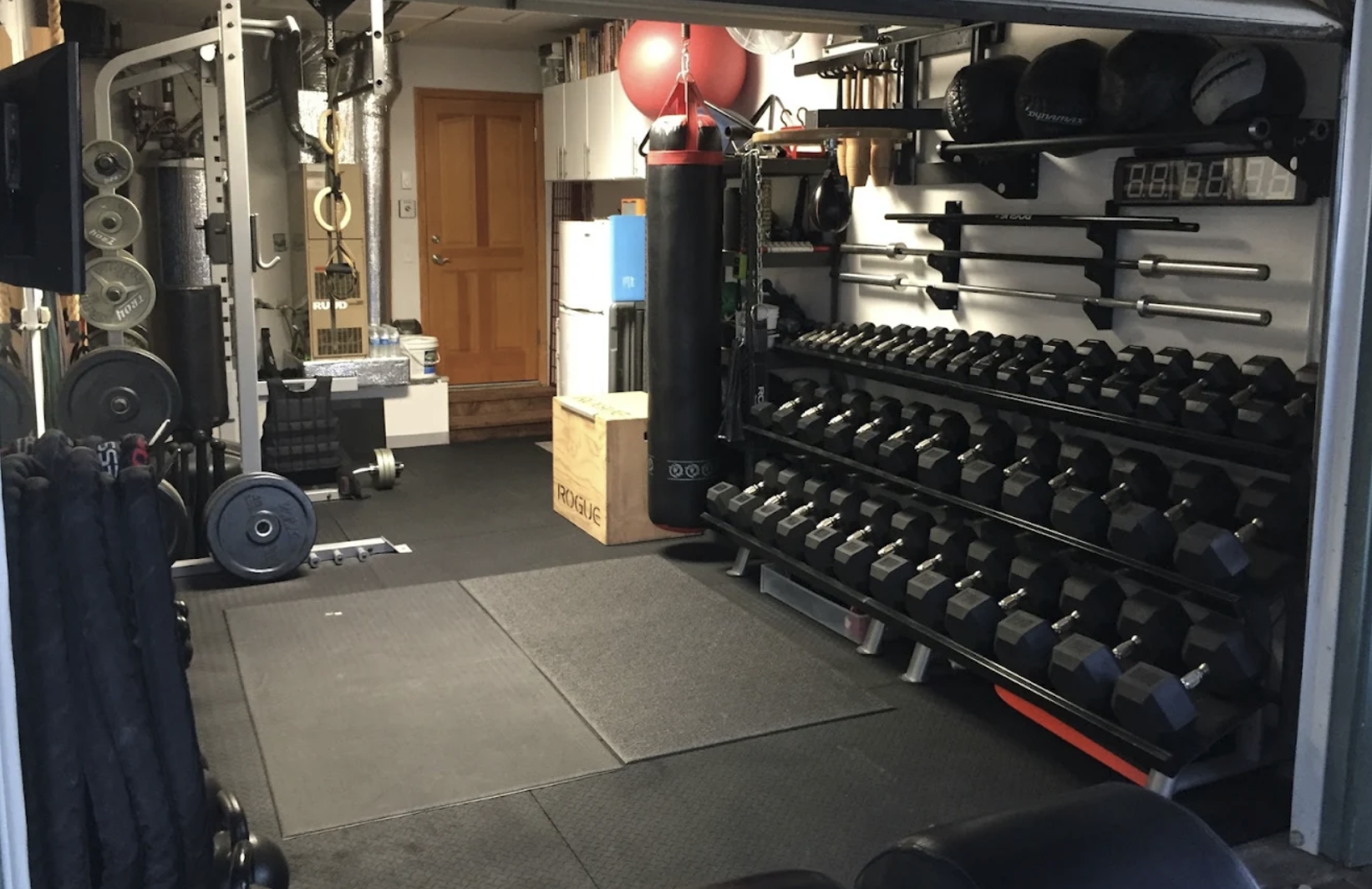
That instinct explains the gym itself. Small Box Fitness occupies a remodeled half of a garage in Santa Cruz County, filled piece by piece with equipment he bought whenever a method caught his interest. He calls the room his laboratory. After twenty-five years as a software engineer, he retired in 2009 and turned a private curiosity into a teaching practice.
“Strength training is a learned experience. Come to my gym and you will learn.”
Dan Fenwick, Owner And Trainer / Small Box Fitness
What Clients Notice First
A small, quiet, private room and a session that begins with instruction rather than a workout. Dan opens with questions and a basic mobility screen, watching what the body reveals before any weight is picked up. Nothing is assigned that has not first been explained.
The deeper experience arrives later, when clients realize the instruction is meant to outlast the appointment. Programs are written down and handed over to be followed alone. What nervous beginners were missing, often, was not courage but information.
|
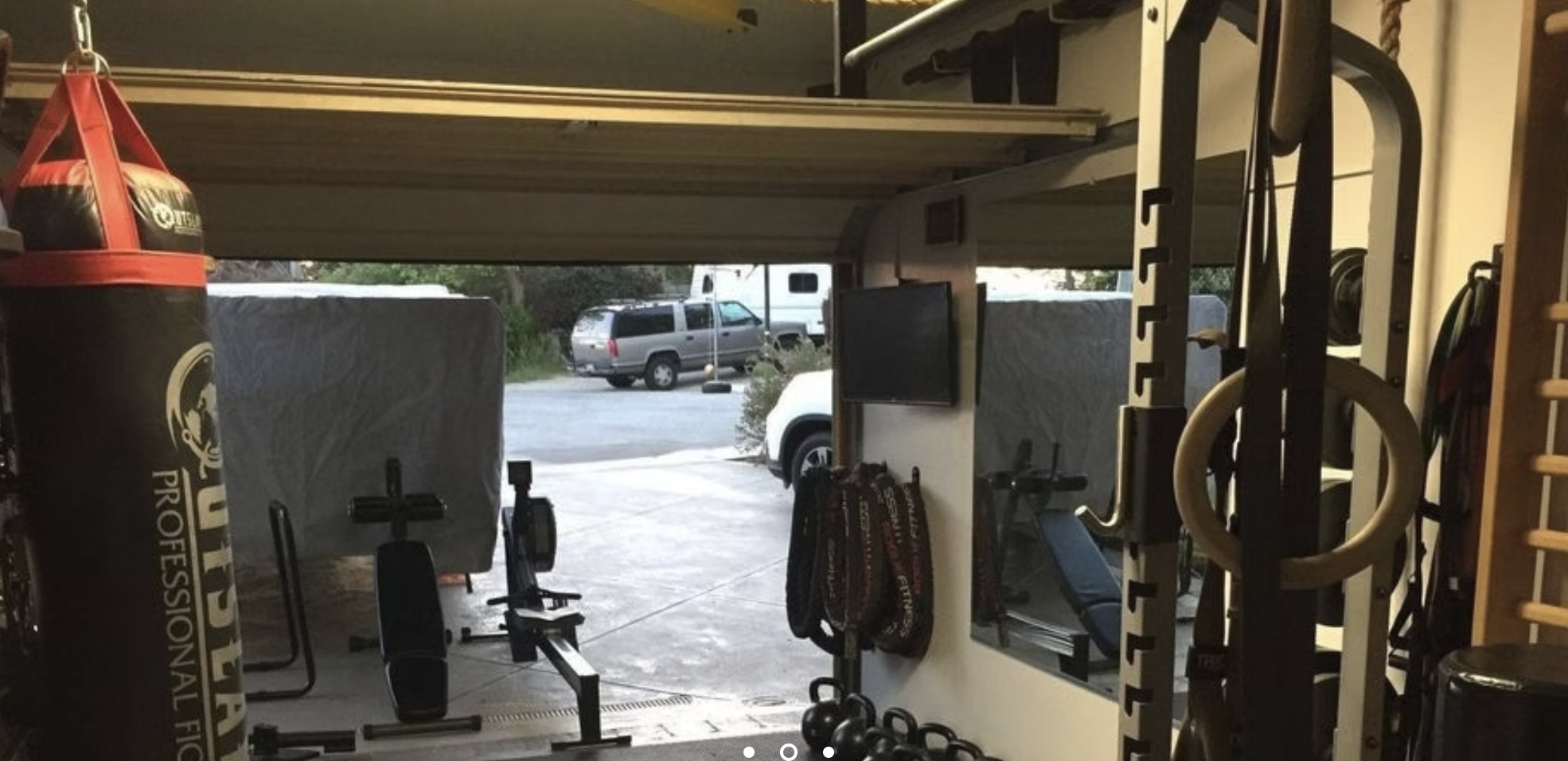
THE ROOM: Small Box Fitness operates by appointment only, with sessions run one-on-one or in small groups of up to three people.
At A Glance
SettingA remodeled half of a garage, private and appointment-only.
InstructionKettlebell work, powerlifting, and general conditioning.
Daily ScheduleThree or four sessions a day, deliberately capped.
CredentialsStrongFirst Level 1 and Functional Movement Screen Level 2.
Owner Focus
Dan Fenwick built Small Box Fitness around a single standard: a client should leave knowing how to do the work correctly without him. That teaching-first posture gives the gym its careful, unhurried, and unusually specific character.
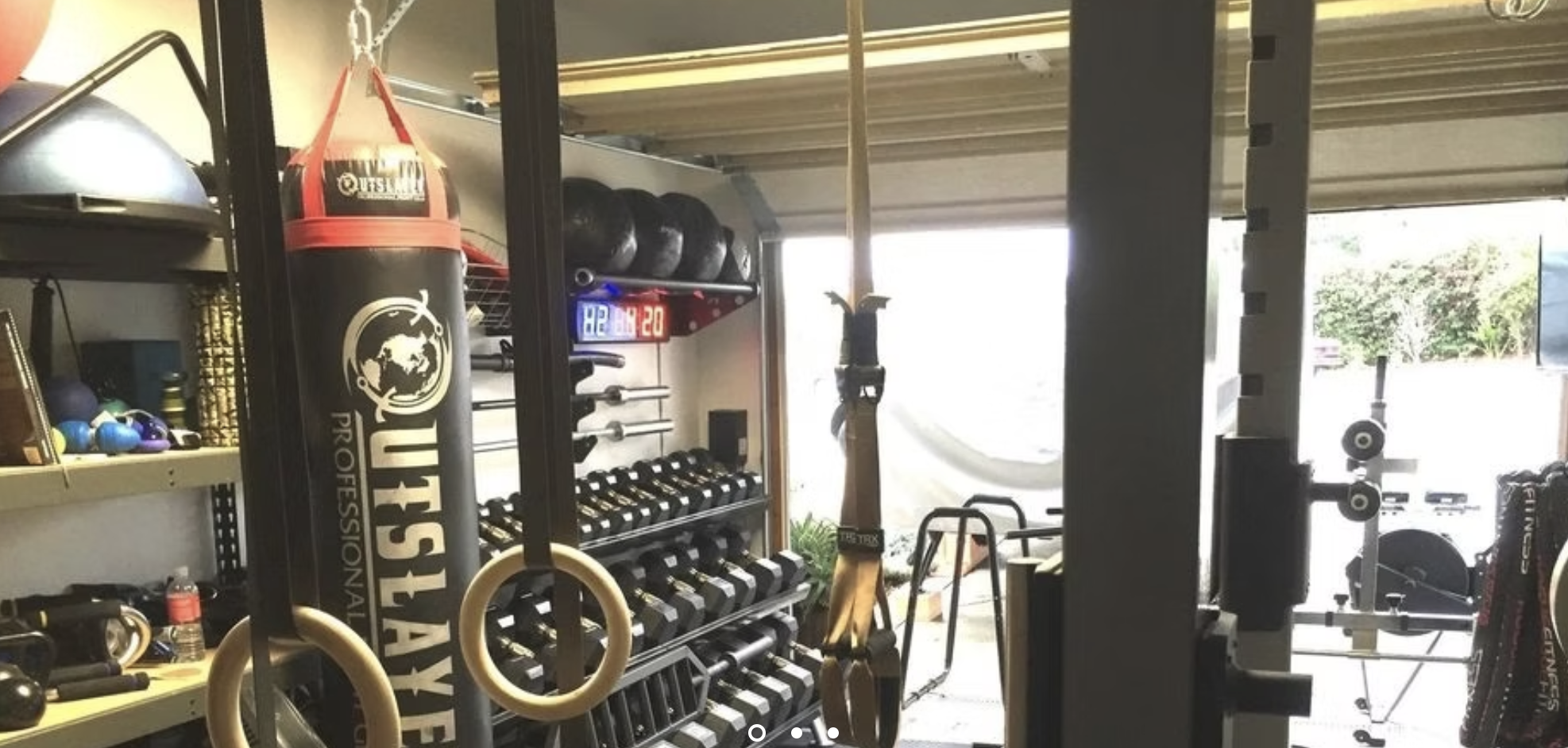
The Equipment: Assembled over years of study, with each addition tested by Dan Fenwick before it is programmed for a client.
Small Box Fitness Standard
Taught TechniqueInstruction comes before load. Clients learn the movement, the reasoning behind it, and the correction before weight is added.
Kettlebell CommandCertified instruction in a tool Dan says sits unused in most gyms because few people are ever taught to handle it.
Written RecordSets, repetitions, and progressions are logged, and every client keeps a copy so training continues correctly between sessions.
Private CapacityOne-on-one or up to three people, by appointment, in a clean and quiet room with no waiting and no audience.
|
Ask what a client is actually paying for here and the answer is not the hour. It is the logbook. Sets, repetitions, and progressions are written out and handed over, because the six days Dan Fenwick is not in the room are the days that decide whether any of it holds. A practice built on that premise has to teach rather than supervise, and it has to stay small enough to do it.
Dan Fenwick left software at fifty-one and began filling half a garage with equipment he wanted to test. What that room turned into is the subject here: a one-trainer practice that caps its own daily schedule, tests its methods on the trainer first, and judges the work by what a client can still perform correctly years afterward.
Most gyms sell access. Dan Fenwick sells instruction, and he is unusually direct about the difference. In his account, people arrive believing exercise is simple and quickly discover that it is not. Loading a body well requires study, and someone has to do that study before a client picks up a weight. At Small Box Fitness, that person is Dan, and the results of the study are handed over rather than withheld. He sees some clients only once a week and expects them to train correctly on the days he is not there, which is why sets, repetitions, and progressions are written down and given to the client in a form they can read and follow alone.
Small Box Fitness is a private, appointment-only training gym in Santa Cruz County, California, offering expert kettlebell instruction, powerlifting, and general conditioning one-on-one or in groups of up to three. Owner Dan Fenwick describes the practice as a teaching operation: clients are shown how to move safely, given written programs, and prepared to train correctly on their own for the rest of their lives.
He describes himself, without much ceremony, as a gym nerd. The habit predates the business by decades. While working as a software engineer, he trained on his own time, rode road and mountain bikes, and worked his way into serious strength training by testing one idea after another. When he retired in 2009 at fifty-one, the certifications followed almost immediately, and so did clients.
This profile examines how a one-trainer gym in Santa Cruz County built its standard around instruction, progression, and equipping clients to continue without supervision.
|
Why It Is Different
Training is treated as a subject to be taught, with certified kettlebell instruction that is difficult to find in the county. |
Who It Serves
Clients from preteen to advanced senior, including people returning to training after injury or apprehension. |
Why It Stands Out
A small private room, a written program, and a trainer who expects clients to eventually need him less. |
The gym grew the way a collection grows. Dan would study a modality, decide if it was worth understanding, and buy the equipment to test it. Isometrics arrived that way. So did a good deal of everything else, until there was enough to justify remodeling half of a garage to house it. The name followed the reality: not a big box gym, a very small box.
He still runs it as a working laboratory. Equipment is swapped out when something more efficient earns the floor space. A bulky glute-ham developer gave way to a Nordic bench that does the same job in a fraction of the room. Methods are tested on himself first, which is where the phrase about taking one for the team comes from. An injury he collects is one a client does not have to.
There is a discipline behind the informality. He trained eight to ten people a day when he first started and found the pace unsustainable, not physically but attentionally. Coaching well turned out to be exhausting in a way he had not anticipated. He reduced the load to three or four sessions a day and has kept it there since, on the reasoning that a client is owed the whole of the trainer’s attention or none of it.
Dan is a StrongFirst Level 1 certified kettlebell instructor, and the subject animates him more than any other. He describes visiting other gyms and finding racks of kettlebells gathering dust, not because the tool is ineffective but because nobody on the floor knows how to teach it. He considers that a waste of an unusually efficient piece of equipment, and one of the clearest reasons a Santa Cruz County client might seek him out specifically.
The instruction is hands-on by necessity. A kettlebell swing cannot be absorbed from a video or improvised from general athleticism; it has to be corrected in person, repeatedly, by someone who knows what to look for. Dan is candid that a client can decline the whole subject and train powerlifting instead, and he will program it happily. He simply thinks they would be passing up something worth having.
He also treats it as a long-horizon tool. At sixty-eight, he is still performing heavy swings at loads he was using more than a decade ago, which he offers less as a boast than as evidence: the modality holds up across a training life if the technique is sound and the progression is honest. He works toward the heaviest weight that remains safe, on the grounds that anything less does not move the needle, and that the route to that weight is the background work most people skip.
Asked for his training philosophy, Dan puts consistency first and does not hedge. His illustration is unglamorous: press one week, disappear for two, and the work restarts from something close to zero. The same effort applied on a regular schedule compounds instead of resetting. Progress, in his framing, is less about intensity than about refusing to give back what has already been earned.
Safety sits immediately beside it, and he is willing to make himself the cautionary example. A movement can be within a person’s strength and still be outside their preparation, because strength and pattern are not the same thing. The answer is a strategic progression into the movement rather than a leap at it, which is precisely the kind of judgment a client cannot supply for themselves early on.
A client at Small Box Fitness is meant to leave with something portable. Dan describes people he taught a decade ago who still use the same techniques as their default, and long-term clients who continue booking sessions not because they cannot train alone but because they prefer his direction. The measure of the work is what holds up after the hour ends.
Nervous clients are handled deliberately. Dan’s first objective is not to reassure but to understand: what exactly is the apprehension, and where did it come from. Very often the answer is a prior injury, and he takes it as given that almost anyone hurt during a movement will remain guarded around it afterward. That guardedness is treated as information rather than an obstacle.
From there he builds from familiarity. If a client has experience with another modality, he brings it into the programming so the early sessions contain something recognizable rather than a wall of new material. Confidence, in his reading, requires familiarity first and success shortly after. The novel work can wait until the person has proof that they can do this.
He has seen where that patience leads. Several clients arrived with lower back pain and a well-founded fear of squatting or hinging. Taken slowly through deadlifts, then swings, then progressive loading, their lower backs, cores, and upper backs strengthened and the back problems receded. One client whose condition was too fragile for that route worked on core stability alone and was improving before relocating out of state. Dan describes the whole category as delicate business: getting people stronger and better conditioned without adding an injury to the ledger.
Small Box Fitness matters because it treats a client’s independence as the product: instruction is given away completely, on the assumption that a person trained properly will still be training properly in ten years.
Drawing on the interview and the business website, Small Box Fitness is built for people who want instruction rather than access, in a private setting, on an appointment schedule.
Dan trains clients from preteen to advanced senior, and treats the differences between them as real rather than cosmetic. He is direct about his own age being an asset here: at sixty-eight, having trained people in their seventies and eighties, he has firsthand insight into what a twenty-year-old can absorb and what someone considerably older can. Programs are built to the person’s history, current capacity, and readiness, not to a template.
Assessment starts before the conversation does. He watches how a person walks toward him and runs a basic mobility screen, and says the combination frequently surfaces issues the client is not aware of carrying. Long-term clients report the same thing from the other direction: that he sometimes reads their body more accurately than they do, and that a mid-session complaint can be addressed with a corrective on the spot before the workout resumes.
Asked what he would add that had not been covered, Dan chose a subject most trainers avoid. Anyone who trains long enough, coach or client, is going to get injured in some form. He treats it as close to inevitable, and therefore as something a competent trainer should have a plan for rather than a disclaimer about.
The plan has two halves. The first is preserving as much hard-won fitness as possible while the injured area is off limits, which means working around it deliberately rather than stopping altogether. Overdo pull-ups without the preparation for them and the elbow will say so; the correct response is to stop that movement for a while and keep training everything else. The second half is doing the rehabilitation properly, so the return is a genuine return and not a setup for a repeat.
Small Box Fitness does not advertise. Roughly half of Dan’s clients find him through the StrongFirst instructor directory, where he is one of very few certified kettlebell instructors listed in the Santa Cruz area. The rest arrive through word of mouth or ordinary local search for a trainer or gym. He is content with the arrangement and has no interest in returning to full-time work; he wants to be in the gym, training people and training himself.
For a county with no shortage of places to exercise, the point of difference is narrow and clear. Someone looking for hands-on kettlebell instruction, private strength coaching, or a careful path back to training after a back injury is looking for a specific kind of expertise that is not evenly distributed. Small Box Fitness is a small room with one trainer in it, which is either a limitation or the entire proposition, depending on what a person actually needs.
Dan Fenwick is the owner and trainer at Small Box Fitness in Santa Cruz County, California. He spent twenty-five years as a software engineer, retired in 2009, and has since built a private training practice centered on teaching people how to train correctly on their own.
Small Box Fitness is known for expert kettlebell instruction, powerlifting, and general conditioning delivered one-on-one or in groups of up to three people inside a small, private, appointment-only gym.
Dan Fenwick described starting nervous clients slowly and carefully, first identifying what makes them apprehensive, then building from movements they already know so that early sessions produce familiarity and success rather than intimidation.
Sessions include kettlebell instruction, powerlifting, and general conditioning, along with instruction in how to record sets, repetitions, and progressions in a logbook. Clients receive a copy of the written program so they can follow it between sessions.
Dan Fenwick cited certified kettlebell instruction that is difficult to find locally, experience programming for age groups from preteen to advanced senior, and a private one-to-three training format in which every repetition can be watched and corrected.
- Small Box Fitness is a private, appointment-only training gym in Santa Cruz County, California, offering kettlebell instruction, powerlifting, and general conditioning.
- Dan Fenwick treats strength training as a learned discipline and measures his work by whether a client can train correctly without him.
- Sessions run one-on-one or in groups of up to three, with written programs clients keep and follow between appointments.
- Consistency and safe progression anchor the philosophy, including deliberate strategies for training around injury rather than stopping entirely.
Dan Fenwick spent a quarter century writing software that millions of people used without ever knowing his name was attached to it. He describes that invisibility plainly, and it is not difficult to see why the second career took. In a small room in Santa Cruz County, the effect of his work is not only visible but returned to him, sometimes a decade later, by people who tell him they still use what he taught them.
That is the argument Small Box Fitness makes about fitness education generally. A workout is consumed and gone; a technique, taught properly and written down, belongs to the person who learned it. For clients in Santa Cruz County weighing where to spend their training hours, the distinction Dan draws is worth taking seriously: the point is not the session. The point is what the session leaves behind.
Dan Fenwick is the owner and trainer at Small Box Fitness in Santa Cruz County, California. He worked as a software engineer for twenty-five years before retiring in 2009 and moving immediately into certification and coaching. His credentials include StrongFirst Level 1 Certified Kettlebell Instructor, Functional Movement Screen Level 2, AFAA Personal and Group Certified Instructor, and Mad Dogg Spinning Level 3 Elite Instructor. He works with clients from preteen to advanced senior in a private gym he built and continues to rebuild around what he learns.
Dan describes strength and conditioning as a learned discipline rather than an intuitive one, and his stated mission is to help people increase mobility, get stronger, and improve overall wellness on programs built for the individual. Consistency comes first in his framework, with safety immediately beside it, and both are taught explicitly so a client can apply them without supervision.
His specialties include certified kettlebell instruction, powerlifting, general conditioning, movement assessment, programming across age groups, and helping clients train productively around an existing injury. His values show up in written programs handed to clients, a deliberately limited daily schedule, and a standard that no exercise is prescribed before it has been explained.


Write A Comment