Recognized by Fitness Living Magazine™ For personalized classical Pilates instruction, advanced Romana’s Pilates training, MELT Method self-care, small-group teaching, and founder-led fitness leadership in Seattle’s Pioneer Square.
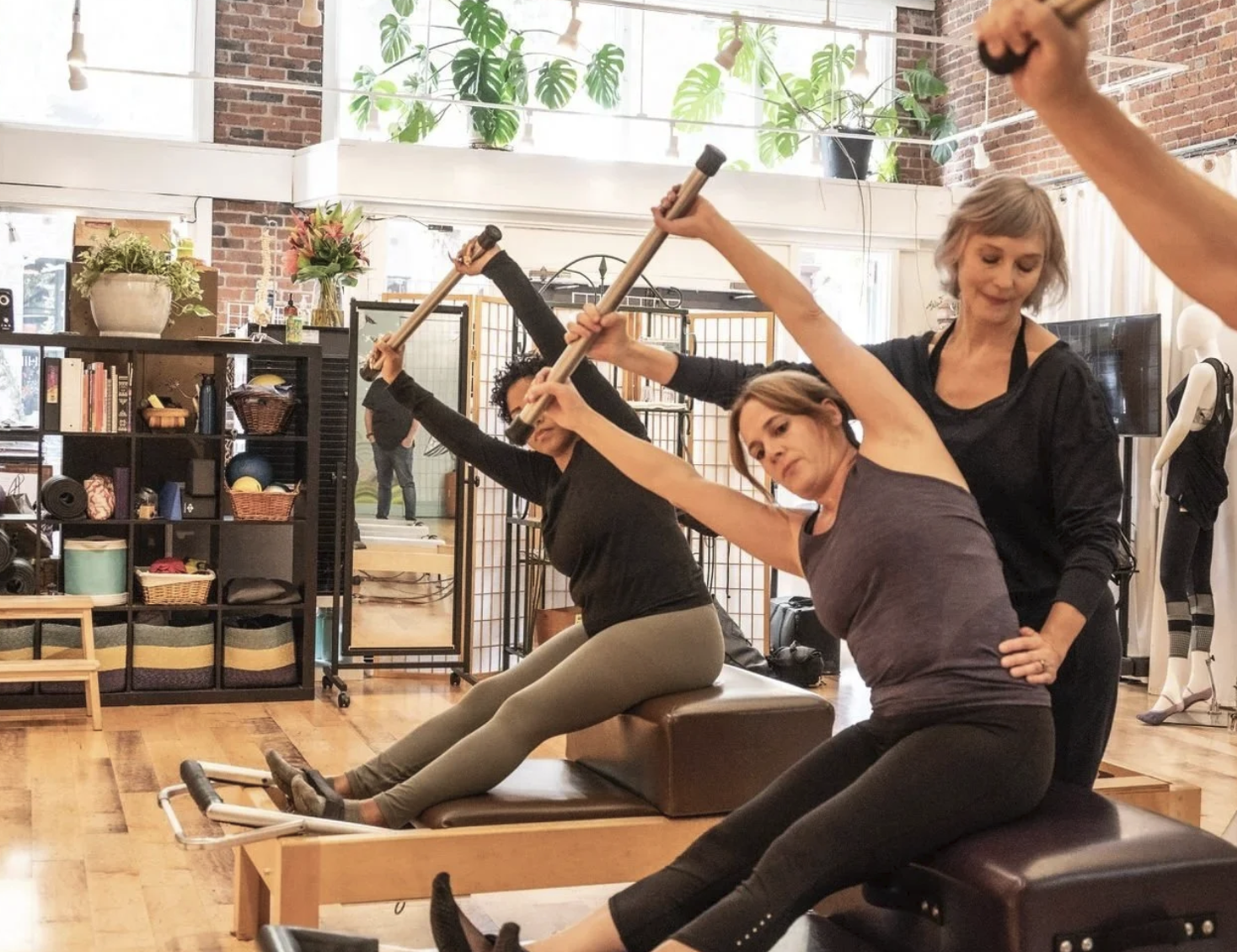
That sequence matters because Marcontell does not treat Pilates as a set of shapes to copy. She wants clients to learn how breath, tension, core recruitment, posture, and intention work together, then use that understanding outside the studio. Private lessons, semi-private sessions, and small classes are different formats, but the standard remains the same: meet the person where they are, teach them to feel what is happening, and build from a more stable foundation.
“I want people to experience a personalized approach to what they’re doing in their fitness that makes them feel internally strong and helps them build a healthier relationship with their bodies.”Christl Marcontell, Founder, Owner and Director / Kinesia Pilates
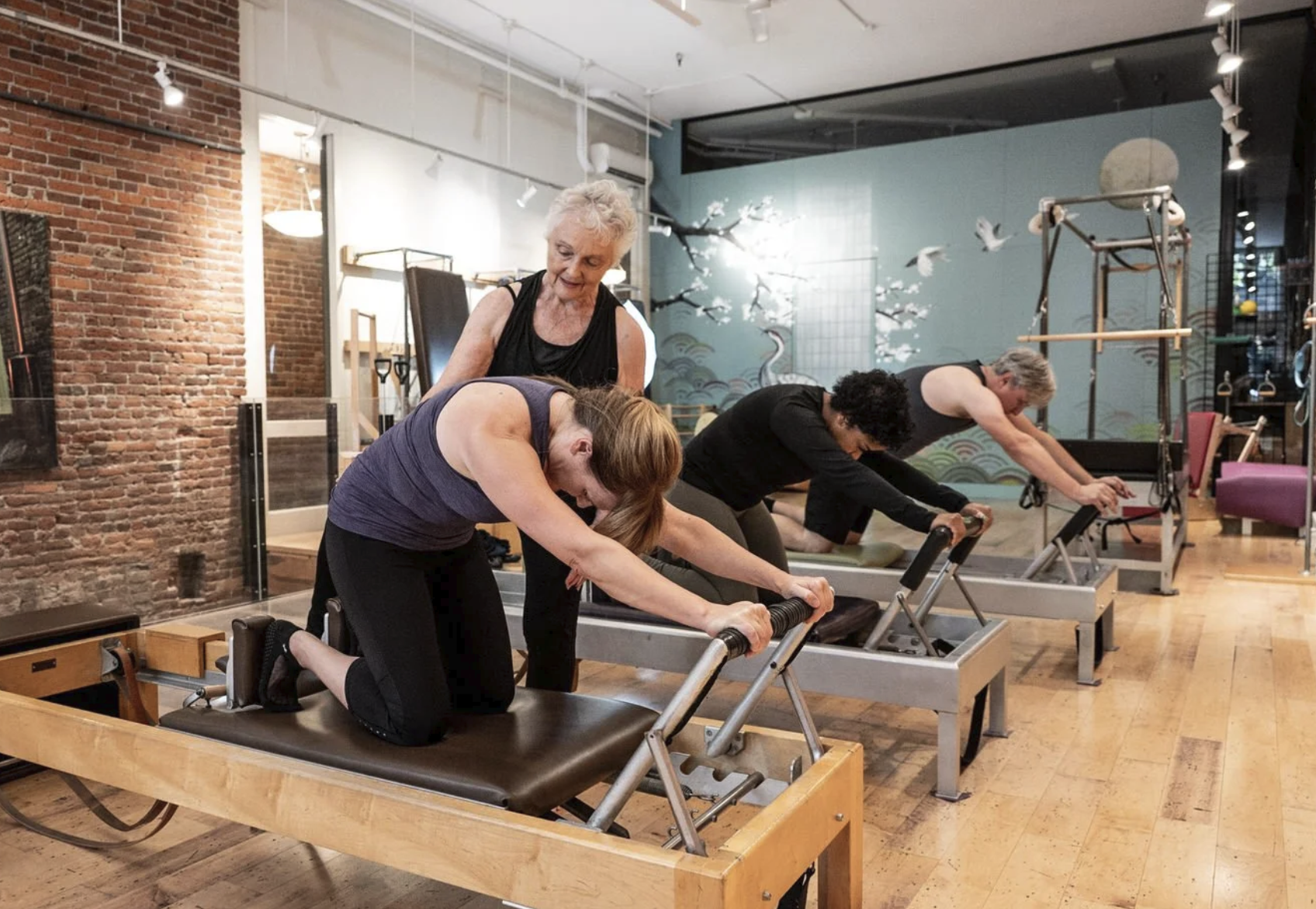
The first signal is the room itself. Marcontell described high ceilings, an open studio, and a pale-blue crane mural commissioned from a local artist after she explained the studio’s mission and philosophy. For clients arriving from offices, homes, galleries, and the surrounding downtown streets, the environment is meant to feel like a calmer counterpoint to the city outside.
The second signal is time. Marcontell said new clients are given space to settle in, hear what the teacher plans to do, and understand how hands-on guidance may be used. Clients are expected to communicate what they feel, and teachers are expected to adjust when touch, pacing, or a movement is not right for that person.
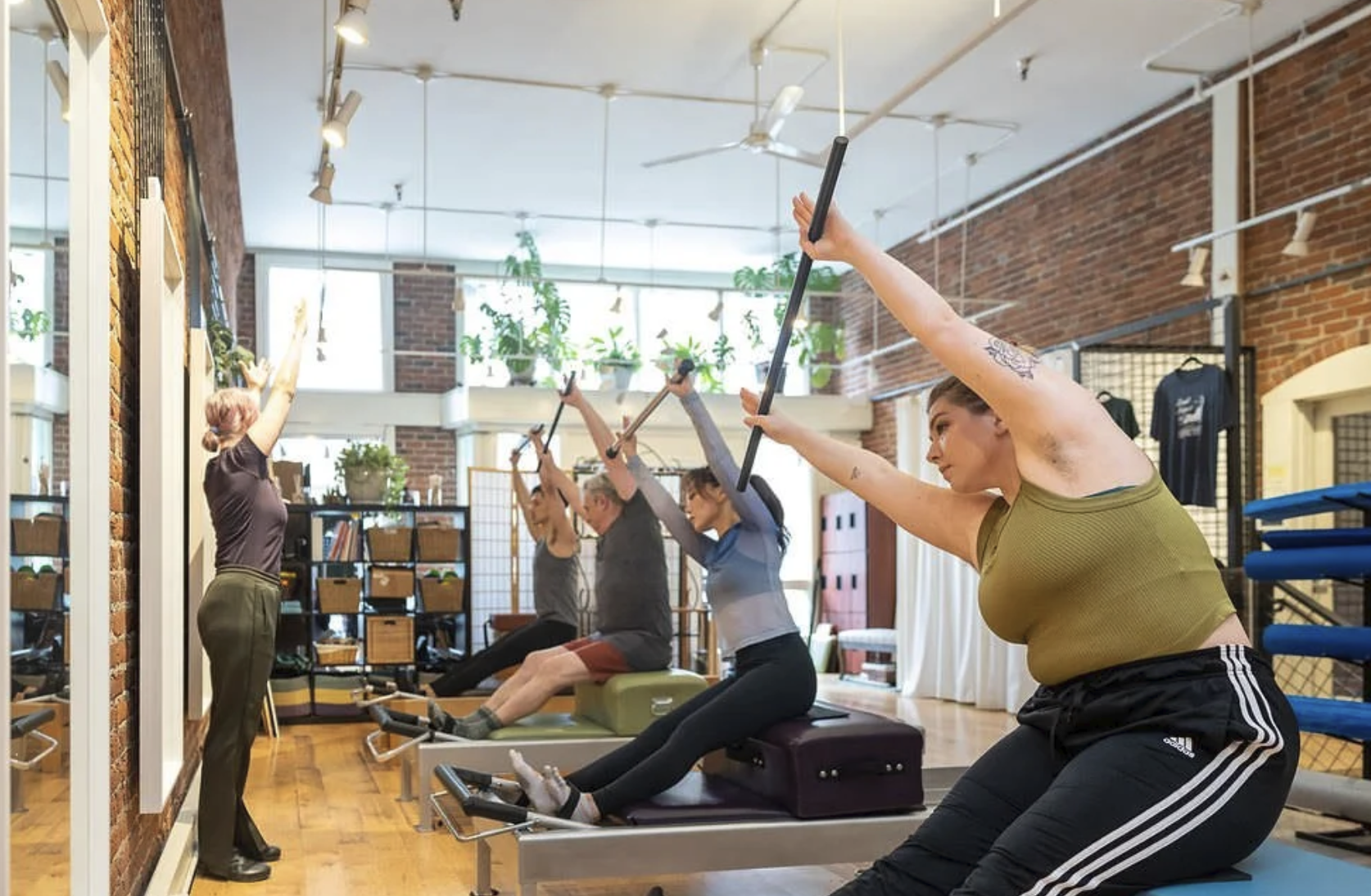
The third signal is scale. Semi-private work is intentionally small, and group classes are kept small enough for the teacher to watch how people move. Kinesia’s model is not built around disappearing into a large room. The client is meant to be taught.
Marcontell remains the studio’s principal teaching voice while also developing the teachers around her. In the interview she described the difficulty of finding comprehensively trained instructors who share Kinesia’s standard, and the studio’s current team reflects her preference for advanced Romana’s Pilates training, close observation, and individualized teaching.
Why Resilience Comes Before Performance
Marcontell’s language is unusually consistent for a Pilates studio owner. She returns to resilience, not appearance, as the quality she wants clients to develop. In her description, resilience is the physical foundation that lets strength, endurance, agility, adaptability, and confidence become more useful because the client is not simply producing force. The client is learning how to organize the body while producing it.
Kinesia Pilates is a personalized classical Pilates studio in Seattle’s Pioneer Square led by Christl Marcontell, a second-generation teacher certified by Romana Kryzanowska in 1999, with private lessons, semi-private training, small group classes, and MELT Method self-care.
The studio emphasizes precise instruction, breath, core recruitment, body awareness, and progressive skill development. Marcontell describes the client experience as calm and grounded, with teachers expected to adapt the work to the person rather than ask the person to fit a standardized class model.
The current studio is at 314 1st Ave South. Kinesia’s official website presently offers a free 15-minute discovery call and lists introductory options for private lessons and Fundamentals classes.
Marcontell grew up near Seattle in Snohomish and began dance training at about four years old. Dance remained part of her life, including professional work and aerial dance in her twenties. A serious accident in her early twenties made prolonged sitting difficult, and later, with a young child and a need for a more sustainable career, she found Pilates in her late twenties and recognized that it could keep her moving while also giving her a way to help other people understand their own bodies.
Inside the Kinesia Pilates Approach
This profile examines how Kinesia combines classical Pilates lineage, individualized teaching, small training formats, MELT Method self-care, and a founder philosophy that places resilience and body awareness ahead of appearance or performance for its own sake.
The studio treats communication as part of the method. Teachers explain the work, use hands-on guidance selectively, listen to what the client reports, and adjust the plan in real time.
Marcontell described clients from late teens through their eighties, including people focused on performance, healthy aging, postural balance, core development, and returning to movement after difficult physical experiences.
Advanced Romana’s Pilates training, personalized apparatus work, small classes, and MELT Method options sit inside a calm Pioneer Square studio where the teaching standard is intentionally founder-led.
A Studio Built From a Dancer’s Understanding of the Body
Dance gave Marcontell a long relationship with movement before Pilates became her profession. In the interview she described movement as a kind of happy place, something that remained available even after a truck accident permanently changed her shoulder and made a sedentary career unrealistic. Pilates arrived later as both a physical practice and a teaching language.
Marcontell was certified by Romana Kryzanowska in 1999, and Kinesia Pilates was established in 2004. The studio’s current team page identifies her as a second-generation Pilates teacher and a MELT Method instructor. What has stayed consistent across those years is her insistence that a teacher must observe the person, not merely recite the exercise.
Why Communication Comes Before Complexity
Asked which approach works especially well for her clients, Marcontell did not name a single apparatus or exercise. She named communication. Many people arrive, she said, already fighting their own body, bracing against a tight back, lifting the shoulders, or carrying stress into the movement. Before adding complexity, she wants to clarify the client’s intention and help the client notice what is actually happening.
That is also why hands-on guidance is introduced explicitly. Marcontell said teachers tell clients when touch may be used and ask them to speak up if it feels uncomfortable or overstimulating. The exchange creates accountability on both sides: the client describes the internal experience, and the teacher modulates the work according to what the client communicates and what the teacher observes.
From there, the work can become more specific. A client may need to stop recruiting the neck and shoulders before they can understand what core support feels like. Another may need a foundational sequence before joining a faster flow class. The mechanism is not complication. It is a better conversation between intention, sensation, teacher, and movement.
Taught, Not Rushed
A Kinesia client is meant to feel seen before being challenged. Marcontell wants the first minutes to lower the sense of urgency, establish trust, explain what the teacher is going to do, and give the client permission to describe what feels different, uncomfortable, or newly possible.
Clients told Marcontell that the studio feels like a happy place and that they leave feeling more grounded, energized, and physically connected. Operationally, that experience comes from small formats, attentive teachers, clear communication, and a willingness to change the work when the person in front of the teacher needs something different.
Resilience as the Foundation, Not an Afterthought
Marcontell’s governing philosophy is that strength is incomplete without resilience. She distinguishes force and endurance from the broader capacity to adapt. In her description, resilience is what allows the body to tolerate challenge with more options available, rather than becoming increasingly locked into the same pattern.
That is why she talks about making the body “3D strong.” A cyclist may have powerful legs and still need work in directions the bike never asks for. A runner may have excellent endurance and still carry a forward posture that changes how the neck, shoulders, and trunk share load. Marcontell looks for what is missing from the picture, then uses Pilates, and when appropriate MELT Method self-care, to give the client a broader movement vocabulary.
Kinesia’s distinction is not simply classical apparatus or a calm room. It is the relationship between a preserved method and responsive teaching: advanced Pilates training, deliberate communication, small formats, and a resilience-first philosophy that asks the client to understand the work rather than merely complete it.
What Kinesia Pilates Offers
The service mix centers on personalized classical Pilates and small-group learning, with MELT Method options for clients who also want guided self-care techniques.
“Christl is absolutely amazing. I’ve been going to Kinesia for seven years now, and even though I no longer work in the area, I enjoy driving downtown to Christl’s classes. Plus, the studio has a great atmosphere. Classes are friendly, there’s lots of laughter, and all of this is combined with a serious approach to Pilates.”
The Result Is Ownership, Not Performance
The moments Marcontell describes with the most pride are not demonstrations. They are transfers of understanding. She gave the example of a client with a rounded, forward posture who was learning to open the chest without simply tightening the back. The client learned to support that change through the core, then later recognized the same feeling outside the studio.
For Marcontell, that is the point at which instruction becomes useful beyond the hour. The client is no longer waiting for the teacher to tell them what is happening. They can feel the difference, make a more informed choice, and carry the cue into running, sitting, walking, or another part of daily life.
That emphasis also helps explain her skepticism toward Pilates that is consumed mainly as a visual performance. Marcontell said advanced shapes are not the same thing as core recruitment. She wants the internal skill to arrive before the public display.
What Consistent Training Makes Visible
Asked what clients may notice over the first 60 to 90 days, Marcontell described better self-control, more refined movement, and a stronger sense of symmetry and balance. She said clients who train twice weekly tend to give the method more opportunity to develop than clients who attend less often, although individual timelines depend on the person, their starting point, and what they are trying to change.
She also described Romana’s Pilates as a choreography that the client gradually learns. The sequence reduces the need to stop and re-explain every transition, while the teacher continues adding or removing challenges as the client advances. In Marcontell’s view, progress becomes visible when the person can move with more control, understand their modifications, and own more of the sequence for themselves.
A Client Story About Stability and a Clue Worth Sharing
Marcontell described a former competitive baseball pitcher who came to her after a period in which a body that had always felt strong and capable no longer felt reliable. The client had already pursued medical evaluation, but the cause of the problem had not yet been clear.
In their Pilates work, Marcontell focused on structural stability, breath, and helping the client recognize the moments when the body felt more organized and under control. During those moments, Marcontell repeatedly noticed a small eye twitch, especially when the client worked through the legs.
Marcontell pointed out the pattern, and the client brought that observation to her neurologist. According to Marcontell’s interview account, the medical team identified a neck-related issue that had not previously been clear and treated it. After that medical stabilization, Marcontell said their Pilates work could focus more effectively on building stability through the rest of the body.
The significance of the story is not that Pilates diagnosed or treated a neurological condition. It is that careful observation produced a detail the client could take back to the appropriate medical professional, while the studio stayed in its role: helping the client learn how stability felt during movement and continuing the training after medical care had addressed the underlying issue.
A Small Teaching Culture Built Around Attention
Kinesia is not organized as a high-volume floor. The current teaching team shares advanced Romana’s Pilates training, and Marcontell described teacher development as one of the hardest and most important parts of growing the studio. The human context is visible in the work itself: a teacher watching closely, clients learning side by side, and different bodies receiving different cues.
Why This Matters in Pioneer Square
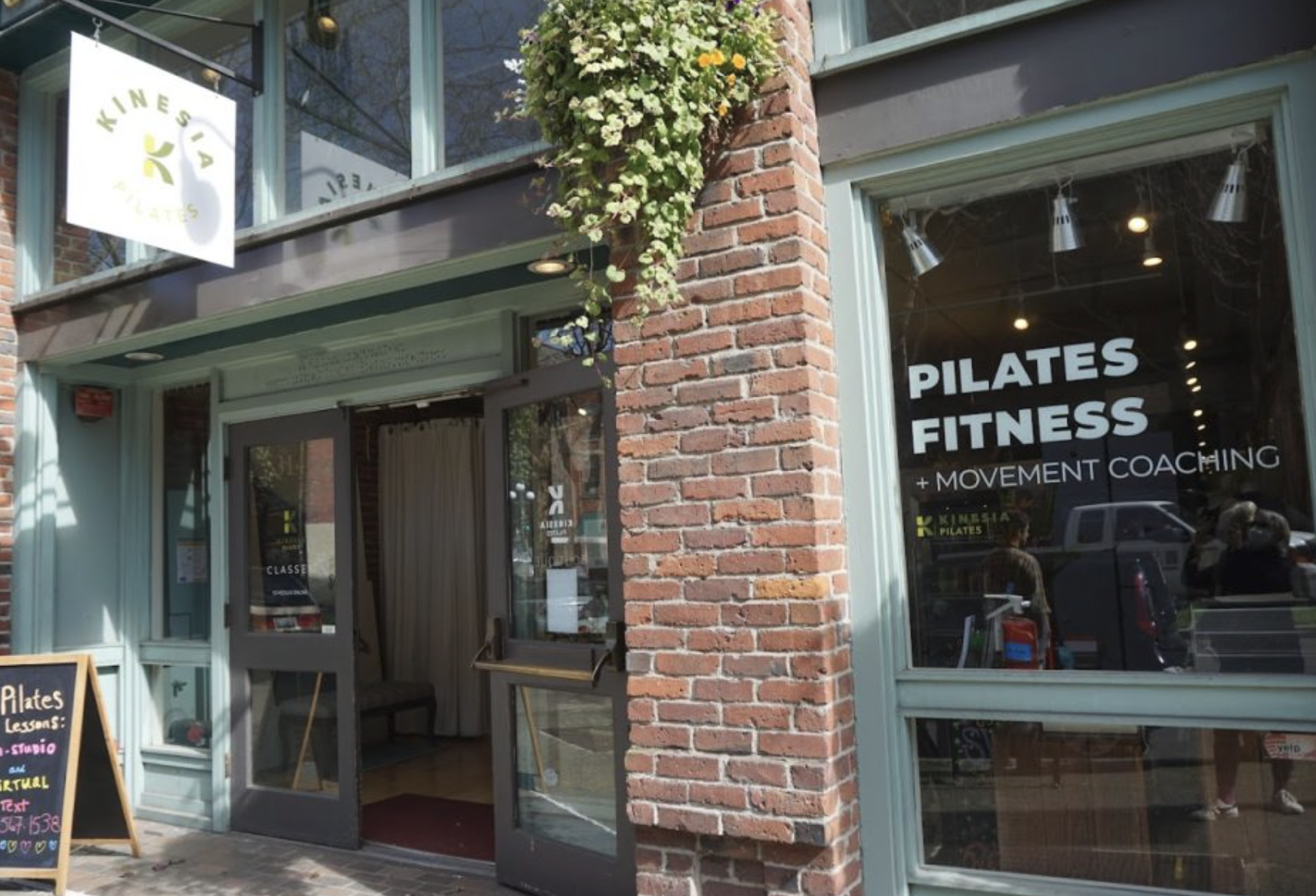
Kinesia Pilates has been rooted in Pioneer Square since Marcontell established the studio in 2004. Today it operates at 314 1st Ave South, inside the historic downtown neighborhood Marcontell also calls home. In the interview she described clients arriving from nearby offices, startups, architecture firms, local businesses, residences, and the street itself.
That setting is part of the studio proposition. Pioneer Square can be busy, event-driven, and highly stimulating. Kinesia offers the opposite experience once the door closes: a quieter room, a small teaching environment, and work that asks the client to pay attention inward while still staying capable of handling the world outside.
For someone comparing Pilates in downtown Seattle, the distinction is practical. Kinesia combines a long-established Pioneer Square presence, second-generation classical Pilates leadership, small training formats, and a current introductory pathway that lets a prospective client ask questions before deciding how to begin.
FAQ
Who Is Christl Marcontell?
Christl Marcontell is the founder, owner, and director of Kinesia Pilates in Seattle’s Pioneer Square. Kinesia’s current team page identifies her as a second-generation Pilates teacher certified by Romana Kryzanowska in 1999. She is also certified in the MELT Method and brings a lifelong dance background to her teaching.
What Is Kinesia Pilates Known For?
Kinesia is known for personalized classical Pilates instruction through the Romana’s Pilates lineage, training across the apparatus, small teaching formats, and separate MELT Method self-care options. The studio’s operating philosophy centers on resilience, body awareness, and teaching the individual rather than running a one-size-fits-all workout.
Can Beginners Join Group Classes Right Away?
Kinesia’s current official guidance asks new clients to take a few private lessons before entering group classes so they can learn the equipment, technique, and safety expectations. Clients with relevant prior apparatus experience can contact the studio about the appropriate class level.
What Is the MELT Method at Kinesia?
Kinesia describes MELT as a gentle self-massage method using small balls and soft rollers. Marcontell and other trained instructors offer MELT as a self-care option, including private instruction and workshop or class formats, and it may be combined with Pilates in some private sessions.
Who Does Kinesia Pilates Serve?
Marcontell described a wide age and experience range, from younger clients and performance-focused athletes to people in later life who want to preserve balance, posture, mobility, and confidence. The studio’s model is designed to change the challenge according to the person’s current level rather than sort everyone into one standard workout.
What Is the Best First Step for a New Client?
Kinesia’s current website offers a free 15-minute discovery call for prospective clients who have questions or want help choosing a starting point. The site also lists introductory offers for three private lessons and three Fundamentals classes.
Key Takeaways
Marcontell frames strength around a resilient foundation rather than appearance, intensity, or advanced movement for its own sake.
Clients are taught to notice and report what they feel, while teachers adapt touch, pacing, cues, and progression to the individual.
Kinesia’s teachers carry advanced Romana’s Pilates training, with Marcontell certified by Romana Kryzanowska in 1999.
The current website offers a free 15-minute discovery call before a prospective client chooses private lessons or an appropriate class pathway.
Conclusion
Kinesia Pilates is not distinctive merely because it preserves a classical lineage or adds MELT Method self-care. The stronger idea is how those pieces are organized around the person: communicate first, reduce unnecessary tension, establish a more reliable foundation, then build strength and complexity without losing the client’s ability to understand what is happening.
Marcontell’s language for the result is resilience. She wants clients to leave feeling more internally strong, more grounded, and more capable of carrying what they learned into the rest of life. In a busy Pioneer Square setting, that gives Kinesia a clear identity: a studio where the method is serious, the room is calm, and the teaching stays personal.
Christl Marcontell
Christl Marcontell built Kinesia around a resilience-first premise: preserve the rigor of classical Pilates, teach the individual rather than the room, and help clients develop enough body awareness to carry the work into life beyond the studio.

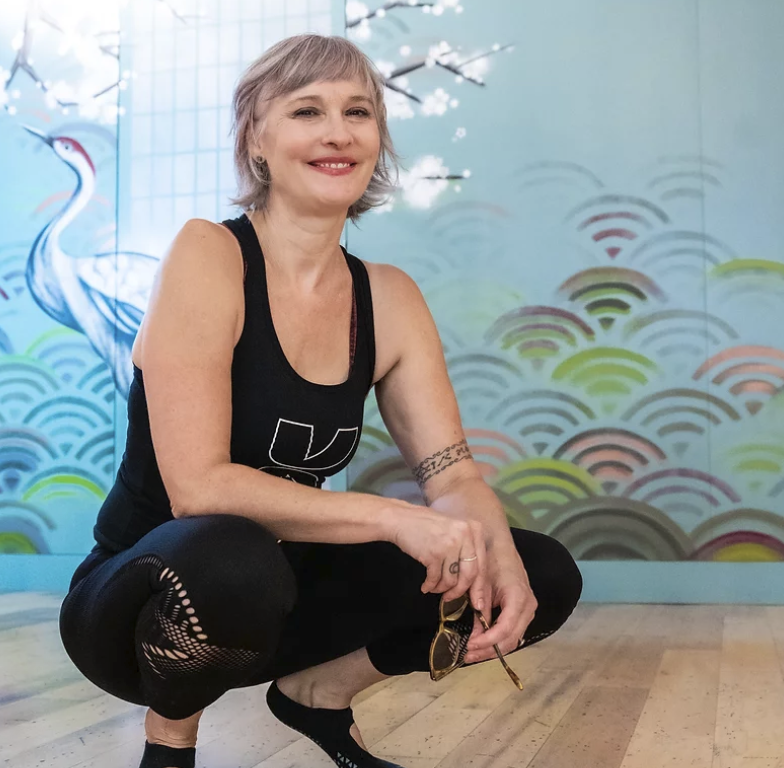
Christl Marcontell grew up near Seattle and began dance training at about four years old. After a serious accident in her early twenties and years of continuing to move through dance and aerial work, she found Pilates in her late twenties as both a physical practice and a sustainable teaching career. She was certified by Romana Kryzanowska in 1999 and established Kinesia Pilates in 2004. Kinesia’s current team page identifies her as a second-generation Pilates teacher and lists multiple MELT Method certifications.
Help clients build a healthier relationship with their bodies through personalized guidance, practical challenges, meaningful goals, and a resilience-first understanding of strength that extends beyond the studio session.
Classical Romana’s Pilates, comprehensive apparatus instruction, individualized cueing, body awareness, breath and core recruitment, small-group teaching, teacher development, MELT Method self-care, and work with clients across a wide range of ages, goals, and movement histories.
About This Spotlight
Fitness Living Magazine™ selected this Spotlight for Kinesia Pilates’ resilience-first teaching philosophy, personalized classical Pilates model, advanced Romana’s Pilates training standard, separate MELT Method self-care options, source-supported client success story, and Christl Marcontell’s long-standing role in Seattle’s Pioneer Square fitness community.
Fitness Living Magazine™ publishes these features to place local fitness leaders on the record about how their programs operate, what clients experience, what standards guide the coaching, and what makes the business relevant to its local community.
Source material for this Spotlight consisted of the recorded Fitness Living Magazine™ editorial interview with Christl Marcontell, the existing published Kinesia Pilates Spotlight and its supplied photo and client-comment assets, the current Fitness Living Magazine™ article URL used for migration continuity, and Kinesia Pilates’ official website used to confirm the present Pioneer Square address, teaching-team credentials, current service structure, class-entry guidance, contact information, and introductory offers.
This feature is editorial content and is not medical advice. Training descriptions, methods, self-care references, and outcomes reflect the featured expert’s account, supplied client feedback, or official studio materials and do not establish diagnosis, treatment, guaranteed pain relief, or guaranteed results. Individual experiences vary. Readers with injuries, acute pain, or medical concerns should consult a qualified healthcare professional before beginning a new exercise or self-care program.