
This is a custom HTML / JavaScript Element
In order To See Your Custom HTML/JavaScript Code in Action You Must Click On The Preview Page Button, Your Code is NOT going to be active in the edit mode
|
Local Fitness Leadership Series
Editorial Spotlight / Santa Barbara, California
|
By Mark D.R. Ford
Managing Editor
|
The Santa Barbara StudioThat Kept Pilates CloserTo Repair Than To Fashion
|
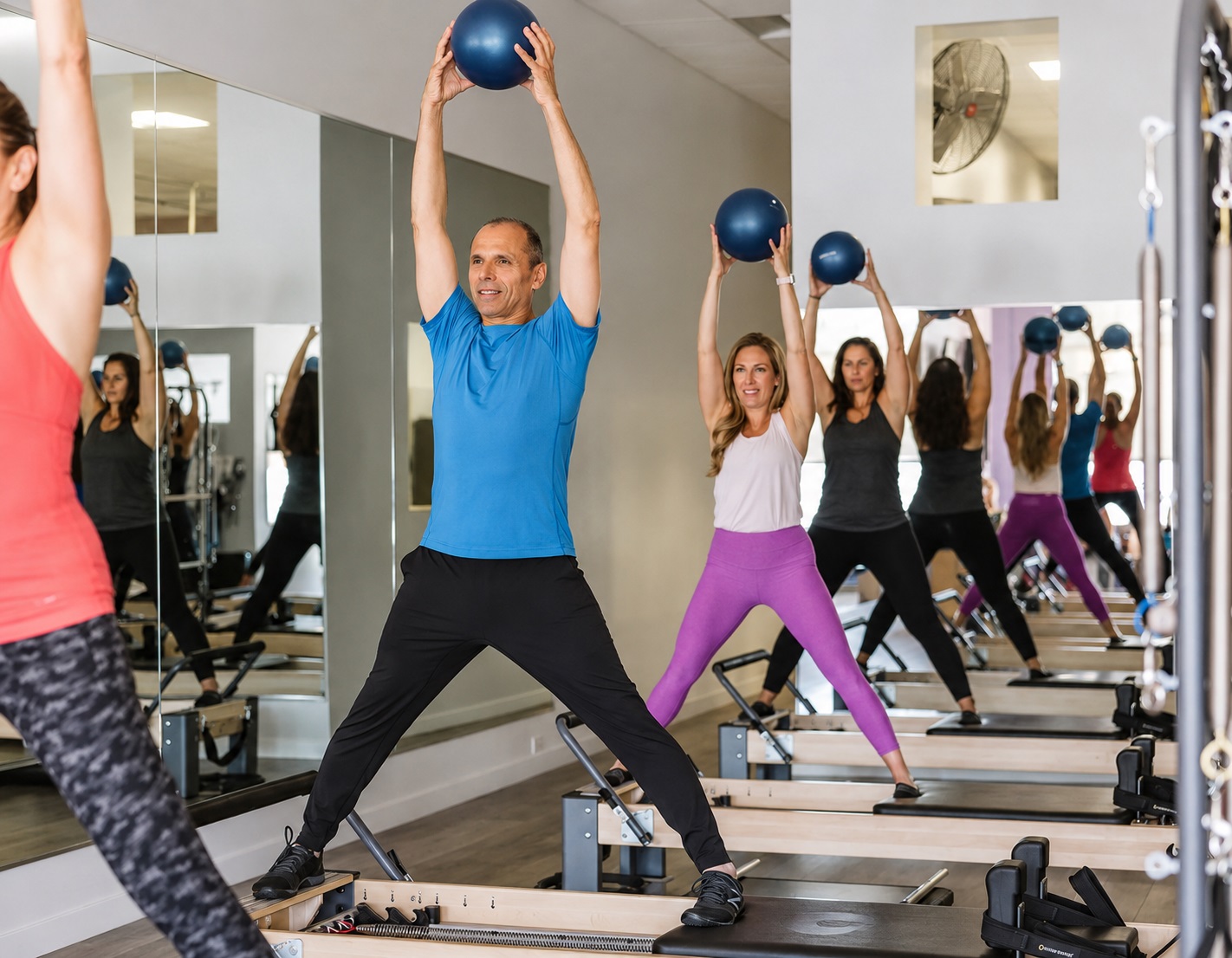
Chanda Fetter met Pilates before most of California had heard of it, and she did not meet it as exercise. She met it as repair. A professional ballet career had left her injured often enough that rehabilitation became a second education, and the method she was handed in a clinical setting was not marketed as fitness at all.
That order of discovery still governs Core Sport, the Santa Barbara studio she owns on State Street in Loreto Plaza. Pilates has since become a trend, a boutique category, and a franchise product. At Core Sport it has remained what it was when she first encountered it: an intelligent way to load muscle without punishing joints, available to almost anyone who walks in.
“It is a very intelligent form of movement. And it helps everybody, no matter what size, what age, what capability, what ability.”
Chanda Fetter, Owner And Master Trainer / Core Sport
What Clients Notice First
A person answers the telephone. Clients raise it constantly: they expect a booking system and instead reach someone who knows the schedule. That tone carries into the studio, where staff greet arrivals by name and treat a first visit as a conversation rather than a transaction.
The second thing clients notice is how little it hurts. Most weight-bearing exercise loads bones and joints along with muscle. Pilates, as Chanda explains it, changes the position of the body so the muscle works while the joint is spared. For someone arriving with an old injury or a long absence from training, that difference decides whether there is a second visit.
What completes the first impression is that the program is not fixed before the client arrives. Someone returning after an injury, beginning again after years away, or simply trying to build strength is not expected to fit a preset formula. Chanda and her staff ask what the person needs, point them toward the classes and private work that make sense, and adjust the plan as the client becomes stronger and more confident.
|
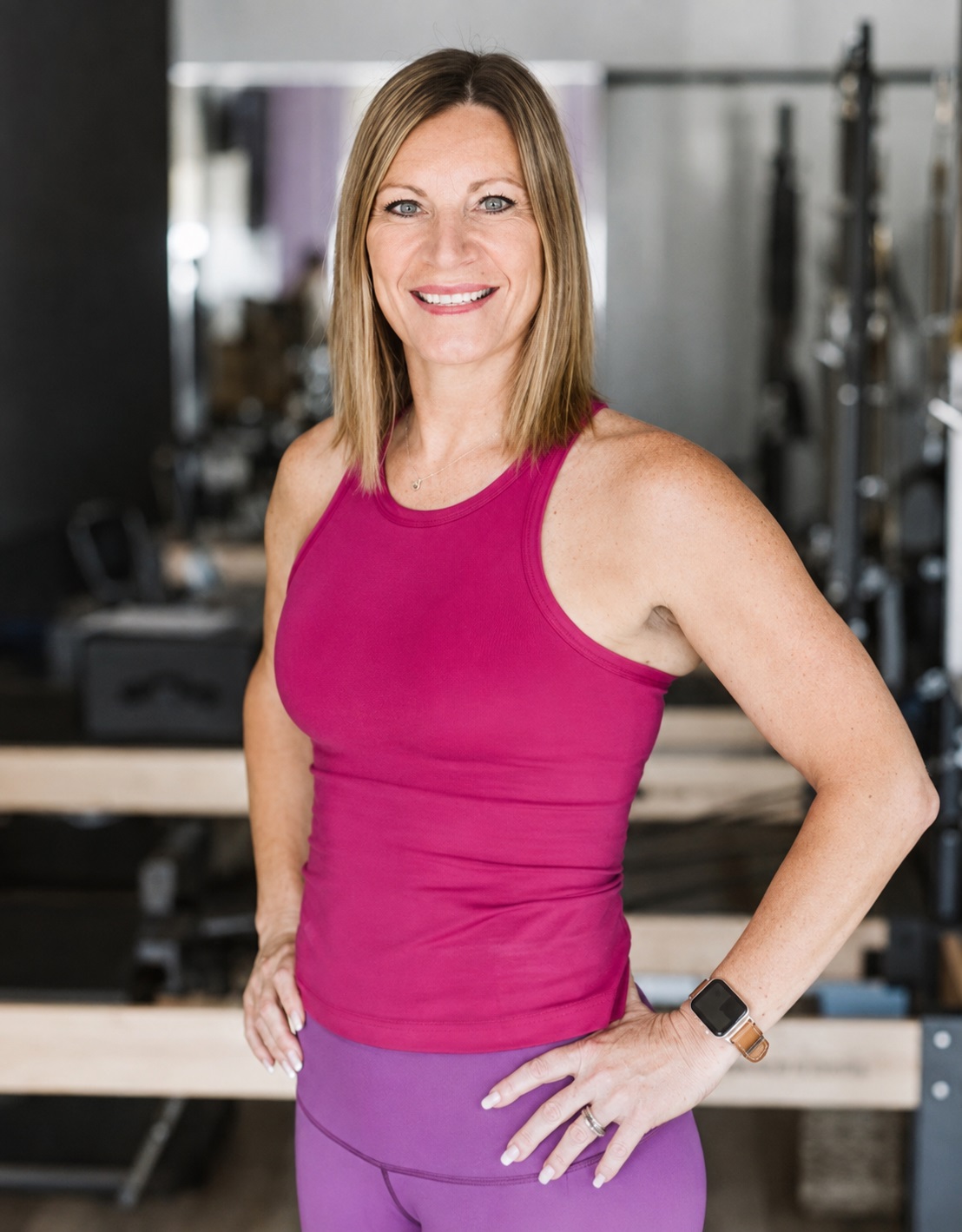
CHANDA FETTER: Owner and master trainer of Core Sport, whose route into Pilates ran through professional ballet, injury, and physical rehabilitation.
At A Glance
LocationState Street at Loreto Plaza, Santa Barbara, California.
MethodPilates taught as rehabilitation, supported by a wide class range.
FacilityTwo suites: one for classes, one for private training and recovery work.
LeadershipOwner-led since 2007, now approaching twenty years in business.
Owner Focus
Chanda Fetter has built Core Sport around a standard she repeats to her own instructors: meet the person in front of you, keep the process simple, and let capability grow from consistency rather than intensity. That owner-led tone gives the studio its steady, personal, rehabilitation-minded identity.
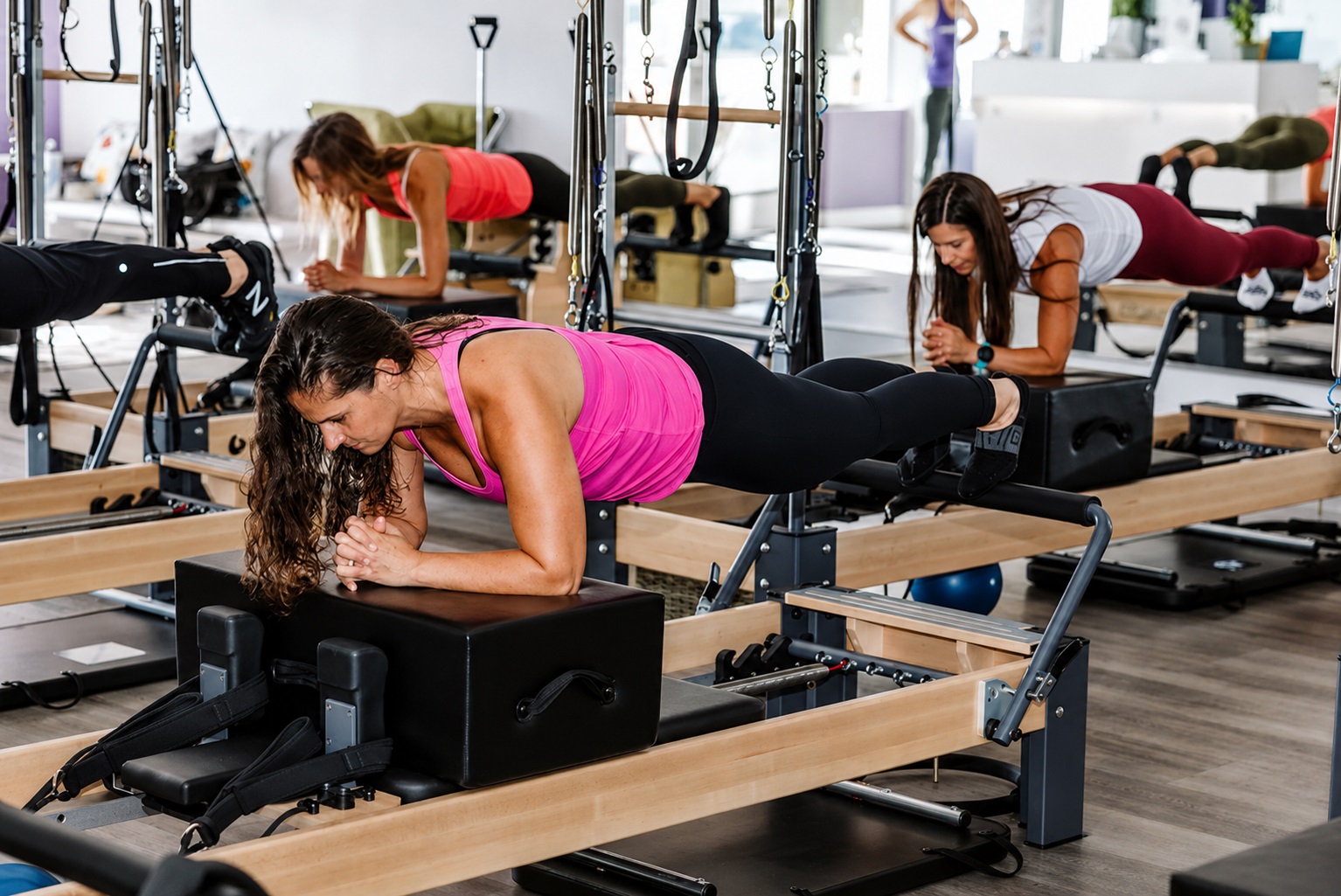
The Floor: Inside Core Sport in Santa Barbara, where the studio operates separate spaces for group fitness and for private training and rehabilitation-oriented work.
Core Sport Standard
Rehab RootsPilates entered this studio as physical rehabilitation, and movement is still taught as a way to restore function first.
Programmed LocallyIndependently owned, so classes answer to the clients in the room rather than choreography issued from a corporate office.
Known By NameEvery arrival is greeted, newcomers are paired with a training partner, and first schedules are mapped out in person.
Every StageYouth offerings, a Kids Club for parents, pelvic floor specialization, and longevity private training sit under one roof.
|
The category grew up around this studio rather than the other way around. Pilates was clinical equipment when Chanda Fetter first met it, and the market has since recast it as a boutique product delivered from a printed weekly script. Her counterargument is practical rather than philosophical: a script cannot accommodate the client who is eight months pregnant or the one who arrives with a replaced hip.
Two decades, a recession, a fire season, a mudslide, and a pandemic sit behind the schedule posted at Core Sport today. What follows examines the decisions that kept the doors open, and the reason the programming still changes when a client’s body does.
The transformation of Pilates in Santa Barbara can be traced through one career. Chanda Fetter encountered the method as a form of physical rehabilitation, brought it into a large local health club as a group offering, and then left that club to open a specialized studio because she believed the setting was limiting what the work could do. Core Sport is the result, and its logic has stayed consistent even as the category around it has become crowded.
Core Sport is an independently owned Pilates and wellness studio in Santa Barbara, California, led by owner and master trainer Chanda Fetter. It operates two suites in Loreto Plaza: a class suite running close to one hundred weekly sessions across Pilates, spin, TRX, barre, weights, circuit, mobility, and pelvic floor programming, plus a Kids Club that makes training more practical for parents, and a wellness suite for private training, rehabilitation, and physical therapy. Chanda describes the studio as serving clients through changing stages of life, from youth offerings and younger parents to pelvic-floor specialization and longevity-focused private training. Clients typically begin with a free introductory class, a seven-day trial, or a wellness consultation.
Her own introduction shaped everything after it. Ballet had given her a technical vocabulary for movement and a professional standard for executing it. Injury took the career away and, in the process, handed her an unexpected curiosity: how movement patterns change, how function returns, and how much control a person can recover over their own body. She has described that period as a gift only in retrospect. At the time, it read as a career ending early.
This profile examines how a rehabilitation-first view of Pilates became a full wellness center, and why independent programming has produced unusually long client tenure in a saturated Santa Barbara market.
|
Why It Is Different
Programming is written for the clients in the room, not delivered as a national format with fixed choreography. |
Who It Serves
Beginners, returning clients, parents, people training around injury, and clients whose needs change across life stages, from pelvic-floor work through longevity-focused training. |
Why It Stands Out
Two suites, deep staff experience, a Kids Club for parents, life-stage programming, and a retention rate the owner estimates at roughly eighty-five percent. |
Chanda grew up in Sacramento and came to Santa Barbara for university, enrolling at UC Santa Barbara after her performing career ended. She specialized in physical education, sports psychology, and anatomy with the intention of becoming a physical therapist. The plan was linear. What redirected it was the response she saw when she began putting people on Pilates equipment.
She supported herself through school by working at a large Santa Barbara health club, eventually managing and operating its group exercise programs for fifteen years. The prevailing view of movement there was, in her description, more archaic than functional: isolated exercises performed for their own sake, with little attention to how the body actually works as a system. She wrote a proposal asking the owners to allocate an unused room to private Pilates. They agreed, and Pilates arrived in a Santa Barbara group setting for the first time.
A client at Core Sport is meant to feel unique, capable, and accompanied. Chanda describes a studio where everyone is called by name, where a nervous newcomer is handed a marked-up schedule rather than a price sheet, and where the work is designed to feel closer to play than to obligation because the people beside you have become friends.
The response inside the club convinced her that the setting had a ceiling. Clients were healing faster than she expected, and the questions they brought were rehabilitative rather than aesthetic. She saw a void locally for specialized Pilates training, and she took what she has called a leap of faith: she left a fifteen-year post and opened Core Sport in 2007, beginning a run that is now approaching its twentieth year.
Longevity of that kind is rare in fitness. Chanda describes an industry with unusually high turnover, and a small coastal city that saturates quickly. Several new Pilates studios have opened in Santa Barbara within a single recent year. Many arrive with favorable opening terms and encounter the real economics somewhere around year three or year five. Core Sport has now outlasted that arithmetic several times over.
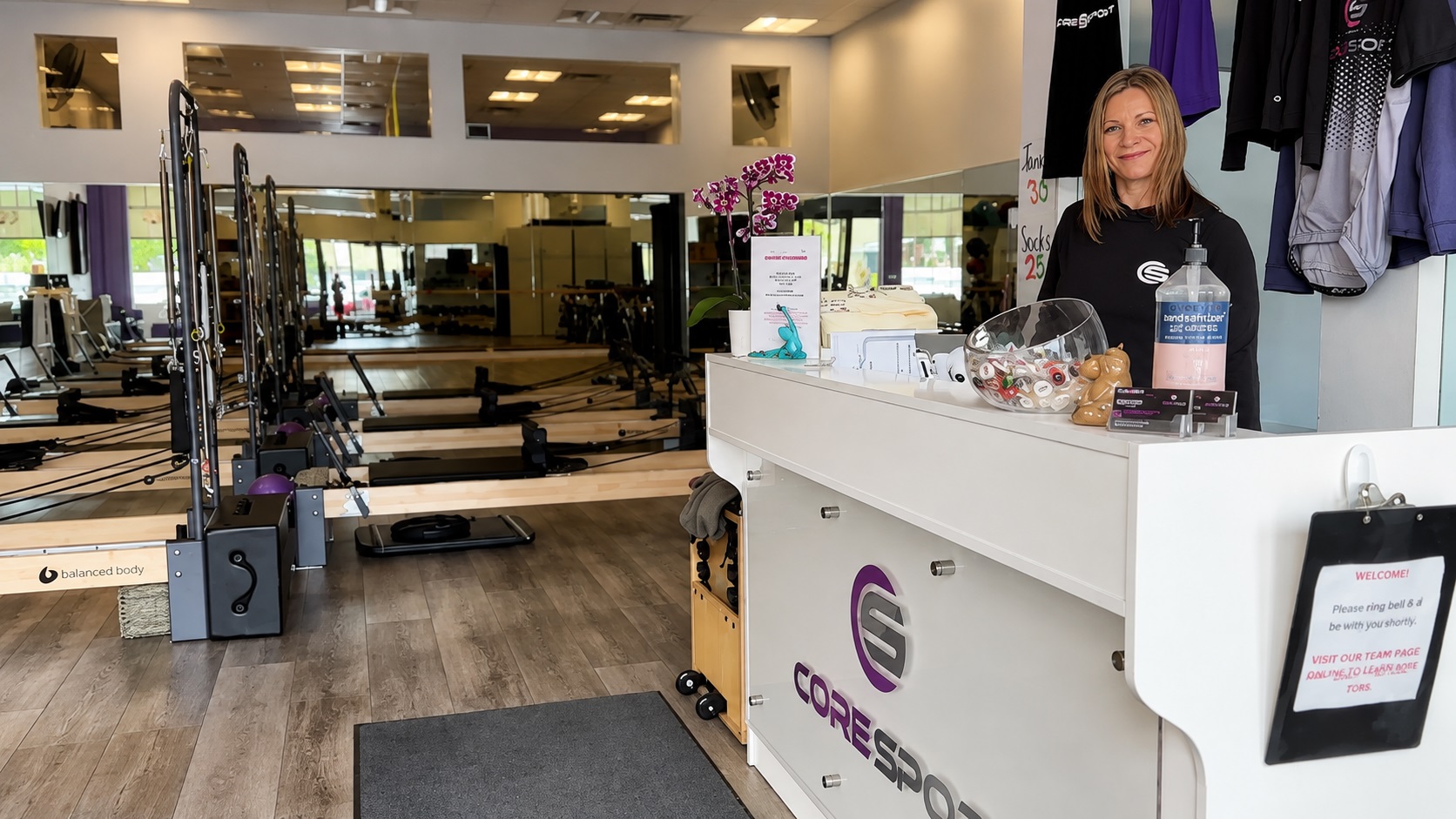
COVID was not Core Sport’s first test. Chanda opened the studio in 2007 and almost immediately faced the 2008 recession. A decade later came the Santa Barbara-area fires of 2017, followed by the mudslides of 2018. Each disruption tested a young independent business in a different way. By the time 2020 arrived, Core Sport had already learned how to keep moving through circumstances it could not control.
2007: Core Sport opened • 2008: Recession • 2017: Fires • 2018: Mudslides • 2020: COVID
In January of 2020, Chanda signed a lease on a larger facility and committed fifteen years of savings to the build-out. Two months later the world closed. The new space could not be completed, the studio could not open, and a substantial balance of prepaid client services sat on the books for work she had every intention of honoring.
After roughly six months of closure, she approached city leadership and was permitted to operate in a limited capacity as an essential service for physical therapy and rehabilitation. She used that window to deliver the sessions clients had already paid for, earning nothing new in the process. What followed was unplanned: local accreditation for rehabilitation-oriented private training, and a private training practice that grew substantially during the period the studio was supposedly dormant.
The community moved in the same direction. Two clients privately offered her money to keep the studio alive. One of them, newly signed and barely known to her, asked her to coffee, described his own experience of a financial crash, and handed her a check with instructions to use it or tear it up. She did not need to cash either offer. She still refers to those clients as her COVID angels.
When restrictions lifted, she faced the opposite problem: more demand than the new facility could absorb. A second suite in the same plaza had come available, she applied to the landlord, and the answer was yes. That is how Core Sport became two spaces rather than one, a class suite and a wellness center, and how the original plan finally got built in full.
Core Sport matters because independence is the product: programming answers to the client rather than a distributed format, and that flexibility is what keeps people for years rather than seasons.
Chanda is direct about where she sits in the market. Large chains operate at scale on volume. Franchise studios operate on a standardized product, which requires instructors to teach a distributed format and, in her view, removes the permission to adapt. Her example is deliberately ordinary: an instructor can memorize a sheet, but the sheet does not account for a client who is eight months pregnant or one who has had a hip replacement.
Independence is what allows the alternative. When she notices a need in the community, she can build a class for it without clearing the idea through a corporate calendar. Her senior staff bring what she estimates as more than a hundred combined years of experience, much of it from professional athletic backgrounds and multiple facilities. That depth is what makes adaptation possible in a group room rather than only in private sessions.
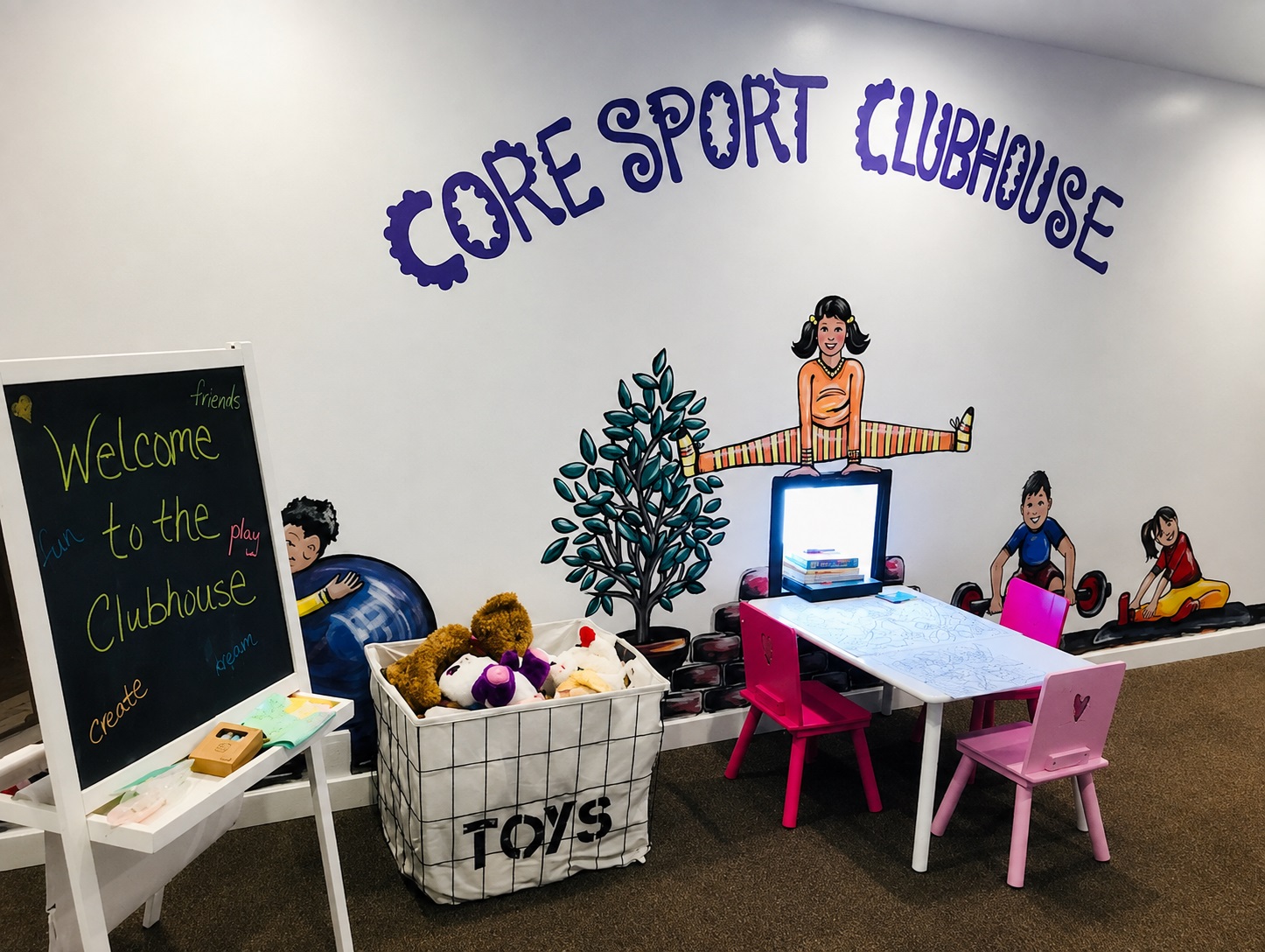
Chanda describes Core Sport as a studio designed to serve people through every stage of life. Youth offerings run at points during the year. Younger parents can choose from the fitness-based class schedule while the Kids Club gives them a practical way to make training fit family life. Through midlife, pelvic-floor specialization addresses needs Chanda sees around the pre- and post-menopausal years. For older adults, the wellness side includes longevity-focused private training.
That range is another expression of the studio’s independence. As a client’s circumstances and capabilities change, the programming can change with them rather than requiring the person to fit the same fixed format indefinitely.
Asked what produces results, Chanda answers with one word: consistency. Her working baseline is three sessions a week, enough that the body stops relearning the movement each time and starts improving at it. Beyond that, the prescription changes with the goal. The clients who progress fastest, she finds, are usually the ones combining group classes with some private training.
She is equally deliberate about what gets measured. The studio uses body composition analysis to establish a baseline, and the emphasis falls on maintaining and building muscle rather than losing weight. Her reasoning is both physiological and psychological: muscle supports metabolism and strength, and a goal framed as gaining something is easier to sustain than one framed as a deficit. In a recent studio challenge, a participant in her sixties reduced body fat and added muscle over the course of a month, a result Chanda notes is difficult at any age and unusual after sixty. Individual experiences vary.
The results clients describe to her are often smaller and more consequential than a number. Lifting a suitcase into an overhead compartment. Walking from one airport gate to the next without assistance. Going into the water with a grandchild. Those are the outcomes she cites when asked what the training is for.
Based on the interview and the studio’s published materials, Core Sport is built for clients who want coached variety, rehabilitation-aware programming, and a single studio that can meet them through changing stages of life.
“Core Sport is a whole lot more than a ‘gym’. Small group classes for Pilates, free weights, spin, TRX, circuit, core mat, optional private training. Started coming here a few years ago, with injuries, hoping to reboot my health. I am vastly stronger now and feel fantastic. I keep coming here because of the wide variety of ways they offer to meet health goals and keep progressing. There is never a boring workout. That’s because the trainers are highly knowledgeable, engaged and creative. This is a community of good humored people encouraging each other. Highest recommendation.”
Asked what the community means to her personally, Chanda does not reach for a business answer. Over one recent six-week stretch, clients faced serious illness and family loss. What she watched in response (hospital visits, cards, visits at home, meal trains, people simply showing up) is the part of the work she describes as remarkable. Clients walk with one another through the fitness journey and, when it comes to it, through the rest of life as well.
That culture is also, in commercial terms, the retention strategy. Chanda estimates client retention at roughly eighty-five percent, a figure she notes is unusual in an industry where clients tend to move often. The studio hosts community events outside class hours and runs workshops for clients at no charge. Her explanation is simple enough to sound obvious: people who feel taken care of tend to stay where they are.
Santa Barbara is an unusually difficult market for an indoor fitness business. The weather permits outdoor exercise nearly every day of the year, the city is small enough to saturate quickly, and the recent boom in boutique Pilates has added several new studios in a short span. A studio here cannot rely on being the only option, and Chanda is candid that an independent operator cannot outspend national marketing budgets.
What it can do is answer the phone, know its clients, and build the class that a specific group of people actually needs. For readers searching for Pilates in Santa Barbara, a rehabilitation-aware studio, or a place that can accommodate an injury without treating it as a disqualification, Core Sport offers a clear local distinction: two suites, a deep bench of instructors, a Kids Club that makes attendance more practical for parents, and programming written for the room and for changing stages of life rather than for the network.
Chanda Fetter is the owner and master trainer of Core Sport in Santa Barbara, California. A former professional ballet dancer, she was introduced to Pilates as a form of physical rehabilitation, studied physical education, sports psychology, and anatomy at UC Santa Barbara, managed group exercise programs at a local health club for fifteen years, and then opened the studio in 2007, which is now approaching two decades in business.
The studio is known for combining Pilates with a wide program range that includes spin, TRX, barre, weight training, mobility and stretch, core mat work, and pelvic floor specialization, along with youth programming, a Kids Club that makes training more practical for parents, longevity-focused private training, and rehabilitation-oriented work in a separate wellness suite.
Chanda Fetter described a deliberate onboarding path for nervous beginners. New clients start with an introductory class where they learn the equipment, what a movement should feel like, and what it should not feel like. Staff greet clients by name, pair newcomers with a training partner, and help map out a schedule that fits their goals.
Yes. Chanda Fetter describes the studio as serving clients through changing stages of life. It offers youth programming at points during the year, fitness-based classes and a Kids Club that make training more practical for parents, pelvic-floor specialization around the pre- and post-menopausal years, and longevity-focused private training for older adults.
Chanda Fetter said consistency of roughly three sessions per week is the baseline she recommends. She focuses clients on maintaining and building muscle rather than only losing weight, and uses body composition analysis to establish a baseline. Clients commonly report improved strength, easier daily movement, and greater confidence. Individual experiences vary.
The studio is independently owned and operated, which allows programming to be shaped around the clients in the room rather than a franchise format. Chanda Fetter cited long-tenured staff, a class schedule of close to one hundred sessions a week, a separate wellness suite for private training and rehabilitation, a Kids Club for parents, programming designed to serve clients across changing stages of life, and a client retention rate she estimates at about eighty-five percent.
- Core Sport opened in 2007 and has remained independently owned through the 2008 recession, the 2017 fires, the 2018 mudslides, and the COVID-19 disruption that began in 2020.
- Chanda encountered Pilates as physical rehabilitation during a professional ballet career, and the studio still treats movement as a way to restore function rather than only to change appearance.
- Two suites divide the work: a class suite running close to one hundred weekly sessions, and a wellness center for private training, rehabilitation, and physical therapy.
- Independence allows programming to be written for the clients in the room, which Chanda credits for a retention rate she estimates at roughly eighty-five percent.
- The studio is designed to meet clients through changing stages of life, from youth offerings and parents supported by the Kids Club to pelvic-floor specialization and longevity-focused private training for older adults.
The story of Pilates in Santa Barbara is, in part, the story of a method that arrived as rehabilitation and was later reclassified as fitness. Chanda Fetter has spent a career on both sides of that line, and Core Sport is what it looks like when the rehabilitative origin is kept rather than discarded. The equipment is the same equipment other studios use. The difference is who gets to decide what happens on it.
Her closing message is not complicated, and she resists making it so. Everybody is capable, everybody matters, and everybody deserves the chance to feel as well as they can feel. Clients who train consistently often report changes their physicians go on to discuss with them; those conversations, and any decisions about medication or treatment, belong to the physician and the patient. What a studio can offer is the movement, the coaching, and the company. Here, that has been enough to hold a community together for nearly twenty years while giving clients room to keep participating as their lives and training needs change.
Chanda Fetter is the owner and master trainer of Core Sport in Santa Barbara, California. A former professional ballet dancer, she was introduced to Pilates as physical rehabilitation after repeated performance injuries, then studied physical education, sports psychology, and anatomy at UC Santa Barbara with the intention of becoming a physical therapist. She spent fifteen years managing group exercise programs at a local health club, where she introduced Pilates in a group setting, before opening her own studio. The business now operates two suites in Loreto Plaza, covering group classes, private training, rehabilitation-oriented work, a Kids Club for parents, and programming designed to meet clients through changing stages of life.
Chanda’s philosophy holds that movement is medicine and that the industry has made a simple thing unnecessarily complicated. She teaches instructors to meet the person in front of them, to keep the process understandable, and to build capability through consistency rather than intensity. Her stated aim is not perfection but participation: that clients move regularly, feel better doing it, and regain the ability to take part in their own lives.
Her specialties include Pilates instruction and rehabilitation-aware programming, group exercise design, private training, body composition assessment, instructor certification, pelvic-floor specialization, and longevity-focused training. Her values show up on the floor as individualized programming, clients addressed by name, complimentary orientation classes, a Kids Club that helps parents stay consistent, community events and workshops, and an independence that allows the schedule to answer to local need and changing stages of life rather than a distributed format.



Write A Comment