
This is a custom HTML / JavaScript Element
In order To See Your Custom HTML/JavaScript Code in Action You Must Click On The Preview Page Button, Your Code is NOT going to be active in the edit mode
|
Local Fitness Leadership Series
Editorial Spotlight / Santa Clara, California
|
By Mark D.R. Ford
Managing Editor
|
A Santa Clara Weight RoomBuilt For Every Age AndEvery Starting Point
|
Years before he owned a strength gym in Santa Clara, Steve Babcock was the one physical education teacher in his middle school who refused to grade a child on how fast that child could run a mile. One eighth-grade boy set his own goal instead: finish a mile in under twenty minutes. Other teachers wanted the boy failed. He started the year at twenty-eight minutes and ended it speed-walking nineteen.
That standard, a goal set by the person doing the work rather than a number on a chart, is now the operating principle at Age-Less Strength, the free-weight gym on Memorex Drive that Steve owns with his wife, Rebekah. The name is the argument. The boy from that class still trains there.
“It really shouldn’t matter your age, it really shouldn’t matter your gender. The gym is for everyone. It’s ageless.”
Steve Babcock, Co-Owner And Strength Coach / Age-Less Strength Gym
What Members Notice First
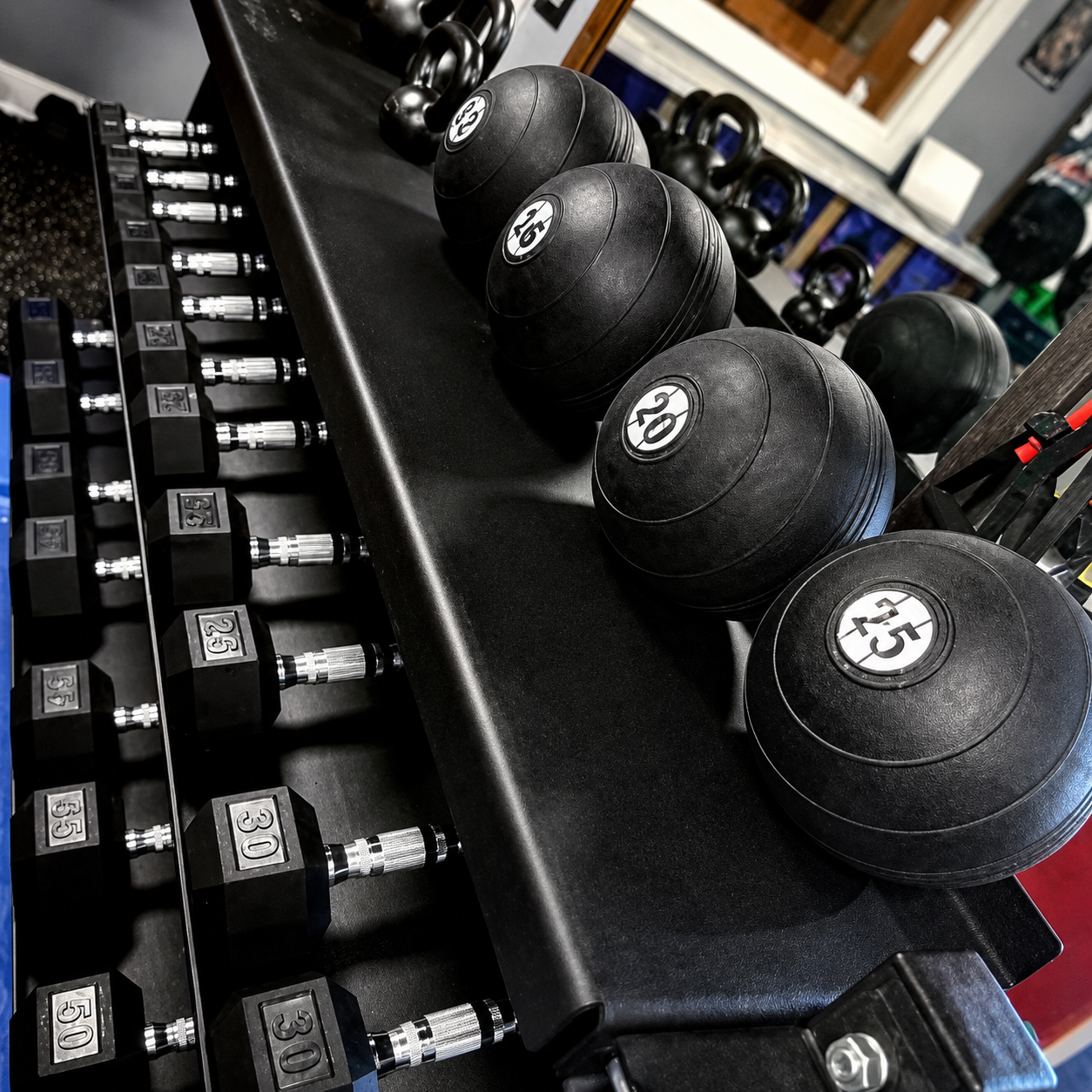
A room built for lifting and nothing else: free weights, plates, bars, real equipment, and none of the decoration that usually surrounds a gym floor. Only about one member in ten competes in powerlifting; most are general fitness members training in a serious strength facility. Members also notice that the owner is on the floor. Steve works most days, and even members who have never paid for a session stop him to ask how a movement should feel.
What follows is quieter. Steve knows every member by name, including former students and teaching colleagues. His manner is closer to a goofball than a drill sergeant, and he says he has never put a member down. Corrections come as suggestions, encouragement comes constantly, and often with a joke attached.
The result is a floor where nobody has to earn the right to belong. Beginners train beside competitive lifters. A ten-year-old and an eighty-year-old are equally welcome. Roughly five of every six members are women, a balance that developed naturally and that the owners want to keep growing. That welcoming standard is visible in the room every day.
|
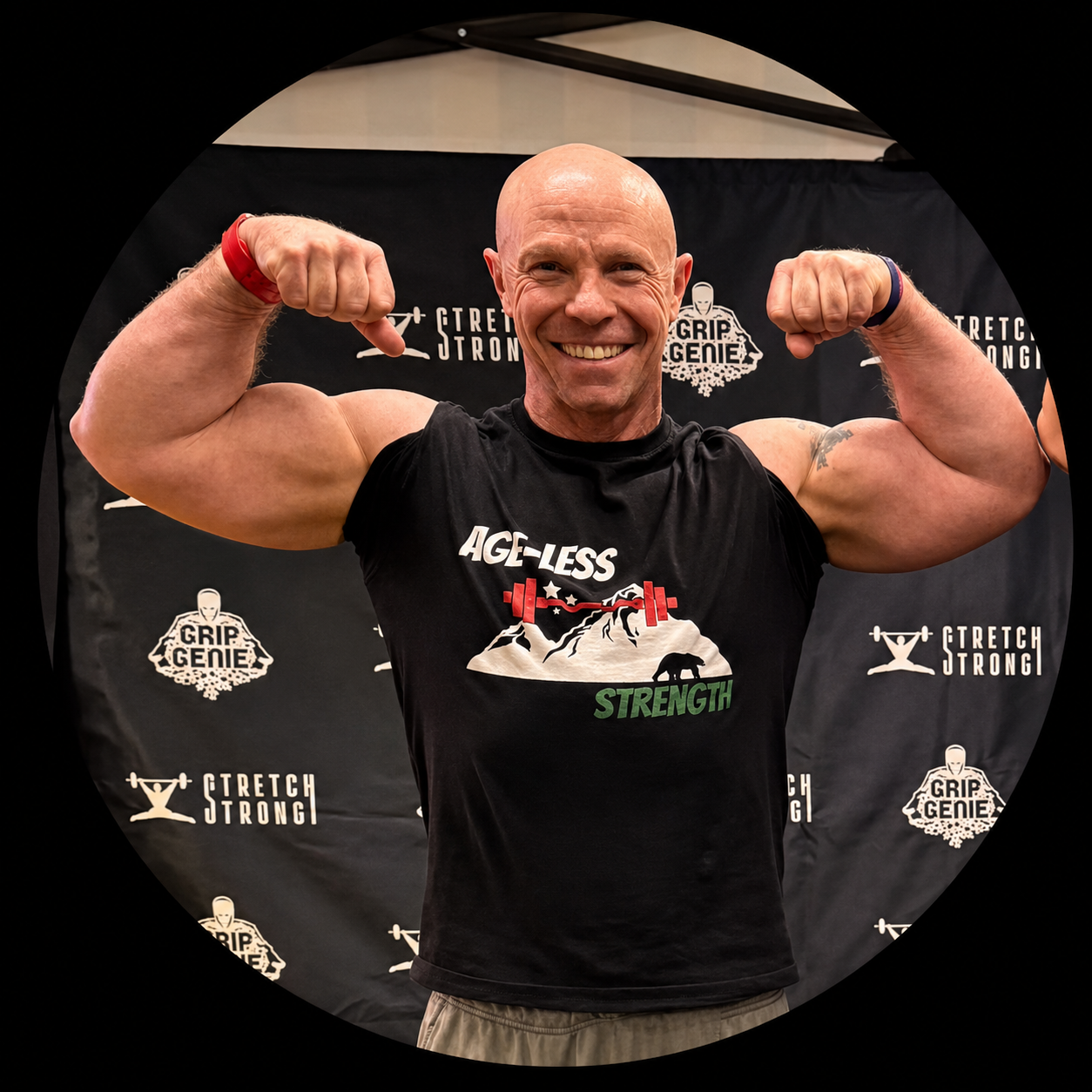
STEVE BABCOCK: Co-owner and strength coach, whose standard was set across fourteen years of middle school physical education and more than twenty years working in gyms.
At A Glance
LocationMemorex Drive, Santa Clara, California.
MethodFree weights and traditional lifts, in a room equipped like a powerlifting gym.
MembershipMostly general fitness; about one member in ten competes in powerlifting.
LeadershipOwned by Steve and Rebekah Babcock, with Steve on the floor most of the day.
Owner Focus
Steve holds the gym to one requirement: see the person first, then write the training for that person. Because he and Rebekah own the place themselves and he is there most of the day, members deal directly with the coach who sets the standard.
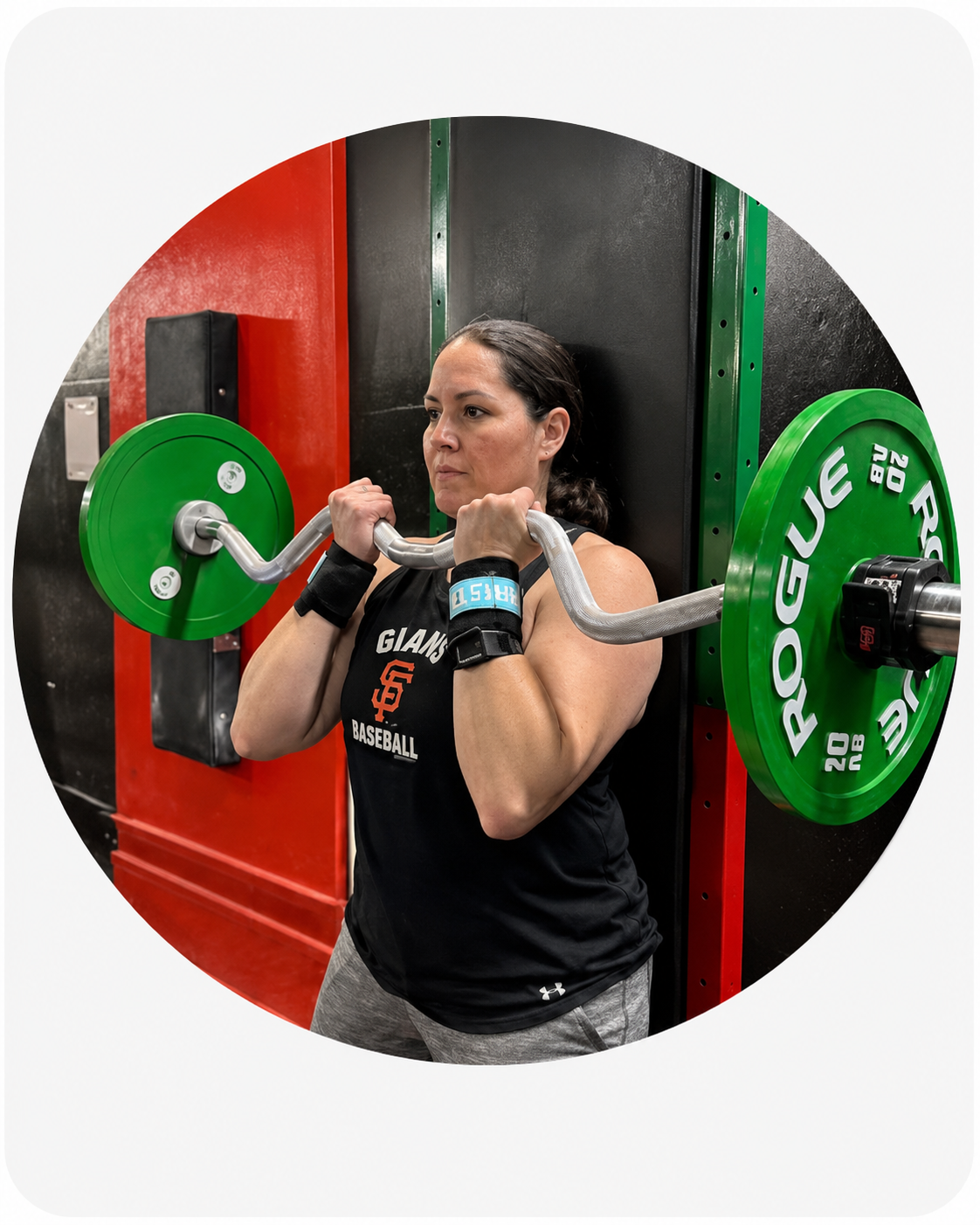
The Floor: The room is equipped for squat, bench, deadlift, and strict curl work. Steve describes the approach as traditional by choice rather than by limitation.
Age-Less Strength Standard
Ageless AccessMembers range from young athletes to lifters well past retirement, with training scaled to the person rather than the age.
Tailored ProgramsEvery program is written for one person’s stated goal, because Steve does not believe a cookie-cutter client exists.
Known By NameSteve knows every member personally, including former students and former teaching colleagues who now train on the same floor.
Women’s StrengthRoughly five of every six members are women, including much of the powerlifting team, a balance the owners intend to keep growing.
|
The name is a claim, and the room is arranged to make the claim testable. One program per person, an owner on the floor for most of the working day, and a membership that runs from ten-year-olds to lifters past eighty are not amenities here. They are the evidence.
This profile follows a teacher who spent fourteen years refusing to grade children against a stopwatch, watched one boy cut nine minutes off a mile, and later carried the same rule onto a free-weight floor where the pace belongs to the member.
Building an inclusive fitness community is a phrase that appears in a great deal of gym marketing. At Age-Less Strength in Santa Clara, California, it is closer to a structural decision. Steve Babcock did not name the gym after a training method or a local landmark. He named it after the thing he believes the fitness industry gets wrong most often: the assumption that there is a correct age, body, gender, or starting point for walking into a weight room.
Age-Less Strength is a free-weight strength gym in Santa Clara, California, owned by Steve Babcock and his wife, Rebekah. It is equipped like a powerlifting facility while serving mostly general fitness members, and it offers personal training, boot camp classes, powerlifting coaching, rehabilitation and mobility work, youth and athletic training, and monthly lifting clinics. Steve describes the standard as individually written programs, a mindset-first coaching philosophy, and a floor open to every age and experience level.
His own history explains part of that conviction. Steve grew up in gymnastics and expected the sport to take him further than it did. He competed in college, understood at some point that an Olympic path was closing, and found himself in a position familiar to many athletes: he had defined himself almost entirely by his sport and did not know what he was outside of it. He studied kinesiology, earned a master’s degree in physical education with a focus on pedagogy, and began teaching.
This profile looks at how a teaching background, traditional strength work, and an insistence on individual programming shape a Santa Clara gym that sets out to serve every age at once.
|
Why It Is Different
A serious free-weight facility run by a former teacher who writes each program for one person and refuses to coach by template. |
Who It Serves
Beginners, general fitness members, women who want a weight room without stigma, young athletes, and competitive powerlifters. |
Why It Stands Out
Owner access, a mindset-first philosophy, open clinics, and a members’ culture the client statement describes as zero egos, all encouragement. |
Steve began coaching gymnastics at fourteen and kept working with young people into his forties, including fourteen years as a middle school physical education teacher. His fitness course was an elective, which meant students had to choose it over traditional PE, and it was the only class in the building where a mile time was not the measure of a passing grade. He set goals with students instead. The boy who arrived at twenty-eight minutes and left at nineteen finished the year in tears, and Steve still describes that as the best experience of his career.
What eventually pulled him out of the classroom was arithmetic. A teacher reaches one roster at a time. Steve had fallen in love with gym culture in his twenties and had come to believe that most people never find out that training can be enjoyable, because the industry has spent decades presenting exercise as a punishment. He wanted a room where he could demonstrate the opposite, at scale, to people of any age who had never been told the door was open to them.
A member at Age-Less Strength is meant to feel safe and, in Steve’s word, seen. He talks to every person differently, describing a good trainer as something close to a good bartender: some members want to be talked through the hour, others want to be listened to. The pace is set by the member, and the program is built around what that member actually asked for.
Steve’s own specialty is strength and conditioning with a powerlifting emphasis, and the gym is built to that specification. Only about ten percent of the membership competes, however, which leaves a facility of serious equipment being used mostly by people pursuing general fitness. On any given day he might coach the strongest lifters in the room, then run agility work with his son and his son’s hockey teammates, then take a beginner through a first session. Rebekah leads the boot camp classes. A third trainer, Gwen, works in rehabilitation and mobility for members returning from injury.
The one thing he will not do is reuse a program. Steve is direct about why trainers fall into templates: the workout is already written, and modifying weights is faster than thinking. His objection is that the practice assumes a person who does not exist. Rehabilitation, weight loss, a first pull-up, and a competition total are different problems, and a member can tell whether the paper in front of them was written for their goal or for someone else’s.
Asked to compress his training philosophy, Steve puts mindset ahead of everything, including talent. He came to that position through powerlifting, where he watched people who had never played a sport, never enjoyed physical education, and never belonged to a gym become some of the strongest lifters he knew. Given a choice between raw ability and work ethic, he says he would take the work ethic on any day of the week.
In practice that means he accepts goals he cannot put a date on. A member who has never touched a bench press and wants to press 225 pounds gets an honest answer: not this year, possibly not next, but the number is reachable at whatever pace that member is willing to work. He sets a pull-up as a target for nearly everyone he trains, on the grounds that nearly everyone can get there. Some of his clients have. Others are still at the beginning of the progression, which he treats as the same story at an earlier point.
Steve has little patience for the bathroom scale as a primary measure, and a good deal of patience for the conversation it forces. His preferred evidence is a member who began shoulder pressing two-and-a-half-pound dumbbells and one day presses ten. To a competitive lifter the number is trivial. To the member it is proof that the body is restructuring even while the scale sits still. He also frames the same progress in longer terms: skeletal muscle strength is what keeps people from falling and getting hurt as they age, which is why he considers it more important than a weight readout.
The achievements that make him proudest are the ones nobody planned. A member notices a muscle in the mirror that was not visible before. Someone is stopped in a grocery store by a stranger paying a compliment, and the first thing they want to do is tell their coach about it. Steve’s reasoning is that people judge themselves more harshly than anyone else does and rarely see their own change; an unprompted observation from outside gets past that in a way a progress photograph cannot.
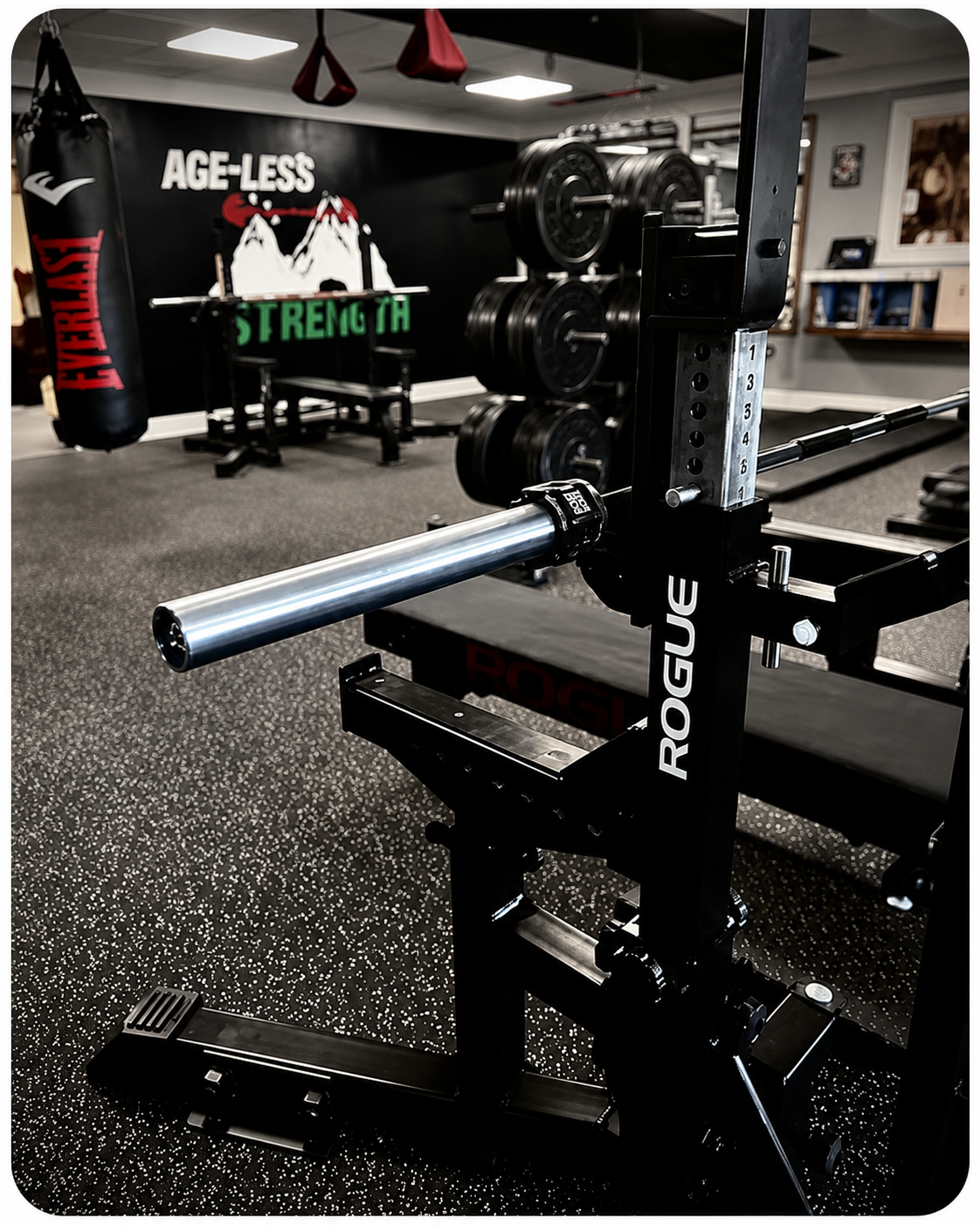
Age-Less Strength matters because it treats inclusion as a coaching method rather than a slogan: the program is written for the person in front of the coach, which is what makes a room work for a beginner and a record holder at the same hour.
Based on the interview and the gym’s website, Age-Less Strength serves members who want a serious free-weight facility with coaching available at every level, from a first session to competition preparation.
Asked what the fitness industry makes unnecessarily complicated, Steve answers carefully and then answers plainly. He considers himself a traditionalist: the best results still come from free weights and exercises that have survived decades of scrutiny. If a member wants a stronger chest, there is a bench press and there are variations of it. The modern impulse, as he sees it, is to reinvent the wheel, which produces workouts that look impressive and teach nothing transferable.
The cost of the novelty, he argues, is that members never learn what actually produces change. He is used to being asked why a session resembles last week’s, and his answer is that resemblance is the point: a program needs four to eight weeks before it shows anything worth adapting. New exercises every session are entertaining and forgettable. Routine can be made enjoyable, he says, and that is a matter of how it is coached rather than how often it is replaced.
About three years ago, deadlifting rather than curling, Steve ruptured the bicep tendon in his left arm. The tendon was surgically repaired, and his surgeon told him plainly that he had never treated anyone quite like him and had no idea whether he would compete again. Steve now holds a world record in the masters category of the strict curl and ranks among the top fourteen curlers of all time. All of it came after the injury rather than before it.
He offers the story for a specific audience: former athletes, and anyone hurt in a gym who has quietly decided the door is closed. In his experience most people defeat themselves before they give the return a chance, which brings the conversation back to mindset. It also gives him standing that a certificate does not confer. When he tells a member recovering from an injury that a comeback is possible, he is describing a route he has walked himself. Recovery timelines differ from person to person, and decisions about returning to training after an injury belong with a qualified healthcare professional.
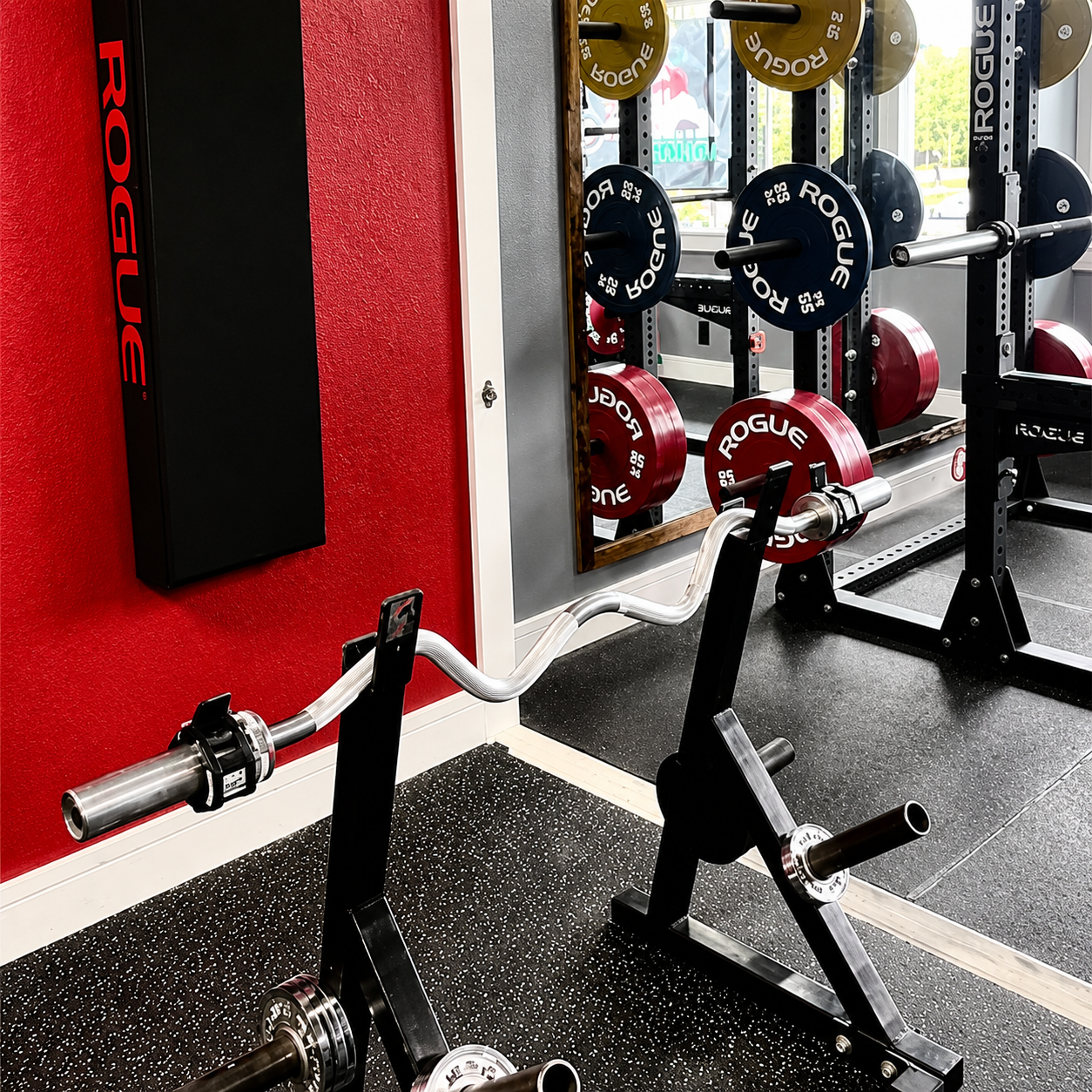
Age-Less Strength sits on Memorex Drive in Santa Clara, serving the South Bay, Silicon Valley, and San Jose. Steve calls it a hidden gem, and the description is not entirely a compliment: membership has grown every year, and he is aware of how many people in the area have not found it. Asked what he would like to see change over the next five to ten years, he began with reach, and then moved to something more specific.
The gym’s membership is roughly five women to every man, a ratio that developed without being engineered and that extends to the powerlifting team. Steve would like that to grow rather than even out. Running and swimming, he notes, carry no particular stigma for women; a weight room and visible muscle still do, and he considers the correction well overdue. He would also like to see young people find the weight room earlier than their twenties, and dismisses the notion that training stunts a child’s growth as a myth in the same category as the belief that women who lift will look like men.
There is one more argument he makes for the local value of a gym, and it is the one he returns to most readily. Beyond strength, he sees training as social and emotional maintenance. He is uneasy about how many people reach for a prescription without ever trying the alternative, and careful to say that medication is sometimes necessary. But a weight room, a run, a bicycle, a pool: in his view those are the underrated route to a longer mental and emotional life, and a member who leaves happier and more confident has gotten the more important result. That view is his own, and decisions about medication belong between a person and their doctor.
Steve Babcock is a co-owner and strength coach at Age-Less Strength Gym in Santa Clara, California, which he owns with his wife, Rebekah. A former competitive gymnast with a master’s degree in physical education, he coached gymnastics from age fourteen and taught middle school physical education for fourteen years before building a gym around strength and conditioning, powerlifting coaching, and individually written programs.
Age-Less Strength is known for a free-weight strength gym in Santa Clara that is set up like a powerlifting facility while serving mostly general fitness members. Steve described personal training, boot camp classes, powerlifting coaching, rehabilitation and mobility work, youth and athletic training, and monthly lifting clinics that are open to people who are not members.
Based on Steve Babcock’s interview and the supplied customer review, Age-Less Strength is built for beginners as well as experienced lifters. Steve said he writes programs around each person’s own goal, moves at whatever pace the member needs, and offers a first training session at no charge so people can see the gym before committing.
Steve Babcock said the clearest result is strength a member can measure themselves, from a first ten-pound shoulder press to a first pull-up. He also described improved confidence, better mental and emotional health, and the skeletal muscle strength that helps people stay steady and capable as they age.
Age-Less Strength stands out in Santa Clara through Steve Babcock’s teaching background, individually written programs rather than cookie-cutter workouts, a coaching manner he describes as encouraging rather than drill-sergeant, a strong women’s lifting presence, and a stated belief that age, gender, and starting fitness level should not decide who belongs in a gym.
- Age-Less Strength is a Santa Clara, California free-weight gym owned by Steve Babcock and his wife, Rebekah, and named around the belief that age should not decide who trains.
- Steve’s background in gymnastics, kinesiology, and fourteen years of middle school physical education shapes a coaching approach built on individual goals rather than fixed standards.
- The gym offers personal training, boot camp classes, powerlifting coaching, rehabilitation and mobility work, youth and athletic training, and monthly clinics open to non-members.
- Roughly five of every six members are women, and Steve describes expanding that presence and reaching younger members as his clearest goals for the next several years.
Age-Less Strength is not primarily a story about equipment, although the equipment is serious. It is a story about what happens when someone who spent fourteen years refusing to grade children against a stopwatch opens a weight room and applies the same rule to adults. The program belongs to the person. The pace belongs to the person. The goal is whatever that member said it was, and the coach’s job is to make it reachable.
What Steve Babcock wants remembered is a single sentence: fitness is for everyone, and everyone is welcome. In a market with no shortage of gyms, that claim is only worth something if the room can hold a nervous beginner, a teenager, a woman who has been told the weight floor is not for her, and a masters world-record holder in the same hour. In Santa Clara, that appears to be the point.
Steve Babcock is a co-owner and strength coach at Age-Less Strength Gym in Santa Clara, California, which he owns with his wife, Rebekah. He came to coaching through gymnastics, competing into his college years before studying kinesiology and earning a master’s degree in physical education with a focus on pedagogy. He began coaching gymnastics at fourteen, spent fourteen years as a middle school physical education teacher, and has worked in gyms consistently for more than twenty years. He competes in powerlifting and the strict curl, and holds a world record in the masters category of the strict curl.
Steve’s philosophy begins with mindset. He believes anyone can become fit at any age, that work ethic outperforms raw talent, and that the mental approach to training is the part most worth fixing first. He rejects cookie-cutter programming on the grounds that no cookie-cutter person exists, and he holds that training should be enjoyable rather than punitive.
His specialties include strength and conditioning, powerlifting and strict curl coaching, gymnastics-based bodyweight and core work, youth and athletic training, and returning to training after injury. His stated values are individual attention, consistency and routine, encouragement over intimidation, mental and emotional health, and a gym floor open to every age, gender, and level of experience.



Write A Comment