

This is a custom HTML / JavaScript Element
In order To See Your Custom HTML/JavaScript Code in Action You Must Click On The Preview Page Button, Your Code is NOT going to be active in the edit mode
|
Local Fitness Leadership Series
Editorial Spotlight / Seattle, Washington
|
By Mark D.R. Ford
Managing Editor
|
|
When Kyla talks about Misfit Strength & Circus, she does not begin with a typical gym promise. She begins with the people who have most often felt out of place in ordinary fitness settings: neurodivergent clients, hypermobile clients, people managing chronic pain, people rebuilding confidence after injury, and people who want strength without the pressure of fitting a narrow definition of what fit should look like.
That idea sits at the center of Misfit Strength & Circus in Seattle, Washington. Kyla grew up active in the Pacific Northwest, later found strength training while navigating pregnancy and postpartum changes in her own body, became a midwife, and eventually brought her education in core function, pelvic floor health, movement, and coaching into a studio built for people who want to feel welcome before they feel impressive.
“Everybody’s welcome here. Fitness doesn’t look a certain way.”
Kyla Helgeland Alexander, Co-Proprietor And Strength Coach / Misfit Strength & Circus
What Clients Notice First
A colorful studio with color-coded squat racks, pride flags, and coaches who greet people by name. Newcomers are not expected to arrive already fit or already confident.
Many clients come in carrying pain, hypermobile joints, or a fear that exercise will hurt them. Misfit’s first impression is not intimidation — it is the sense that someone here genuinely understands their body.
|
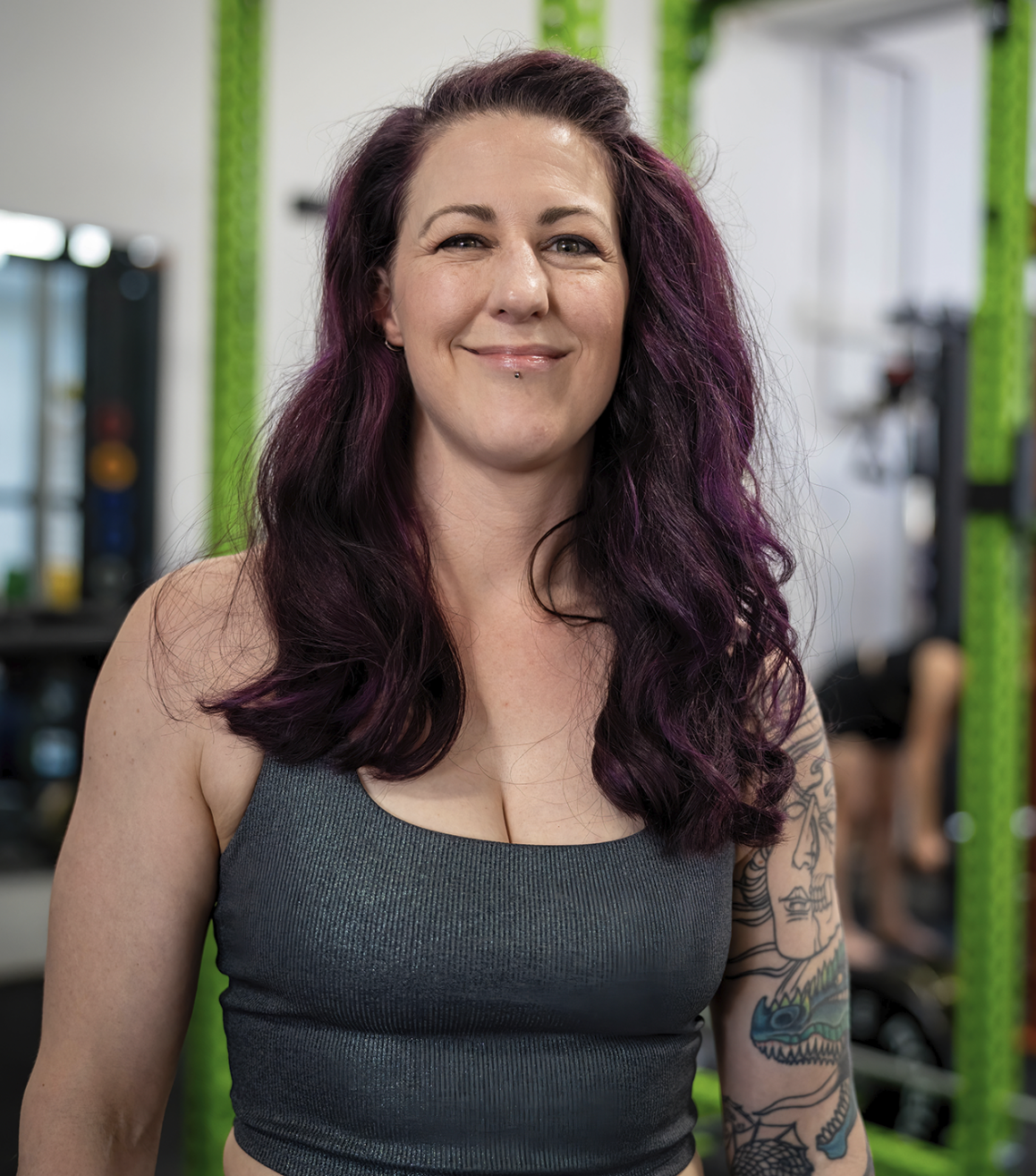
Featured Profile: Kyla brings a rare blend of strength coaching, midwifery background, pelvic floor education, and aerial arts experience to Misfit Strength & Circus — creating a training environment shaped by deep technical knowledge and genuine inclusion.
Misfit Strength & Circus
Seattle, Washington misfitstrengthstudio.com Owner Focus
Kyla has built Misfit Strength & Circus around a clear and personal standard: people are not expected to look, move, or learn the same way. They are assessed, coached, and supported as individuals — with a philosophy rooted in her background as a midwife, aerialist, and strength coach.

The Studio: Misfit’s identity is visible before clients walk inside — expressive, colorful, and intentionally different from the standard gym image.
Misfit Strength & Circus Standard
Inclusive Coaching
Clients are met where they are, with no expectation that fitness must look or feel the same for everyone in the room.
Movement First
Mobility, stability, breathing, and core control form the foundation before any heavier loading is introduced.
Useful Strength
Training is tied to real life — less pain, more control, more confidence, and a greater ability to do what clients actually want to do.
Community Identity
Misfit was named with intention. It is a space built for people who have felt like outsiders — and who deserve a place to train, belong, and grow stronger.
|
The Fitness Standard |
Misfit Strength & Circus stands apart by combining individualized strength coaching, core and pelvic floor education, hypermobility-aware programming, circus arts, and a deliberately inclusive environment — supported by a coaching team whose credentials span midwifery, strength coaching, aerial arts, and massage therapy with fascial specialization. |
Misfit Strength & Circus is worth examining not because it is a new kind of gym, but because it asks a harder question than most gyms ask: what would fitness look like if it were built around the people most fitness spaces overlook? Kyla’s answer — shaped by midwifery, strength coaching, aerial arts, and a family-built studio — is a place where hypermobile, neurodivergent, pain-managing, and simply uncertain clients can learn to move, breathe, stabilize, and get stronger without having to perform confidence they have not yet earned.
This profile examines how Kyla Helgeland Alexander’s background as a retired midwife, strength coach, and aerialist shaped a studio philosophy centered on inclusive coaching, core education, hypermobility-aware programming, and a belief that belonging comes before performance.
The story of Misfit Strength & Circus begins with a question that many people quietly carry into fitness spaces: will this place understand me? For Kyla, that question matters. She and the Misfit team work with clients who may not feel comfortable in a regular gym — including people with hypermobility, neurodivergence, chronic pain, injury histories, pelvic floor concerns, pregnancy and postpartum needs, or simple uncertainty around how to begin.
Misfit Strength & Circus is a strength and circus arts studio in Seattle, Washington, built for people who want serious coaching without the intimidation of a typical gym. Kyla describes Misfit as a place where clients are welcomed, assessed carefully, taught how to breathe and stabilize, coached through strength progressions, and supported as they build confidence, reduce pain, and learn to trust their bodies — at whatever starting point they bring through the door.
Kyla’s own path helps explain the studio’s tone. She grew up active in the Pacific Northwest — playing sports, dancing, riding bikes, and climbing trees in Arlington, Washington. She had children young and found herself in a different body, trying to understand how to feel strong again. Strength training became part of that answer. Later, her work as a midwife deepened her understanding of how movement, breathing, core function, and pelvic floor health shape everyday life in ways most fitness spaces never address.
This profile looks at how Misfit Strength & Circus combines individualized coaching, strength training, pelvic floor education, mobility, stability, and circus arts inside an inclusive Seattle studio built for people who need something more thoughtful than a standard gym experience.
|
Why It Is Different
The studio specializes in people who often feel unseen by regular gyms, with careful attention to hypermobility, pain, core function, and body confidence. |
Who It Serves
Misfit serves clients who want to get stronger, move with less pain, learn proper lifting, explore circus arts, or feel genuinely supported in a nontraditional environment. |
Why It Stands Out
Its identity is built around inclusive coaching, colorful community, technical strength education, and a clear invitation: you belong here as you are. |
Kyla described Misfit as a space for people who do not feel comfortable in regular gyms — including clients who are afraid of hurting themselves, people who have dealt with chronic pain, and people who have felt that traditional gym culture was not designed with them in mind. The studio name carries that intention. Misfit is a place for those who may see themselves as outsiders, learners, or people who need a more thoughtful entry point into strength training.
That does not mean the training is soft. It means the coaching is precise. Kyla spoke about strength training as a process that begins with assessment, breathing, core connection, mobility, and stability — and then moves into progressive loading. Clients are not asked to pretend their body is the same as everyone else’s. They are taught how to understand it, stabilize it, and gradually ask more of it.
A client at Misfit Strength & Circus is meant to feel welcomed and supported before being challenged. Kyla described a space where people are greeted by name, listened to carefully, and coached from their actual starting point — not pushed through a generic workout plan designed for someone else’s body.
When Kyla talked about early client progress, she returned consistently to stability and control. Many clients have never learned how to use their core properly. They may not understand how breathing connects to bracing, how deeper core muscles support a squat, or why stability matters before load increases. Misfit’s coaching helps clients learn those pieces before expecting the body to perform at a higher level.
This is especially important for clients with hypermobility. Kyla noted that approximately ninety percent of Misfit’s clients have hypermobile joints to varying degrees, which means programming often includes preparation exercises that activate the right muscles before heavier movements. A squat may begin with core, hamstring, and glute activation. A press may require better shoulder balance first. The method is not random. It is designed to make strength safer, more understandable, and more sustainable.
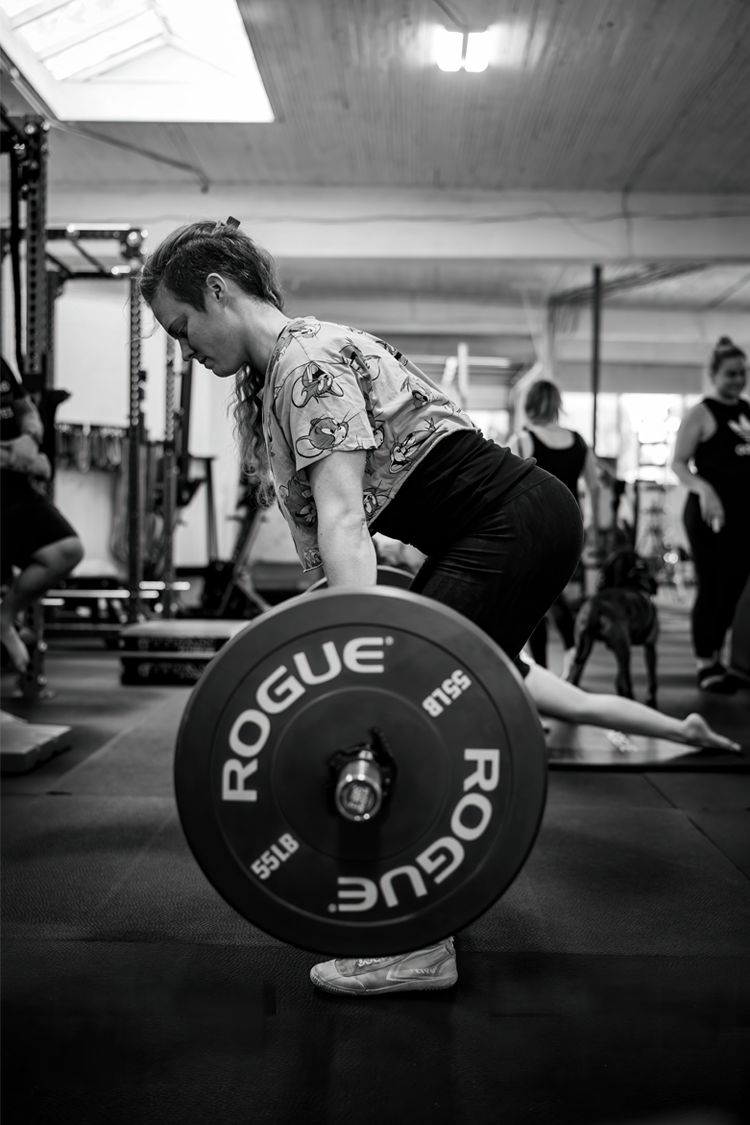
Kyla’s background as a retired midwife gives her a different lens on fitness. She has spent years studying core and pelvic floor function, and she sees how dysfunction often appears in everyday movement: low back pain, hip pain, difficulty managing intra-abdominal pressure during exercise, and a loss of confidence in the body’s reliability. Her message is direct — common does not mean normal, and people do not simply have to live with these limitations.
For clients, that realization can be quietly life-changing. Kyla described the pride of watching someone experience less back pain, less hip pain, more control, and more ability to move without embarrassment. These are not always dramatic transformations. They are often everyday wins: lifting a bag into an airplane overhead compartment without help, moving through a squat with more confidence, or simply feeling more in control of a body that once felt unpredictable.
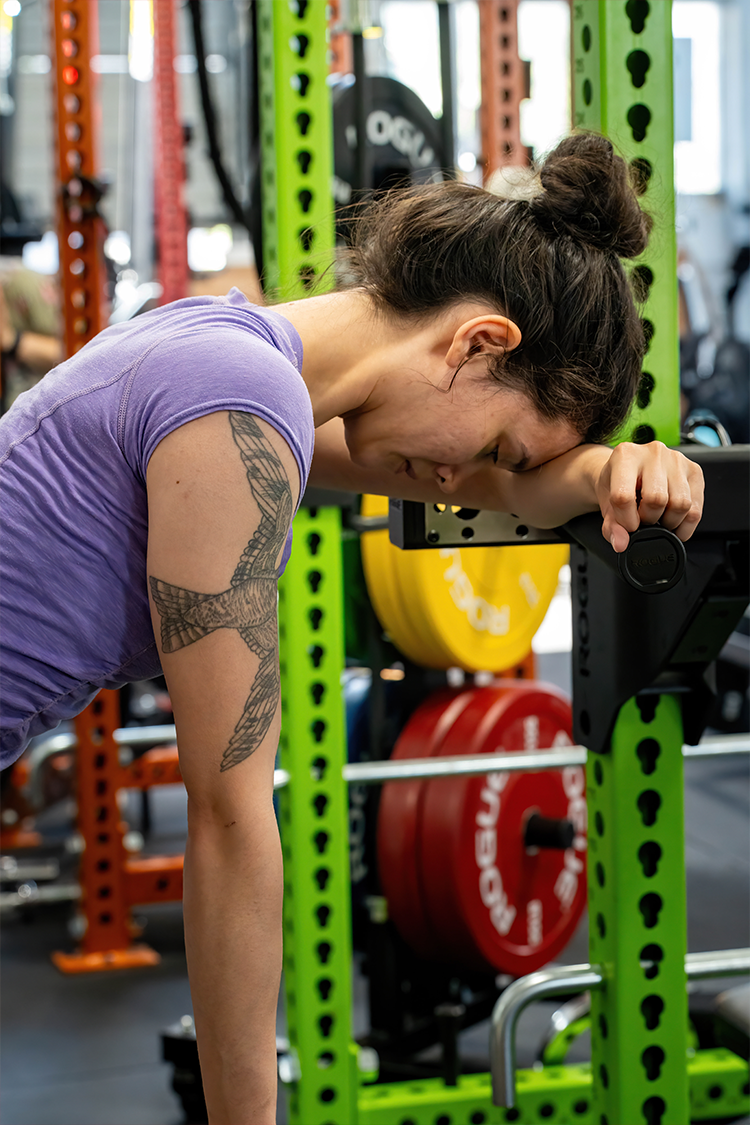
Misfit Strength & Circus matters because it treats inclusion as a coaching standard, not a slogan: people are welcomed, assessed, taught, stabilized, strengthened, and given reasons to trust their bodies again.
Based on Kyla’s interview and public business information, Misfit Strength & Circus is built for people who want strength coaching, movement education, circus arts, recovery support, and an inclusive studio experience that meets them where they are.
“I’ve been doing personal training with Kyla to combat some chronic pain issues that no other doctor, PT, or massage therapist had been able to help. Amazing!!”
One of the most distinctive parts of Misfit is the connection between strength training and circus arts. Kyla said circus gives people a reason to want strength beyond the abstract goal of lifting more weight. A client may want to build squat depth, shoulder stability, or core control because that strength helps them do something joyful, creative, and surprising in another part of the studio. The motivation is concrete, not theoretical.
That motivation matters. For many people, fitness becomes easier to sustain when it is tied to capability, play, skill, and identity. At Misfit, the barbell and the aerial rig are not opposing worlds. They support the same larger mission: help people understand their bodies, build confidence, and discover what movement can make possible for them specifically.

Kyla described a training hierarchy that begins with mobility, moves into stability, and then builds strength progressively. Clients need access to safe ranges of motion, enough control to own those ranges, and then enough strength to load them over time. That structure helps explain why Misfit’s coaching does not simply chase exhaustion. The goal is not to wear people out for the feeling of doing something. The goal is to help them actually improve.
Progressive overload still matters. Kyla was clear that people cannot lift the same weight forever and expect to keep getting stronger. But Misfit’s method is to increase load appropriately, with good form, balanced joint mechanics, and programming that uses varying rep ranges and movement angles to develop well-rounded, pain-free strength. The result is training that respects both ambition and safety — and keeps the body developing rather than stalling or breaking down.
In Seattle’s fitness market, many studios compete on equipment, class variety, or price point. Misfit Strength & Circus competes on something more specific: understanding. Kyla said people often choose the studio because its website and social media name the things that matter to them directly — core and pelvic floor function, hypermobility, neurodiversity, and a welcoming environment for people who may feel like they are in a different category from the typical gym member.
For people searching for strength coaching in White Center and South Delridge, beginner lifting classes, hypermobility-informed fitness, pelvic floor training, or a neurodivergent-friendly option, Misfit offers a clear local point of difference. It is not trying to be every gym for every person. It is trying to be the right place for people who need thoughtful coaching, safety, belonging, and a path to strength that feels human.
Kyla is a co-proprietor, strength coach, aerial coach, and retired midwife at Misfit Strength & Circus in Seattle, Washington. Her coaching background includes strength training, core and pelvic floor function, pregnancy and postpartum corrective exercise, aerial arts, and movement education for clients with a wide range of bodies and needs.
Misfit Strength & Circus is known for strength coaching, personal training, beginner lifting classes, progressive group training, circus arts, aerial classes, core and pelvic floor education, and a welcoming studio environment for people who may not feel comfortable in a traditional gym.
Yes. Based on Kyla’s interview, beginners are not expected to know how to lift, use equipment, or look a certain way. The studio focuses on meeting people where they are, teaching proper movement from the foundation, and helping clients build confidence gradually and sustainably.
Misfit serves a wide range of clients — including people new to lifting, clients with hypermobility, neurodivergent clients, people with chronic pain or injury histories, pregnancy and postpartum clients, aerial and circus students, and people who want an inclusive alternative to a conventional gym environment.
Kyla described results that include greater strength, less pain, better stability and core control, more confidence using strength equipment, improved body awareness, and a greater ability to do everyday activities with less fear or discomfort.
- Misfit Strength & Circus is a Seattle strength and circus arts studio built around inclusive coaching, safety, stability, and a genuine belief that fitness should feel accessible to people who often feel overlooked by traditional gyms.
- Kyla’s background as a retired midwife shapes her attention to core function, pelvic floor health, pregnancy and postpartum needs, and the kind of movement education most fitness spaces never offer.
- The studio serves clients who may not feel comfortable in typical gym environments, including hypermobile clients, neurodivergent clients, people with pain histories, and complete beginners.
- Its coaching model emphasizes mobility, stability, and progressive strength — with circus arts providing a joyful, skill-based motivation for getting stronger that keeps clients engaged over the long term.
Misfit Strength & Circus is not only a story about strength training. It is a story about what happens when a fitness space takes seriously the people who often feel left out of fitness spaces. Kyla’s perspective is rooted in lived experience, education, midwifery, coaching, and a belief that people can get stronger without being forced into a narrow definition of what fitness should look like or feel like.
The message she wants people to remember is clear: you do not have to be or look a certain way to want strength, health, and support. Misfit was named for a reason. For clients who want a coaching environment that understands complexity, welcomes difference, and teaches strength from the inside out, that name may be the most honest invitation in the room.
|
The First Step
For readers who feel connected to Kyla’s story and want to understand whether Misfit Strength & Circus is the right fit, the best first step is simply to stop by while the studio is open, see the space, and ask some basic questions. No prior fitness experience is required — and no expectation of any kind is placed on that first visit.
Misfit also offers consultation visits for people interested in strength coaching who want to learn more about what the studio does and how it approaches coaching. Kyla described the consultation as information-sharing rather than a sales conversation — the goal is to help people feel genuinely good about whatever choice they make.
Visit Misfit Strength & Circus
|
PrepareYour goals, movement history, any pain or injury concerns, and what you hope strength training can change in your daily life.
DiscussPersonal training, beginner lifting classes, circus and aerial options, core and pelvic floor needs, or any hypermobility and pain concerns you want addressed.
ExpectAn honest, unhurried conversation about fit — and a first class offered free for lifting or circus, with no obligation to continue.
Misfit’s first step is not a transaction. It is an introduction — designed to help each person feel seen and informed before they decide whether this is the right place to begin getting stronger.
|
|
Featured Fitness Leader
About The Featured Expert
Kyla Helgeland Alexander
Co-Proprietor, Strength Coach, Aerial Coach, Retired Midwife / Misfit Strength & Circus
Seattle, Washington
|
|
Kyla is a co-proprietor of Misfit Strength & Circus, where she combines strength coaching, aerial coaching, pelvic floor education, pregnancy and postpartum corrective exercise, and her background as a retired midwife. Her work centers on helping people feel stronger, safer, and more capable in bodies that may not fit a traditional fitness template — building a studio shaped by inclusion, technical knowledge, and a genuine belief that everyone deserves a place to learn how to move well.
At Misfit, Kyla’s coaching philosophy is grounded in meeting clients where they are, helping them build core connection and stability as the foundation for everything else, and creating a studio culture where people who have felt like outsiders can find a community to train, learn, and belong to over the long term.
Her values include inclusive coaching, body-aware strength training, neurodivergent-friendly support, hypermobility-informed programming, core and pelvic floor education, pregnancy and postpartum corrective exercise, circus arts, fascial release work, and a welcoming community where clients are treated as individuals rather than shaped to fit a standard gym mold.


Write A Comment