

How Starting Strength Training Transformed a Chef into a Gym Owner
From Kitchen to Barbell: How Cameron Cox Turned Structured Strength Training Into a Thriving Charleston Coaching Business
What began as a search for a better career path became the foundation for one of Charleston’s growing strength coaching communities.
T he fitness industry is crowded with quick fixes, complicated routines, and transformation stories built more on marketing than method. But for Charleston strength coach Cameron Cox, the breakthrough that changed his life was surprisingly simple: learning how to train with purpose, consistency, and measurable progression.
What started as a personal interest in Starting Strength–style barbell training eventually became a career shift, then a garage gym business, and finally a full coaching facility serving more than 115 active clients. In Cox’s case, strength training did more than improve performance in the gym. It gave structure to his life, sharpened his direction, and created a business model rooted in results.
For Cox, the appeal of strength training was never about hype. It was about clarity. Train hard. Track progress. Coach honestly. Repeat.
Location: Charleston, South Carolina
Profession: Strength Coach & Gym Owner
Certification: Starting Strength Coach
Experience: Nearly 10 years coaching
Client Base: 115+ active members
Training Focus: Barbell strength development
Signature Offer: 90-Day Strength Coaching Program
From Kitchen to Weight Room
Before he coached squats, deadlifts, and presses, Cox was working in restaurant kitchens. After college, he moved to Charleston intending to build a future in the culinary world. Like many young professionals, he entered that season of life with ambition, work ethic, and a willingness to grind through long hours.
But restaurant life can be punishing. The schedule is demanding, the pace is relentless, and the long-term path often becomes less appealing the deeper you get into it. Cox eventually realized that while he respected the work, he did not want to build his future around it.
“I moved to Charleston right after college and thought I wanted to be a chef,” Cox said. “After a few years of cooking, I realized that was a terrible idea.”
At the same time, his interest in training was becoming more serious. The gym offered something the kitchen did not: a system where effort produced visible, trackable progress. That sense of order mattered.
Discovering Starting Strength
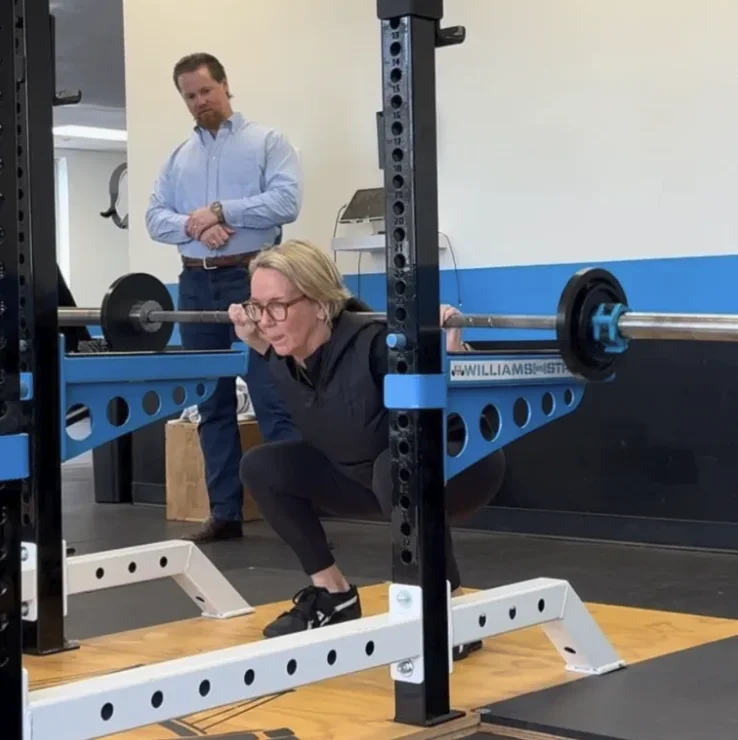
Cox’s development accelerated when he began following the principles associated with Starting Strength, a method built around a handful of foundational barbell lifts and a clear model of progressive overload. Instead of jumping between random exercises, the system narrows the focus and asks a simple question: can you perform the basic lifts correctly and gradually add weight over time?
The approach centers on a few core movements:
- Squats
- Deadlifts
- Bench presses
- Overhead presses
For Cox, that structure was transformational. Every session had a purpose. Every lift had a standard. Every week created a record of progress. Rather than chasing novelty, he learned to value repetition, technique, and consistency.
That mindset would later become central to the way he coached clients. People do not need endless variety to make progress. They need a system they can trust and a coach who can guide them through it.
Learning to Coach Before Learning to Scale
Cox eventually moved into professional coaching and spent several years working as a trainer at Gold’s Gym. Those years mattered because they gave him real exposure to the challenges everyday clients face: inconsistency, low confidence, poor technique, and confusion about where to begin.
Coaching in that environment helped him build the fundamentals that strong trainers need but flashy marketing often overlooks. He learned how to teach movement patterns, correct form under fatigue, communicate clearly, and keep people engaged long enough to experience real progress.
He later earned his Starting Strength Coach certification, which aligned his professional work with the training method that had already changed his own trajectory. But over time, Cox wanted more than a commercial gym setting. He wanted to coach in an environment built around the values he believed in.
That meant building something smaller, more focused, and more personal.
The Garage Gym Experiment That Became a Real Business
In 2019, Cox launched his own training operation out of a garage gym. The setup was modest: a rack, a barbell, plates, a bench, and enough equipment to coach the lifts that mattered most. But the simplicity of the space was part of the advantage. There was no distraction from the work.
Over time, the results spoke for themselves. Clients got stronger. Confidence improved. Word of mouth spread. The business grew not because it looked flashy, but because it delivered something many people struggle to find in commercial gyms: structure, accountability, and honest coaching.
For four years, Cox steadily built a loyal training community in that garage environment. By 2023, roughly 30 clients were training with him regularly. That alone was proof of concept. But life gave him a reason to think bigger.
“When my wife got pregnant,” Cox said, “I decided we were going to open a gym.”
Building a Strength Community in Charleston
Opening a full facility changed the scale of Cox’s business quickly. The client base grew from about 30 members to more than 115 active clients, a sign that the demand for coached strength training in Charleston was stronger than many might assume.
Unlike traditional gyms that depend on access-based memberships, Cox’s model is centered on coaching. Clients are not simply paying to use equipment. They are paying for instruction, accountability, programming, and a training environment that reduces confusion.
That distinction matters, especially for beginners. Many people join a gym when they feel physically out of shape, mentally discouraged, or overwhelmed by conflicting advice. A coaching-first environment meets them at that stage and gives them a clear path forward.
Cox’s approach is straightforward: make people feel welcome, teach them the lifts properly, give them a plan, and help them keep going long enough to see change.
Why This Matters to Charleston
Charleston continues to grow, and with that growth comes a greater need for local businesses that strengthen community life in practical ways. Fitness spaces can play a meaningful role in that ecosystem, but not all gyms serve the same purpose.
Locally owned strength facilities like Cox’s offer something distinct: a place where residents can receive real instruction, develop discipline, and build confidence in a setting that feels more personal than a big-box gym. For many people, that difference is the reason they stay consistent.
In that sense, Cox’s business is more than a gym story. It is also a Charleston small-business story: one person built a focused service around a clear philosophy, earned trust, and grew by helping people solve a real problem.
Inside the 90-Day Coaching System
One of the clearest expressions of Cox’s philosophy is his 90-Day Strength Coaching Program. The program is designed to help clients move from uncertainty to consistency by giving them a structured entry point into training.
Core elements typically include:
- Personalized strength programming
- Coached lifting sessions
- Technique correction and progression tracking
- Habit development and accountability
- Long-term training planning
The goal is not just short-term motivation. It is to help clients reach the point where training becomes part of their identity and routine.
The Moment Every Coach Wants to See
Cox says one of the most rewarding moments in coaching comes when a client stops asking whether they belong in the gym. Early on, many people want reassurance that they are doing things correctly. Later, once confidence has been built, the question changes.
Instead of asking, “Am I doing this right?” they begin asking, “What’s my next workout?”
That shift is significant. It means training is no longer something they are trying out. It has become part of how they live.
Frequently Asked Questions About Starting Strength Training and Gym Ownership
What makes Starting Strength training effective for beginners?
It focuses on a small number of compound lifts that build foundational strength quickly while keeping progress easy to track.
How does a coached gym differ from a typical membership gym?
A coached gym emphasizes programming, accountability, technique, and progress instead of simply providing access to equipment.
Why do structured strength programs often retain members better?
Because clients see measurable improvement, feel guided, and are less likely to become overwhelmed or inconsistent.
What can aspiring gym owners learn from Cox’s story?
That clarity of philosophy, strong coaching, and word-of-mouth trust can build a sustainable business even from a very small starting point.
Comparison: Starting Strength Training vs. Traditional Gym Workouts
| Aspect | Starting Strength Training | Traditional Gym Workouts |
|---|---|---|
| Primary Focus | Barbell compound lifts for strength | Cardio, machines, and mixed exercises |
| Target Audience | Beginners and trainees seeking measurable progress | General fitness members with varied goals |
| Training Method | Progressive overload with technical mastery | Broader variety with less emphasis on progression |
| Typical Outcome | Strength gains, confidence, and consistency | General conditioning and mixed fitness results |
| Retention Driver | Personalized coaching and clear benchmarks | Convenience and membership flexibility |
- Starting Strength training offers a simple, trackable way to build strength and confidence.
- Cox’s growth came from coaching quality and client results, not gimmicks.
- A garage gym can become a serious business when the training system works.
- Charleston’s growth is creating more demand for structured, community-focused fitness spaces.
- Clear programming and accountability help beginners stay consistent long enough to transform.
Conclusion: The Transformative Power of Simple, Disciplined Training
Cameron Cox’s story stands out because it is not built on spectacle. It is built on fundamentals. A young professional discovered a more meaningful path through structured strength training, learned to coach it well, and turned that philosophy into a growing business that now serves more than 115 clients.
For aspiring gym owners, the lesson is clear: a business does not need to begin with a huge facility or a flashy brand. It needs a real service, a repeatable method, and a reputation for delivering results. For readers thinking about their own fitness journey, the takeaway is just as practical: simple training done consistently can change more than your body. It can change your direction.
In Charleston, Cox has built a model that reflects both principles at once — disciplined training and disciplined entrepreneurship.
The Strength Club Official Website
The Strength Club: Basic Barbell Training
Sources:


Write A Comment